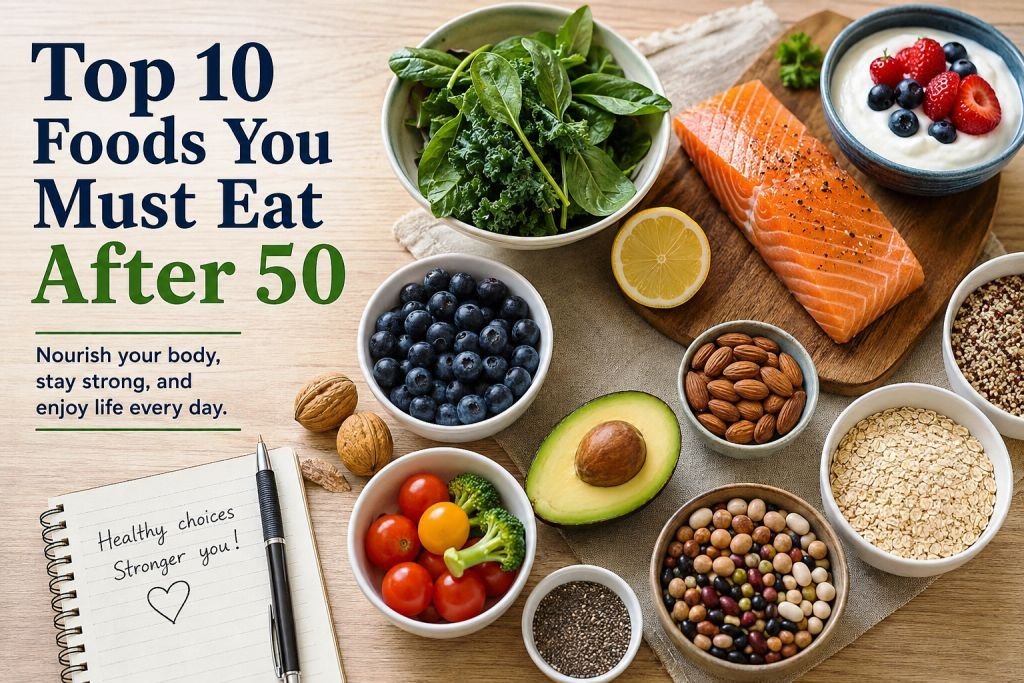
Getting older does not mean you have to give up the foods you enjoy or follow an extremely restrictive diet. In fact, eating well after 50 is often less about dieting and more about making smarter choices consistently.
The Top 10 Foods You Must Eat After 50 include nutrient-rich foods that can help you get more protein, fiber, vitamins, minerals, healthy fats, and other important nutrients from your meals. These foods can fit into familiar American meals without requiring a complete change in your lifestyle.
After 50, your nutritional needs can change. You may need to pay closer attention to protein, calcium, vitamin D, fiber, potassium, vitamin B12, and healthy fats. At the same time, many people become less active or eat smaller portions, which means every bite can matter more nutritionally.
That does not mean every meal needs to be perfect.
A simple breakfast with Greek yogurt and berries, a lunch with beans and vegetables, or a dinner featuring salmon and leafy greens can make a meaningful difference over time.
This guide explains 10 foods worth including regularly after 50, why they are useful, how to eat them, and what to consider if you have specific health or dietary needs.
Why Does Nutrition Matter More After 50?
Your body continues to change throughout adulthood. Muscle mass can gradually decline, bone health becomes increasingly important, and digestion, appetite, and activity levels may change.
These changes make nutrient-dense foods especially valuable.
A nutrient-dense food provides a good amount of vitamins, minerals, protein, fiber, or healthy fats relative to its calories.
For example, a handful of walnuts provides healthy fats, protein, fiber, and several micronutrients. A serving of salmon provides protein and omega-3 fats. Leafy greens provide fiber and a range of vitamins and minerals.
The goal is not to find one magical food.
Instead, think about building a balanced eating pattern that includes different food groups throughout the week.
For adults over 50, a practical plate might include:
- A protein-rich food
- Several servings of vegetables and fruits
- Whole grains or other high-fiber carbohydrates
- Healthy fats
- Adequate fluids
- Foods rich in calcium and vitamin D
Portion sizes and individual nutritional needs vary, especially for people managing diabetes, kidney disease, heart disease, food allergies, or other conditions.
What Are the Top 10 Foods You Must Eat After 50?
There is no official medical list of exactly 10 foods that every person over 50 must eat.
However, the following foods are excellent choices because they provide nutrients that are important as we age.
1. Salmon and Other Fatty Fish
Salmon is one of the easiest foods to recommend when discussing healthy eating after 50.
It is rich in high-quality protein and provides omega-3 fatty acids. Salmon also contains vitamin D and several other nutrients.
Protein becomes particularly important as we get older because maintaining muscle is an important part of healthy aging.
You do not need to eat salmon every day.
Try including fatty fish such as salmon, sardines, trout, or mackerel as part of your weekly meal rotation.
Easy ways to eat more fish
Try:
- Baked salmon with roasted vegetables
- Salmon over a large salad
- Tuna and whole-grain toast
- Sardines with crackers and vegetables
- Grilled trout with brown rice
- Salmon tacos with cabbage and avocado
If you do not eat seafood, you can still obtain protein and healthy fats from other foods such as beans, nuts, seeds, eggs, and plant oils.
2. Greek Yogurt
Greek yogurt is a convenient option for breakfast, snacks, or even a quick dessert.
It provides protein and calcium, and many varieties contain live cultures.
Protein can help make meals more satisfying, while calcium is important for maintaining strong bones.
When shopping, compare nutrition labels. Some flavored yogurts contain significant amounts of added sugar.
Plain Greek yogurt is a versatile choice because you can add your own ingredients.
Try mixing it with:
- Fresh berries
- Chopped walnuts
- Cinnamon
- Chia seeds
- Sliced banana
- A small amount of unsweetened granola
For someone who prefers savory foods, plain Greek yogurt can also be used as a base for dips and sauces.
3. Leafy Green Vegetables
If your plate rarely contains green vegetables, your 50s are a good time to change that.
Spinach, kale, collard greens, Swiss chard, romaine lettuce, and other leafy greens provide fiber, vitamins, minerals, and plant compounds.
They are also relatively low in calories, making them easy to include in meals without dramatically increasing portion sizes.
One simple trick is to stop thinking of vegetables as a side dish.
Make them part of the main meal.
Add spinach to eggs. Put kale into soup. Use romaine as the base of a chicken salad. Add cooked greens to beans or whole grains.
A simple leafy-green habit
Try adding one handful of greens to one meal every day.
Over time, increase the amount as you become comfortable with it.
Fresh vegetables are excellent, but frozen vegetables can also be nutritious and convenient. They are particularly useful when fresh produce is expensive or difficult to keep on hand.
4. Berries
Blueberries, strawberries, raspberries, and blackberries are small foods with a lot to offer.
They provide fiber and a variety of vitamins, minerals, and plant compounds.
Berries are also naturally sweet, which makes them useful when you want something sweet without relying heavily on desserts or candy.
Add berries to:
- Oatmeal
- Greek yogurt
- Cottage cheese
- Smoothies
- Whole-grain cereal
- Salads
Frozen berries are another practical option.
They can be less expensive than fresh berries and are easy to store.
If berries are not available, other whole fruits such as apples, oranges, pears, peaches, and bananas can also be part of a balanced diet.
5. Beans and Lentils
Beans and lentils deserve much more attention in an after-50 diet.
Black beans, kidney beans, chickpeas, pinto beans, navy beans, and lentils provide plant protein and fiber.
Fiber is particularly useful because many Americans do not get enough of it.
Beans are also inexpensive, making them one of the best foods for people who want nutritious meals without spending a lot of money.
You can use them in:
- Chili
- Soups
- Salads
- Burrito bowls
- Tacos
- Lentil curry
- Bean-based pasta dishes
- Vegetable stews
If canned beans are your choice, look for lower-sodium options when possible. Rinsing canned beans can also help remove some of the sodium.
If beans cause digestive discomfort, start with smaller portions and increase gradually.
6. Oats and Other Whole Grains
Whole grains can be a valuable part of a healthy eating pattern after 50.
Oats are especially convenient because they can be prepared quickly and combined with many other nutritious foods.
A bowl of oatmeal can become a complete breakfast when you add protein, fruit, and healthy fats.
For example:
Oatmeal + Greek yogurt + blueberries + walnuts
That combination provides carbohydrates, protein, fiber, healthy fats, and several important micronutrients.
Other whole grains to consider include:
- Brown rice
- Barley
- Quinoa
- Whole-wheat bread
- Whole-grain pasta
- Bulgur
- Farro
When buying packaged grain products, check the ingredient list and Nutrition Facts label. Products marketed as “multigrain” are not automatically whole grain.
Look for products that identify a whole grain as a major ingredient.
7. Eggs
Eggs are affordable, versatile, and easy to prepare.
They provide high-quality protein and several vitamins and minerals.
For many people, eggs are an especially practical breakfast option because they can be prepared in minutes.
Try:
- Scrambled eggs with spinach
- Vegetable omelets
- Hard-boiled eggs with fruit
- Eggs on whole-grain toast
- Egg and vegetable breakfast bowls
Eggs can be part of a balanced diet, but your ideal intake depends on your overall eating pattern and individual health circumstances.
If you have been told to limit dietary cholesterol or have a specific medical condition, follow your healthcare professional’s advice.
8. Nuts and Seeds
Walnuts, almonds, pistachios, peanuts, chia seeds, flaxseeds, and pumpkin seeds can make small meals more nutritious.
They provide healthy fats, protein, fiber, and various micronutrients.
The main thing to remember is portion size.
Nuts and seeds are nutrient-dense but also relatively calorie-dense.
A small handful can be enough.
Instead of eating directly from a large container, portion them into a small bowl or container.
This makes it easier to enjoy them without mindlessly eating several servings.
Try adding nuts or seeds to:
- Yogurt
- Oatmeal
- Salads
- Smoothies
- Vegetable dishes
- Whole-grain cereal
Ground flaxseed and chia seeds can also be stirred into oatmeal or yogurt.
9. Avocados
Avocados are another useful source of healthy fats and fiber.
They have a creamy texture that makes them easy to add to meals.
You can spread mashed avocado on whole-grain toast, add slices to a salad, or use avocado in a sandwich instead of a creamy sauce.
Avocados also contain potassium and other nutrients.
Because they are calorie-dense, you do not need a huge portion.
A moderate serving can add flavor and richness to a meal.
One of the easiest lunches after 50 is a simple bowl containing:
- Beans
- Greens
- Avocado
- Tomatoes
- Brown rice
- A protein source
- A light dressing
It is quick, filling, and easy to customize.
10. Colorful Vegetables
Leafy greens are important, but do not stop there.
A healthy diet after 50 should include vegetables in different colors.
Think:
- Carrots
- Bell peppers
- Broccoli
- Cauliflower
- Tomatoes
- Sweet potatoes
- Beets
- Squash
- Green beans
- Cabbage
Different vegetables provide different combinations of nutrients and plant compounds.
A useful rule is simple: add more color to your plate.
If your dinner contains chicken and rice, add broccoli and red peppers.
If you are eating a sandwich, add a side salad.
If you are making pasta, mix in mushrooms, spinach, tomatoes, and peppers.
Small additions can make everyday meals much more nutrient-rich.
How Should You Build a Healthy Plate After 50?
Knowing which foods are healthy is only half the equation.
You also need a practical way to combine them.
A simple approach is to think about your plate in sections.
| Part of the meal | Examples |
|---|---|
| Protein | Fish, eggs, chicken, beans, lentils, yogurt |
| Vegetables | Broccoli, spinach, carrots, peppers, greens |
| Whole-food carbohydrates | Oats, brown rice, potatoes, whole grains |
| Healthy fats | Avocado, nuts, seeds, olive oil |
| Fruit | Berries, apples, oranges, pears |
This does not mean every meal needs to contain every item.
Instead, look at your overall day.
If breakfast is oatmeal with berries and yogurt, lunch could be a bean and vegetable salad, followed by fish, vegetables, and brown rice for dinner.
That creates variety without making meals complicated.
What Nutrients Should You Pay Attention to After 50?
Food choices after 50 should not focus on calories alone.
Nutrient quality becomes increasingly important.
Protein
Protein supports muscles and helps maintain strength.
Good sources include:
- Fish
- Eggs
- Greek yogurt
- Chicken
- Turkey
- Beans
- Lentils
- Tofu
- Cottage cheese
- Nuts and seeds
Try including a protein source at most meals.
Fiber
Fiber supports digestive health and can help meals feel more satisfying.
Good sources include:
- Beans
- Lentils
- Oats
- Berries
- Apples
- Vegetables
- Whole grains
- Nuts
- Seeds
Increase fiber gradually if your current diet is low in fiber, and drink enough fluids.
Calcium and Vitamin D
Calcium is important for bones and teeth.
Food sources include dairy products and certain fortified foods. Some fish and leafy greens can also contribute calcium.
Vitamin D is found naturally in relatively few foods, although fatty fish and fortified foods can provide it.
Some people may need supplements based on their diet, health status, medications, or laboratory results.
Talk with a healthcare professional before starting supplements, particularly if you take prescription medications.
Vitamin B12
Vitamin B12 deserves attention as people age because some older adults may have difficulty absorbing enough B12 from food.
Sources include:
- Fish
- Meat
- Eggs
- Milk
- Dairy products
- Fortified foods
If you follow a vegetarian or vegan diet, discuss reliable B12 sources with a healthcare professional or registered dietitian.
Potassium
Potassium is found in foods such as:
- Potatoes
- Beans
- Spinach
- Tomatoes
- Avocados
- Bananas
- Yogurt
However, people with certain kidney conditions may need to limit potassium.
This is one reason personalized nutrition advice matters.
What Should You Eat for Breakfast After 50?
Breakfast does not need to be complicated.
A good breakfast combines protein, fiber, and minimally processed foods.
Some easy ideas include:
Option 1: Protein Oatmeal
- Oatmeal
- Greek yogurt
- Blueberries
- Walnuts
- Cinnamon
Option 2: Vegetable Eggs
- Two eggs
- Spinach
- Bell peppers
- Whole-grain toast
- Fresh fruit
Option 3: Yogurt Bowl
- Plain Greek yogurt
- Berries
- Chia seeds
- Walnuts
- Small serving of oats
Option 4: Simple Toast
- Whole-grain toast
- Avocado
- Egg
- Tomato slices
The best breakfast is one you can prepare consistently.
What Are the Best Foods to Eat for Dinner After 50?
Dinner can follow the same basic pattern.
Start with a protein source.
Add plenty of vegetables.
Then include a reasonable serving of whole grains, potatoes, or another carbohydrate source if desired.
For example:
Dinner idea: baked salmon, roasted broccoli, brown rice, and a side salad.
Another option could be:
Dinner idea: lentil soup, whole-grain bread, mixed greens, and sliced avocado.
You do not need expensive specialty foods to eat well.
A simple home-cooked meal can be just as practical.
What Foods Should You Limit After 50?
Healthy aging is not only about what you add.
It is also about what you eat less often.
There is no need to completely ban every food you enjoy.
Instead, consider limiting foods that provide lots of calories but relatively few nutrients when eaten frequently.
These may include:
- Sugar-sweetened beverages
- Highly processed snack foods
- Large portions of sweets
- Processed meats
- Excessively salty packaged foods
- Deep-fried foods
- Refined grains eaten in large amounts
- Foods with substantial added sugars
An occasional cookie or slice of birthday cake is not going to erase a healthy eating pattern.
The bigger picture matters.
What Are Common Healthy Eating Mistakes After 50?
Even people who know a lot about nutrition can fall into common habits.
Mistake 1: Eating Too Little Protein
Some people eat toast or cereal for breakfast, a light salad for lunch, and a small dinner.
That may leave the diet short on protein.
Try adding eggs, Greek yogurt, cottage cheese, beans, fish, chicken, tofu, or another protein source.
Mistake 2: Avoiding All Carbohydrates
Carbohydrates are not automatically unhealthy.
Whole grains, beans, fruits, and vegetables provide carbohydrates along with important nutrients and fiber.
Instead of eliminating carbohydrates, focus on their quality and portion size.
Mistake 3: Drinking Too Many Calories
Soda, sweetened coffee drinks, energy drinks, and other sugary beverages can add a lot of calories without providing much nutritional value.
Water is usually the simplest everyday beverage.
Unsweetened tea and coffee can also fit into many healthy eating patterns.
Mistake 4: Not Eating Enough Vegetables
It is easy to eat a sandwich or frozen meal and forget vegetables.
Keep easy options available.
Frozen broccoli, baby carrots, salad greens, tomatoes, and frozen mixed vegetables can make this much easier.
Mistake 5: Relying Too Heavily on Supplements
Supplements can be useful for people who have specific nutritional needs.
But they should not replace a balanced diet.
Food provides combinations of nutrients and other beneficial compounds that a single pill cannot fully reproduce.
Who Should Be Careful With These Foods?
The foods in this article can fit into many healthy diets, but individual needs vary.
If you have a chronic medical condition, take prescription medications, have food allergies, or have been told to follow a special diet, speak with your healthcare professional before making major dietary changes.
People with kidney disease, for example, may need specific guidance about potassium, phosphorus, protein, or fluids.
People with diabetes may need to pay particular attention to carbohydrate portions and overall meal patterns.
People taking blood-thinning medications may also have specific dietary considerations.
If you have difficulty chewing or swallowing, food texture may need to be modified.
If you have experienced unexplained weight loss, persistent loss of appetite, or major changes in digestion, discuss those symptoms with a qualified healthcare professional rather than trying to solve them through diet alone.
How Can You Start Eating Better After 50?
You do not need to completely redesign your kitchen overnight.
Start with one or two changes.
For example:
Week 1: Add a serving of vegetables to lunch.
Week 2: Add a protein source to breakfast.
Week 3: Replace refined grains with whole grains more often.
Week 4: Add beans or lentils to two meals.
These small habits can be easier to maintain than an extreme diet.
Another useful strategy is to make healthy foods convenient.
Keep berries in the freezer.
Keep nuts in small portions.
Keep washed greens ready for salads.
Keep canned beans in the pantry.
Keep eggs in the refrigerator.
When nutritious food is easy to reach, you are more likely to eat it.
What Is a Simple 1-Day Eating Plan After 50?
Here is an example of how these foods can fit together.
Breakfast
Oatmeal topped with blueberries, walnuts, and plain Greek yogurt.
Mid-Morning Snack
An apple with a small serving of almonds.
Lunch
A large salad with leafy greens, chickpeas, tomatoes, bell peppers, avocado, and a simple olive-oil-based dressing.
Afternoon Snack
Plain Greek yogurt with berries.
Dinner
Baked salmon with roasted broccoli and brown rice.
Evening
Water or unsweetened tea if desired.
This is only an example.
Your calorie, protein, carbohydrate, and other nutrient requirements can differ depending on your body size, activity level, medical conditions, medications, and personal goals.
How Can You Make Healthy Eating Affordable After 50?
Eating nutritious food does not have to mean buying expensive health products.
Some of the most useful foods are budget-friendly.
Consider:
- Oats
- Beans
- Lentils
- Eggs
- Frozen vegetables
- Canned fish
- Brown rice
- Potatoes
- Bananas
- Apples
- Plain yogurt
- Peanut butter
- Seasonal produce
Buy fresh produce when it is affordable and use frozen options when necessary.
Frozen vegetables can be especially convenient because they last longer and require little preparation.
Cooking larger portions can also save time.
For example, prepare a pot of lentils or beans on Sunday and use them for several meals during the week.
What About Eating Out After 50?
You do not have to stop eating at restaurants.
Instead, look for simple ways to improve your order.
Choose grilled, baked, roasted, or steamed foods more often.
Ask for vegetables instead of fries when practical.
Consider splitting large restaurant portions.
Request sauces and dressings on the side.
Choose water or an unsweetened drink more often.
And remember that eating out is also a social experience.
Enjoying a meal with family or friends can be part of a healthy lifestyle.
Can These Foods Help With Healthy Aging?
No single food can guarantee a particular health outcome.
Healthy aging is influenced by many factors, including overall diet, physical activity, sleep, stress, genetics, smoking, alcohol use, medical care, and social connections.
The value of the Top 10 Foods You Must Eat After 50 comes from how they fit into an overall eating pattern.
A person who eats salmon once but otherwise relies heavily on ultra-processed foods is not going to receive the same nutritional benefits as someone who regularly eats a variety of vegetables, fruits, whole grains, beans, fish, nuts, seeds, and other minimally processed foods.
Consistency matters more than perfection.
Frequently Asked Questions
What are the Top 10 Foods You Must Eat After 50?
There is no universal list of foods that every person over 50 must eat. However, nutrient-rich choices worth including regularly include salmon or other fatty fish, Greek yogurt, leafy greens, berries, beans and lentils, oats and whole grains, eggs, nuts and seeds, avocados, and a variety of colorful vegetables.
What is the most important food to eat after 50?
There is no single most important food. A varied diet is generally more useful than relying heavily on one food. Protein-rich foods, vegetables, fruits, whole grains, legumes, and healthy fats can all contribute to a balanced eating pattern.
How much protein do adults over 50 need?
Protein needs vary based on body size, activity level, health status, and other factors. Many older adults benefit from paying attention to protein intake because maintaining muscle becomes increasingly important with age. A healthcare professional or registered dietitian can help determine an appropriate amount for your individual needs.
Are eggs healthy after 50?
Eggs can be part of a balanced diet for many adults. They provide protein and several nutrients. However, individual dietary needs differ, particularly for people with certain health conditions. If your doctor has recommended a specific dietary pattern, follow that advice.
Are bananas good for people over 50?
Bananas can be a convenient source of carbohydrates and potassium and can fit into a balanced diet. However, people with certain kidney conditions may need to monitor potassium intake.
Should seniors avoid carbohydrates?
Most people do not need to completely eliminate carbohydrates. Fruits, vegetables, beans, oats, and whole grains provide carbohydrates along with fiber and other nutrients. The overall quality and quantity of carbohydrates matter.
What is a good breakfast for someone over 50?
A balanced breakfast can include protein, fiber, and whole foods. Examples include oatmeal with Greek yogurt and berries, eggs with vegetables and whole-grain toast, or a yogurt bowl with fruit, nuts, and seeds.
What foods are good for maintaining muscle after 50?
Protein-rich foods such as fish, eggs, yogurt, poultry, beans, lentils, tofu, cottage cheese, nuts, and seeds can help provide protein. Resistance exercise is also important for maintaining strength and muscle as you age.
Should I take vitamins after 50?
Some people need supplements because of dietary restrictions, nutrient deficiencies, medications, or specific health circumstances. However, supplements are not automatically necessary for everyone. Discuss supplements with a healthcare professional before starting them, especially if you take medications.
Is it too late to improve your diet after 50?
No. Improving your eating habits can be worthwhile at any age. You do not need to make dramatic changes. Start by adding more vegetables, choosing better protein sources, eating more fiber-rich foods, and reducing highly processed foods when practical.
A Simple Shopping List for Healthy Eating After 50
If you want to put this information into practice, start with a basic grocery list.
Protein Foods
- Salmon
- Canned tuna or salmon
- Eggs
- Plain Greek yogurt
- Cottage cheese
- Beans
- Lentils
- Chicken or turkey
- Tofu
Fruits
- Blueberries
- Strawberries
- Apples
- Oranges
- Bananas
- Pears
Vegetables
- Spinach
- Broccoli
- Carrots
- Bell peppers
- Tomatoes
- Kale
- Green beans
- Sweet potatoes
Whole Grains
- Oats
- Brown rice
- Quinoa
- Whole-grain bread
- Whole-grain pasta
- Barley
Healthy Fats
- Walnuts
- Almonds
- Chia seeds
- Flaxseeds
- Pumpkin seeds
- Avocados
- Extra-virgin olive oil
You do not need to purchase everything on this list.
Choose foods you actually enjoy and can afford.
Practical Tips for Eating Well Every Day
Healthy eating becomes easier when you remove unnecessary complications.
Try these habits:
- Keep healthy snacks visible and convenient.
- Add vegetables to meals you already enjoy.
- Include a protein source at breakfast.
- Choose whole fruit instead of fruit-flavored snacks more often.
- Use beans to stretch meat-based meals.
- Buy frozen vegetables when fresh produce is inconvenient.
- Drink water regularly throughout the day.
- Read Nutrition Facts labels on packaged foods.
- Compare added sugar and sodium when choosing similar products.
- Cook at home when practical.
- Avoid turning healthy eating into an all-or-nothing challenge.
Most importantly, build meals around foods you enjoy.
If you hate a particular vegetable, you do not have to force yourself to eat it every day. There are plenty of alternatives.
The best healthy diet is one that you can realistically maintain.
Final Thoughts
Eating well after 50 does not require a complicated meal plan, expensive supplements, or a strict list of forbidden foods.
The Top 10 Foods You Must Eat After 50 discussed in this guide offer a practical starting point: fatty fish such as salmon, Greek yogurt, leafy greens, berries, beans and lentils, whole grains, eggs, nuts and seeds, avocados, and a colorful variety of vegetables.
The bigger goal is variety.
Build meals around nutrient-rich foods. Include enough protein and fiber. Choose whole or minimally processed foods more often. Drink enough fluids. Keep portions appropriate for your needs. And leave room for the foods you genuinely enjoy.
Healthy aging is not about being perfect.
It is about making choices that support your body consistently, one meal at a time.
If you are making major dietary changes or have a medical condition, medication-related concern, food allergy, or special nutritional requirement, talk with your doctor or a registered dietitian for advice tailored to you.
Health Disclaimer
This article is for general educational and informational purposes only. It is not intended to diagnose, treat, cure, or prevent any disease or medical condition. Individual nutritional needs vary. Always consult a qualified healthcare professional for personalized medical or dietary advice, especially if you have a chronic health condition or take prescription medications.
Related Keywords
- Best foods to eat after 50 for healthy aging
- Healthy diet for adults over 50
- Best foods for seniors over 60
- High protein foods for older adults
- Nutrient rich foods for healthy aging
Also Read –
Salmon Benefits: Powerful Reasons to Eat More Salmon
Blueberries: 25 Powerful Health Benefits for a Healthier Life
30 Super Foods for a Healthier You: Eat Better Every Day
Written by
Kanhaiya Solanki is a dedicated online researcher, content writer, and blogger passionate about publishing high-quality, research-based articles. His goal is to provide accurate, easy-to-understand, and practical information on health, technology, senior care, and lifestyle topics for readers worldwide.CategoriesHealth & Wellness