Most people don’t spend much time thinking about what happens in the bathroom. You go, flush, wash your hands, and move on with your day.
But your poop can tell you quite a bit about what’s happening inside your digestive system.
Changes in stool color, consistency, shape, frequency, or smell are often harmless and may simply reflect something you ate. Still, some changes deserve attention, especially when they are new, persistent, or accompanied by pain, bleeding, unexplained weight loss, fever, or other symptoms.
That’s why learning the signs your poop is trying to warn you can be a useful part of paying attention to your health.
This doesn’t mean you should panic every time your stool looks different. A green stool after eating certain foods, for example, isn’t automatically a medical problem. Stool color can be influenced by food and bile, and normal bowel habits vary from person to person.
The important thing is to notice changes from your normal pattern.
In this guide, we’ll look at 10 stool changes and bowel symptoms worth knowing about, what they can sometimes mean, and when it makes sense to talk with a healthcare professional.
Why Does Your Poop Matter?
Your digestive system is constantly processing food, absorbing nutrients, moving waste, and eliminating what your body doesn’t need.
The final product gives you a visible snapshot of part of that process.
Healthy stool doesn’t have to look exactly the same every day. One person’s normal may be different from another person’s normal. Your diet, fluid intake, medications, activity level, stress, and overall health can all affect bowel movements.
A useful rule is this:
Don’t focus on one unusual bowel movement. Pay attention to persistent or unexplained changes.
For example, having loose stool once after eating a heavy meal is very different from having diarrhea repeatedly for several weeks.
Likewise, noticing a slightly different shade of brown isn’t the same as repeatedly seeing black, tarry stool or visible blood.
The goal isn’t to diagnose yourself by looking in the toilet. It’s to recognize when a change is worth discussing with your doctor.
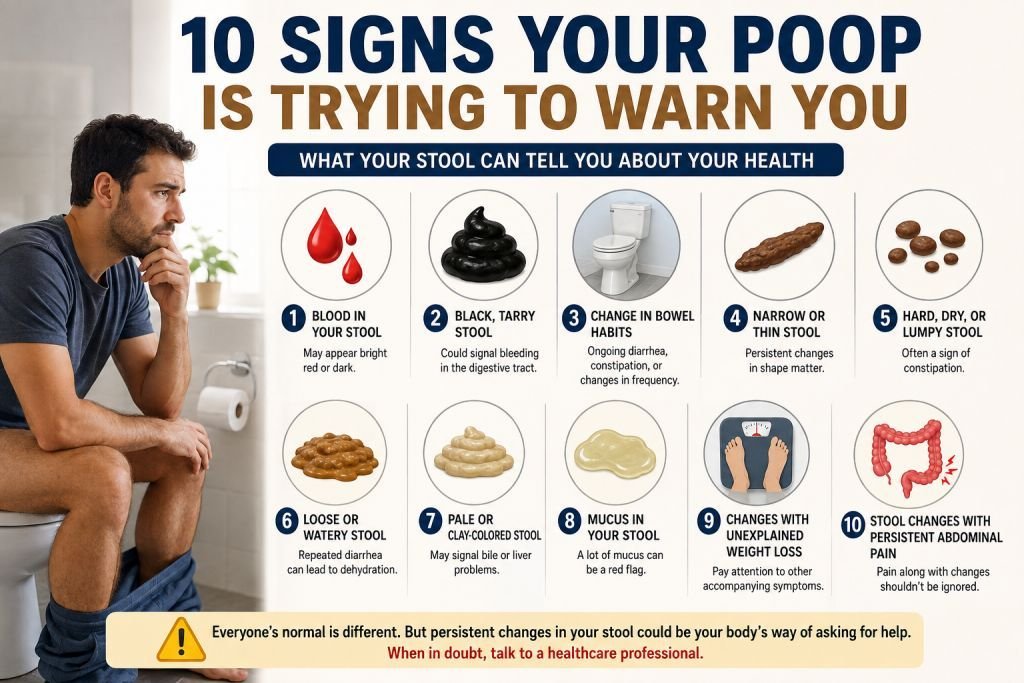
10 Signs Your Poop Is Trying to Warn You
1. You Notice Blood in Your Stool
Blood is one of the stool changes you shouldn’t casually ignore.
Bright red blood may appear on toilet paper, on the outside of the stool, or in the toilet bowl. Sometimes it can be related to hemorrhoids or a small tear caused by passing hard stool.
But rectal bleeding can have many causes, including conditions that need medical evaluation.
Blood can also appear darker or become mixed with stool when bleeding occurs higher in the digestive tract. Black, tarry stool can be a sign of gastrointestinal bleeding and needs prompt medical attention.
This is particularly important if bleeding is accompanied by:
- Dizziness or lightheadedness
- Weakness
- Shortness of breath
- Severe abdominal pain
- Fainting
- Large amounts of blood
- Black, tar-like stool
If you see blood in your stool, don’t automatically assume it’s hemorrhoids.
A healthcare professional can help determine the cause.
And if you have heavy bleeding, feel faint, or have signs of severe blood loss, seek emergency medical care.
2. Your Stool Suddenly Turns Black and Tarry
Not all dark stool is dangerous.
Certain foods and supplements can change stool color. Iron supplements, for example, can make stools appear dark.
But stool that is truly black, sticky, or tar-like can be associated with bleeding in the upper digestive tract.
This is different from simply having dark brown stool.
Gastrointestinal bleeding can occur for several reasons, including ulcers and other digestive conditions. NIDDK notes that black, tarry stool is a symptom that requires prompt medical attention, especially when accompanied by dizziness, fainting, weakness, or other concerning symptoms.
If your stool suddenly becomes black and tarry without an obvious explanation, don’t wait several days hoping it will disappear.
Contact a healthcare professional promptly.
If you have significant bleeding, fainting, severe weakness, confusion, or other signs of an emergency, seek emergency care.
3. Your Bowel Habits Change and Stay Different
Everybody has a slightly different bathroom routine.
Some people go every morning. Others go at different times throughout the day.
What’s important is your usual pattern.
A persistent change in bowel habits can include:
- New constipation
- Repeated diarrhea
- Alternating constipation and diarrhea
- More frequent bowel movements than usual
- A persistent feeling that you need to go
- A noticeable change in stool appearance
A short-term change may happen after an infection, a dietary change, travel, stress, or medication.
But if your bowel habits remain noticeably different without an obvious reason, it’s worth talking with your doctor.
Changes in bowel habits are among the symptoms healthcare professionals consider when evaluating colorectal conditions. Importantly, these symptoms are often caused by problems other than cancer, so a change does not automatically mean something serious.
The key is persistence.
If your normal routine changes and doesn’t return to normal, don’t simply accept it as part of getting older.
4. Your Stool Is Very Thin or Narrow for a Prolonged Period
You’ve probably heard that pencil-thin stool automatically means colon cancer.
That’s too simplistic.
Stool shape can change for many reasons, and an occasional narrow bowel movement doesn’t necessarily mean there’s a problem.
However, if your stool becomes consistently narrower than usual and the change persists, especially when combined with other symptoms, it’s worth discussing with a healthcare professional.
Other symptoms that deserve attention include:
- Blood in the stool
- Unexplained weight loss
- Persistent abdominal discomfort
- A feeling that you still need to have a bowel movement
- Ongoing constipation or diarrhea
- Unexplained fatigue
The American Cancer Society lists changes in bowel habits, including changes in stool appearance, among symptoms that should be evaluated when persistent.
Again, this doesn’t mean a narrow stool equals cancer.
It means a lasting change from your normal deserves an explanation.
5. You Have Hard, Dry, or Lumpy Stool
If your stool is consistently hard, dry, or lumpy and difficult to pass, constipation may be the reason.
Constipation can also involve fewer than three bowel movements per week or a feeling that you haven’t completely emptied your bowels.
For many people, constipation is related to everyday habits.
Common contributors can include:
- Not eating enough fiber
- Not drinking enough fluids
- Limited physical activity
- Ignoring the urge to use the bathroom
- Certain medications
- Changes in routine
- Some medical conditions
A simple first step is to gradually improve your diet and activity level.
Fiber-rich foods such as beans, lentils, vegetables, fruits, oats, and whole grains can help increase dietary fiber.
If you’re increasing fiber, do it gradually and make sure you’re getting adequate fluids. A sudden large increase can cause extra gas and bloating.
Gentle physical activity can also support regular bowel habits.
But persistent constipation shouldn’t always be treated as a minor inconvenience.
Talk with a healthcare professional if constipation doesn’t improve with self-care or if you have bleeding, blood in the stool, constant abdominal pain, vomiting, fever, inability to pass gas, or unexplained weight loss.
6. Your Stool Is Loose or Watery Again and Again
Everyone gets diarrhea occasionally.
A stomach bug, food poisoning, dietary change, or certain medications can temporarily cause loose stool.
But repeated watery bowel movements can become a problem, especially if they continue or cause dehydration.
Diarrhea may include:
- Loose or watery stool
- Abdominal cramps
- Urgency
- Bloating
- Nausea
- Vomiting
- Fever
- Blood or mucus in some cases
Diarrhea can also cause dehydration and, when prolonged, problems with nutrient absorption.
For adults, medical advice is particularly important when diarrhea lasts more than a couple of days, becomes severe, causes dehydration, or is accompanied by blood, black stool, significant abdominal pain, or a high fever.
Older adults can be more vulnerable to complications from dehydration.
If you’re having frequent watery stools, don’t focus only on stopping the diarrhea. Pay attention to hydration and other symptoms as well.
7. Your Stool Looks Very Pale, Gray, or Clay-Colored
Brown stool is typical because of the way bile is processed as it moves through the digestive tract.
A temporary color change isn’t necessarily a reason to worry.
However, repeatedly pale, gray, or clay-colored stool can be different.
Bile contributes to the normal brown color of stool, so a significant reduction in bile reaching the intestine can affect stool color.
If unusually pale stool keeps happening, especially if it occurs with other symptoms such as yellowing of the skin or eyes, dark urine, abdominal pain, nausea, or unexplained weight loss, contact a healthcare professional.
Don’t try to diagnose the cause based on color alone.
A doctor may need to consider your medications, diet, medical history, and other symptoms.
8. You See a Lot of Mucus in Your Stool
A small amount of mucus can sometimes occur naturally in stool.
Your intestines produce mucus to help stool move through the digestive tract.
But a noticeable or persistent increase in mucus can be worth discussing with your doctor, especially if it occurs alongside other changes.
Pay attention if mucus appears with:
- Persistent diarrhea
- Abdominal pain
- Blood
- Fever
- Changes in bowel habits
- Unexplained weight loss
Mucus can occur with several digestive conditions, so it isn’t possible to determine the cause simply by looking at it.
For example, infections and inflammatory digestive conditions can produce gastrointestinal symptoms that overlap with more common problems.
If mucus keeps appearing or is accompanied by blood or significant symptoms, get medical advice rather than trying to treat the cause yourself.
9. Your Stool Changes Along With Unexplained Weight Loss
Losing weight without intentionally changing your diet or activity level deserves attention.
Now combine that with a persistent change in bowel habits, blood in the stool, ongoing diarrhea, constipation, or abdominal symptoms, and it’s even more important to talk with a healthcare professional.
Unintentional weight loss can happen for many reasons.
Stress, medication changes, digestive disorders, thyroid problems, infections, and other medical conditions can all contribute.
Cancer is another possible cause, but it is far from the only explanation.
The important point is not to jump to the worst conclusion.
Instead, think of unexplained weight loss as a reason to investigate what’s happening.
The American Cancer Society recommends discussing persistent changes in bowel habits and other unexplained symptoms with a healthcare professional.
If you’re over 40 or 50 and notice a persistent combination of bowel changes and unexplained weight loss, don’t put off making an appointment.
10. Your Stool Changes and You Also Have Persistent Abdominal Pain
Occasional gas, bloating, or mild stomach discomfort happens to almost everyone.
But persistent or worsening abdominal pain combined with bowel changes is different.
For example, you may notice:
- Ongoing cramps
- Abdominal swelling
- Pain during or after bowel movements
- Constipation that won’t improve
- Repeated diarrhea
- Blood in the stool
- Vomiting
- Loss of appetite
There are many possible causes, ranging from infections and food-related problems to digestive disorders that require medical treatment.
Constipation accompanied by constant abdominal pain, vomiting, fever, blood in the stool, or inability to pass gas is a reason to seek medical attention promptly.
Severe or sudden abdominal pain should never be dismissed simply because you also have a bowel problem.
What Does Healthy Poop Usually Look Like?
There isn’t one perfect stool that everyone should have.
Healthy bowel movements can vary in color, size, frequency, and consistency.
In general, stool that is brown and reasonably easy to pass is typical.
Many people use the Bristol Stool Form Scale as a simple way to describe stool consistency. It ranges from very hard, pellet-like stool to completely watery stool.
Here’s a simplified overview:
| Stool appearance | What it may suggest |
|---|---|
| Hard, separate pellets | Constipation |
| Lumpy, firm stool | Possible constipation |
| Sausage-shaped with cracks | Often considered a common healthy pattern |
| Smooth, soft sausage | Often considered a healthy pattern |
| Soft pieces with clear edges | Can still be normal |
| Mushy stool | May indicate loose stool |
| Watery stool | Diarrhea |
The scale is a communication tool, not a diagnosis.
Your normal pattern matters more than trying to achieve one particular shape every day.
Can Food Change the Color of Your Poop?
Absolutely.
Food is one of the simplest explanations for temporary stool color changes.
Green vegetables or foods containing strong food coloring can sometimes change stool color. Other foods can produce different shades.
Bile also plays an important role in stool color. As bile travels through the digestive system, it changes chemically and contributes to the typical brown color of stool.
So don’t panic because you ate something unusual and noticed a different color afterward.
Instead, ask yourself:
What did I eat recently?
Also consider supplements and medications.
If the unusual color continues without an obvious explanation, or if you see red blood or black, tarry stool, seek medical advice.
How Can You Support Healthy Bowel Movements?
Your everyday habits can make a meaningful difference to digestive health.
Eat More Fiber-Rich Foods
Fiber is found in plant foods such as:
- Apples and pears
- Berries
- Beans
- Lentils
- Chickpeas
- Oatmeal
- Whole-grain bread
- Brown rice
- Vegetables
- Nuts and seeds
Try adding fiber gradually instead of making a dramatic overnight change.
For example, you might add berries to breakfast, beans to lunch, and an extra serving of vegetables at dinner.
Drink Enough Fluids
Adequate fluid intake helps support normal body function and can be particularly important when increasing dietary fiber.
Your needs depend on your age, activity, climate, diet, and medical conditions.
If you have been told to restrict fluids because of a heart, kidney, or other medical condition, follow your healthcare professional’s advice instead of increasing fluid intake on your own.
Stay Physically Active
You don’t need an intense workout to support general digestive health.
Walking is a simple option for many adults.
A 10- to 20-minute walk after a meal can be an easy way to add movement to your day.
If you have balance problems, joint limitations, or another health concern, choose activities appropriate for your abilities and discuss exercise with your healthcare professional when needed.
Don’t Ignore the Urge to Go
When you repeatedly ignore the urge to have a bowel movement, your bathroom habits can become less regular.
Try giving yourself enough time in the morning or after a meal rather than rushing through the process.
A consistent routine can be especially helpful for people who struggle with constipation.
Review Your Medications
Some medications and supplements can affect bowel movements.
For example, certain medicines can contribute to constipation, while others may cause loose stool.
Never stop a prescribed medication because you think it is affecting your poop.
Instead, ask your doctor or pharmacist whether a medication could be contributing to the change and whether another option is appropriate.
What Are Common Mistakes People Make About Stool Changes?
Mistake 1: Assuming Every Change Means Cancer
This can create unnecessary fear.
Most digestive symptoms have multiple possible explanations, and many are not cancer.
The right approach is to pay attention to persistent or concerning changes and get them evaluated when appropriate.
Mistake 2: Ignoring Blood
Blood in stool should not automatically be blamed on hemorrhoids.
Even if hemorrhoids are present, a healthcare professional may need to determine whether another cause is contributing.
Mistake 3: Waiting Too Long With Black, Tarry Stool
Black, tarry stool can indicate gastrointestinal bleeding.
This is not something to monitor casually at home. Prompt medical evaluation is appropriate.
Mistake 4: Using Laxatives Frequently Without Guidance
Laxatives can be useful for some people, but persistent constipation deserves attention to the underlying cause.
If you repeatedly need laxatives to have bowel movements, talk with a healthcare professional.
Mistake 5: Following Random Internet Remedies
A digestive problem isn’t always caused by “toxins,” and you don’t need an extreme cleanse to have a healthy colon.
Avoid aggressive detox products, extreme fasting, or unproven supplements marketed as ways to “clean out” your digestive system.
A balanced diet, adequate fluids when appropriate, regular movement, and medical evaluation when necessary are more sensible foundations.
Who Should Be Especially Careful About Changes in Stool?
Anyone can experience digestive problems, but some people should be particularly cautious.
Talk with a healthcare professional sooner rather than later if you are:
- Over age 65 and experiencing significant diarrhea
- Experiencing unexplained weight loss
- Seeing blood in your stool
- Having black or tarry stools
- Experiencing persistent abdominal pain
- Having ongoing diarrhea or constipation
- Taking medications that affect digestion or bleeding risk
- Living with a chronic digestive condition
- Experiencing repeated bowel changes without an obvious cause
- Have a personal or family history of colorectal disease
Older adults can be more vulnerable to dehydration from significant diarrhea. NIDDK specifically recommends medical attention for older adults with certain diarrheal illnesses and warning symptoms.
When Should You Call a Doctor?
A single unusual bowel movement isn’t usually a reason to panic.
But contact a healthcare professional if you notice a persistent or unexplained change, especially if it comes with other symptoms.
Seek prompt medical attention for:
- Blood in the stool
- Black, tarry stool
- Severe abdominal pain
- Persistent vomiting
- Significant dehydration
- Unexplained weight loss
- Ongoing diarrhea
- Persistent constipation
- Fever with significant digestive symptoms
- Dizziness, fainting, or severe weakness
NIDDK advises adults with diarrhea to seek medical help for warning signs such as black or bloody stool, severe pain, dehydration, high fever, or diarrhea that persists beyond two days.
If you have symptoms of severe gastrointestinal bleeding or shock, seek emergency medical care immediately.
Frequently Asked Questions
1. What are the most important signs your poop is trying to warn you about?
Some of the most important changes include visible blood, black tarry stool, persistent diarrhea or constipation, a lasting change in stool shape, unexplained weight loss, pale stool, and bowel changes accompanied by significant abdominal pain.
These signs can have many causes, so they don’t automatically indicate a serious disease. The purpose of recognizing them is to know when professional evaluation may be appropriate.
2. Is it normal for poop to change color?
Yes. Stool color can change because of foods, food coloring, supplements, medications, and bile. Brown and even green shades can be normal.
However, bright red blood or black, tarry stool can indicate bleeding and should be evaluated promptly.
3. What does black poop mean?
Black stool can sometimes result from foods, iron supplements, or other substances. But black, tarry, sticky stool can be a sign of gastrointestinal bleeding.
If you have black, tarry stool and don’t have an obvious explanation, contact a healthcare professional promptly.
4. Is narrow poop always a sign of colon cancer?
No.
Occasional changes in stool shape can happen for many reasons.
However, a persistent change in stool appearance, especially when combined with bleeding, unexplained weight loss, abdominal symptoms, or ongoing bowel changes, should be discussed with a healthcare professional.
5. How often should you poop?
There isn’t one number that is normal for everyone.
Some healthy adults have bowel movements several times a day, while others go several times a week.
Constipation is commonly described as fewer than three bowel movements per week along with hard, dry, or difficult-to-pass stool or a feeling of incomplete emptying.
Your usual pattern matters.
6. Why is my poop hard and difficult to pass?
Hard stool can be related to constipation.
Low fiber intake, inadequate fluid intake, low physical activity, ignoring the urge to go, medications, and certain medical conditions can all contribute.
Increasing fiber gradually, staying appropriately hydrated, and being physically active can help many people. Persistent or severe constipation should be discussed with a healthcare professional.
7. Is mucus in poop normal?
Small amounts of mucus can occur naturally.
But a noticeable or persistent increase in mucus, particularly when accompanied by blood, diarrhea, abdominal pain, fever, or unexplained weight loss, deserves medical attention.
8. When is diarrhea a concern?
Diarrhea becomes more concerning when it persists, becomes severe, causes dehydration, or occurs with blood, black stool, severe abdominal pain, or high fever.
Older adults should be especially cautious about dehydration.
9. Can stress affect bowel movements?
Yes. Stress can affect how the digestive system functions and may influence bowel habits in some people.
However, persistent or significant bowel changes shouldn’t automatically be blamed on stress.
If symptoms continue or are accompanied by bleeding, weight loss, severe pain, or other warning signs, talk with a healthcare professional.
10. Should people over 50 pay more attention to bowel changes?
Adults over 50 should take persistent bowel changes seriously, particularly because colorectal cancer screening is an important part of preventive healthcare.
Screening recommendations depend on individual risk and age, so talk with your healthcare professional about which screening schedule is right for you.
A Simple Stool Health Checklist
If you’re trying to become more aware of your digestive health, you don’t need to obsess over every bowel movement.
Instead, occasionally ask yourself:
- Is this close to my normal stool pattern?
- Has the change lasted more than a few days?
- Is there blood?
- Is the stool black and tarry?
- Is it unusually pale or clay-colored?
- Am I having persistent diarrhea?
- Am I struggling with constipation?
- Has my stool shape changed consistently?
- Do I have abdominal pain?
- Have I lost weight without trying?
- Do I have fever, weakness, dizziness, or dehydration?
If several answers concern you, it’s a good reason to contact your healthcare professional.
Final Thoughts
Your poop isn’t a perfect health test, but it can provide useful clues.
The most important thing isn’t whether your stool looks exactly like someone else’s.
It’s whether something has changed from your normal pattern and whether that change continues.
A temporary color change after eating a certain food may be completely harmless. A day of loose stool may pass on its own. Mild constipation can often improve with everyday changes in diet, fluids, and activity.
But blood, black tarry stool, persistent changes in bowel habits, unexplained weight loss, significant abdominal pain, or ongoing diarrhea or constipation deserve more attention.
Learning the signs your poop is trying to warn you isn’t about becoming obsessed with the toilet.
It’s about becoming more familiar with your own body.
And when something doesn’t look or feel right, don’t guess.
Ask a qualified healthcare professional.
Health Disclaimer: This article is for general educational purposes and is not a substitute for medical diagnosis, treatment, or individualized medical advice. Stool changes can have many different causes. If you have blood in your stool, black or tarry stool, severe abdominal pain, significant dehydration, unexplained weight loss, or other concerning symptoms, seek appropriate medical care.
Sources for Further Reading
For reliable digestive-health information, readers can consult the National Institute of Diabetes and Digestive and Kidney Diseases, Mayo Clinic digestive health resources, and the American Cancer Society’s colorectal cancer information.
Also Read –
Salmon Benefits: Powerful Reasons to Eat More Salmon
Blueberries: 25 Powerful Health Benefits for a Healthier Life
30 Super Foods for a Healthier You: Eat Better Every Day
Written by
Kanhaiya Solanki is a dedicated online researcher, content writer, and blogger passionate about publishing high-quality, research-based articles. His goal is to provide accurate, easy-to-understand, and practical information on health, technology, senior care, and lifestyle topics for readers worldwide.CategoriesHealth & Wellness