Understanding your heart rate is one of the simplest ways to keep track of your overall health as you age. A quick pulse check can reveal valuable information about how well your heart is functioning, whether you’re getting enough exercise, and when it may be time to speak with a healthcare provider.
Many older adults ask questions such as, “What is a normal pulse for a 70-year-old?” or “When should seniors worry about heart rate?” The truth is that heart rate can vary from person to person. However, there are generally accepted ranges that help determine what is considered normal.
This comprehensive Heart Rate Chart for Seniors will explain normal resting pulse ranges, factors that affect heart rate, warning signs to watch for, and practical ways to maintain a healthy heart. Whether you’re monitoring your own health or caring for an aging parent, this guide can help you better understand what those numbers mean.
Why This Topic Matters
As people age, the risk of cardiovascular disease naturally increases. According to the American Heart Association, heart disease remains one of the leading causes of death among older adults in the United States.
Monitoring resting pulse can help:
- Detect potential heart rhythm problems.
- Identify side effects from medications.
- Track fitness improvements.
- Recognize dehydration or illness early.
- Prompt timely medical evaluation.
For example, imagine a 72-year-old who regularly checks their resting pulse and notices it suddenly rises from 68 beats per minute (BPM) to 95 BPM without explanation. This change could signal an infection, medication issue, or heart condition that deserves medical attention.
Regular monitoring allows seniors and caregivers to notice changes before symptoms become serious.
What Is a Resting Heart Rate?
A resting heart rate (RHR) is the number of times your heart beats per minute while your body is completely at rest.
The best time to measure resting pulse is:
- First thing in the morning.
- Before drinking coffee.
- Before exercising.
- After sitting quietly for at least five minutes.
For most adults, including older adults, a normal resting heart rate generally falls between 60 and 100 beats per minute.
People who exercise regularly often have lower resting heart rates because their hearts pump blood more efficiently.
Heart Rate Chart for Seniors by Age
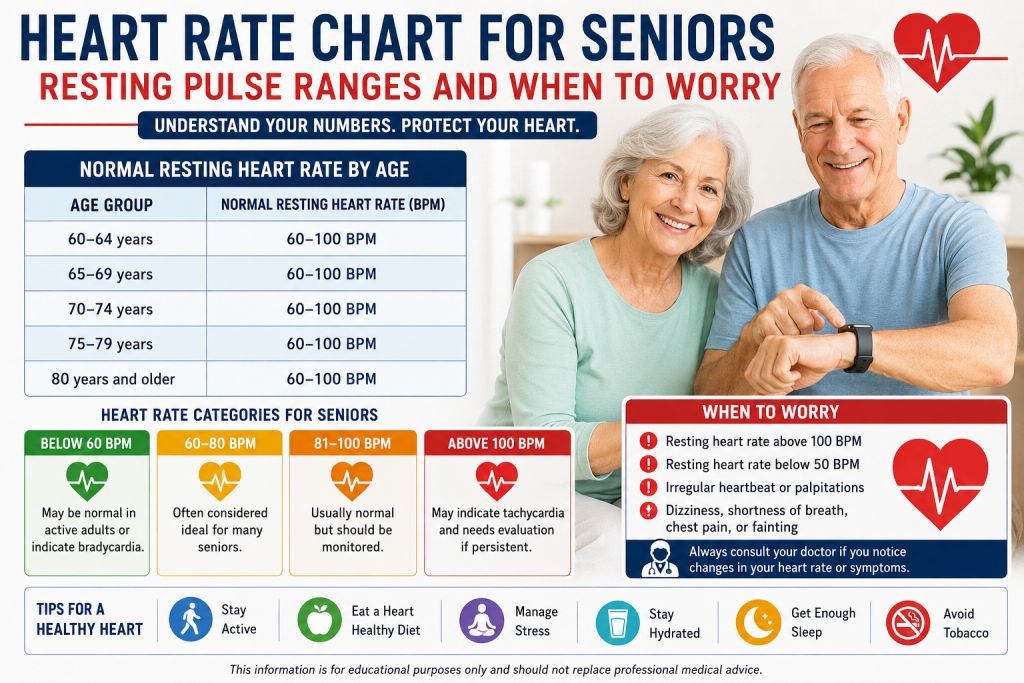
The following Heart Rate Chart for Seniors provides general resting pulse guidelines.
| Age Group | Normal Resting Heart Rate (BPM) |
|---|---|
| 60–64 years | 60–100 BPM |
| 65–69 years | 60–100 BPM |
| 70–74 years | 60–100 BPM |
| 75–79 years | 60–100 BPM |
| 80 years and older | 60–100 BPM |
Healthy Resting Heart Rate Categories for Seniors
| Resting Pulse | Interpretation |
|---|---|
| Below 60 BPM | May be normal in active adults or indicate bradycardia |
| 60–80 BPM | Often considered ideal for many seniors |
| 81–100 BPM | Usually normal but should be monitored |
| Above 100 BPM | May indicate tachycardia and needs evaluation if persistent |
It is important to remember that “normal” differs from person to person. Some healthy seniors naturally maintain resting heart rates in the low 60s, while others consistently remain in the upper 70s.
Scientific Explanation: How Aging Affects Heart Rate
Aging causes several changes within the cardiovascular system.
1. Reduced Heart Efficiency
Over time, the heart muscle can become stiffer. This may reduce the heart’s ability to respond quickly during activity.
2. Changes in Electrical Signals
The heart relies on electrical impulses to maintain rhythm. Age-related changes can sometimes disrupt these signals, increasing the risk of arrhythmias.
3. Medication Effects
Many older adults take medications that directly influence pulse rate.
Examples include:
- Beta-blockers
- Calcium channel blockers
- Thyroid medications
- Blood pressure medications
4. Reduced Physical Activity
Lower activity levels may contribute to a higher resting pulse.
5. Chronic Health Conditions
Conditions common among seniors may alter heart rate, including:
- High blood pressure
- Diabetes
- Thyroid disease
- Heart failure
- Sleep apnea
What Factors Affect the Heart Rate Chart for Seniors?
Several everyday factors can influence pulse readings.
Physical Activity
Exercise temporarily raises heart rate. Physically fit seniors often have lower resting heart rates.
Stress and Anxiety
Emotional stress stimulates adrenaline release, causing the heart to beat faster.
Caffeine
Coffee, tea, soda, and energy drinks may increase heart rate.
Dehydration
Not drinking enough fluids can make the heart work harder.
Fever or Illness
Infections commonly raise resting pulse.
Medications
Certain medications may slow or speed up the heartbeat.
Temperature
Hot weather can increase pulse because the heart must work harder to cool the body.
What Is a Good Resting Heart Rate for Seniors?
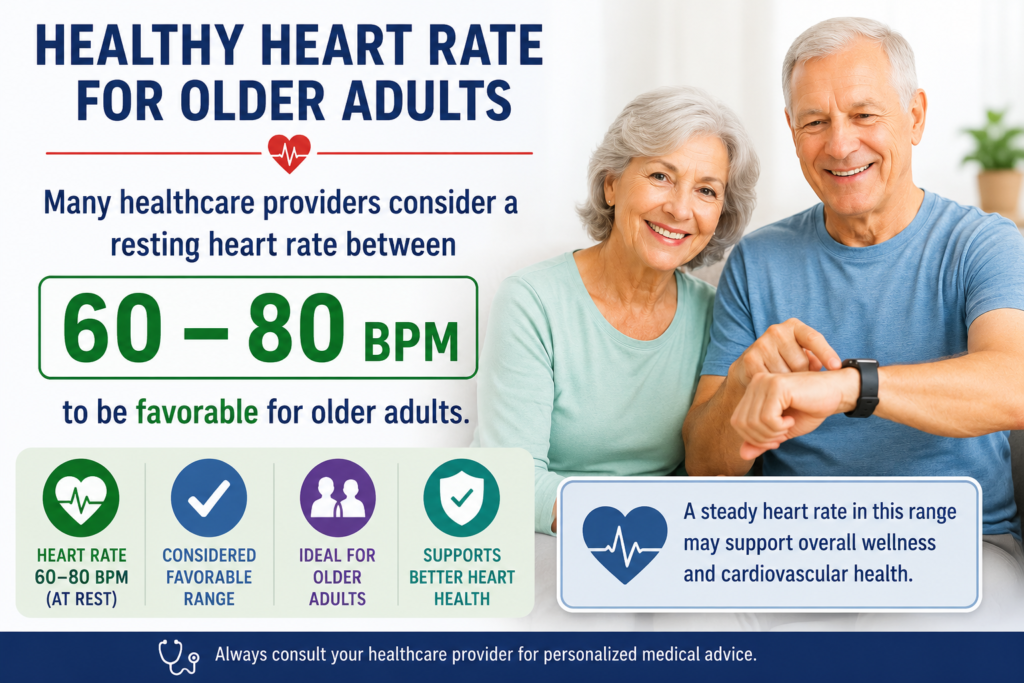
Many healthcare providers consider a resting heart rate between 60 and 80 BPM to be favorable for older adults.
However, individual health history matters.
Examples:
- A retired marathon runner may naturally have a resting pulse of 55 BPM.
- A sedentary senior may consistently have a resting pulse around 80 BPM.
Neither number automatically indicates a problem.
The most important factor is whether the rate has changed suddenly or is causing symptoms.
When Should Seniors Worry About Their Heart Rate?
Knowing when to seek medical care is critical.
Seek Immediate Medical Attention If You Experience:
- Chest pain.
- Severe shortness of breath.
- Fainting.
- Sudden confusion.
- Severe dizziness.
- Loss of consciousness.
A Senior Should Contact a Doctor If:
- Resting heart rate remains above 100 BPM.
- Resting pulse repeatedly falls below 50 BPM.
- Heartbeat feels irregular.
- Heart rate changes suddenly without explanation.
- Palpitations occur frequently.
Warning Signs That Should Never Be Ignored
Persistent Fast Heart Rate (Tachycardia)
A heart rate consistently above 100 BPM while resting may signal:
- Atrial fibrillation
- Infection
- Hyperthyroidism
- Heart disease
- Medication reactions
Persistent Slow Heart Rate (Bradycardia)
A resting pulse below 60 BPM can sometimes indicate:
- Electrical problems within the heart
- Medication side effects
- Conduction disorders
Irregular Heart Rhythm
Skipping beats, fluttering sensations, or pounding in the chest should always be discussed with a healthcare provider.
How to Check Your Pulse Correctly
Checking your pulse at home is easy.
Method 1: Wrist Pulse
- Sit quietly for five minutes.
- Place your index and middle fingers on the inside of your wrist.
- Locate the pulse below the thumb.
- Count beats for 30 seconds.
- Multiply by two.
Method 2: Neck Pulse
- Place two fingers beside your windpipe.
- Count beats for 30 seconds.
- Multiply by two.
Method 3: Wearable Devices
Many seniors use:
- Smartwatches
- Fitness trackers
- Home blood pressure monitors
While convenient, these devices should not replace medical evaluation.
Best Tips to Maintain a Healthy Heart Rate
Stay Physically Active
Regular exercise strengthens the heart.
Recommended activities include:
- Walking
- Swimming
- Cycling
- Chair exercises
- Water aerobics
The CDC recommends at least 150 minutes of moderate physical activity per week for most older adults.
Eat a Heart-Healthy Diet
Foods that support cardiovascular health include:
Fruits and Vegetables
Examples:
- Berries
- Leafy greens
- Oranges
- Tomatoes
Whole Grains
Examples:
- Oatmeal
- Brown rice
- Whole wheat bread
Healthy Proteins
Examples:
- Fish
- Beans
- Lentils
- Skinless poultry
Healthy Fats
Examples:
- Avocados
- Nuts
- Olive oil
Stay Hydrated
Even mild dehydration can increase heart rate.
Most seniors benefit from drinking fluids consistently throughout the day unless otherwise directed by their physician.
Manage Stress
Helpful stress-reduction techniques include:
- Deep breathing
- Meditation
- Prayer
- Gentle yoga
- Spending time outdoors
Get Enough Sleep
Poor sleep may negatively affect heart health.
Aim for approximately seven to eight hours of sleep nightly.
Avoid Tobacco
Smoking significantly increases cardiovascular risk.
Quitting smoking can improve heart health at any age.
Best Exercises for Improving Resting Heart Rate in Seniors
Walking
Walking remains one of the safest exercises for most seniors.
Swimming
Swimming provides cardiovascular benefits while reducing joint stress.
Tai Chi
Tai Chi may improve balance, flexibility, and heart health.
Strength Training
Light resistance exercises help maintain muscle mass and support overall health.
Always consult a healthcare provider before beginning a new exercise program.
Foods That May Support Heart Health
| Food | Potential Benefit |
|---|---|
| Salmon | Rich in omega-3 fats |
| Oats | Supports healthy cholesterol |
| Walnuts | Contains healthy fats |
| Spinach | Provides potassium and nutrients |
| Beans | High in fiber |
| Olive oil | Supports cardiovascular health |
| Blueberries | Rich in antioxidants |
Common Mistakes to Avoid
Ignoring Symptoms
Do not assume dizziness or palpitations are simply part of aging.
Checking Pulse Immediately After Activity
Wait several minutes after exercise for accurate resting measurements.
Measuring Inconsistently
Take readings at roughly the same time each day.
Stopping Medications Without Medical Advice
Never discontinue heart medications on your own.
Relying Only on Smart Devices
Wearable technology can be useful, but abnormal readings should be confirmed by a healthcare professional.
Who Should Be Careful?
Some seniors should monitor heart rate more closely.
This includes individuals with:
- Coronary artery disease
- Atrial fibrillation
- Heart failure
- High blood pressure
- Diabetes
- Thyroid disorders
- Sleep apnea
- Previous heart attack history
- Pacemakers
Caregivers should also pay close attention to changes in heart rate among older adults living independently.
Frequently Asked Questions
What is a normal pulse for a 70-year-old?
For most adults age 70, a normal resting heart rate ranges from 60 to 100 BPM. Many healthy seniors fall between 60 and 80 BPM.
Is a resting heart rate of 55 normal for seniors?
It can be normal, especially among physically active individuals. If symptoms such as dizziness or fainting occur, medical evaluation is recommended.
Is 90 BPM too high for an elderly person?
A resting heart rate of 90 BPM generally falls within the normal adult range, although persistent readings near the upper limit should be discussed with a healthcare provider.
What heart rate is considered dangerous?
Heart rates consistently above 100 BPM or below 50 BPM, particularly when accompanied by symptoms, require medical attention.
Can dehydration raise heart rate in seniors?
Yes. Dehydration can cause the heart to beat faster because the body has less circulating fluid.
Should seniors monitor heart rate daily?
Daily monitoring may be beneficial for seniors with heart disease, arrhythmias, or those taking medications that affect pulse.
Can anxiety increase pulse rate?
Yes. Stress and anxiety can temporarily raise heart rate through the release of stress hormones.
Disclaimer
This article is intended for educational purposes only and should not replace professional medical advice, diagnosis, or treatment. Always consult your physician or qualified healthcare provider regarding concerns about your heart rate or overall health.
Trusted External Resources
- American Heart Association: https://www.heart.org
- Centers for Disease Control and Prevention: https://www.cdc.gov
- National Institute on Aging: https://www.nia.nih.gov
Final Thoughts
Monitoring your pulse is a simple habit that can provide meaningful insight into your health. This Heart Rate Chart for Seniors offers a useful reference for understanding normal resting pulse ranges, but numbers alone never tell the whole story.
Pay attention to patterns rather than isolated readings. If your heart rate changes suddenly, feels irregular, or causes symptoms such as dizziness, chest pain, or shortness of breath, contact a healthcare professional promptly.
Staying active, eating nutritious foods, managing stress, and keeping regular medical appointments can go a long way toward maintaining heart health well into your senior years.
Also Read –
Figs: 21 Powerful Health Benefits for Seniors and Adults
How to Hydrate Fast: 11 Safe, Effective Ways Backed by Experts
Blood Sugar Chart for Seniors: 2026 Complete Guide With Normal Ranges
Written by
Kanhaiya Solanki is a dedicated online researcher, content writer, and blogger passionate about publishing high-quality, research-based articles. His goal is to provide accurate, easy-to-understand, and practical information on health, technology, senior care, and lifestyle topics for readers worldwide.