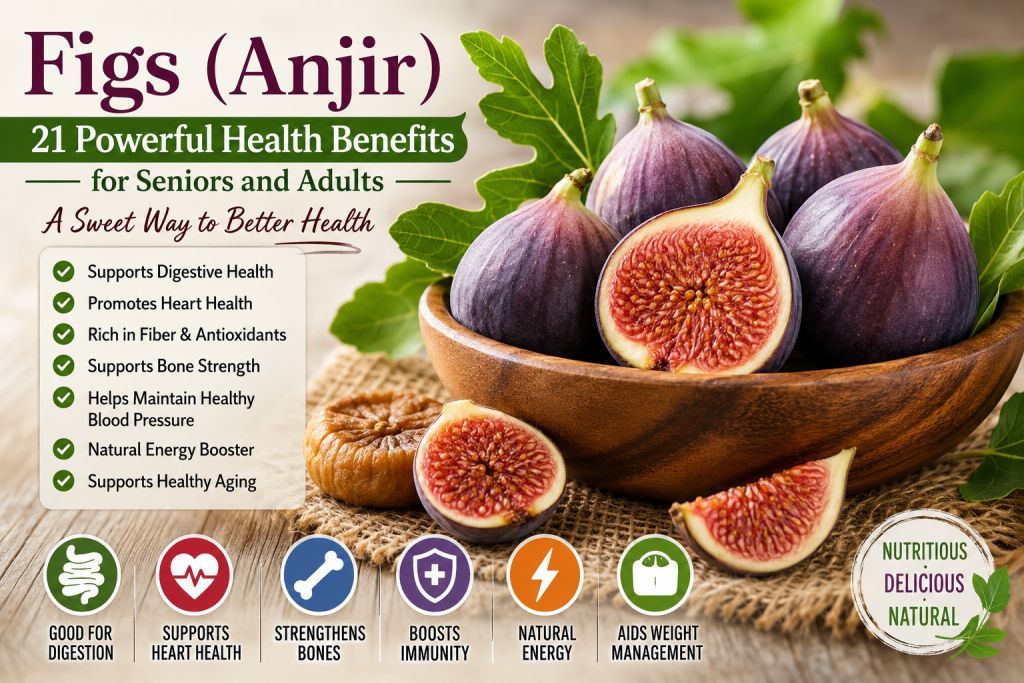
Figs, commonly known as Anjir in many parts of the world, have been enjoyed for thousands of years. These naturally sweet fruits are prized not only for their delicious taste but also for their impressive nutritional profile. Whether eaten fresh or dried, figs can be a healthy addition to a balanced diet.
In the United States, interest in natural foods that support healthy aging continues to grow. Many adults over 40 are looking for nutrient-dense foods that may support heart health, digestion, bone strength, and overall wellness. Figs (Anjir) fit perfectly into this lifestyle.
From breakfast bowls and salads to healthy snacks, figs are versatile, easy to include in everyday meals, and packed with essential vitamins, minerals, and antioxidants.
Disclaimer: This article is for educational purposes only and should not replace professional medical advice. Always consult your healthcare provider regarding specific dietary concerns or medical conditions.
What Are Figs?
Figs are the edible fruit of the fig tree, scientifically known as Ficus carica. They are native to the Mediterranean and Middle Eastern regions but are now grown in many parts of the world, including the United States.
Fresh figs have soft flesh, tiny edible seeds, and a mildly sweet flavor. Dried figs are more concentrated in nutrients and sweetness.
Popular varieties include:
- Black Mission figs
- Brown Turkey figs
- Kadota figs
- Calimyrna figs
- Adriatic figs
Why This Topic Matters
As Americans age, nutritional needs change. Adults and seniors often need more fiber, calcium, potassium, and antioxidant-rich foods.
Figs (Anjir) matter because they offer:
- Natural dietary fiber.
- Essential minerals for bone health.
- Plant compounds that may help combat oxidative stress.
- A naturally sweet alternative to processed desserts.
Many people struggle to consume enough fruits daily. Adding figs to meals can help increase nutrient intake without complicated meal planning.
Nutrition Facts of Figs
Nutrition in One Medium Fresh Fig
| Nutrient | Amount |
|---|---|
| Calories | 37 |
| Carbohydrates | 10 g |
| Fiber | 1.4 g |
| Protein | 0.4 g |
| Fat | 0.2 g |
| Calcium | 18 mg |
| Potassium | 116 mg |
| Magnesium | 8 mg |
Nutrition in 2 Dried Figs
| Nutrient | Amount |
|---|---|
| Calories | 42 |
| Carbohydrates | 11 g |
| Fiber | 1.9 g |
| Calcium | 65 mg |
| Potassium | 136 mg |
| Iron | 0.3 mg |
According to the United States Department of Agriculture, figs provide several important nutrients while remaining naturally fat-free. USDA FoodData Central
21 Health Benefits of Figs
1. Figs Support Digestive Health
Figs are rich in dietary fiber, which promotes regular bowel movements and supports healthy digestion.
Many adults find that adding a few figs to breakfast helps maintain digestive regularity.
2. Figs May Help Prevent Constipation
Constipation becomes more common with age. The fiber in figs adds bulk to stool and may help improve bowel movement frequency.
3. Figs Promote Heart Health
Figs contain potassium, a mineral important for maintaining healthy blood pressure levels.
Diets rich in fruits and vegetables are associated with better cardiovascular health.
4. Figs (Anjir) Contain Powerful Antioxidants
Antioxidants help protect cells from damage caused by free radicals.
Fresh and dried figs contain:
- Polyphenols
- Flavonoids
- Carotenoids
These compounds may contribute to overall wellness.
5. Figs Support Healthy Aging
Oxidative stress increases with age. Antioxidant-rich foods like figs may help support healthy aging when included in an overall balanced diet.
6. Figs Can Support Bone Health
Figs provide calcium, magnesium, and phosphorus, all essential nutrients for maintaining strong bones.
This is especially important for adults over age 50.
7. Figs Provide Natural Energy
Because figs contain natural sugars and carbohydrates, they can provide a quick source of energy.
Many active adults enjoy figs before walking, hiking, or exercising.
8. Figs May Help Maintain Healthy Blood Pressure
Potassium helps balance sodium intake in the body.
A diet containing potassium-rich foods, including figs, may support healthy blood pressure levels.
9. Figs Can Help Increase Fiber Intake
Americans generally consume less fiber than recommended.
Adding figs to snacks or meals is an easy way to increase daily fiber intake.
10. Figs Support Gut Health
Dietary fiber acts as fuel for beneficial gut bacteria.
A healthy gut microbiome supports digestion and overall wellness.
11. Figs Are Naturally Fat-Free
For individuals seeking nutrient-dense foods without excess fat, figs are an excellent option.
12. Figs May Help Reduce Cravings for Sweets
Their natural sweetness can satisfy dessert cravings while providing nutrients.
Instead of cookies or candy, many people enjoy dried figs as a healthier alternative.
13. Figs Contain Important Minerals
Figs provide:
- Calcium
- Potassium
- Magnesium
- Copper
- Iron
These minerals play numerous roles in maintaining health.
14. Figs Can Be Part of a Weight Management Plan
Because figs contain fiber, they may help promote feelings of fullness.
Portion control remains important, especially with dried figs.
15. Figs Support Immune Function
Nutrients found in figs contribute to overall immune system health.
16. Figs Provide Plant-Based Nutrients
People following vegetarian or plant-focused diets can benefit from the minerals and fiber found in figs.
17. Figs Are Easy to Add to Meals
Convenience matters.
Figs require minimal preparation and pair well with many foods.
18. Figs May Support Healthy Cholesterol Levels
Some research suggests that soluble fiber found in fruits may help support healthy cholesterol levels when combined with a heart-healthy diet.
19. Figs Can Improve Dietary Variety
Eating a variety of fruits helps ensure a broad intake of nutrients.
Adding figs expands healthy eating choices.
20. Figs Offer a Naturally Sweet Snack
Unlike many packaged snacks, figs contain no added sugar when consumed in their natural form.
21. Figs Contribute to Overall Wellness
No single food creates perfect health. However, including nutrient-rich foods such as figs in a balanced eating pattern can contribute to long-term wellness.
How Do Figs Work in the Body?
Fiber
Fiber:
- Supports digestion.
- Helps maintain bowel regularity.
- Promotes satiety.
Potassium
Potassium:
- Helps regulate fluid balance.
- Supports muscle function.
- Plays a role in blood pressure regulation.
Antioxidants
Antioxidants:
- Protect cells from oxidative damage.
- Support healthy aging.
- Promote overall wellness.
Research from organizations such as the Mayo Clinic emphasizes the importance of consuming fruits rich in fiber and antioxidants. Mayo Clinic Nutrition Information
Best Ways to Eat Figs
Fresh Figs
Fresh figs taste delicious:
- On their own.
- Sliced into salads.
- Added to oatmeal.
- Mixed into yogurt.
Dried Figs
Dried figs are convenient and shelf-stable.
Use them:
- As snacks.
- In trail mix.
- In baked goods.
- Chopped into cereal.
Fig Smoothie Recipe
Ingredients
- 3 fresh figs
- 1 banana
- 1 cup milk or almond milk
- ½ teaspoon cinnamon
- Ice cubes
Blend until smooth.
Healthy Breakfast Ideas Using Figs
| Breakfast | How to Add Figs |
|---|---|
| Oatmeal | Slice fresh figs on top |
| Yogurt bowl | Mix chopped dried figs |
| Whole-grain toast | Add figs with nut butter |
| Smoothie | Blend fresh figs |
Best Tips for Eating Figs
Choose Fresh Figs Carefully
Look for figs that are:
- Slightly soft.
- Fragrant.
- Free from bruises.
Store Properly
Fresh figs spoil quickly.
Store them in the refrigerator and consume within a few days.
Practice Portion Control
Because dried figs are concentrated sources of calories and natural sugar, moderation is important.
Recommended serving:
- Fresh figs: 2–3 medium fruits.
- Dried figs: 2–4 pieces.
Pair Figs with Protein
Combining figs with protein-rich foods can improve satiety.
Examples:
- Greek yogurt and figs.
- Cottage cheese and figs.
- Nuts and figs.
Common Mistakes to Avoid
Eating Too Many Dried Figs
Large amounts may cause digestive discomfort due to high fiber intake.
Ignoring Portion Sizes
Dried figs are nutritious but calorie-dense.
Replacing Entire Meals with Figs
Figs should complement a balanced diet, not replace complete meals.
Increasing Fiber Too Quickly
Gradually increase fiber intake and drink adequate water.
Assuming Figs Cure Diseases
Figs support health, but they are not a cure or treatment for medical conditions.
Who Should Be Careful?
Certain individuals should exercise caution when consuming figs (Anjir).
People with Diabetes
Figs contain natural sugars.
People with diabetes should monitor portion sizes and consult healthcare professionals regarding dietary adjustments.
Individuals with Allergies
Rarely, some individuals may experience allergic reactions to figs.
People Taking Certain Medications
Because figs contain vitamin K and other bioactive compounds, individuals taking medications should discuss dietary changes with healthcare providers.
Individuals with Digestive Sensitivities
Excessive consumption may cause:
- Bloating
- Gas
- Loose stools
Frequently Asked Questions About Figs
Are figs (Anjir) healthy?
Yes. Figs provide fiber, vitamins, minerals, and antioxidants that can support overall health when consumed as part of a balanced diet.
Is it better to eat fresh or dried figs?
Both offer nutritional benefits. Fresh figs are lower in calories, while dried figs provide concentrated nutrients.
How many figs should I eat per day?
Most adults can enjoy 2–3 fresh figs or 2–4 dried figs daily as part of a healthy diet.
Can seniors eat figs every day?
Many seniors can safely enjoy figs daily in moderate amounts. Those with medical conditions should consult healthcare providers.
Are figs good for constipation?
The fiber content in figs may help support regular bowel movements and digestive health.
Can people with diabetes eat figs?
Yes, in moderation. Portion control is important because figs contain natural sugars.
Do figs contain calcium?
Yes. Figs provide calcium, especially dried figs, which can contribute to overall bone health.
Final Thoughts
Figs (Anjir) are among nature’s most nutritious fruits. They offer fiber, minerals, antioxidants, and natural sweetness in one convenient package.
Whether you prefer fresh figs in summer or dried figs year-round, adding them to a balanced eating plan can support healthy aging and overall wellness.
The key is moderation. Pair figs with other wholesome foods, maintain variety in your diet, and focus on long-term healthy habits rather than quick fixes.
For many American adults and seniors, figs (Anjir) can be a delicious and practical addition to everyday nutrition.
Sources and References
- USDA FoodData Central Database
- Mayo Clinic Healthy Nutrition Guide
- Harvard T.H. Chan School of Public Health Nutrition Source
- National Institute on Aging Healthy Eating Information
Also Read –
How to Hydrate Fast: 11 Safe, Effective Ways Backed by Experts
How to Stay Mentally Active After Retirement? 19 Proven Ways
Is Forgetfulness Normal After 60?
Written by
Kanhaiya Solanki is a dedicated online researcher, content writer, and blogger passionate about publishing high-quality, research-based articles. His goal is to provide accurate, easy-to-understand, and practical information on health, technology, senior care, and lifestyle topics for readers worldwide.