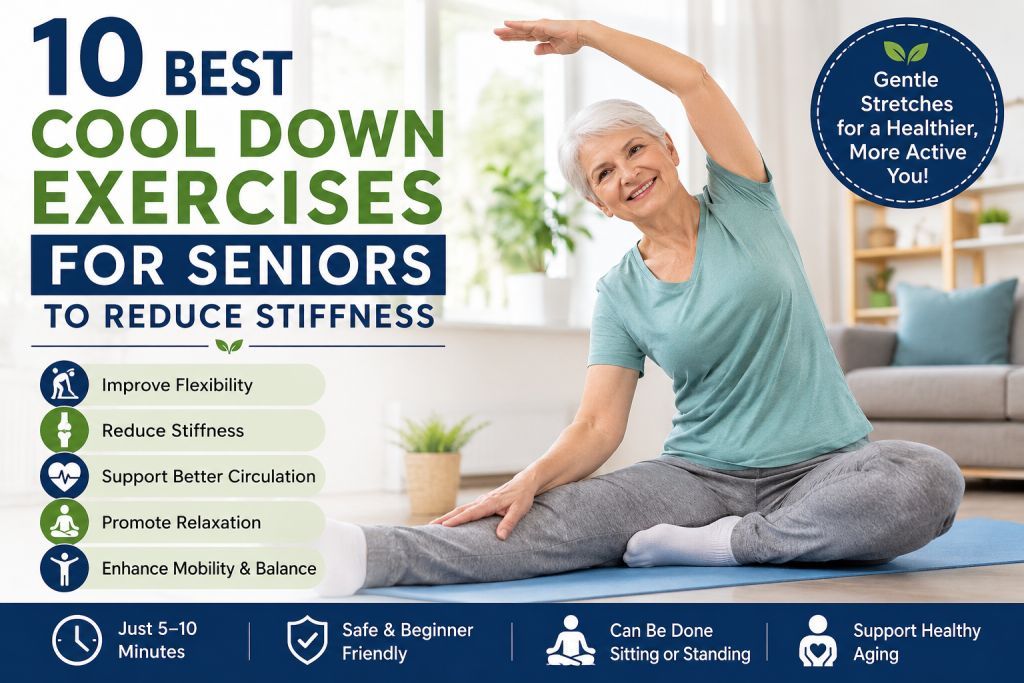
The 10 best cool down exercises for seniors to reduce stiffness, improve flexibility, and support healthy aging safely.
10 Best Cool Down Exercises for Seniors to Reduce Stiffness Naturally
A good workout doesn’t end when the walking, stretching, or strength training stops. For older adults, what happens after exercise can be just as important as the workout itself. The 10 best cool down exercises for seniors to reduce stiffness can help maintain flexibility, ease muscle tension, and support healthy mobility as you age.
Many seniors experience stiffness after exercise or even after routine daily activities. Simple cool down exercises can make a significant difference. They encourage better circulation, reduce muscle tightness, and help the body transition safely back to a resting state.
Whether you enjoy morning walks, chair exercises, swimming, gardening, or fitness classes, adding a few minutes of cool down movements may help you stay comfortable and active for years to come.
Why This Topic Matters
Aging naturally brings changes to muscles, joints, and connective tissues. Muscles may lose elasticity, joints can become stiffer, and recovery often takes longer than it did in younger years.
According to organizations such as the Centers for Disease Control and Prevention (CDC) and the National Institute on Aging, regular physical activity supports healthy aging. However, recovery is equally important.
Without proper cool down exercises, some seniors may notice:
- Increased muscle soreness
- Joint stiffness
- Reduced flexibility
- Dizziness after exercise
- Longer recovery times
Fortunately, a short cool down routine lasting just 5 to 10 minutes can help address many of these issues.
For additional physical activity guidelines, visit the CDC: https://www.cdc.gov/physicalactivity
Learn more about healthy aging at the National Institute on Aging: https://www.nia.nih.gov/health/exercise-and-physical-activity
What Are Cool Down Exercises?
Cool down exercises are gentle movements and stretches performed after physical activity. They gradually slow the heart rate while helping muscles relax.
A cool down typically includes:
- Slow walking
- Gentle stretching
- Deep breathing
- Range-of-motion exercises
The goal is not to increase fitness intensity. Instead, the goal is to help the body recover safely.
Benefits of the 10 Best Cool Down Exercises for Seniors to Reduce Stiffness
Adding cool down exercises to your routine offers numerous benefits.
1. Helps Reduce Muscle Stiffness
Gentle stretching keeps muscles from tightening excessively after exercise.
2. Improves Flexibility
Regular cool downs can help maintain joint mobility and range of motion.
3. Encourages Better Circulation
Gradually slowing movement supports healthy blood flow throughout the body.
4. May Reduce Muscle Soreness
Although soreness can still occur, stretching may lessen post-exercise discomfort.
5. Supports Balance and Mobility
Flexible muscles often contribute to better movement and stability.
6. Helps Prevent Dizziness
Stopping intense activity abruptly can cause lightheadedness. Cooling down allows the cardiovascular system to adjust gradually.
7. Promotes Relaxation
Deep breathing and gentle movements can reduce stress and promote calmness.
Scientific and Practical Explanation: Why Seniors Feel Stiff
As people age:
- Muscle mass naturally decreases.
- Connective tissues become less elastic.
- Cartilage may wear down over time.
- Joint lubrication decreases.
- Recovery after exercise slows.
Exercise itself creates temporary muscle stress. Without proper recovery, muscles may remain tight.
Cool down exercises encourage:
| Body Function | Benefit |
|---|---|
| Blood circulation | Delivers oxygen to recovering muscles |
| Muscle relaxation | Reduces tension |
| Joint mobility | Maintains flexibility |
| Nervous system recovery | Helps the body return to resting state |
| Heart rate normalization | Supports safe recovery |
10 Best Cool Down Exercises for Seniors to Reduce Stiffness
The following exercises are gentle, beginner-friendly, and appropriate for many older adults.
Always move slowly and stop if pain occurs.
1. Slow Walking
Walking slowly for several minutes is one of the easiest cool down exercises.
How to Do It
- Reduce your pace after exercise.
- Walk comfortably for 3 to 5 minutes.
- Focus on smooth, steady breathing.
Benefits
- Gradually lowers heart rate.
- Prevents dizziness.
- Improves circulation.
Best For
- Walking workouts
- Cardio sessions
- Swimming recovery
2. Neck Stretch
Many seniors carry tension in the neck and shoulders.
How to Do It
- Sit or stand comfortably.
- Slowly tilt your head toward one shoulder.
- Hold for 15 to 20 seconds.
- Repeat on the opposite side.
Benefits
- Reduces neck tension.
- Improves mobility.
- Relieves upper-body stiffness.
Safety Tip
Never force the stretch or roll your neck in large circles.
3. Shoulder Rolls
Shoulder rolls help loosen tight upper-body muscles.
Instructions
- Sit upright.
- Roll shoulders backward slowly 10 times.
- Roll shoulders forward 10 times.
Benefits
- Improves shoulder mobility.
- Releases tension.
- Enhances posture.
4. Seated Hamstring Stretch
Tight hamstrings can contribute to lower back discomfort.
How to Perform
- Sit near the edge of a sturdy chair.
- Extend one leg forward.
- Keep the back straight.
- Lean slightly forward from the hips.
- Hold for 20 seconds.
Repeat on both legs.
Benefits
- Improves leg flexibility.
- Reduces lower-body stiffness.
- Supports walking mobility.
5. Standing Calf Stretch
Calf muscles often tighten after walking.
Steps
- Stand facing a wall.
- Place hands on the wall.
- Step one foot backward.
- Keep the heel on the floor.
- Hold for 20 to 30 seconds.
Switch legs.
Benefits
- Improves ankle flexibility.
- Reduces calf tightness.
- Supports balance.
6. Seated Spinal Twist
Gentle spinal movements can reduce back stiffness.
Instructions
- Sit tall in a chair.
- Slowly turn your upper body to one side.
- Hold for 15 seconds.
- Return to center.
- Repeat on the opposite side.
Benefits
- Improves spinal mobility.
- Relieves back tightness.
- Encourages better posture.
7. Chest Opener Stretch
Many older adults develop rounded shoulders.
How to Do It
- Sit or stand tall.
- Clasp hands behind your back if comfortable.
- Gently lift the chest.
- Hold for 20 seconds.
Benefits
- Opens the chest muscles.
- Improves posture.
- Counteracts sitting-related stiffness.
8. Ankle Circles
Healthy ankle mobility is essential for balance and fall prevention.
Instructions
- Sit comfortably.
- Lift one foot slightly.
- Rotate the ankle in circles 10 times.
- Reverse direction.
- Repeat on the opposite foot.
Benefits
- Improves ankle flexibility.
- Promotes circulation.
- Supports walking stability.
9. Gentle Side Stretch
Side stretches loosen muscles along the torso.
Steps
- Sit or stand upright.
- Raise one arm overhead.
- Lean gently to the opposite side.
- Hold for 15 to 20 seconds.
Repeat on both sides.
Benefits
- Improves flexibility.
- Relieves side-body tension.
- Enhances mobility.
10. Deep Breathing With Arm Raises
Breathing exercises can be an excellent final step in any cool down.
Instructions
- Sit comfortably.
- Slowly raise both arms while inhaling.
- Lower arms while exhaling.
- Repeat 5 to 10 times.
Benefits
- Encourages relaxation.
- Helps normalize breathing.
- Reduces stress.
Sample 10-Minute Senior Cool Down Routine
| Exercise | Time |
|---|---|
| Slow walking | 3 minutes |
| Neck stretch | 1 minute |
| Shoulder rolls | 1 minute |
| Hamstring stretch | 1 minute |
| Calf stretch | 1 minute |
| Spinal twist | 1 minute |
| Chest opener | 30 seconds |
| Ankle circles | 30 seconds |
| Side stretch | 30 seconds |
| Deep breathing | 1 minute |
What Is the Best Time to Perform Cool Down Exercises?
The best time is immediately after physical activity.
Examples include:
- After walking
- After strength training
- Following swimming sessions
- After chair exercise classes
- Following yoga sessions
Consistency matters more than duration.
Even five minutes can provide benefits.
Best Tips for Getting the Most From Cool Down Exercises
Move Slowly
Never rush through stretches.
Avoid Bouncing
Gentle, steady stretching is safer.
Breathe Normally
Avoid holding your breath.
Stay Hydrated
Drink water after exercise.
Stretch Both Sides Equally
Balance helps maintain symmetry and mobility.
Wear Comfortable Clothing
Loose-fitting clothes make movement easier.
Listen to Your Body
Mild tension is normal. Sharp pain is not.
Foods That Support Recovery and Flexibility
While no food can eliminate stiffness completely, a balanced diet supports muscle recovery.
Consider Including:
- Fatty fish like salmon
- Berries
- Leafy greens
- Nuts and seeds
- Beans
- Greek yogurt
- Eggs
- Whole grains
- Olive oil
- Plenty of water
These foods provide nutrients important for muscle and joint health.
Common Mistakes to Avoid
Many seniors unintentionally skip important recovery steps.
Avoid These Mistakes:
- Stopping exercise abruptly.
- Holding stretches too long.
- Stretching to the point of pain.
- Forgetting to breathe.
- Skipping cool downs altogether.
- Performing rapid bouncing movements.
- Ignoring dizziness or discomfort.
- Using poor posture during stretches.
Who Should Be Careful?
Some individuals should consult a healthcare professional before beginning new exercise routines.
This includes people with:
- Recent surgery
- Severe arthritis
- Osteoporosis
- Chronic balance problems
- Recent fractures
- Heart disease
- Uncontrolled high blood pressure
- Persistent pain
A physical therapist or healthcare provider can recommend personalized modifications.
Frequently Asked Questions
1. How long should seniors cool down after exercise?
Most seniors benefit from 5 to 10 minutes of cool down exercises after physical activity.
2. Can cool down exercises reduce stiffness?
Yes. Regular cool down exercises may help reduce muscle tightness and improve flexibility over time.
3. Should seniors stretch every day?
Many older adults can safely perform gentle stretching daily, but individual needs vary.
4. Is walking considered a cool down exercise?
Yes. Slow walking is one of the best cool down exercises for seniors because it gradually lowers heart rate.
5. What if stretching causes pain?
Stop immediately and consult a healthcare professional if pain persists.
6. Are chair-based cool down exercises effective?
Absolutely. Chair stretches can provide many of the same flexibility benefits while offering extra support.
7. Can cool down exercises help with balance?
Regular stretching and mobility exercises may support balance by maintaining flexibility and movement.
Disclaimer
This article is for educational purposes only and does not replace professional medical advice, diagnosis, or treatment. Always consult your healthcare provider before beginning a new exercise program, especially if you have existing medical conditions or mobility limitations.
Final Thoughts
The 10 best cool down exercises for seniors to reduce stiffness are simple, practical tools that can make everyday movement easier and more comfortable. A few minutes spent cooling down after exercise can help improve flexibility, support mobility, and encourage healthier aging.
The key is consistency rather than perfection. Whether you prefer walking, chair exercises, or strength training, finishing with gentle stretches and deep breathing can help your body recover more comfortably.
Start with just a few exercises, listen to your body, and gradually build a cool down routine that fits your lifestyle.
Also Read –
Heart Rate Chart for Seniors: 7 Normal Resting Pulse Ranges and Warning Signs