As we get older, keeping track of blood sugar becomes increasingly important. Whether you have diabetes, prediabetes, or simply want to stay healthy, understanding a blood sugar chart for seniors can help you make informed decisions about your daily habits.
Many older adults notice changes in energy levels, appetite, or overall health as they age. Sometimes, these changes are linked to fluctuations in blood glucose levels. Monitoring blood sugar regularly can help identify potential problems early and reduce the risk of serious complications.
This guide explains normal blood sugar ranges for seniors, how aging affects glucose levels, practical management tips, foods to eat, common mistakes to avoid, and answers to frequently asked questions.
Why Does a Blood Sugar Chart for Seniors Matter?
Blood sugar, also called blood glucose, is the body’s main source of energy. However, blood sugar levels that remain too high or too low can create health problems.
For seniors, proper blood sugar management is especially important because aging naturally affects:
- Insulin sensitivity
- Kidney function
- Physical activity levels
- Medication use
- Appetite and digestion
Maintaining healthy glucose levels may help reduce the risk of:
- Heart disease
- Stroke
- Vision loss
- Kidney disease
- Nerve damage
- Falls related to dizziness or low blood sugar
According to the American Diabetes Association, older adults should work closely with healthcare providers to determine individualized blood sugar goals.
For additional information, visit the official resources from the American Diabetes Association: American Diabetes Association
You can also review diabetes information from the U.S. Centers for Disease Control and Prevention: CDC Diabetes Resources
Blood Sugar Chart for Seniors
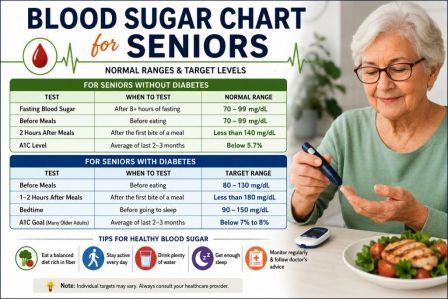
The following blood sugar chart provides general target ranges for most older adults.
Important: Individual goals may vary depending on overall health, medications, and medical history.
Normal Blood Sugar Chart for Seniors
| Blood Sugar Test | Normal Range for Seniors Without Diabetes |
|---|---|
| Fasting Blood Sugar | 70–99 mg/dL |
| Before Meals | 70–99 mg/dL |
| Two Hours After Meals | Less than 140 mg/dL |
| A1C Level | Below 5.7% |
Blood Sugar Targets for Seniors With Diabetes
| Time of Testing | Typical Target Range |
|---|---|
| Before Meals | 80–130 mg/dL |
| 1–2 Hours After Meals | Less than 180 mg/dL |
| Bedtime | 90–150 mg/dL |
| A1C Goal (Many Older Adults) | Below 7% to 8% |
Healthcare professionals may recommend slightly different targets for frail seniors or those with multiple chronic conditions.
What Is Considered High Blood Sugar in Seniors?
Blood sugar may be considered high if:
- Fasting blood sugar is consistently above 126 mg/dL.
- Random blood sugar readings exceed 200 mg/dL.
- Post-meal readings regularly exceed 180 mg/dL.
- A1C levels are 6.5% or higher.
Persistently high blood sugar can increase the risk of complications over time.
Common Symptoms of High Blood Sugar
- Increased thirst
- Frequent urination
- Fatigue
- Blurred vision
- Slow-healing wounds
- Increased hunger
- Dry mouth
- Unexplained weight loss
What Is Low Blood Sugar in Seniors?
Low blood sugar, also called hypoglycemia, usually occurs when blood glucose drops below 70 mg/dL.
Older adults may be more vulnerable because of medications, skipped meals, or reduced appetite.
Symptoms of Low Blood Sugar
- Shakiness
- Sweating
- Confusion
- Weakness
- Irrability
- Dizziness
- Rapid heartbeat
- Difficulty concentrating
Severe hypoglycemia can increase the risk of falls and injuries.
How Does Aging Affect Blood Sugar Levels?
Aging can influence blood sugar in several ways.
Reduced Insulin Sensitivity
The body’s cells may become less responsive to insulin over time. As a result, glucose stays in the bloodstream longer.
Less Physical Activity
Many seniors become less active due to arthritis, mobility limitations, or lifestyle changes. Reduced activity may increase blood sugar levels.
Medication Interactions
Certain medications, including steroids and some blood pressure drugs, can affect blood glucose.
Changes in Diet
Appetite changes, dental issues, or digestive problems may alter eating patterns and impact glucose control.
Understanding A1C Levels in Seniors
The A1C test measures average blood sugar over the previous two to three months.
A1C Chart for Seniors
| A1C Level | Meaning |
|---|---|
| Below 5.7% | Normal |
| 5.7%–6.4% | Prediabetes |
| 6.5% or higher | Diabetes |
For healthy older adults, many healthcare providers aim for an A1C below 7%.
However, seniors with multiple medical conditions may have less strict goals to avoid dangerous episodes of low blood sugar.
What Are the Best Times for Seniors to Check Blood Sugar?
Monitoring schedules vary, but common testing times include:
- First thing in the morning (fasting)
- Before meals
- Two hours after meals
- Before bedtime
- When symptoms occur
People taking insulin may need more frequent testing.
Best Foods to Support Healthy Blood Sugar in Seniors
Diet plays a major role in blood sugar control.
High-Fiber Foods
Fiber slows sugar absorption.
Examples include:
- Oatmeal
- Beans
- Lentils
- Whole grains
- Vegetables
- Berries
Lean Protein Sources
Protein helps maintain stable blood sugar.
Good choices include:
- Fish
- Chicken breast
- Turkey
- Eggs
- Greek yogurt
- Tofu
Healthy Fats
Healthy fats may improve satiety.
Examples:
- Avocados
- Nuts
- Seeds
- Olive oil
Non-Starchy Vegetables
Fill half your plate with:
- Broccoli
- Spinach
- Green beans
- Cauliflower
- Cucumber
- Bell peppers
Foods Seniors Should Limit
Some foods can cause blood sugar spikes.
Try limiting:
- Sugary beverages
- Candy
- White bread
- Pastries
- Sweetened cereals
- Processed snacks
- Excess fruit juice
Moderation is key. Completely eliminating favorite foods is not always necessary.
Practical Meal Tips for Seniors
Here are some realistic strategies:
Eat Consistently
Skipping meals can lead to unstable blood sugar levels.
Watch Portion Sizes
Using smaller plates may help prevent overeating.
Stay Hydrated
Dehydration can affect glucose readings.
Include Protein With Every Meal
For example:
Breakfast:
- Eggs with whole-grain toast
Lunch:
- Turkey sandwich with vegetables
Dinner:
- Grilled salmon with steamed broccoli
Best Exercises for Blood Sugar Control in Seniors
Regular physical activity can improve insulin sensitivity.
Walking
A daily 20- to 30-minute walk may help lower blood sugar.
Strength Training
Light resistance exercises can preserve muscle mass.
Examples include:
- Resistance bands
- Light dumbbells
- Chair exercises
Swimming
Swimming is gentle on joints and supports cardiovascular health.
Stretching and Balance Exercises
Activities such as yoga or tai chi may improve flexibility and reduce fall risk.
Before beginning a new exercise routine, consult a healthcare provider.
Scientific Explanation: Why Exercise Lowers Blood Sugar
Muscles use glucose for energy.
When you exercise:
- Muscles absorb glucose from the bloodstream.
- Insulin sensitivity improves.
- Blood sugar levels often decrease.
- Weight management becomes easier.
Even short periods of movement after meals can be beneficial.
Common Mistakes Seniors Should Avoid
Ignoring Symptoms
Fatigue or confusion should not automatically be blamed on aging.
Skipping Meals
This can trigger low blood sugar, especially in people taking diabetes medications.
Not Drinking Enough Water
Dehydration may elevate blood sugar readings.
Taking Medication Incorrectly
Always follow prescription instructions.
Avoiding Physical Activity Completely
Even gentle movement can provide benefits.
Relying Solely on Home Readings
Routine medical checkups remain essential.
Who Should Be Especially Careful?
Some seniors require closer monitoring.
These groups include:
- Adults diagnosed with diabetes
- Individuals with prediabetes
- Seniors taking insulin
- People with kidney disease
- Adults with heart disease
- Seniors with a history of hypoglycemia
- Individuals using multiple medications
When Should Seniors Contact a Healthcare Provider?
Seek medical advice if you experience:
- Blood sugar consistently above target range
- Frequent low blood sugar episodes
- Sudden vision changes
- Unexplained weight loss
- Persistent fatigue
- Repeated dizziness or falls
Emergency care may be needed for severe symptoms such as confusion, unconsciousness, or difficulty breathing.
Frequently Asked Questions About Blood Sugar Chart for Seniors
What is a normal fasting blood sugar for seniors?
For most seniors without diabetes, normal fasting blood sugar ranges from 70 to 99 mg/dL.
What should blood sugar be two hours after eating?
Generally, blood sugar should remain below 140 mg/dL in adults without diabetes and below 180 mg/dL in many adults with diabetes.
Is 150 blood sugar normal for seniors?
It depends on when the reading is taken. A reading of 150 mg/dL after a meal may be acceptable for some people with diabetes, but fasting levels of 150 mg/dL are typically considered elevated.
How often should seniors check blood sugar?
Testing frequency depends on individual health conditions and medications. Some seniors may check once daily, while others may require multiple checks each day.
Can seniors reverse prediabetes?
Lifestyle changes such as healthy eating, regular exercise, and weight management may help many individuals return blood sugar levels to a healthier range.
Why do blood sugar goals differ for older adults?
Older adults often have different health considerations, including medication use and fall risk. Healthcare providers may individualize targets to improve safety.
Final Thoughts
Understanding a blood sugar chart for seniors is an important part of healthy aging. Regular monitoring, nutritious eating, physical activity, and routine healthcare visits can make a significant difference in maintaining overall wellness.
Every senior is unique. Blood sugar targets should always be personalized based on age, medical conditions, medications, and lifestyle factors. If you have concerns about your glucose levels, discuss them with your healthcare provider.
Disclaimer: This article is intended for educational purposes only and should not replace professional medical advice, diagnosis, or treatment. Always consult a qualified healthcare professional regarding personal health concerns.
Sources and References
For credibility, E-E-A-T, and better SEO performance, you can include the following authoritative sources in your article:
- American Diabetes Association (ADA) – Diabetes Diagnosis & Tests
American Diabetes Association: Diabetes Diagnosis & Tests - American Diabetes Association – Older Adults Standards of Care
American Diabetes Association: Older Adults Living With Diabetes - Centers for Disease Control and Prevention (CDC) – Diabetes Basics
CDC Diabetes Basics - Centers for Disease Control and Prevention – A1C Test
CDC A1C Test Information - National Institute on Aging – Diabetes in Older People
National Institute on Aging: Diabetes in Older People - National Institute of Diabetes and Digestive and Kidney Diseases (NIDDK)
NIDDK Diabetes Overview - Mayo Clinic – Blood Sugar Testing
Mayo Clinic Blood Sugar Testing Guide - MedlinePlus – Blood Glucose Test
MedlinePlus Blood Glucose Test Information - National Library of Medicine – Diabetes in Older Adults
National Library of Medicine (PubMed) - U.S. National Institutes of Health (NIH)
National Institutes of Health
Related posts:
Health Insurance Age 62 to 65 Average Cost: 2026 Complete Guide
Laser Eye Surgery for Seniors: 9 Important Facts Before You Decide
United Health Care Plans for Seniors: 2026 Complete Guide to Coverage and Benefits
Written by
Kanhaiya Solanki is a dedicated online researcher, content writer, and blogger passionate about publishing high-quality, research-based articles. His goal is to provide accurate, easy-to-understand, and practical information on health, technology, senior care, and lifestyle topics for readers worldwide.