Staying hydrated becomes increasingly important as we age. Yet many older adults do not drink enough water each day. A reliable Daily Water Intake Chart for Seniors can help older adults and caregivers understand how much fluid is needed to support healthy aging.
Water plays a role in nearly every body function. It helps regulate body temperature, lubricates joints, transports nutrients, supports digestion, and keeps organs functioning properly. For seniors, proper hydration can also help reduce the risk of urinary tract infections, constipation, confusion, dizziness, and hospitalizations.
The challenge is that older adults often experience a reduced sense of thirst. Many seniors simply do not feel thirsty even when their bodies need fluids. Medications, chronic health conditions, and mobility limitations can make hydration even more complicated.
This guide explains recommended daily water intake for seniors, factors that influence fluid needs, practical hydration tips, warning signs of dehydration, and a helpful daily water intake chart for seniors.
Why This Topic Matters
Dehydration is one of the leading preventable causes of emergency room visits among older adults in the United States.
According to the U.S. Centers for Disease Control and Prevention, dehydration can contribute to serious health complications, especially among people aged 65 and older. Older adults are more vulnerable because age-related changes reduce the body’s ability to conserve water and recognize thirst.
Useful resources:
- U.S. National Library of Medicine – Hydration and Aging Research Articles
- National Academies of Sciences, Engineering, and Medicine. Dietary Reference Intakes for Water, Potassium, Sodium, Chloride, and Sulfate. Available at:
- National Academies Press – Dietary Reference Intakes for Water
- National Institute on Aging (NIA) – Healthy Aging Resources
- Centers for Disease Control and Prevention (CDC) – Healthy Aging
- Academy of Nutrition and Dietetics – Healthy Hydration Tips for Older Adults
- Harvard T.H. Chan School of Public Health – The Nutrition Source: Water
- Mayo Clinic – Water: How Much Should You Drink Every Day?
- MedlinePlus – Dehydration Information
A simple hydration routine can make a meaningful difference in daily well-being and quality of life.
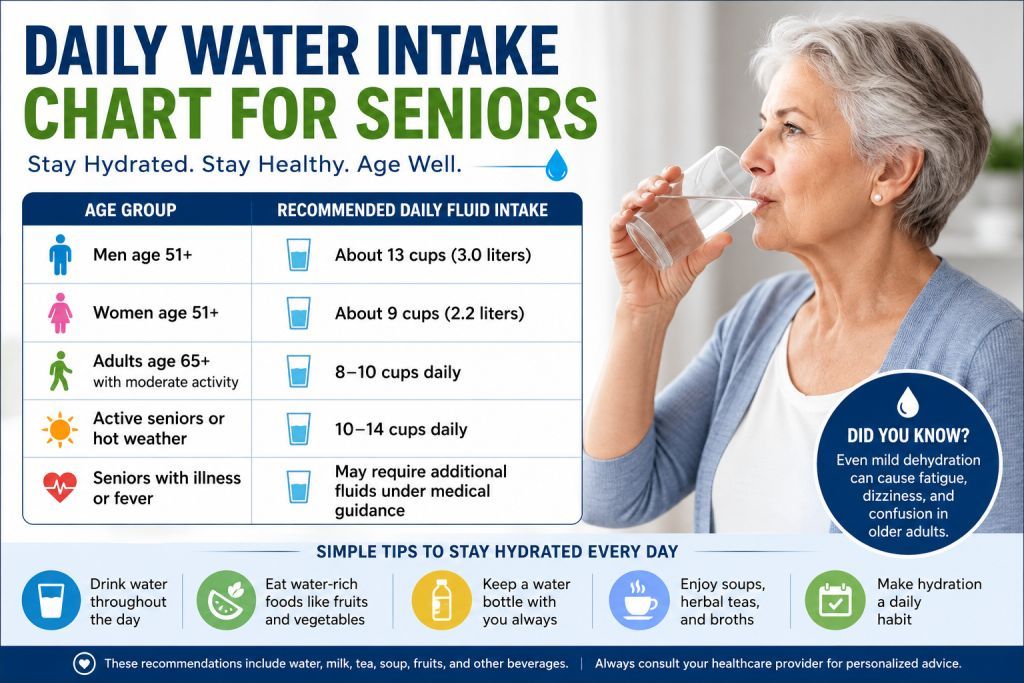
Daily Water Intake Chart for Seniors
The following chart offers general recommendations for healthy older adults.
| Age Group | Recommended Daily Fluid Intake |
|---|---|
| Men age 51+ | About 13 cups (3.0 liters) |
| Women age 51+ | About 9 cups (2.2 liters) |
| Adults age 65+ with moderate activity | 8–10 cups daily |
| Active seniors or hot weather | 10–14 cups daily |
| Seniors with illness or fever | May require additional fluids under medical guidance |
Important: These recommendations include water, milk, herbal tea, soup, fruits, and other beverages.
Individual needs vary significantly.
How Much Water Should Seniors Drink Each Day?
Many healthcare professionals recommend that most healthy seniors aim for approximately:
- 64 ounces (8 cups) of fluids daily at minimum.
- Men generally require more fluids than women.
- Physically active seniors need additional fluids.
- Hot climates increase water requirements.
- Certain medical conditions may change recommendations.
A common rule is:
Body weight (pounds) ÷ 2 = ounces of water needed daily
For example:
- 160-pound adult = approximately 80 ounces daily.
- 180-pound adult = approximately 90 ounces daily.
This formula provides a general estimate rather than a strict medical recommendation.
Why Does Aging Increase Dehydration Risk?
Several age-related changes make dehydration more likely.
Reduced Sense of Thirst
Many seniors simply do not feel thirsty as often. Even when the body needs water, thirst signals may be weaker.
Decreased Kidney Function
Kidneys naturally become less efficient with age, reducing the body’s ability to conserve water.
Medication Side Effects
Many commonly prescribed medications increase fluid loss, including:
- Diuretics (“water pills”)
- Blood pressure medications
- Certain diabetes medications
- Laxatives
- Some antidepressants
Chronic Health Conditions
Conditions such as:
- Diabetes
- Kidney disease
- Heart disease
- Dementia
- Parkinson’s disease
may influence hydration needs.
Limited Mobility
Some seniors intentionally drink less because they worry about frequent bathroom trips or have mobility challenges.
Benefits of Following a Daily Water Intake Chart for Seniors
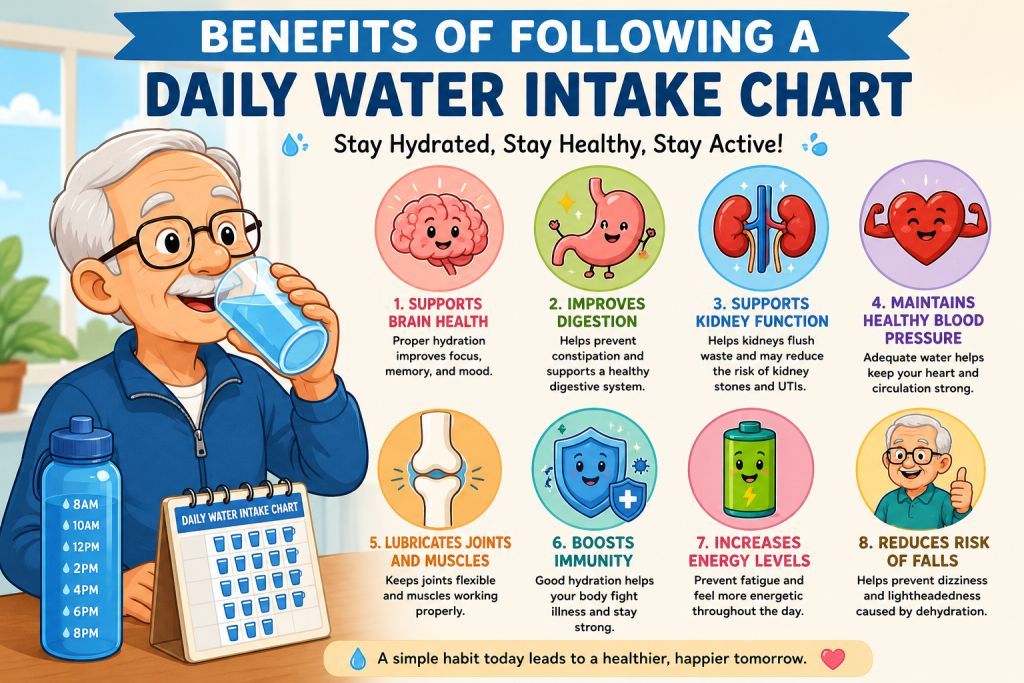
Consistent hydration provides numerous health benefits.
1. Supports Brain Health
Even mild dehydration can affect concentration, memory, and mood.
Older adults who remain hydrated may experience:
- Better focus
- Improved alertness
- Reduced confusion
- Enhanced cognitive performance
2. Helps Prevent Constipation
Constipation is common among seniors.
Adequate fluid intake:
- Softens stool
- Promotes regular bowel movements
- Supports digestive health
3. Protects Kidney Function
Water helps the kidneys filter waste products effectively.
Good hydration may lower the risk of:
- Kidney stones
- Urinary tract infections
- Kidney stress
4. Supports Healthy Blood Pressure
Dehydration can contribute to low blood pressure, dizziness, and fainting.
Proper hydration helps maintain stable circulation.
5. Improves Joint and Muscle Function
Water lubricates joints and supports muscle performance.
Older adults who stay hydrated may experience:
- Less muscle cramping
- Improved mobility
- Better physical performance
6. Supports Temperature Regulation
Hydration helps the body cool itself during warm weather and physical activity.
7. Reduces Fall Risk
Dehydration can lead to:
- Weakness
- Dizziness
- Lightheadedness
These symptoms increase the likelihood of falls.
Scientific Explanation: How Hydration Works in the Aging Body
Approximately 50% to 60% of the human body consists of water.
Water is essential for:
- Transporting oxygen and nutrients.
- Removing metabolic waste.
- Regulating body temperature.
- Maintaining blood volume.
- Supporting cellular function.
As people age:
- Total body water decreases.
- Muscle mass declines.
- Fat tissue increases.
- Kidneys become less efficient.
These changes reduce the body’s water reserve and make fluid balance more delicate.
Researchers have found that older adults often experience dehydration without obvious symptoms until it becomes severe.
This is why regularly following a Daily Water Intake Chart for Seniors is often more reliable than drinking only when thirsty.
Best Drinks for Senior Hydration
Not all beverages hydrate equally.
Excellent Hydration Choices
- Plain water
- Sparkling water without added sugar
- Low-fat milk
- Herbal tea
- Unsweetened tea
- Diluted fruit juice
- Broth-based soups
Drinks to Limit
- Sugary soft drinks
- Energy drinks
- Excess alcohol
- Highly caffeinated beverages
Moderate coffee intake generally contributes to hydration, but excessive caffeine may increase fluid loss in some individuals.
Hydrating Foods Seniors Should Eat
Many foods naturally contain significant amounts of water.
Fruits With High Water Content
| Food | Water Content |
|---|---|
| Watermelon | 92% |
| Strawberries | 91% |
| Cantaloupe | 90% |
| Oranges | 86% |
| Grapefruit | 88% |
Vegetables Rich in Water
| Food | Water Content |
|---|---|
| Cucumber | 96% |
| Lettuce | 95% |
| Celery | 95% |
| Zucchini | 94% |
| Tomatoes | 94% |
Including these foods can increase daily fluid intake naturally.
Best Practical Hydration Tips for Seniors
Start the Day With Water
Drink one glass of water immediately after waking.
Create a Daily Schedule
Try this hydration routine:
| Time | Suggested Intake |
|---|---|
| Morning | 2 cups |
| Mid-morning | 1 cup |
| Lunch | 2 cups |
| Afternoon | 2 cups |
| Dinner | 2 cups |
| Evening | 1 cup |
Keep Water Visible
Place water bottles in commonly used areas:
- Living room
- Bedroom
- Kitchen
- Car
Visible reminders encourage regular drinking.
Use Marked Water Bottles
Graduated bottles help track progress throughout the day.
Flavor Water Naturally
Add:
- Lemon slices
- Cucumber
- Mint
- Berries
Natural flavoring can make water more enjoyable.
Drink Small Amounts Frequently
Sipping regularly is often easier than consuming large amounts at once.
Pair Drinking With Daily Habits
Drink water:
- After brushing teeth.
- Before meals.
- After medications.
- During television breaks.
Can Seniors Drink Too Much Water?
Yes.
Excessive water intake can occasionally cause low sodium levels, a condition known as hyponatremia.
Symptoms may include:
- Nausea
- Headache
- Confusion
- Muscle weakness
Most healthy adults are unlikely to drink dangerous amounts unintentionally, but individuals with specific medical conditions should consult their healthcare provider regarding fluid limits.
Signs of Dehydration in Older Adults
Recognizing early symptoms is critical.
Mild to Moderate Signs
- Dry mouth
- Fatigue
- Headache
- Dark yellow urine
- Dry skin
- Increased thirst
- Dizziness
More Serious Signs
- Confusion
- Rapid heart rate
- Very little urine
- Extreme weakness
- Sunken eyes
- Fainting
Seek medical attention promptly if severe symptoms develop.
Common Mistakes to Avoid
Many seniors unknowingly make hydration mistakes.
Waiting Until Thirst Appears
Thirst often becomes unreliable with age.
Drinking Most Fluids at Night
This may increase nighttime bathroom visits and disrupt sleep.
Avoiding Water Due to Incontinence Concerns
Reducing fluids may worsen urinary health rather than improve it.
Ignoring Hot Weather
Fluid needs rise during summer months.
Relying Only on Coffee or Soda
Water should remain the primary beverage.
Forgetting Fluids During Illness
Fever, vomiting, and diarrhea significantly increase water needs.
Who Should Be Careful About Water Intake?
Certain individuals require personalized fluid recommendations.
These include seniors with:
- Congestive heart failure
- Chronic kidney disease
- Dialysis treatment
- Severe liver disease
- Certain endocrine disorders
Healthcare providers may recommend fluid restrictions for these conditions.
Always follow individualized medical advice.
Disclaimer
This article is intended for educational purposes only and should not replace professional medical advice. Fluid needs vary based on health status, medications, and medical conditions. Consult your healthcare provider for personalized recommendations.
Frequently Asked Questions (FAQs)
1. How many glasses of water should a senior drink daily?
Most healthy seniors should aim for approximately 8 to 10 cups of fluids daily, although individual needs vary.
2. Is coffee included in daily fluid intake?
Yes. Coffee contributes to total fluid intake, but water should remain the primary source of hydration.
3. What is the best time for seniors to drink water?
The best approach is to drink small amounts consistently throughout the day rather than consuming large quantities at once.
4. How can caregivers encourage seniors to drink more water?
Caregivers can offer flavored water, establish routines, provide favorite beverages, and keep drinks within easy reach.
5. What color urine indicates proper hydration?
Pale yellow urine generally suggests adequate hydration. Dark yellow urine may indicate the need for more fluids.
6. Can dehydration cause confusion in seniors?
Yes. Dehydration can contribute to confusion, dizziness, and changes in mental status in older adults.
7. Should seniors drink more water during summer?
Yes. Hot weather increases fluid loss through sweat, so additional fluids are often necessary.
Final Thoughts
Following a Daily Water Intake Chart for Seniors is a simple yet powerful way to support healthy aging. Hydration affects energy levels, digestion, brain function, kidney health, and overall well-being.
Because thirst becomes less reliable with age, seniors should develop regular drinking habits rather than waiting until they feel thirsty.
Small daily actions—such as carrying a water bottle, eating water-rich foods, and following a hydration schedule—can make a meaningful difference over time.
For many older adults, staying hydrated is one of the easiest and most effective steps toward maintaining independence and enjoying a healthier life.
This content is for informational purposes only and not medical advice.
Related Posts :
Health Insurance Age 62 to 65 Average Cost: 2026 Complete Guide
Laser Eye Surgery for Seniors: 9 Important Facts Before You Decide
United Health Care Plans for Seniors: 2026 Complete Guide to Coverage and Benefits
Written by
Kanhaiya Solanki is a dedicated online researcher, content writer, and blogger passionate about publishing high-quality, research-based articles. His goal is to provide accurate, easy-to-understand, and practical information on health, technology, senior care, and lifestyle topics for readers worldwide.