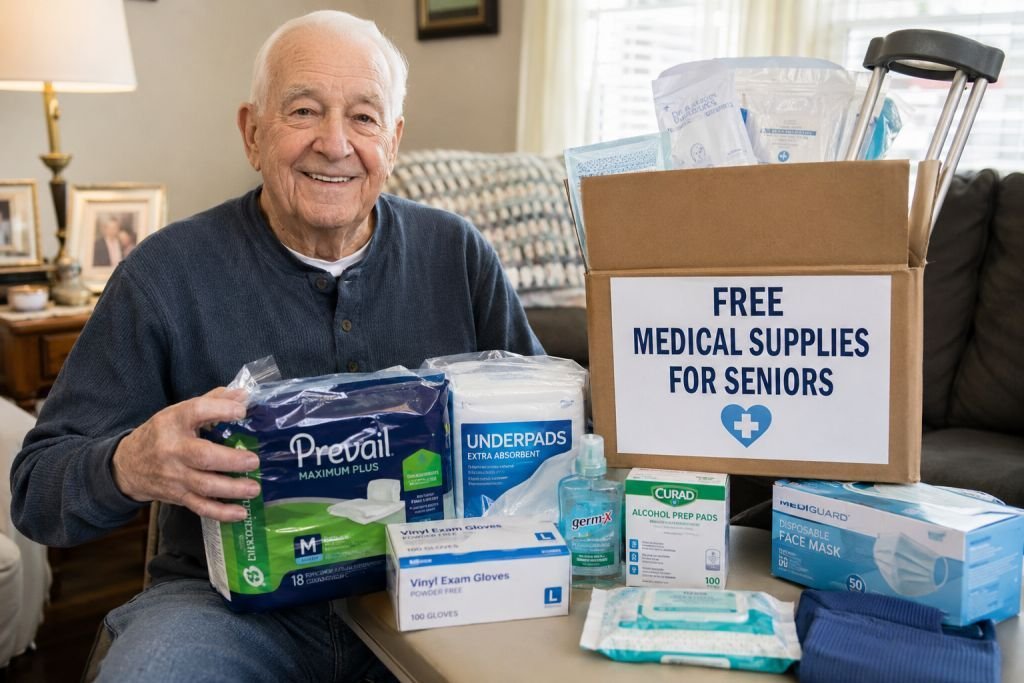
Taking care of an aging parent, spouse, or even yourself can be rewarding, but it also comes with real financial challenges. Medical supplies that seem inexpensive at first can quickly become a major monthly expense. Items like adult diapers, blood glucose test strips, walkers, wheelchairs, wound care products, and incontinence supplies often need to be replaced regularly.
The good news is that many older adults in the United States may qualify for free medical supplies for elderly individuals through government programs, nonprofit organizations, veterans’ benefits, community agencies, and healthcare providers. While not every product is available at no cost, many essential medical supplies can be covered fully or partially if eligibility requirements are met.
Understanding where to look can save hundreds or even thousands of dollars each year. Many families simply don’t realize these resources exist until someone points them in the right direction.
This guide explains where seniors can find free or low-cost medical supplies, how these programs work, who qualifies, and practical tips that can make the application process easier.
Why Free Medical Supplies for Elderly Matter
Healthcare costs continue to rise across the United States. Even seniors with insurance often discover that monthly medical expenses stretch their retirement income further than expected.
For many households, the cost of ongoing supplies becomes one of the largest healthcare expenses.
These may include:
- Adult diapers
- Disposable gloves
- Catheters
- Blood pressure monitors
- Blood sugar testing supplies
- Wheelchairs
- Walkers
- Canes
- Shower chairs
- Hospital beds
- Wound care dressings
- Compression stockings
- Nebulizer supplies
- Oxygen equipment
A single item may not seem expensive, but recurring purchases quickly add up.
For example:
| Medical Supply | Estimated Monthly Cost |
|---|---|
| Adult briefs | $80–$300 |
| Gloves | $20–$60 |
| Blood glucose supplies | $30–$150 |
| Catheters | $100–$500 |
| Wound dressings | $50–$250 |
| Nutritional supplements | $50–$200 |
Actual costs vary depending on insurance coverage, location, and medical needs.
Finding free medical supplies for elderly adults can ease financial stress while helping seniors stay healthy, independent, and safe at home.
What Medical Supplies Can Seniors Get for Free?
Many people assume only expensive equipment is covered. In reality, assistance programs may include a wide variety of everyday medical necessities.
Depending on eligibility, older adults may receive help with:
Mobility Equipment
- Walkers
- Rollators
- Canes
- Crutches
- Manual wheelchairs
- Power wheelchairs
- Scooters
- Lift chairs in certain situations
Bathroom Safety Equipment
Falls remain one of the biggest health risks for older adults.
Some programs may help provide:
- Shower chairs
- Raised toilet seats
- Grab bars
- Bed rails
- Transfer benches
These products can improve safety and reduce the risk of injury at home.
Diabetes Supplies
Many seniors living with diabetes qualify for assistance with:
- Blood glucose meters
- Test strips
- Lancets
- Continuous glucose monitoring supplies (when eligible)
- Insulin delivery supplies
Coverage depends on insurance, medical necessity, and physician documentation.
Incontinence Products
Many families spend hundreds of dollars each month on incontinence care.
Possible assistance may include:
- Adult briefs
- Protective underwear
- Disposable pads
- Underpads
- Cleansing wipes
- Skin protection products
Not every insurance plan covers these items, but Medicaid programs in many states do.
Respiratory Equipment
Older adults with chronic lung conditions may receive assistance for:
- Oxygen equipment
- Oxygen tubing
- CPAP supplies
- Nebulizers
- Nebulizer medication accessories
Medical documentation is usually required.
Wound Care Supplies
People recovering from surgery or managing chronic wounds may qualify for:
- Sterile gauze
- Medical tape
- Foam dressings
- Hydrocolloid dressings
- Bandages
- Saline solution
Proper wound care reduces complications and supports healing.
Home Medical Equipment
Some seniors may qualify for larger medical equipment such as:
- Hospital beds
- Patient lifts
- Pressure-relief mattresses
- Bedside commodes
These items are generally considered durable medical equipment (DME) and often require a prescription.
Who Qualifies for Free Medical Supplies for Elderly?
Eligibility depends on the program providing assistance.
Some programs are based on income, while others focus on medical need, disability status, military service, or insurance coverage.
Common eligibility factors include:
- Age 65 or older
- Disability
- Medicare enrollment
- Medicaid eligibility
- Veteran status
- Physician prescription
- Financial need
- Chronic medical condition
Meeting one requirement does not automatically qualify someone for every program.
Many seniors receive assistance through a combination of resources.
For example:
- Medicare may cover a walker.
- Medicaid may cover incontinence supplies.
- A nonprofit may provide nutritional supplements.
- A local aging agency may loan a wheelchair.
Combining benefits often results in the greatest savings.
Government Programs That Offer Free Medical Supplies for Elderly
One of the best places to begin searching for free medical supplies for elderly programs is through federal and state assistance.
These programs serve millions of older Americans every year.
Medicare
Medicare is one of the largest healthcare programs for seniors in the United States.
Although Medicare doesn’t cover every medical supply, it does help pay for many types of durable medical equipment when a healthcare provider determines the item is medically necessary.
Examples include:
- Walkers
- Wheelchairs
- Oxygen equipment
- Hospital beds
- Patient lifts
- Blood sugar testing equipment
- CPAP machines
Generally, Medicare requires:
- A physician’s prescription
- Medical necessity
- An approved supplier
- Enrollment in the appropriate Medicare coverage
Coverage rules differ depending on the equipment and Medicare plan.
Medicaid
Medicaid is jointly funded by federal and state governments, meaning benefits vary depending on where a person lives.
Many state Medicaid programs offer broader coverage than Medicare for everyday medical supplies.
Depending on the state, benefits may include:
- Adult diapers
- Disposable gloves
- Underpads
- Catheters
- Nutritional supplements
- Wound care supplies
- Mobility aids
- Bathroom safety equipment
Some states also provide home- and community-based services that include medical equipment delivered directly to eligible seniors.
Applying through your state’s Medicaid office can help determine what benefits are available.
Why It Helps to Apply Early
Many assistance programs process applications on a first-come, first-served basis or require additional paperwork before benefits begin.
Applying before supplies become an emergency need can prevent gaps in care. Keep copies of prescriptions, insurance information, and medical records organized so they are easy to submit when requested.
How Does Medicare Cover Free Medical Supplies for Elderly?
Medicare is often the first place seniors turn when they need medical equipment. While Medicare doesn’t provide every supply for free, it may cover a significant portion of the cost if certain conditions are met.
The key requirement is medical necessity. A healthcare provider must determine that the equipment or supply is needed to diagnose or treat a medical condition.
Medicare Part B commonly covers many types of durable medical equipment (DME).
Examples include:
- Walkers
- Manual wheelchairs
- Power wheelchairs (when medically necessary)
- Hospital beds
- Oxygen equipment
- CPAP machines for sleep apnea
- Patient lifts
- Blood glucose monitors
- Blood sugar test strips for eligible individuals
- Nebulizers
Depending on your Medicare plan, you may still be responsible for deductibles or coinsurance. Some Medicare Advantage plans may provide additional benefits beyond Original Medicare.
Before purchasing equipment, always verify that both your healthcare provider and the supplier participate in Medicare.
Does Medicaid Offer More Free Medical Supplies for Elderly?
In many cases, yes.
Unlike Medicare, Medicaid benefits are managed by individual states. This means coverage can vary widely depending on where you live.
Many state Medicaid programs provide assistance with supplies that Medicare often does not cover.
Examples may include:
- Adult diapers
- Disposable underpads
- Protective underwear
- Catheters
- Disposable gloves
- Skin barrier creams
- Nutritional supplements
- Enteral feeding supplies
- Compression garments
- Wound care products
Some Medicaid waiver programs also help seniors remain safely at home by covering home medical equipment and caregiver support services.
If you’re unsure about your state’s benefits, contact your Medicaid office or local aging agency for guidance.
Can Veterans Receive Free Medical Supplies for Elderly?
Older adults who served in the military may qualify for additional healthcare benefits through the U.S. Department of Veterans Affairs (VA).
Veterans enrolled in VA healthcare may receive medically necessary supplies prescribed by their VA healthcare provider.
Depending on individual eligibility, this may include:
- Hearing aid batteries
- Wheelchairs
- Prosthetic devices
- Orthopedic braces
- CPAP equipment
- Incontinence products
- Catheters
- Hospital beds
- Home oxygen equipment
- Mobility aids
Many veterans are surprised to learn they qualify for benefits they have never used.
If you or your spouse served in the military, it’s worth speaking with a Veterans Service Officer (VSO) who can explain available programs and assist with applications.
What Nonprofit Organizations Help Seniors Get Medical Supplies?
Government programs are important, but they’re not the only option.
Across the United States, nonprofit organizations work to provide free or low-cost medical equipment to seniors who need assistance.
Common services include:
- Wheelchair loan closets
- Walker lending programs
- Hospital bed donations
- Shower chair exchanges
- Medical equipment recycling
- Home safety equipment
Many nonprofits accept gently used medical equipment from families after a loved one recovers or no longer needs it.
After cleaning and inspecting these items, they distribute them to people in need.
This approach helps reduce waste while making healthcare more affordable.
How Can Area Agencies on Aging Help?
One of the best-kept secrets for older adults is the local Area Agency on Aging (AAA).
Every community has an agency dedicated to helping seniors access services.
They may assist with:
- Medical equipment referrals
- Transportation
- Caregiver support
- Nutrition services
- Home modifications
- Medicare counseling
- Financial assistance
- Local nonprofit programs
If you’re overwhelmed by the number of programs available, your Area Agency on Aging can often point you in the right direction.
Can Doctors Help Seniors Get Free Medical Supplies?
Absolutely.
Healthcare providers often know which programs are available in their community.
Doctors, nurse practitioners, discharge planners, and social workers regularly help patients apply for assistance.
They may:
- Write prescriptions
- Complete medical necessity forms
- Recommend approved suppliers
- Refer patients to nonprofit organizations
- Connect families with case managers
Never hesitate to ask your healthcare provider if there are assistance programs available.
Many families simply don’t know to ask.
Are There Free Medical Supply Loan Closets?
Yes.
Medical equipment loan closets exist in many cities across the United States.
These community programs lend equipment for weeks or months at little to no cost.
Items commonly available include:
- Walkers
- Rollators
- Crutches
- Wheelchairs
- Canes
- Shower chairs
- Bedside commodes
- Transfer benches
Loan closets are especially helpful for seniors recovering from surgery or illness who only need equipment temporarily.
Can Hospitals Help With Medical Supplies?
Hospitals frequently employ discharge planners and case managers whose job is to help patients transition safely back home.
Before discharge, ask whether assistance is available for:
- Hospital beds
- Walkers
- Wheelchairs
- Wound care supplies
- Oxygen equipment
- Home health services
Planning ahead can prevent unnecessary expenses after leaving the hospital.
Practical Tips to Increase Your Chances of Approval
Applying for free medical supplies for elderly programs can feel overwhelming at first.
Fortunately, a little preparation goes a long way.
Keep Important Documents Ready
Create a folder containing:
- Medicare or Medicaid card
- Driver’s license or photo ID
- Physician prescriptions
- Medical records
- Proof of income (if required)
- Insurance information
Having everything organized helps speed up applications.
Ask for Detailed Prescriptions
Instead of requesting “walker,” your healthcare provider should describe why it’s medically necessary.
Detailed documentation often improves approval rates.
Apply to Multiple Programs
There’s no rule saying you can only use one resource.
Many seniors combine:
- Medicare
- Medicaid
- Veterans benefits
- Nonprofit assistance
- Local aging services
- Community loan closets
This strategy often provides the greatest financial relief.
Replace Supplies Before Running Out
Some items require approval before shipment.
Ordering early reduces the chance of interruptions.
Keep Copies of Everything
Applications sometimes require follow-up documentation.
Keeping copies saves time if paperwork needs to be resubmitted.
Best Home Safety Tips for Seniors Using Medical Equipment
Having medical supplies is only part of staying healthy.
Using them safely matters just as much.
Here are practical tips:
- Keep walkways free of clutter.
- Secure loose rugs.
- Install adequate lighting.
- Wear supportive shoes indoors.
- Check equipment regularly for damage.
- Replace worn rubber tips on canes and walkers.
- Follow cleaning instructions for reusable equipment.
- Store medications separately from medical supplies.
Small safety improvements can significantly reduce the risk of falls and injuries.
Lifestyle Habits That Support Healthy Aging
Medical supplies work best when combined with healthy daily habits.
Older adults should also focus on:
Eat a Balanced Diet
Choose foods rich in:
- Lean protein
- Fruits
- Vegetables
- Whole grains
- Healthy fats
- Calcium
- Vitamin D
Good nutrition supports healing, muscle strength, and immune health.
Stay Physically Active
Even gentle activity can improve:
- Balance
- Flexibility
- Joint mobility
- Heart health
- Muscle strength
Walking, stretching, chair exercises, and light resistance training are popular options for many seniors.
Always consult a healthcare provider before beginning a new exercise program.
Stay Hydrated
Many older adults don’t feel thirsty as often as younger adults.
Aim to drink fluids regularly unless your healthcare provider has recommended fluid restrictions.
Attend Regular Medical Checkups
Routine visits allow healthcare providers to monitor changing needs and adjust equipment or treatments as necessary.
Disclaimer
This article is for educational purposes only and should not replace professional medical advice, diagnosis, or treatment. Coverage for medical supplies varies by insurance plan, state, and individual circumstances. Always consult your healthcare provider and insurance plan administrator before making healthcare decisions.
Helpful External Resources
For the most accurate and up-to-date information about eligibility and coverage, visit these official resources:
- Medicare: https://www.medicare.gov
- Medicaid information: https://www.medicaid.gov
- National Institute on Aging: https://www.nia.nih.gov
- Centers for Disease Control and Prevention: https://www.cdc.gov
Frequently Asked Questions About Free Medical Supplies for Elderly
1. What free medical supplies for elderly adults are most commonly available?
The most commonly available supplies include:
- Walkers
- Canes
- Manual wheelchairs
- Blood glucose meters
- Test strips
- Oxygen equipment
- CPAP machines
- Hospital beds
- Catheters
- Wound care supplies
- Adult incontinence products (through some Medicaid programs)
- Shower chairs
- Bedside commodes
Coverage depends on medical necessity, insurance benefits, and the assistance program you qualify for.
2. Does Medicare provide free medical supplies for elderly people?
Medicare may help cover many medically necessary supplies, but it does not automatically make them free. In many cases, Medicare Part B pays a large portion of the approved cost for durable medical equipment (DME), while the patient may still be responsible for deductibles or coinsurance.
Always check that both your healthcare provider and equipment supplier participate in Medicare.
3. Can low-income seniors get free medical supplies?
Yes. Seniors with limited income may qualify for additional assistance through:
- Medicaid
- State assistance programs
- Area Agencies on Aging
- Veterans Affairs (for eligible veterans)
- Community health organizations
- Nonprofit charities
- Medical equipment lending programs
Eligibility rules vary by state and program.
4. How can I apply for free medical supplies for elderly family members?
The process usually looks like this:
- Visit your healthcare provider for an evaluation.
- Obtain a prescription if required.
- Contact your insurance provider to verify coverage.
- Apply through Medicare, Medicaid, the VA, or local assistance programs.
- Submit any requested medical or financial documentation.
- Work with an approved medical equipment supplier if necessary.
Keeping copies of all paperwork can make the process smoother.
5. Are adult diapers covered for seniors?
Coverage depends on the program.
Original Medicare generally does not cover routine disposable incontinence supplies. However, many state Medicaid programs do cover adult diapers, protective underwear, underpads, and related products for eligible individuals when medically necessary.
6. Where can I find free wheelchairs for seniors?
Many communities offer wheelchairs through:
- Medical equipment loan closets
- Local nonprofit organizations
- Churches and faith-based charities
- Area Agencies on Aging
- Veterans Affairs programs
- Hospital equipment lending programs
Some organizations lend equipment temporarily, while others provide donated items to eligible individuals.
7. Can caregivers apply on behalf of an elderly parent?
Yes. Family caregivers often help complete applications, gather documents, schedule appointments, and communicate with healthcare providers. In some situations, legal authorization such as a power of attorney may be required to manage certain benefits or healthcare decisions.
8. Are free medical supplies available for seniors living at home?
Yes. Many programs are designed specifically to help older adults remain safely in their own homes. Depending on eligibility, assistance may include mobility aids, bathroom safety equipment, oxygen supplies, wound care products, and other medically necessary items.
Quick Checklist for Finding Free Medical Supplies for Elderly
Use this checklist to stay organized during your search:
| Task | Completed |
|---|---|
| Talk with your healthcare provider | ☐ |
| Ask for a prescription if needed | ☐ |
| Review your Medicare benefits | ☐ |
| Check your state’s Medicaid program | ☐ |
| Contact your local Area Agency on Aging | ☐ |
| Ask about Veterans benefits (if applicable) | ☐ |
| Search for nonprofit medical equipment programs | ☐ |
| Look for community loan closets | ☐ |
| Keep copies of all paperwork | ☐ |
| Reapply if your medical needs change | ☐ |
Final Thoughts
Finding free medical supplies for elderly adults can take a little research, but the effort is often well worth it. Many seniors and caregivers are surprised to learn that valuable assistance is available through government programs, nonprofit organizations, veterans’ services, and community resources.
If you or a loved one needs medical equipment, don’t assume you have to pay the full cost out of pocket. Start by speaking with a healthcare provider, reviewing your insurance benefits, and contacting local aging organizations. Even if one program doesn’t meet your needs, another may offer the support you’re looking for.
Remember that coverage rules can change over time, and benefits vary based on your state, insurance plan, and individual medical situation. Checking your options each year can help you discover new resources and reduce healthcare expenses.
Most importantly, don’t wait until supplies become an emergency. Planning ahead, keeping your medical records organized, and asking questions can make the process much easier. With the right information and support, many older adults can access the medical supplies they need while protecting their health, independence, and financial well-being.
Also Read –
Salmon Benefits: Powerful Reasons to Eat More Salmon
Blueberries: 25 Powerful Health Benefits for a Healthier Life
30 Super Foods for a Healthier You: Eat Better Every Day
Written by
Kanhaiya Solanki is a dedicated online researcher, content writer, and blogger passionate about publishing high-quality, research-based articles. His goal is to provide accurate, easy-to-understand, and practical information on health, technology, senior care, and lifestyle topics for readers worldwide.CategoriesHealth & Wellness