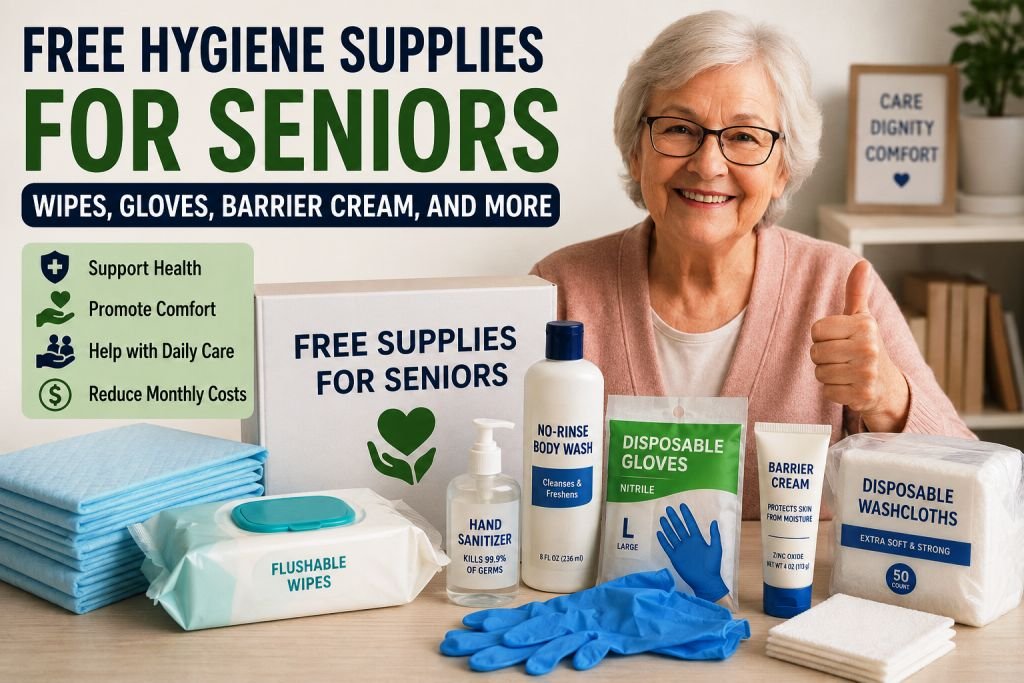
If you’re searching for Free Hygiene Supplies for Seniors, you’re not alone. Every year, millions of older Americans and family caregivers look for affordable ways to get everyday hygiene products like disposable gloves, cleansing wipes, barrier creams, adult washcloths, and other personal care essentials.
These supplies may seem simple, but they can make a huge difference in comfort, dignity, skin health, and infection prevention. The challenge is that these items can become expensive when they are needed every day. Fortunately, many seniors may qualify for free or low-cost hygiene supplies through government programs, nonprofit organizations, local agencies, healthcare providers, and community support programs.
Whether you’re caring for an aging parent, helping a spouse recover from surgery, or simply planning ahead for healthy aging, understanding your options can save money while improving quality of life.
In this guide, you’ll learn what free hygiene supplies are available, who may qualify, where to find assistance, and practical tips for choosing the right products.
Why Free Hygiene Supplies for Seniors Matter
As people grow older, everyday personal care often requires additional support. Limited mobility, arthritis, chronic illness, recovery after surgery, or conditions such as incontinence can make routine hygiene more difficult.
Products like disposable gloves, cleansing wipes, barrier creams, and disposable washcloths help seniors stay clean while reducing irritation and lowering the risk of skin problems. Unfortunately, buying these supplies every month can become a financial burden.
For example, a caregiver helping an older adult with daily hygiene may use:
- Disposable gloves several times a day
- Moist cleansing wipes after bathroom visits
- Barrier cream to protect sensitive skin
- Disposable underpads
- Hand sanitizer
- Skin moisturizers
Even basic supplies can add hundreds of dollars to yearly household expenses.
That’s why many families search online for:
- Where can seniors get free hygiene supplies?
- Does Medicare pay for hygiene products?
- Free wipes for seniors near me
- Free gloves for elderly caregivers
- Barrier cream assistance programs
Knowing where to look can make these essential products much more affordable.
What Are Free Hygiene Supplies for Seniors?
Free Hygiene Supplies for Seniors refer to personal care products provided through assistance programs, healthcare organizations, nonprofits, community agencies, or insurance-related benefits.
These products are intended to help older adults maintain cleanliness, protect their skin, improve comfort, and reduce the risk of infection.
Depending on the program, supplies may be available at no cost or with little to no out-of-pocket expense.
Common hygiene products include:
| Hygiene Supply | Common Use |
|---|---|
| Disposable gloves | Caregiving and personal hygiene |
| Personal cleansing wipes | Daily cleaning without bathing |
| Barrier cream | Protects skin from moisture |
| Disposable washcloths | Bedside bathing |
| Hand sanitizer | Hand hygiene |
| Skin moisturizer | Prevents dry skin |
| Protective underpads | Bed and chair protection |
| Incontinence wipes | Gentle cleansing |
| No-rinse bathing products | Bathing without water |
| Disposable aprons | Caregiver protection |
Availability varies depending on location, eligibility requirements, and the organization providing assistance.
Who May Need Free Hygiene Supplies?
Not every older adult needs daily hygiene products, but many benefit from having them available.
People who commonly use these supplies include:
Seniors Living Independently
Older adults who still live alone may appreciate products that make daily hygiene easier, especially if bending, standing, or bathing has become difficult.
Family Caregivers
Adult children caring for aging parents often use gloves, wipes, and barrier creams while assisting with personal care.
These products can help caregivers maintain a cleaner environment while protecting both themselves and their loved ones.
Seniors With Limited Mobility
People recovering from surgery or living with arthritis, Parkinson’s disease, stroke, or other mobility challenges may rely on disposable hygiene supplies for everyday comfort.
Older Adults Managing Incontinence
Skin protection becomes especially important for seniors experiencing bladder or bowel incontinence.
Regular cleansing combined with barrier creams may help reduce skin irritation caused by prolonged moisture exposure.
Home Health Patients
Many home healthcare patients use disposable hygiene supplies as part of their daily care routine.
Healthcare providers may recommend specific products depending on an individual’s needs.
Why Daily Hygiene Becomes More Important With Age
Healthy skin naturally changes as we age.
Older adults often experience:
- Thinner skin
- Reduced natural oils
- Slower healing
- Increased dryness
- Greater sensitivity
- Higher risk of pressure injuries
These changes mean even minor irritation can become uncomfortable if not addressed promptly.
Good hygiene habits help support:
- Healthy skin
- Better comfort
- Confidence
- Reduced odor
- Cleaner living spaces
- Improved caregiver safety
Simple daily routines can make a meaningful difference in overall well-being.
Types of Free Hygiene Supplies for Seniors
Many assistance programs focus on practical items that caregivers use every day.
Disposable Gloves
Disposable gloves are one of the most commonly requested caregiving supplies.
They’re helpful when assisting with:
- Dressing wounds
- Personal hygiene
- Bathroom assistance
- Cleaning medical equipment
- Handling soiled laundry
Nitrile gloves are often preferred because they are durable and suitable for many people with latex allergies.
Cleansing Wipes
Pre-moistened wipes provide quick, gentle cleaning when a traditional shower or bath isn’t practical.
Many products are:
- Alcohol-free
- Fragrance-free
- pH balanced
- Designed for sensitive skin
Large body wipes are especially useful for bed-bound seniors.
Barrier Cream
Barrier creams create a protective layer over the skin to help shield it from excess moisture.
These products are commonly used around areas exposed to frequent moisture due to sweating or incontinence.
Popular ingredients may include:
- Zinc oxide
- Dimethicone
- Petrolatum
Using barrier cream as directed may help reduce skin irritation, though persistent skin problems should always be evaluated by a healthcare professional.
Disposable Washcloths
Soft disposable washcloths offer a convenient option for seniors who have difficulty bathing.
Many are designed for use with no-rinse cleansers and help caregivers provide gentle, effective hygiene.
No-Rinse Cleansing Products
These products allow seniors to freshen up without needing access to a shower.
They are commonly used:
- During illness
- After surgery
- While traveling
- In home healthcare settings
Hand Hygiene Products
Keeping hands clean remains one of the simplest ways to reduce the spread of germs.
Many assistance programs include:
- Hand sanitizer
- Liquid soap
- Antibacterial wipes
Handwashing with soap and water is generally recommended whenever hands are visibly dirty.
Practical Benefits of Free Hygiene Supplies for Seniors
Receiving hygiene assistance isn’t just about saving money.
These products can also support daily comfort and independence.
Some practical benefits include:
Improved Comfort
Clean skin often feels healthier and more comfortable throughout the day.
Better Skin Protection
Gentle cleansing and moisturization may help reduce dryness and irritation.
Easier Caregiving
Disposable supplies simplify many caregiving tasks and help save time.
Reduced Household Costs
Monthly hygiene expenses can add up quickly.
Free assistance programs may help families redirect money toward medications, nutritious food, transportation, or other essential needs.
Greater Independence
Simple products like cleansing wipes or no-rinse body wash can help some seniors continue managing portions of their own daily hygiene.
Practical Explanation: Why These Products Matter
Healthcare professionals often emphasize consistent hygiene because skin acts as the body’s first line of defense.
When skin becomes overly dry, irritated, or damaged, it may be more vulnerable to discomfort and infection. Gentle cleansing, moisturizing, and protecting the skin with appropriate products can support overall skin health, particularly for older adults with limited mobility or chronic health conditions.
For caregivers, using gloves and proper hygiene supplies also promotes safer care practices and helps reduce exposure to bodily fluids during personal care tasks.
It’s important to remember that hygiene products support daily care but are not a substitute for medical treatment. If a senior develops persistent skin irritation, open sores, signs of infection, or worsening symptoms, it’s important to consult a qualified healthcare professional.
Frequently Asked Questions (Part 1)
Are free hygiene supplies really available for seniors?
Yes. Some seniors may qualify for free or low-cost hygiene supplies through community organizations, healthcare programs, nonprofit agencies, and certain insurance-related benefits, depending on eligibility.
Does Medicare automatically provide wipes and gloves?
Original Medicare does not generally cover everyday hygiene products for routine personal use. However, certain medical supplies may be covered under specific circumstances. Coverage depends on medical necessity and individual plans.
Can family caregivers receive free supplies?
Some local caregiver support programs, nonprofit organizations, and Area Agencies on Aging may provide hygiene supplies or connect caregivers with community resources.
Are barrier creams considered medical supplies?
Barrier creams are commonly used to protect skin from excess moisture and irritation. Coverage varies depending on the program and medical situation.
Are these products safe for sensitive skin?
Many hygiene products are made for sensitive skin and are fragrance-free or hypoallergenic. Reading product labels and consulting a healthcare provider for persistent skin concerns is always a good idea.
Where to Get Free Hygiene Supplies for Seniors
Finding Free Hygiene Supplies for Seniors can take a little research, but there are more resources available than many families realize. While every program has its own eligibility rules, combining several assistance options can significantly reduce monthly expenses.
If you’re wondering, “Where can I get free wipes, gloves, or barrier cream for an elderly parent?” start with the resources below.
1. Area Agencies on Aging (AAA)
One of the best places to begin is your local Area Agency on Aging (AAA). These organizations help older adults connect with services that support independent living.
Depending on your location, they may provide or help you locate:
- Personal hygiene kits
- Disposable gloves
- Cleansing wipes
- Adult diapers
- Barrier creams
- Caregiver support programs
- Home-delivered supplies
- Referrals to local charities
Many AAAs also maintain updated lists of community organizations that distribute free personal care products throughout the year.
Tip
If supplies aren’t available directly, ask about:
- Emergency assistance
- Senior wellness programs
- Caregiver resource centers
- Local donation closets
2. Medicaid Home and Community-Based Services
Unlike Original Medicare, some Medicaid programs may help cover medically necessary personal care supplies for eligible individuals.
Coverage varies by state and may depend on:
- Income
- Disability status
- Medical condition
- Home care eligibility
- Physician recommendations
In some cases, Medicaid waiver programs may include supplies used during in-home caregiving.
Examples may include:
- Disposable gloves
- Protective underpads
- Skin protection products
- Hygiene supplies used during personal care
Always check your state’s Medicaid office because benefits differ across the United States.
3. Medicare Advantage Plans
Many people ask:
Does Medicare cover hygiene supplies?
Original Medicare generally does not pay for routine hygiene products like wipes or barrier creams used for everyday personal care.
However, some Medicare Advantage (Part C) plans include over-the-counter (OTC) allowances that members can use to purchase eligible health-related items.
Depending on the plan, eligible products may include:
- Disposable gloves
- Skin creams
- Hand sanitizer
- Moisturizers
- Cleansing wipes
- First-aid products
Benefits vary by insurance company and plan type, so reviewing your annual benefits is worthwhile.
4. Veterans Benefits
Veterans may have access to hygiene supplies through the Department of Veterans Affairs (VA) if the products are considered medically necessary.
Some veterans receiving home health services or long-term care may qualify for supplies recommended by their healthcare team.
Possible covered products include:
- Gloves
- Skin protectants
- Wound care items
- Disposable hygiene products
Eligibility depends on individual health needs and VA program requirements.
5. Local Food Banks and Community Pantries
Many people think food banks only provide groceries.
Today, numerous community food pantries also distribute:
- Soap
- Shampoo
- Toothpaste
- Disposable wipes
- Adult hygiene products
- Incontinence supplies
- Feminine hygiene items
- Disposable gloves
Some organizations receive donations specifically intended for seniors and caregivers.
It’s worth calling before visiting to learn what products are currently available.
6. Churches and Faith-Based Organizations
Many churches operate community outreach programs regardless of religious affiliation.
Some ministries organize hygiene drives throughout the year and distribute:
- Personal care kits
- Cleaning supplies
- Skin care products
- Disposable gloves
- Bath wipes
These programs often serve:
- Low-income seniors
- Homebound older adults
- Caregivers
- Veterans
Availability varies by community.
7. Senior Centers
Local senior centers are another excellent resource.
Besides offering meals and activities, many centers connect members with:
- Hygiene assistance
- Health screenings
- Caregiver education
- Community partnerships
- Supply distribution events
Ask whether the center participates in any local wellness initiatives.
8. Community Health Clinics
Federally funded health centers and community clinics sometimes receive donated medical and hygiene supplies.
Patients may receive:
- Barrier cream
- Skin moisturizer
- Disposable gloves
- Educational materials
- Referrals to assistance programs
Healthcare providers can also recommend products that are appropriate for individual skin conditions.
9. Nonprofit Organizations
Many nonprofit organizations support older adults living independently.
Some focus on:
- Aging in place
- Disability assistance
- Home healthcare
- Chronic disease management
- Caregiver support
Depending on available funding, nonprofits may distribute hygiene supplies directly or provide vouchers for obtaining them.
Programs often change throughout the year, so checking periodically is worthwhile.
10. Caregiver Support Programs
Family caregivers frequently overlook caregiver assistance programs.
Some programs offer:
- Free caregiving education
- Temporary respite care
- Hygiene products
- Protective equipment
- Home safety resources
These services can reduce both financial stress and caregiver burnout.
Can Seniors Receive Free Hygiene Kits?
Yes, some organizations provide complete hygiene kits instead of individual products.
A typical senior hygiene kit may include:
| Item | Included in Many Kits |
|---|---|
| Toothbrush | Yes |
| Toothpaste | Yes |
| Soap | Yes |
| Shampoo | Yes |
| Disposable wipes | Often |
| Hand sanitizer | Often |
| Lotion | Often |
| Disposable gloves | Sometimes |
| Barrier cream | Sometimes |
| Washcloth | Often |
The contents vary depending on donations and community funding.
Practical Tips for Saving Money on Hygiene Supplies
Even if you don’t qualify for free products, these strategies can help reduce costs.
Buy Generic Brands
Store-brand hygiene products often contain similar ingredients at a much lower price.
Compare Unit Prices
Larger packages usually cost less per item than smaller packs.
Use OTC Benefits
If your Medicare Advantage plan includes an over-the-counter allowance, use it before it expires.
Many benefits reset every quarter.
Ask Healthcare Providers
Doctors, nurses, wound care specialists, and home health agencies sometimes have product samples available.
Join Local Caregiver Groups
Caregiver support groups often share information about:
- Community giveaways
- Donation programs
- Local charities
- Supply exchanges
Networking with other caregivers can uncover resources you may not find through an online search.
Daily Hygiene Tips for Older Adults
Having the right supplies is only part of the equation. A consistent routine can help maintain healthy skin and improve comfort.
Helpful habits include:
- Wash hands regularly with soap and water.
- Moisturize dry skin after bathing.
- Change incontinence products promptly.
- Use fragrance-free products if skin is sensitive.
- Drink enough water to support healthy skin.
- Wear breathable clothing.
- Keep fingernails trimmed and clean.
- Check skin daily for redness or irritation.
- Store hygiene products in a clean, dry place.
- Replace expired products when necessary.
Common Mistakes to Avoid
Families often spend more money than necessary because they aren’t aware of available assistance.
Here are some common mistakes.
Waiting Until Supplies Run Out
Start looking for assistance before products become an emergency need.
Assuming Medicare Covers Everything
Many people mistakenly believe all personal care products are automatically covered.
Understanding the difference between Medicare, Medicaid, and private insurance can prevent disappointment.
Ignoring Local Resources
Small community organizations often provide assistance that isn’t widely advertised.
Buying Products That Irritate the Skin
Older skin tends to be more sensitive.
Whenever possible, choose:
- Fragrance-free
- Alcohol-free
- Dermatologist-tested products
Not Asking for Help
Many seniors hesitate to request assistance because they feel embarrassed.
Remember that these programs exist to help people maintain health, comfort, and independence.
Who Should Be Careful?
Most hygiene products are safe when used as directed, but certain individuals should take extra care.
Talk with a healthcare professional before using new products if the senior has:
- Open wounds
- Severe skin allergies
- Chronic skin conditions
- Recent surgery
- Pressure injuries
- Signs of infection
- Diabetes-related foot problems
If redness, swelling, pain, or a rash develops after using a product, discontinue use and seek medical advice.
Expert Advice for Caregivers
Caregivers often focus on medications and doctor appointments, but daily hygiene deserves equal attention. Small preventive steps—such as using gentle wipes, applying barrier cream when appropriate, and keeping skin clean and moisturized—can improve comfort and may help reduce skin irritation.
Create a simple checklist for daily care:
- Morning hand and face washing
- Skin inspection
- Moisturizer application if needed
- Prompt changing of incontinence products
- Evening cleansing routine
- Restocking supplies before they run low
Staying organized makes caregiving easier and helps ensure that essential hygiene items are always available.
Frequently Asked Questions About Free Hygiene Supplies for Seniors
1. Can seniors really get free hygiene supplies?
Yes. Many seniors can receive free or low-cost hygiene supplies through community organizations, nonprofit programs, local senior services, Medicaid programs in some states, veterans’ benefits, and certain Medicare Advantage plans with over-the-counter (OTC) allowances. Eligibility varies depending on income, health needs, and where you live.
2. Does Medicare pay for wipes, gloves, or barrier cream?
Original Medicare generally does not cover routine personal hygiene products used for everyday care. However, some Medicare Advantage (Part C) plans include OTC benefits that may help pay for eligible products such as gloves, skin creams, and cleansing wipes. Check your plan’s current benefit guide for details.
3. Are free hygiene supplies available for caregivers?
Yes. Some caregiver support programs, Area Agencies on Aging, nonprofit organizations, and community health programs provide supplies or can refer caregivers to local assistance programs. Family caregivers should also ask healthcare providers about available community resources.
4. Can seniors receive free incontinence supplies?
Some Medicaid programs, veterans’ benefits, and nonprofit organizations may provide assistance with medically necessary incontinence products. Coverage depends on the program and eligibility requirements.
5. How often can seniors receive free hygiene products?
It depends on the organization. Some programs provide supplies monthly, while others distribute products during special events or when donations are available.
6. Are barrier creams safe for older adults?
Barrier creams are commonly used to help protect skin from excess moisture and irritation. It’s important to follow the product instructions and consult a healthcare professional if a senior has open wounds, severe skin conditions, or signs of infection.
7. Where should I start if I need help today?
A good first step is contacting your local Area Agency on Aging, senior center, community health clinic, or county social services office. These organizations often know about local programs that provide free hygiene supplies.
8. What if I don’t qualify for assistance?
If you don’t qualify for free programs, consider using Medicare Advantage OTC benefits (if available), shopping store brands, buying in bulk, looking for manufacturer coupons, or asking local charities about emergency assistance.
9. Are hygiene products considered medical supplies?
Some products may be considered medically necessary in certain healthcare settings, but many everyday hygiene items are classified as personal care products. Coverage depends on the insurance plan and the reason the product is needed.
10. Can I apply on behalf of an elderly parent?
Yes. Adult children, legal guardians, and caregivers can often help older adults apply for assistance programs. Having basic information such as identification, insurance details, and proof of income may help speed up the process.
Helpful Checklist Before Applying for Assistance
Use this checklist to make the process easier:
- Gather your Medicare or Medicaid information.
- Keep proof of income available if required.
- Make a list of the hygiene supplies you need each month.
- Ask your healthcare provider if any products are medically recommended.
- Contact your local Area Agency on Aging for referrals.
- Check whether your Medicare Advantage plan includes an OTC allowance.
- Ask local churches, food pantries, and senior centers about hygiene distribution events.
- Keep track of application deadlines or renewal dates.
Trusted Resources for More Information
For the most accurate and up-to-date information, visit these trusted sources:
- Centers for Disease Control and Prevention (CDC): https://www.cdc.gov
- Medicare: https://www.medicare.gov
- National Institute on Aging (NIA): https://www.nia.nih.gov
- Eldercare Locator: https://eldercare.acl.gov
These organizations provide reliable information on healthy aging, caregiving, Medicare benefits, and community resources.
Disclaimer
This article is intended for educational and informational purposes only. It should not be considered medical, legal, or insurance advice. Benefits, eligibility requirements, and available programs vary by state, insurance plan, and organization. Always consult your healthcare provider, insurance company, or local assistance agency before making decisions about medical care or benefit programs.
Final Thoughts
Finding Free Hygiene Supplies for Seniors can make everyday life easier for both older adults and their caregivers. While products like cleansing wipes, disposable gloves, barrier creams, and skin care items may seem like small necessities, they play an important role in maintaining comfort, protecting skin, and supporting independence.
The good news is that many families don’t have to shoulder these costs alone. Local community organizations, Area Agencies on Aging, Medicare Advantage plans with OTC benefits, Medicaid programs, veterans’ services, nonprofit organizations, and senior centers may all provide valuable assistance.
If you’re helping an aging parent, spouse, or loved one, don’t wait until supplies become too expensive or difficult to find. Reach out to local resources, ask questions, and explore every available program. Even combining several smaller assistance programs can significantly reduce monthly expenses while ensuring seniors have the hygiene products they need to stay healthy and comfortable.
Taking a few minutes to research local support today may lead to long-term savings and greater peace of mind for you and your family.
Key Takeaways
- Free Hygiene Supplies for Seniors are available through various local and national assistance programs.
- Medicare Advantage plans may offer OTC benefits that can help cover eligible hygiene products.
- Medicaid coverage varies by state and may include medically necessary personal care supplies.
- Area Agencies on Aging are one of the best places to find local assistance.
- Community organizations, food pantries, churches, and nonprofits often distribute hygiene kits.
- Daily hygiene supports skin health, comfort, and quality of life for older adults.
- Family caregivers should also explore caregiver support programs for additional resources.
Also Read –
Salmon Benefits: Powerful Reasons to Eat More Salmon
Blueberries: 25 Powerful Health Benefits for a Healthier Life
30 Super Foods for a Healthier You: Eat Better Every Day
Written by
Kanhaiya Solanki is a dedicated online researcher, content writer, and blogger passionate about publishing high-quality, research-based articles. His goal is to provide accurate, easy-to-understand, and practical information on health, technology, senior care, and lifestyle topics for readers worldwide.CategoriesHealth & Wellness