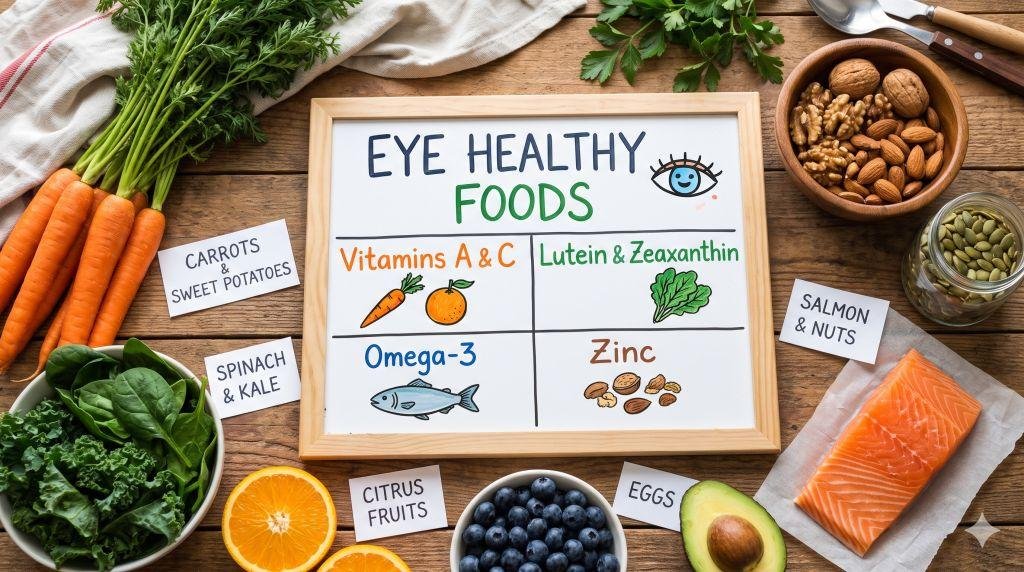
What you eat can play an important role in maintaining healthy vision as you get older. An eye-healthy diet does not require expensive supplements or unusual foods. It starts with familiar choices such as leafy greens, colorful vegetables, citrus fruits, eggs, nuts, seeds, and fatty fish.
This eye healthy foods chart brings those choices together in one easy-to-understand guide. It explains which nutrients matter, where to find them, how they may support eye health, and how adults over 50 can build simple meals around them.
Nutrition cannot prevent or cure every eye disease. However, a balanced diet can support overall health and may help reduce some risk factors associated with age-related eye conditions. The National Eye Institute specifically recommends healthy foods such as dark leafy greens and fish rich in omega-3 fatty acids as part of healthy-vision habits.
For older adults, nutrition is only one part of protecting eyesight. Regular eye examinations, controlling blood pressure and blood sugar, staying physically active, avoiding tobacco, and protecting your eyes from excessive ultraviolet exposure also matter.
Quick Answer: What Are the Best Foods for Eye Health?
The best foods for healthy vision are generally nutrient-dense foods that provide lutein, zeaxanthin, vitamin C, vitamin E, vitamin A-related carotenoids, zinc, and omega-3 fatty acids.
Good choices include:
- Spinach and other dark leafy greens
- Kale and collard greens
- Broccoli
- Carrots and sweet potatoes
- Red and orange bell peppers
- Eggs
- Salmon, sardines, trout, and other fatty fish
- Oranges and other citrus fruits
- Strawberries and berries
- Almonds and sunflower seeds
- Avocado
- Beans and legumes
- Tomatoes
The goal is not to eat one “magic” eye food. A variety of colorful vegetables, fruits, fish, whole foods, and healthy fats is a more realistic approach.
Eye Healthy Foods Chart
The following chart provides a practical starting point.
| Food | Key Nutrients | Why It May Support Eye Health |
|---|---|---|
| Spinach | Lutein, zeaxanthin, vitamin C | Provides carotenoids concentrated in the retina |
| Kale | Lutein, zeaxanthin, vitamin C | Rich source of leafy-green carotenoids |
| Collard greens | Lutein, zeaxanthin, vitamin C | Adds carotenoids and other nutrients |
| Broccoli | Vitamin C, lutein | Provides antioxidant nutrients |
| Carrots | Beta-carotene | Helps provide vitamin A activity |
| Sweet potatoes | Beta-carotene | Rich source of provitamin A carotenoid |
| Red bell peppers | Vitamin C | Provides a concentrated source of vitamin C |
| Oranges | Vitamin C | Supports normal antioxidant protection |
| Strawberries | Vitamin C | Provides vitamin C and plant compounds |
| Eggs | Lutein, zeaxanthin, vitamin A | Convenient source of eye-related nutrients |
| Salmon | EPA, DHA, protein | Provides omega-3 fatty acids and protein |
| Sardines | EPA, DHA, vitamin D | Nutrient-dense fatty fish option |
| Trout | EPA, DHA, protein | Provides marine omega-3 fatty acids |
| Almonds | Vitamin E | Provides vitamin E and healthy fats |
| Sunflower seeds | Vitamin E | Concentrated vitamin E source |
| Avocado | Vitamin E, lutein | Provides healthy fats and carotenoids |
| Beans | Zinc, plant nutrients | Supports an overall nutrient-rich diet |
| Tomatoes | Vitamin C, carotenoids | Adds colorful plant nutrients |
| Pumpkin | Carotenoids | Provides beta-carotene and other carotenoids |
Food composition varies by variety, serving size, and preparation, so the chart is intended as a practical food guide rather than a precise nutrient database.
Why Nutrition Matters for Eye Health
Your eyes are living tissues that require nutrients just like the rest of your body.
Some nutrients are particularly interesting because they are involved in the structure or function of the eye or are concentrated in parts of the retina.
Two carotenoids—lutein and zeaxanthin—are found in the retina and lens. They are believed to act as antioxidants and help filter high-energy blue and ultraviolet light.
Other nutrients have different roles.
Vitamin A is important for normal vision because the retina uses vitamin A-related compounds in the process of detecting light. Vitamin C and vitamin E have antioxidant functions, while zinc participates in many biological processes, including those involved in normal vision.
This does not mean eating large quantities of one nutrient will automatically improve eyesight. Nutrition works as part of an overall dietary pattern.
10 Important Eye-Healthy Foods and Why They Matter
1. Spinach and Other Dark Leafy Greens
Spinach is one of the easiest foods to include in an eye-conscious diet.
It provides lutein and zeaxanthin along with vitamin C and other nutrients. These carotenoids are particularly interesting because they accumulate in the retina.
Other useful choices include:
- Kale
- Collard greens
- Swiss chard
- Mustard greens
- Turnip greens
You do not have to eat a large bowl of raw spinach every day.
Try adding cooked spinach to scrambled eggs, soups, pasta dishes, or beans.
2. Kale
Kale deserves special attention because it is a particularly nutrient-dense leafy green.
It can provide lutein and zeaxanthin while also contributing vitamin C and other plant compounds.
For adults who don’t enjoy kale salads, try roasting chopped kale until crisp, adding it to soups, or mixing it into a vegetable-and-egg breakfast.
3. Fatty Fish
Salmon, sardines, trout, herring, and similar fish provide the omega-3 fatty acids EPA and DHA.
The National Eye Institute includes salmon, tuna, and halibut among fish high in omega-3 fatty acids that can be part of healthy eating for vision.
Fatty fish also provides protein and other nutrients, making it useful beyond eye health.
If you want to compare common omega-3 foods, see EverageWell’s Omega-3 Foods Chart, which includes salmon, sardines, trout, mackerel, flaxseed, chia seeds, and walnuts.
4. Eggs
Eggs are a convenient source of lutein and zeaxanthin.
They are also easy to prepare and provide protein, making them particularly practical for older adults who want nutrient-dense meals without complicated cooking.
Try:
- Vegetable omelets
- Scrambled eggs with spinach
- Hard-boiled eggs with whole-grain toast
- Egg and avocado bowls
Eggs should be considered one component of a balanced diet rather than a stand-alone solution for eye health.
5. Carrots and Sweet Potatoes
Carrots are famous for being associated with eyesight, and there is a nutritional reason behind that reputation.
Carrots contain beta-carotene, which the body can convert into vitamin A. Vitamin A is necessary for normal vision.
Sweet potatoes are another excellent source of beta-carotene.
However, eating extra carrots does not give someone “super vision.” Vitamin A is important for normal vision, but consuming more than your body needs does not necessarily make eyesight sharper.
6. Red and Orange Bell Peppers
Bell peppers are colorful, crunchy, and versatile.
Red and orange varieties can provide vitamin C and carotenoids.
You can add sliced peppers to:
- Omelets
- Salads
- Stir-fries
- Sandwiches
- Bean bowls
- Roasted vegetable dishes
For adults over 50, easy-to-eat vegetables like cooked peppers can be especially useful when raw vegetables become difficult to chew.
7. Citrus Fruits
Oranges, grapefruit, lemons, and other citrus fruits provide vitamin C.
Vitamin C is an antioxidant nutrient and contributes to normal tissue health.
An orange can be an easy snack, while berries, kiwi, and peppers can provide additional vitamin C variety.
Whole fruit is generally more useful nutritionally than relying on fruit juice because whole fruit provides fiber and requires less processing.
8. Berries
Strawberries, blueberries, blackberries, and raspberries add color and variety to the diet.
They provide vitamin C and numerous plant compounds.
Try adding berries to:
- Plain Greek yogurt
- Oatmeal
- Cottage cheese
- A smoothie
- A whole-grain breakfast bowl
Frozen berries can be a practical option when fresh fruit is expensive or out of season.
9. Nuts and Seeds
Almonds and sunflower seeds are useful sources of vitamin E.
Avocado and some vegetable oils can also contribute vitamin E.
Nuts and seeds are calorie-dense, so you do not need a large amount. A small serving can add healthy fats, minerals, and other nutrients to a meal.
For example, add a small amount of chopped almonds to oatmeal instead of eating a large handful straight from the bag.
10. Broccoli
Broccoli provides vitamin C and carotenoids while adding fiber and other nutrients.
It is also easy to combine with other eye-friendly foods.
A simple dinner might include:
- Baked salmon
- Steamed broccoli
- Sweet potato
- A small serving of brown rice
That single meal combines several nutrients associated with an overall healthy eating pattern.
Key Nutrients for Healthy Vision
Lutein and Zeaxanthin
Lutein and zeaxanthin are carotenoids found in the retina.
They are especially concentrated in the macula, the central part of the retina responsible for detailed central vision. Research has made these nutrients particularly important in discussions about age-related macular degeneration (AMD).
Food sources include:
- Spinach
- Kale
- Collard greens
- Broccoli
- Eggs
- Corn
- Peas
- Avocado
The important point is that food provides these nutrients as part of a larger nutritional package.
Vitamin A and Beta-Carotene
Vitamin A is required for normal vision.
Beta-carotene is a carotenoid that the body can convert to vitamin A.
Food sources include:
- Carrots
- Sweet potatoes
- Pumpkin
- Winter squash
- Cantaloupe
- Dark leafy greens
A diet lacking sufficient vitamin A can cause vision problems, but that does not mean high-dose vitamin A supplements are appropriate for everyone.
Vitamin C
Vitamin C has antioxidant functions and is found in many fruits and vegetables.
Good sources include:
- Oranges
- Grapefruit
- Strawberries
- Kiwi
- Bell peppers
- Broccoli
- Tomatoes
The American Academy of Ophthalmology lists vitamin C-rich fruits and vegetables among useful food sources for an eye-supportive diet.
Vitamin E
Vitamin E is another antioxidant nutrient.
Food sources include:
- Almonds
- Sunflower seeds
- Avocado
- Vegetable oils
- Nuts
- Seeds
A food-first approach is generally preferable to taking high-dose antioxidant supplements without a specific medical reason.
Zinc
Zinc is involved in many biological processes and is important for normal vision.
Food sources include:
- Meat
- Seafood
- Eggs
- Dairy
- Beans
- Nuts
- Seeds
Oysters are particularly rich in zinc, while beans and nuts can provide smaller amounts.
Omega-3 Fatty Acids
EPA and DHA are long-chain omega-3 fatty acids found mainly in fatty fish.
Good food sources include:
- Salmon
- Sardines
- Trout
- Herring
- Mackerel
Plant foods such as flaxseed, chia seeds, and walnuts provide ALA, another type of omega-3 fatty acid.
It is important not to assume that omega-3 supplements automatically prevent eye disease. In the AREDS2 clinical trial, omega-3 supplementation did not significantly reduce progression to advanced AMD.
Eye Healthy Foods Chart by Nutrient
| Nutrient | Foods to Choose | Simple Meal Idea |
|---|---|---|
| Lutein | Spinach, kale, peas | Spinach omelet |
| Zeaxanthin | Kale, spinach, eggs | Egg and vegetable bowl |
| Beta-carotene | Carrots, sweet potatoes, pumpkin | Roasted vegetables |
| Vitamin C | Oranges, peppers, broccoli, berries | Fruit and vegetable salad |
| Vitamin E | Almonds, sunflower seeds, avocado | Avocado toast with seeds |
| Zinc | Seafood, meat, beans, nuts | Salmon and bean salad |
| EPA/DHA | Salmon, sardines, trout | Baked salmon dinner |
| ALA | Chia, flaxseed, walnuts | Oatmeal with chia and walnuts |
Eye-Healthy Foods vs. Supplements
Food and supplements should not be treated as interchangeable.
A varied diet can provide many nutrients that work together, while supplements may contain concentrated amounts of selected nutrients.
The distinction becomes particularly important with AREDS2 supplements.
AREDS2 is not an ordinary “eye vitamin.” It is a specific supplement formulation studied in people with certain stages of age-related macular degeneration.
The National Eye Institute reports that AREDS2 can help slow vision loss in people with intermediate AMD or certain cases of late AMD, but it is not intended for everyone and does not prevent early AMD from progressing in every person.
The formulation studied in AREDS2 includes vitamin C, vitamin E, zinc, copper, lutein, and zeaxanthin.
If you have been diagnosed with AMD, ask your ophthalmologist whether AREDS2 is appropriate for you.
Do not simply start a high-dose eye supplement because you are over 50.
Benefits of an Eye-Healthy Eating Pattern
May Support Normal Retinal Function
Nutrients such as vitamin A, lutein, and zeaxanthin are involved in normal eye function.
A varied diet helps provide these nutrients without relying on one food.
May Support Healthy Aging
A diet rich in vegetables, fruits, fish, nuts, seeds, and other minimally processed foods also supports cardiovascular and metabolic health.
That matters because conditions such as diabetes and high blood pressure can affect eye health.
The National Eye Institute notes that healthy habits can help lower the risk of diseases such as diabetes and high blood pressure that can contribute to vision problems.
Provides Antioxidant Nutrients
Fruits and vegetables provide vitamin C, carotenoids, vitamin E, and numerous plant compounds.
These nutrients contribute to the body’s antioxidant defenses.
Helps Build a More Balanced Diet
Eye-friendly foods overlap with many foods recommended for general healthy aging.
That means you don’t need a separate “eye diet.”
A plate containing salmon, leafy greens, sweet potato, and berries can support several areas of health at the same time.
What Foods Should You Limit for Better Eye Health?
There is no single food that must be completely eliminated for healthy eyes.
Instead, focus on limiting foods that make it difficult to maintain an overall nutritious diet.
Consider keeping these foods occasional rather than everyday staples:
- Sugar-sweetened beverages
- Highly processed snack foods
- Excessively salty packaged foods
- Deep-fried foods
- Highly refined sweets
- Large portions of processed meats
- Foods high in added sugars
The point is not that one cookie or serving of fries damages your eyesight.
Overall dietary patterns matter much more than individual foods.
Eye Health Mistakes to Avoid
Mistake 1: Thinking Carrots Are Enough
Carrots are nutritious, but they are only one food.
Leafy greens, fish, fruits, nuts, seeds, and other vegetables provide different nutrients.
Mistake 2: Taking High-Dose Supplements Without Advice
More vitamins do not automatically mean better eyesight.
Certain high-dose supplements can interact with medications or cause harm.
Mistake 3: Ignoring Regular Eye Exams
A healthy diet does not replace an eye examination.
The National Eye Institute describes a dilated eye exam as an important way to stay on top of eye health.
Mistake 4: Assuming Blurry Vision Is a Nutrition Problem
Blurred vision can have many causes.
Cataracts, glaucoma, diabetic eye disease, AMD, refractive errors, medication effects, and other conditions can affect vision.
New or worsening vision changes deserve professional evaluation.
Mistake 5: Focusing on One “Superfood”
There is no single food that guarantees healthy eyesight.
Variety is more useful.
A Simple Eye-Healthy Meal Plan for Adults Over 50
You do not need an elaborate menu.
Breakfast
Spinach and egg breakfast
- Two eggs
- Cooked spinach
- Whole-grain toast
- One orange or berries
This provides protein plus several eye-related nutrients.
Lunch
Salmon and vegetable bowl
- Cooked salmon
- Mixed leafy greens
- Bell peppers
- Tomatoes
- Beans
- Olive oil and lemon
This combines protein, omega-3 fats, vegetables, fiber, and colorful plant foods.
Afternoon Snack
Greek yogurt with berries and walnuts
This provides protein along with fruit and healthy fats.
Dinner
Chicken or fish with colorful vegetables
Try:
- Grilled chicken or trout
- Roasted sweet potato
- Broccoli
- Side salad
Simple Evening Option
If you want something small:
- Apple with a few almonds
- Berries with plain yogurt
- Carrot slices with hummus
Portions should be adjusted according to your appetite, calorie needs, activity level, and medical conditions.
For more meal ideas, see EverageWell’s 7-Day Healthy Meal Chart for Adults Over 50.
Common Myths About Foods and Eye Health
Myth: Eating carrots can give you better-than-normal eyesight.
Fact: Carrots provide beta-carotene, which contributes to vitamin A nutrition and normal vision. But eating extra carrots does not give healthy eyes superhuman vision.
Myth: You need an eye-health supplement after age 50.
Fact: Not necessarily. A balanced diet is appropriate for most people. AREDS2 supplements are specifically intended for certain people with AMD and should be discussed with an eye-care professional.
Myth: Blueberries can prevent all eye diseases.
Fact: Berries are nutritious and provide vitamin C and plant compounds, but no single fruit prevents every eye condition.
Myth: Omega-3 supplements prevent macular degeneration.
Fact: AREDS2 did not find a significant overall benefit from omega-3 supplementation for preventing progression to advanced AMD. Fatty fish can still be part of a healthy diet.
Myth: If you eat healthy, you don’t need eye exams.
Fact: Diet is only one part of eye care. Regular examinations can help detect eye disease that may not cause obvious symptoms early on.
Myth: All vitamin A supplements are good for your eyes.
Fact: Vitamin A is essential for normal vision, but high-dose supplementation is not automatically beneficial and can be harmful in some circumstances.
Myth: One eye-health food is better than a varied diet.
Fact: Different foods provide different nutrients. Variety is generally more useful than relying on a single food.
Who Should Be More Careful?
Adults Over 50
Age-related eye conditions become more relevant as people get older, so nutrition and routine eye care deserve more attention.
Adults over 50 should also pay attention to cardiovascular and metabolic health because conditions such as high blood pressure and diabetes can affect vision.
If you’re monitoring blood pressure, you can use EverageWell’s Healthy Blood Pressure Chart by Age as a general educational reference.
People With Diabetes
Diabetes can affect the eyes, particularly when blood glucose remains elevated over time.
A healthy diet can support diabetes management, but it does not replace prescribed treatment or regular diabetic eye care.
People With High Blood Pressure
High blood pressure can contribute to eye and cardiovascular problems.
A heart-healthy eating pattern that emphasizes vegetables, fruits, whole grains, legumes, fish, and appropriate portions can support overall health.
You may also find EverageWell’s Cholesterol Levels Chart useful when looking at cardiovascular health as part of healthy aging.
People With Diagnosed AMD
If you have AMD, do not assume that food alone or an over-the-counter supplement will provide the same benefit as a clinically studied treatment.
Ask your ophthalmologist whether AREDS2 is appropriate for your stage of disease.
People Taking Medications
High-dose supplements can interact with medicines.
This is especially important for older adults who may take several prescription medications.
Always tell your doctor or pharmacist about vitamins and supplements you use.
How to Get Started With an Eye-Healthy Diet
You do not have to completely change your diet tomorrow.
Step 1: Add One Dark Green Vegetable
Try spinach, kale, collards, or another leafy green several times each week.
Step 2: Eat Fish Regularly If It Fits Your Diet
Salmon, sardines, trout, and similar fish provide EPA and DHA.
Step 3: Add a Colorful Fruit or Vegetable to Each Meal
Think:
- Orange
- Red
- Green
- Yellow
- Purple
Color variety is a simple way to increase plant-food variety.
Step 4: Keep Nuts or Seeds Available
A small portion of almonds, walnuts, chia seeds, or sunflower seeds can make an easy snack or meal topping.
Step 5: Replace Some Processed Snacks
Instead of chips every afternoon, try fruit with nuts, yogurt with berries, or vegetables with hummus.
Step 6: Keep Your Overall Diet Balanced
Eye health is part of overall health.
Aim for a pattern that includes vegetables, fruits, whole grains, protein foods, and healthy fats.
Step 7: Don’t Forget Eye Exams
Food cannot detect glaucoma, cataracts, AMD, or other eye conditions.
Keep up with recommended eye examinations.
12 Frequently Asked Questions About Eye Healthy Foods
1. What is the best food for eye health?
There is no single best food. Dark leafy greens, fatty fish, eggs, colorful vegetables, fruits, nuts, and seeds can all contribute useful nutrients to an eye-healthy diet.
2. What are the best eye healthy foods for adults over 50?
Adults over 50 can focus on leafy greens, salmon and other fatty fish, eggs, carrots, sweet potatoes, peppers, berries, citrus fruits, nuts, seeds, and beans.
3. Are carrots really good for your eyes?
Yes. Carrots provide beta-carotene, which the body can convert into vitamin A. Vitamin A is necessary for normal vision. However, carrots do not provide a special ability to see better than normal.
4. Which foods contain lutein and zeaxanthin?
Dark leafy greens such as spinach and kale are excellent food sources. Eggs, broccoli, peas, corn, and avocado also provide these carotenoids.
5. Is spinach good for your eyes?
Yes. Spinach provides lutein and zeaxanthin along with other nutrients. These carotenoids are concentrated in the retina.
6. Is salmon good for eye health?
Salmon provides EPA and DHA omega-3 fatty acids and can be part of an overall healthy diet. The National Eye Institute includes salmon among fish high in omega-3 fatty acids.
7. Can food improve eyesight?
Food can provide nutrients required for normal eye function and may support overall eye health. However, diet generally cannot reverse refractive errors such as nearsightedness or replace treatment for eye diseases.
8. Do eye vitamins really work?
Certain supplements have evidence for specific situations. AREDS2 can help slow progression of certain forms of AMD, but it is not a general eye-health supplement for everyone.
9. Should everyone over 50 take AREDS2?
No. AREDS2 was studied for people with particular stages and risks of AMD. People without the appropriate diagnosis should not assume they need it. Talk with an eye-care professional.
10. Are eggs good for eyesight?
Eggs provide lutein and zeaxanthin and can be an easy source of protein and other nutrients. They are one useful food among many.
11. Are berries good for your eyes?
Berries provide vitamin C and other plant compounds and can be part of a healthy diet. However, no berry has been proven to prevent all eye diseases.
12. What vegetables are best for eye health?
Dark leafy greens, broccoli, peppers, carrots, sweet potatoes, pumpkin, and other colorful vegetables are excellent choices because they provide different vitamins and carotenoids.
13. Can omega-3 supplements prevent AMD?
Current clinical evidence does not support omega-3 supplementation as a way to prevent progression to advanced AMD. The AREDS2 trial found no significant overall benefit from adding omega-3 supplements to the AREDS formulation.
14. Can a healthy diet prevent cataracts or glaucoma?
A healthy diet may support general eye health, but there is not enough evidence to say that a particular diet can prevent every cataract or glaucoma case. Regular eye examinations remain important.
15. What is the most important thing for healthy vision after 50?
Think beyond food. Eat a varied nutrient-rich diet, stay physically active, manage conditions such as diabetes and high blood pressure, avoid smoking, protect your eyes from excessive UV exposure, and follow recommended eye-examination schedules.
Final Takeaway
This eye healthy foods chart is best viewed as a guide to building a varied, nutrient-rich diet—not as a prescription for treating an eye condition.
For adults over 50, some of the most useful choices are dark leafy greens, colorful vegetables, berries and citrus fruits, eggs, nuts and seeds, and fatty fish such as salmon and sardines.
Lutein and zeaxanthin are particularly interesting nutrients for retinal health, while vitamin A, vitamin C, vitamin E, zinc, and omega-3 fatty acids contribute to a broader nutrient-rich eating pattern.
The bigger lesson is simple: eat a variety of whole, nutrient-dense foods rather than looking for one miracle food or supplement.
And remember that healthy eating is only one piece of the picture. Regular eye exams and good control of conditions such as diabetes and high blood pressure are equally important parts of protecting your vision as you age.
Medical Disclaimer
This article is intended for general educational and informational purposes only. It does not replace individualized medical advice, diagnosis, or treatment. Nutritional needs vary from person to person, and people with eye disease, diabetes, kidney disease, nutritional deficiencies, or those taking medications or supplements should speak with a qualified healthcare professional before making major dietary or supplement changes.
Trusted Sources and Further Reading
- National Eye Institute — Keep Your Eyes Healthy
- National Eye Institute — Healthy Vision
- National Eye Institute — AREDS2 Supplements
- NIH Office of Dietary Supplements — Vitamin A and Carotenoids
- American Academy of Ophthalmology — Diet, Nutrition and Eye Health
- NCCIH — Dietary Supplements for Eye Conditions
- JAMA Ophthalmology — AREDS2 Randomized Clinical Trial
Medical Disclaimer
This article is provided for general educational and informational purposes and does not replace individualized medical, financial, legal, or long-term-care advice. Senior living and healthcare needs vary from person to person. Speak with the older adult’s healthcare professional and appropriate local aging or long-term-care professionals before making major care decisions.
About EverAgeWell: EverAgeWell provides practical health and wellness information to help readers make informed decisions about healthy aging, nutrition, and everyday life.
Written by
Kanhaiya Solanki is a dedicated online researcher, content writer, and blogger passionate about publishing high-quality, research-based articles. His goal is to provide accurate, easy-to-understand, and practical information on health, technology, senior care, and lifestyle topics for readers worldwide.