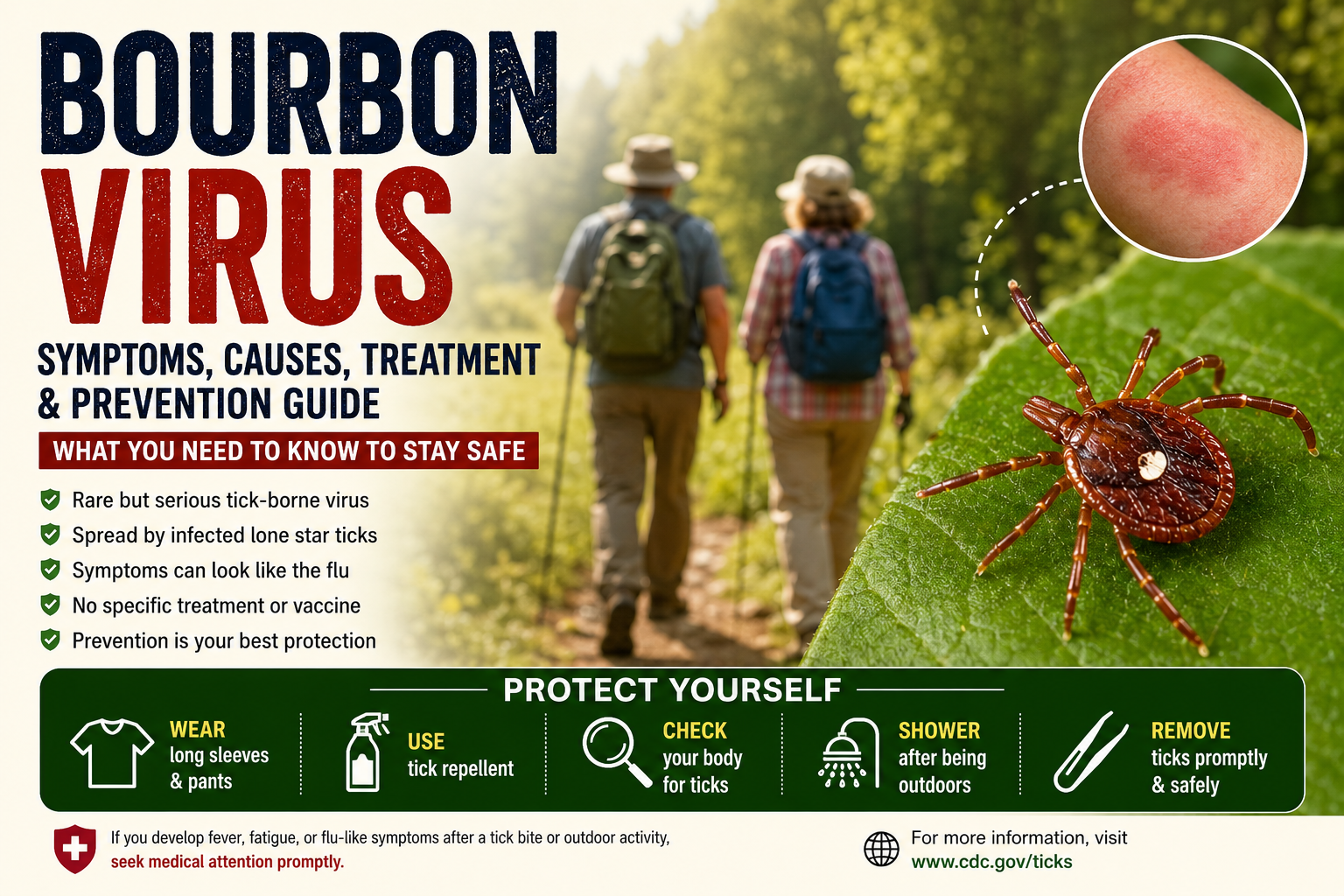
The Bourbon virus is a rare but serious virus that has gained attention in the United States because it is spread by tick bites. While only a small number of confirmed human cases have been reported, health experts continue to monitor the virus closely because it can cause severe illness in some people.
If you enjoy gardening, hiking, fishing, hunting, camping, or simply spending time outdoors, understanding the Bourbon virus is an important part of protecting your health. Tick-borne diseases are becoming more common in several parts of the United States, making awareness more valuable than ever.
For adults over 40 and older Americans, especially those who spend time outdoors or have chronic health conditions, learning how to recognize the symptoms and prevent tick bites can make a meaningful difference.
This guide explains what the Bourbon virus is, how it spreads, the warning signs to watch for, who may be at greater risk, and practical ways to reduce your chances of infection. The goal is to provide trustworthy, easy-to-understand information that helps you make informed decisions without causing unnecessary fear.
Why the Bourbon Virus Matters
Many Americans have heard of Lyme disease or Rocky Mountain spotted fever, but the Bourbon virus remains unfamiliar to most people. That is understandable because it is extremely rare. However, rarity does not mean it should be ignored.
Public health agencies continue to study the virus because researchers are still learning about how it behaves, where it is spreading, and why some infections become severe.
Several factors make this topic especially important:
- Tick populations have expanded in many regions of the United States.
- More people are spending time outdoors for recreation and exercise.
- Warmer temperatures may increase tick activity in some areas.
- Early symptoms can resemble common viral illnesses, making diagnosis challenging.
- There is currently no specific antiviral medication approved for Bourbon virus infection.
Knowing the basics allows you to recognize potential warning signs while taking simple precautions that lower your overall risk of tick-borne illnesses.
What Is the Bourbon Virus?
The Bourbon virus is a tick-borne virus first identified in the United States in 2014 after a resident of Bourbon County, Kansas, became seriously ill. The virus was named after the county where it was first recognized.
Scientists classify Bourbon virus as a member of the Thogotovirus group within the Orthomyxoviridae virus family. Although this sounds highly technical, the important point for most people is simple: it is a virus that appears to spread primarily through tick bites.
Researchers believe the lone star tick is the main carrier responsible for transmitting the virus to humans, although scientists continue to study its ecology and transmission patterns.
Fortunately, confirmed infections remain uncommon. However, because testing is limited and symptoms resemble other illnesses, experts believe some infections may go undiagnosed.
Where Has the Bourbon Virus Been Found?
Most confirmed cases have occurred in the central and eastern United States, where lone star ticks are commonly found.
States where Bourbon virus activity has been identified include areas such as:
| State | Evidence Reported |
|---|---|
| Kansas | First identified human case |
| Missouri | Human cases and tick surveillance |
| Oklahoma | Tick surveillance |
| Arkansas | Tick surveillance |
| Virginia | Virus detected in ticks |
| North Carolina | Tick surveillance |
| Tennessee | Tick surveillance |
Researchers continue to monitor additional states because lone star ticks have expanded their geographic range over the past several years.
Finding the virus in ticks does not necessarily mean people in every area face a high risk. Instead, it highlights the importance of staying informed if you spend time outdoors.
How Does the Bourbon Virus Spread?
Current evidence suggests that the Bourbon virus is spread primarily through the bite of an infected lone star tick.
Ticks become infected after feeding on infected animals. Later, when they bite another animal or a person, they may transmit the virus.
People are more likely to encounter ticks while:
- Walking through tall grass
- Hiking wooded trails
- Hunting
- Camping
- Gardening
- Working outdoors
- Clearing brush
- Visiting parks with dense vegetation
Ticks are small and often go unnoticed. Many people never realize they were bitten because the bite itself is usually painless.
That is why checking your body after outdoor activities remains one of the simplest and most effective prevention habits.
Can Bourbon Virus Spread From Person to Person?
Based on current scientific evidence, there is no evidence that the Bourbon virus spreads directly from one person to another through everyday contact.
Normal activities such as:
- Hugging
- Shaking hands
- Sharing meals
- Caring for someone at home
- Sitting near an infected person
have not been shown to spread the virus.
The primary known risk remains exposure to infected ticks.
Researchers continue to study the virus, and public health recommendations may change as new evidence becomes available.
What Are the Symptoms of Bourbon Virus?
One challenge with Bourbon virus infection is that its symptoms can resemble many other viral illnesses.
Symptoms often begin suddenly and may include:
- Fever
- Chills
- Extreme fatigue
- Muscle aches
- Joint pain
- Headache
- Loss of appetite
- Nausea
- Vomiting
- Skin rash in some patients
Some people may develop more severe illness requiring hospitalization.
Doctors have also reported laboratory findings such as:
- Low white blood cell count
- Low platelet count
- Elevated liver enzymes
These abnormalities can also occur with several other tick-borne diseases, making laboratory testing important for an accurate diagnosis.
How Soon Do Symptoms Appear?
Researchers are still learning about the Bourbon virus, so the exact incubation period is not fully understood.
Like many tick-borne illnesses, symptoms generally appear within several days to about two weeks after an infected tick bite.
Many people do not remember being bitten, especially if the tick was very small.
If you develop:
- Fever
- Fatigue
- Muscle aches
- Severe headache
within two weeks of spending time outdoors in a tick-prone area, it is a good idea to contact a healthcare provider and mention your recent outdoor activities.
Providing this information can help doctors consider tick-borne illnesses during their evaluation.
Why Older Adults Should Pay Extra Attention
While anyone can be bitten by an infected tick, adults over 40 and seniors may want to be especially cautious.
Several reasons explain this:
Chronic Health Conditions
Many older adults live with conditions such as:
- Diabetes
- Heart disease
- Kidney disease
- Chronic lung disease
These conditions can make recovery from serious infections more complicated.
Weaker Immune Function
As people age, the immune system naturally changes.
Although many older adults remain healthy and active, infections may sometimes become more severe or take longer to recover from.
Increased Outdoor Activities
Many retirees enjoy:
- Gardening
- Walking trails
- Golf
- Fishing
- Camping
- Bird watching
These activities offer excellent health benefits but may also increase exposure to ticks if proper precautions are not taken.
How Doctors Diagnose Bourbon Virus
Diagnosing the Bourbon virus can be challenging because its symptoms overlap with many other illnesses, including influenza, COVID-19, ehrlichiosis, anaplasmosis, and other tick-borne infections.
A healthcare provider will usually begin by asking questions such as:
- Have you recently been bitten by a tick?
- Have you spent time outdoors?
- When did your symptoms begin?
- Have you traveled recently?
- Do you have any underlying health conditions?
Blood tests may show signs of infection, such as low white blood cells, low platelets, or elevated liver enzymes. However, these findings are not specific to the Bourbon virus.
Specialized laboratory testing, often coordinated through public health laboratories, may be needed to confirm the diagnosis because routine hospital tests do not typically detect the virus.
Key Facts at a Glance
| Topic | Quick Answer |
|---|---|
| Main cause | Bite from an infected lone star tick |
| Person-to-person spread | No evidence through everyday contact |
| Common symptoms | Fever, fatigue, headache, muscle aches, nausea |
| Highest exposure | Outdoor activities in tick habitats |
| Specific antiviral treatment | None currently approved |
| Best protection | Prevent tick bites and remove ticks promptly |
Is There a Treatment for Bourbon Virus?
One of the most common questions people ask is, “Can Bourbon virus be cured?”
At this time, there is no specific antiviral medication approved to treat Bourbon virus infection. Instead, medical care focuses on supporting the body’s recovery while managing symptoms and monitoring for complications.
Treatment depends on how sick the patient becomes. Someone with mild symptoms may recover at home under a healthcare provider’s guidance, while people with severe illness may require hospitalization.
Supportive medical care may include:
- Rest and limiting strenuous activity
- Drinking enough fluids to prevent dehydration
- Medications recommended by a healthcare provider to reduce fever or discomfort
- Monitoring blood pressure, oxygen levels, and organ function in hospitalized patients
- Intravenous (IV) fluids if dehydration becomes severe
- Close observation for complications
Because early symptoms resemble bacterial tick-borne diseases such as ehrlichiosis, doctors may sometimes prescribe antibiotics while waiting for test results. Antibiotics do not treat the Bourbon virus itself, but they can be lifesaving if another bacterial tick-borne illness is present.
Never start antibiotics or other prescription medications without medical advice.
Why Early Medical Evaluation Matters
Since there is no targeted treatment for the Bourbon virus, early medical evaluation becomes especially important.
Prompt medical attention can help healthcare providers:
- Rule out other serious illnesses
- Identify bacterial tick-borne infections that can be treated with antibiotics
- Monitor blood counts and liver function
- Prevent dehydration
- Decide whether hospital care is needed
If you recently spent time outdoors and develop a fever along with unusual fatigue or muscle aches, mention your possible tick exposure to your healthcare provider. This information can help guide testing and treatment decisions.
Scientific Explanation: How Does the Bourbon Virus Affect the Body?
Although researchers continue to study the Bourbon virus, scientists know that it enters the body through the bite of an infected tick.
After entering the bloodstream, the virus may infect certain immune cells and trigger the body’s natural immune response.
This immune response is responsible for many of the symptoms people experience, including:
- Fever
- Chills
- Body aches
- Fatigue
- Headache
In some patients, the virus may also affect:
- White blood cells
- Platelets
- Liver function
This explains why blood tests sometimes show:
| Laboratory Finding | Why It Matters |
|---|---|
| Low white blood cell count | May reduce the body’s ability to fight infection |
| Low platelet count | Can increase bleeding risk in severe cases |
| Elevated liver enzymes | Indicates stress or inflammation affecting the liver |
Scientists are still learning why some infections remain mild while others become severe.
Possible contributing factors include:
- Age
- Overall health
- Immune system function
- Existing medical conditions
- The body’s immune response
How to Prevent Bourbon Virus
Since there is no vaccine and no specific antiviral treatment, prevention remains the most effective strategy.
Fortunately, preventing tick bites is something most people can do with a few simple habits.
Dress for Tick Protection
When walking in wooded or grassy areas:
- Wear long sleeves.
- Wear long pants.
- Tuck pants into socks when practical.
- Choose light-colored clothing so ticks are easier to spot.
- Wear closed-toe shoes instead of sandals.
These small changes can make it easier to notice ticks before they attach.
Use EPA-Registered Tick Repellents
Tick repellents can reduce the chance of bites.
Look for products containing ingredients recommended by public health authorities, such as:
- DEET
- Picaridin
- IR3535
- Oil of lemon eucalyptus (for appropriate ages and according to product directions)
Always follow the instructions on the product label.
Stay on Cleared Trails
Ticks often wait on tall grass and low vegetation before attaching to passing animals or people.
When hiking:
- Stay in the center of trails.
- Avoid brushing against bushes.
- Avoid walking through tall weeds whenever possible.
Check Your Body Carefully
One of the easiest ways to reduce risk is to perform a full-body tick check after spending time outdoors.
Pay close attention to:
- Behind the knees
- Under the arms
- Around the waist
- Inside the belly button
- Behind the ears
- Along the hairline
- Between the legs
- Around the ankles
Ticks can be surprisingly small, especially in their immature stages.
Shower Soon After Coming Indoors
Taking a shower within two hours of coming indoors may help wash away unattached ticks and gives you a good opportunity to perform a careful skin check.
Check Children and Pets
Dogs and outdoor pets can carry ticks into the home.
After outdoor activities:
- Inspect pets carefully.
- Ask your veterinarian about tick prevention products.
- Check children’s clothing and skin.
- Wash outdoor clothing promptly.
How to Remove a Tick Safely
Removing a tick correctly may reduce the chance of disease transmission.
Follow these steps:
- Use fine-tipped tweezers.
- Grasp the tick as close to the skin as possible.
- Pull upward with slow, steady pressure.
- Avoid twisting or crushing the tick.
- Clean the bite area with soap and water.
- Wash your hands thoroughly.
Avoid common home remedies such as:
- Nail polish
- Petroleum jelly
- Essential oils
- Heat from a match
- Burning the tick
These methods are not recommended and may increase the risk of complications.
Outdoor Safety Tips for Every Season
Although ticks are often most active during warmer months, they can remain active whenever temperatures are mild.
To reduce your risk throughout the year:
Spring
- Begin tick checks early in the season.
- Treat outdoor clothing if appropriate.
- Prepare your yard before heavy vegetation grows.
Summer
- Stay hydrated during outdoor activities.
- Wear protective clothing.
- Reapply insect repellent as directed.
- Avoid sitting directly in tall grass.
Fall
- Continue checking for ticks after hiking or hunting.
- Wear long sleeves during yard cleanup.
- Remove leaf piles where ticks may hide.
Mild Winter Days
In some regions, ticks remain active even during winter warm spells.
Don’t assume cold weather completely eliminates the risk.
Can You Reduce Tick Exposure Around Your Home?
Yes. A few landscaping changes may help lower the number of ticks around your property.
Consider:
- Mowing grass regularly
- Removing brush piles
- Trimming shrubs
- Clearing leaf litter
- Creating a barrier of gravel or wood chips between wooded areas and the lawn
- Keeping playground equipment away from wooded edges
These changes may also discourage wildlife that carries ticks.
Common Mistakes to Avoid
Many people unknowingly increase their risk because of simple mistakes.
Avoid these common errors:
Assuming Tick Bites Always Hurt
Most tick bites are painless.
You may never notice one until hours later.
Skipping Tick Checks
Even experienced hikers sometimes forget to inspect their skin after returning home.
A quick five-minute check can make a difference.
Ignoring Flu-Like Symptoms
If you develop fever and fatigue after outdoor activities, don’t assume it’s just a seasonal virus.
Mention possible tick exposure when seeking medical care.
Waiting Too Long to Remove a Tick
Remove attached ticks as soon as you notice them.
Prompt removal is an important part of tick safety.
Forgetting About Pets
Dogs can bring ticks indoors.
Using veterinarian-recommended tick prevention can help protect both pets and family members.
Who Should Be Especially Careful?
While everyone should practice tick prevention, certain groups may face a higher risk of severe illness or complications.
These include:
- Adults age 65 and older
- People with weakened immune systems
- Individuals receiving cancer treatment
- Organ transplant recipients
- People with chronic heart disease
- People with diabetes
- Individuals with chronic kidney disease
- Outdoor workers
- Farmers and ranchers
- Park employees
- Landscapers
- Hunters
- Campers
- Gardeners
- Hikers
- Pet owners who spend time in wooded areas
Being in one of these groups does not mean you will become infected. It simply means extra attention to tick prevention is especially worthwhile.
When Should You Call a Healthcare Provider?
Seek medical advice promptly if you develop symptoms after spending time in areas where ticks are common, especially if you experience:
- Fever that does not improve
- Severe fatigue
- Persistent headache
- Muscle or joint pain
- Nausea or vomiting
- Confusion
- Difficulty breathing
- Signs of dehydration
- A recent tick bite followed by illness
Early evaluation can help healthcare providers determine whether your symptoms are related to the Bourbon virus, another tick-borne disease, or a different medical condition altogether.
Frequently Asked Questions About Bourbon Virus
1. What is the Bourbon virus?
The Bourbon virus is a rare tick-borne virus found in the United States. It was first identified in Bourbon County, Kansas, in 2014. Researchers believe it is primarily spread through the bite of an infected lone star tick. Although confirmed cases remain uncommon, health officials continue to monitor the virus because it can cause serious illness in some people.
2. Is the Bourbon virus contagious?
Current evidence shows that the Bourbon virus is not spread through normal person-to-person contact. Activities like hugging, shaking hands, sharing food, or caring for someone at home have not been shown to transmit the virus. The primary known source of infection is the bite of an infected tick.
3. What are the first symptoms of Bourbon virus?
Early symptoms may include:
- Fever
- Chills
- Extreme tiredness
- Muscle aches
- Joint pain
- Headache
- Loss of appetite
- Nausea
- Vomiting
Because these symptoms are similar to many other illnesses, it’s important to tell your healthcare provider if you’ve recently been in areas where ticks are common.
4. Is there a vaccine for Bourbon virus?
At this time, there is no vaccine available to prevent Bourbon virus infection. The best protection is to avoid tick bites by wearing protective clothing, using EPA-registered insect repellents, checking your body after outdoor activities, and removing ticks promptly.
5. Can Bourbon virus be treated with antibiotics?
No. Antibiotics do not treat viral infections like the Bourbon virus. However, doctors may prescribe antibiotics if they suspect another bacterial tick-borne illness, such as ehrlichiosis, while waiting for test results.
6. Who is most at risk for severe illness?
Anyone bitten by an infected tick can become ill, but people who may be at greater risk for complications include:
- Older adults
- Individuals with weakened immune systems
- People with chronic medical conditions
- Outdoor workers
- Hunters, hikers, and campers
- Gardeners and farmers
7. Where are lone star ticks commonly found?
Lone star ticks are found in many parts of the central, southern, and eastern United States. Their geographic range has expanded over time, making tick prevention important in many outdoor environments.
8. How can I reduce my risk of getting the Bourbon virus?
Simple prevention steps include:
- Wear long sleeves and long pants in wooded or grassy areas.
- Use EPA-registered tick repellents.
- Stay on cleared trails.
- Perform full-body tick checks after outdoor activities.
- Shower within two hours of coming indoors.
- Inspect pets for ticks.
- Keep your yard trimmed and free of excess brush and leaf litter.
Key Takeaways
Here are the most important points to remember about the Bourbon virus:
- Bourbon virus is a rare but potentially serious tick-borne illness.
- It is believed to spread mainly through infected lone star ticks.
- There is no evidence of routine person-to-person spread.
- Early symptoms often resemble the flu.
- No specific antiviral treatment or vaccine currently exists.
- Preventing tick bites remains the best defense.
- Early medical evaluation is important if symptoms develop after tick exposure.
Practical Tick Safety Checklist
Before heading outdoors:
- Wear light-colored clothing.
- Apply tick repellent according to label directions.
- Wear closed-toe shoes.
- Stay on maintained trails whenever possible.
After returning home:
- Check your entire body for ticks.
- Shower as soon as practical.
- Wash outdoor clothing.
- Inspect pets carefully.
- Watch for symptoms during the following two weeks.
Medical Disclaimer
This article is intended for educational and informational purposes only and should not be considered medical advice. Health information changes as new research becomes available. Always consult a qualified healthcare professional for diagnosis, treatment, or medical concerns. If you experience severe symptoms after a tick bite or outdoor exposure, seek medical care promptly.
Final Thoughts
Although the Bourbon virus remains rare, it serves as an important reminder that tick-borne diseases deserve attention. Spending time outdoors is one of the best ways to stay active, improve heart health, and enjoy nature. Fortunately, you do not have to avoid these activities—you simply need to take sensible precautions.
A few preventive habits, such as wearing protective clothing, using insect repellent, checking your skin for ticks, and removing attached ticks promptly, can significantly reduce your risk of tick-borne illnesses.
For adults over 40 and seniors, staying informed is one of the best ways to protect your health. Understanding the symptoms of the Bourbon virus, knowing when to seek medical care, and practicing everyday tick safety can help you continue enjoying outdoor activities with greater confidence.
As researchers continue studying this rare virus, recommendations may evolve. Following guidance from trusted public health organizations and discussing concerns with your healthcare provider can help you make informed decisions for yourself and your family.
Trusted Resources
For additional information about tick-borne diseases and prevention, visit:
- Centers for Disease Control and Prevention (CDC): https://www.cdc.gov
- Your state or local health department
- Your primary healthcare provider
Also Read –
Salmon Benefits: Powerful Reasons to Eat More Salmon
Blueberries: 25 Powerful Health Benefits for a Healthier Life
30 Super Foods for a Healthier You: Eat Better Every Day
Written by
Kanhaiya Solanki is a dedicated online researcher, content writer, and blogger passionate about publishing high-quality, research-based articles. His goal is to provide accurate, easy-to-understand, and practical information on health, technology, senior care, and lifestyle topics for readers worldwide.CategoriesHealth & Wellness