As we age, staying flexible and mobile becomes more important than ever. Simple daily activities like getting out of bed, reaching for items on a shelf, or walking up stairs can become challenging when muscles and joints become stiff.
The good news is that you don’t need an intense workout routine to stay active. In fact, seated stretches for seniors can be one of the safest and most effective ways to maintain mobility, improve flexibility, and support overall independence.
Whether you’re recovering from an injury, living with arthritis, or simply looking for gentle ways to move more, these chair-based stretches can help you feel stronger and more comfortable in your everyday life.
Why This Topic Matters
Many older adults become less active over time due to joint pain, health conditions, or fear of falling. Unfortunately, reduced movement often leads to increased stiffness, weaker muscles, and decreased balance.
Gentle seated stretching offers a practical solution because it:
- Requires minimal equipment.
- Can be done at home.
- Reduces fall risk compared to standing exercises.
- Works well for beginners.
- Supports healthy aging.
Even just 10 to 15 minutes of stretching each day can make everyday tasks feel easier.
Benefits of Seated Stretches for Seniors
Regular chair stretching provides numerous physical and mental benefits.
Physical Benefits
| Benefit | How It Helps |
|---|---|
| Improved flexibility | Increases range of motion in joints |
| Better mobility | Makes daily movement easier |
| Reduced stiffness | Loosens tight muscles |
| Improved circulation | Encourages healthy blood flow |
| Better posture | Strengthens supporting muscles |
| Less muscle tension | Promotes relaxation |
| Joint health support | Keeps joints moving smoothly |
Mental and Emotional Benefits
- Encourages relaxation.
- May reduce stress and anxiety.
- Promotes better body awareness.
- Builds confidence in movement.
- Supports overall well-being.
Many seniors report feeling more energetic after incorporating daily stretching into their routine.
Scientific and Practical Explanation: How Flexibility Changes With Age
Aging naturally causes several changes in the body:
Muscles Lose Elasticity
Muscles gradually become shorter and less flexible. This can make movements feel stiff or restricted.
Joints Become Less Mobile
Cartilage can wear down over time, reducing joint mobility.
Reduced Physical Activity
Many adults become less active with age, which accelerates stiffness.
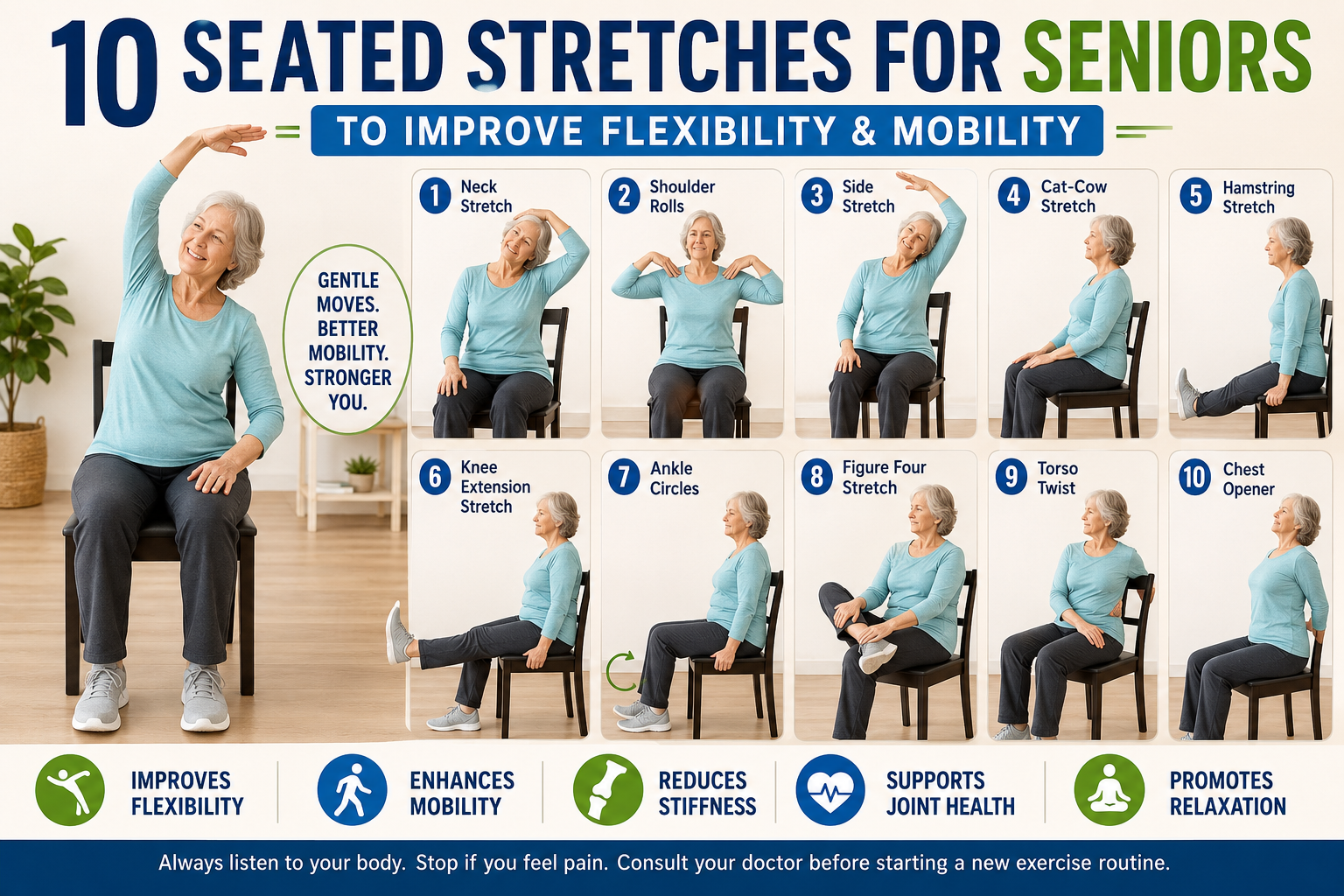
10 Best Seated Stretches for Seniors to Improve Flexibility & Mobility
Before beginning these seated stretches for seniors, sit in a sturdy chair without wheels. Keep your feet flat on the floor and sit tall.
1. Seated Neck Stretch
This stretch helps relieve tension in the neck and shoulders.
How to Do It
- Sit upright.
- Slowly tilt your head toward your right shoulder.
- Hold for 15 to 30 seconds.
- Return to center.
- Repeat on the opposite side.
Benefits
- Reduces neck stiffness.
- Improves range of motion.
- Helps ease tension from prolonged sitting.
2. Shoulder Rolls
Shoulder rolls improve upper-body mobility.
How to Do It
- Sit comfortably.
- Lift your shoulders toward your ears.
- Roll them backward in a circular motion.
- Repeat 10 times.
- Reverse direction.
Benefits
- Loosens tight shoulders.
- Improves posture.
- Increases circulation.
3. Seated Side Stretch
This stretch targets the torso and spine.
Steps
- Raise your right arm overhead.
- Lean gently to the left.
- Feel a stretch along your side.
- Hold for 15 seconds.
- Repeat on both sides.
Benefits
- Improves spinal flexibility.
- Opens chest muscles.
- Enhances mobility.
4. Seated Cat-Cow Stretch
The seated cat-cow stretch promotes spinal health.
How to Perform
Cow Position
- Sit tall.
- Arch your back slightly.
- Lift your chest.
Cat Position
- Round your back.
- Tuck your chin gently.
Repeat 8 to 10 times.
Benefits
- Improves spinal mobility.
- Reduces back stiffness.
- Encourages healthy posture.
5. Seated Hamstring Stretch
Tight hamstrings are common among older adults.
Instructions
- Extend one leg forward.
- Keep the heel on the floor.
- Bend slightly at the hips.
- Keep your back straight.
- Hold for 20 seconds.
Switch legs.
Benefits
- Improves lower-body flexibility.
- Supports walking.
- Helps reduce lower-back strain.
6. Seated Knee Extension Stretch
This movement strengthens and stretches the legs.
Steps
- Sit tall.
- Slowly straighten one leg.
- Hold for a few seconds.
- Lower slowly.
- Repeat 10 times.
Benefits
- Supports knee health.
- Improves leg mobility.
- Strengthens quadriceps.
7. Ankle Circles
Healthy ankles are essential for balance.
How to Do It
- Lift one foot slightly.
- Rotate your ankle clockwise 10 times.
- Rotate counterclockwise 10 times.
- Switch feet.
Benefits
- Improves circulation.
- Supports balance.
- Increases ankle mobility.
8. Seated Figure Four Stretch
This stretch targets the hips.
Instructions
- Sit tall.
- Cross one ankle over the opposite knee.
- Lean forward slightly.
- Hold for 20 seconds.
Repeat on both sides.
Benefits
- Stretches hips and glutes.
- Reduces hip tightness.
- Improves mobility.
Note: Skip this exercise if hip replacement precautions apply unless approved by your healthcare provider.
9. Seated Torso Twist
Gentle spinal rotation helps maintain mobility.
Steps
- Sit upright.
- Place your right hand on the chair.
- Slowly twist to the right.
- Hold 15 seconds.
- Repeat on the other side.
Benefits
- Improves spinal flexibility.
- Helps posture.
- Reduces trunk stiffness.
10. Seated Chest Opener
Many seniors develop rounded shoulders due to prolonged sitting.
How to Perform
- Sit tall.
- Clasp hands behind your back if comfortable.
- Gently lift your chest.
- Hold for 20 seconds.
Benefits
- Improves posture.
- Opens chest muscles.
- Encourages deeper breathing.
Sample Daily Seated Stretch Routine for Seniors
| Exercise | Time/Repetitions |
|---|---|
| Neck Stretch | 20 seconds each side |
| Shoulder Rolls | 10 reps |
| Side Stretch | 20 seconds each side |
| Cat-Cow | 10 reps |
| Hamstring Stretch | 20 seconds each leg |
| Knee Extension | 10 reps each leg |
| Ankle Circles | 10 each direction |
| Figure Four Stretch | 20 seconds each side |
| Torso Twist | 20 seconds each side |
| Chest Opener | 20 seconds |
Total time: Approximately 10–15 minutes.
Best Tips for Safe Seated Stretching
To get the most from seated stretches for seniors, follow these guidelines.
Warm Up First
Walk around your home for a few minutes or march gently while seated.
Stretch Slowly
Avoid sudden movements or bouncing.
Breathe Naturally
Never hold your breath while stretching.
Stay Consistent
Aim to stretch at least three to five days per week.
Listen to Your Body
Mild tension is normal. Sharp pain is not.
Use a Stable Chair
Choose a sturdy chair without wheels for added safety.
Foods That Support Flexibility and Joint Health
While stretching is essential, nutrition also plays an important role.
Omega-3 Rich Foods
- Salmon
- Sardines
- Walnuts
- Flaxseeds
Protein Sources
- Lean poultry
- Eggs
- Greek yogurt
- Beans
Anti-Inflammatory Foods
- Berries
- Leafy greens
- Olive oil
- Tomatoes
Bone-Supporting Nutrients
- Milk
- Fortified cereals
- Cheese
- Yogurt
Staying hydrated is equally important because dehydration may contribute to muscle cramps and stiffness.
Common Mistakes to Avoid
Many seniors unintentionally reduce the effectiveness of stretching by making simple mistakes.
Stretching Too Hard
Overstretching can increase injury risk.
Holding Your Breath
Steady breathing helps muscles relax.
Skipping Stretch Sessions
Consistency matters more than intensity.
Ignoring Pain
Pain is a signal to stop and reassess.
Using Poor Posture
Sit upright throughout your routine.
Rushing Through Movements
Slow, controlled stretching produces better results.
Who Should Be Careful?
Although seated stretches are generally safe, some individuals should consult a healthcare professional before beginning.
You should speak with your doctor if you have:
- Recent surgery.
- Severe osteoporosis.
- Recent fractures.
- Uncontrolled high blood pressure.
- Severe arthritis flare-ups.
- Chronic dizziness.
- Significant balance disorders.
- Joint replacement restrictions.
Important Disclaimer
This article is intended for educational purposes only and does not replace medical advice. Always consult your healthcare provider before beginning a new exercise program, especially if you have existing health conditions.
Frequently Asked Questions
1. How often should seniors do seated stretches?
Most older adults can safely perform gentle stretching three to seven days per week. Daily stretching often provides the greatest mobility benefits.
2. Can seated stretches improve balance?
Indirectly, yes. Improved flexibility and stronger muscles may contribute to better balance and movement confidence.
3. Are chair exercises safe for seniors with arthritis?
In many cases, yes. Gentle movement can help reduce stiffness. However, individuals with arthritis should consult their healthcare provider for personalized guidance.
4. How long should each stretch be held?
Generally, holding stretches for 15 to 30 seconds is recommended for older adults.
5. What is the best time of day to stretch?
Many seniors prefer stretching in the morning to ease stiffness, but any time that fits your routine is beneficial.
6. Can these seated stretches for seniors be done every day?
Yes, most healthy seniors can safely perform these stretches daily, provided movements remain gentle and pain-free.
7. Do I need special equipment?
No. Most seated stretches require only a sturdy chair and comfortable clothing.
Final Thoughts
Aging doesn’t have to mean losing flexibility or independence. Incorporating seated stretches for seniors into your daily routine is a simple yet powerful way to support mobility, reduce stiffness, and improve quality of life.
Start slowly, stay consistent, and focus on gentle progress rather than perfection. Even a few minutes of stretching each day can help you move more comfortably and confidently.
For many older adults, these small daily habits can make a meaningful difference in maintaining an active and independent lifestyle.
External Resources
- CDC Physical Activity Guidelines for Older Adults: https://www.cdc.gov/physicalactivity/basics/older_adults/
- National Institute on Aging Exercise Resources: https://www.nia.nih.gov/health/exercise-and-physical-activity
Also Read –
10 Best Cool Down Exercises for Seniors to Reduce Stiffness Naturally
Heart Rate Chart for Seniors: 7 Normal Resting Pulse Ranges and Warning Signs
Figs: 21 Powerful Health Benefits for Seniors and Adults
Written by
Kanhaiya Solanki is a dedicated online researcher, content writer, and blogger passionate about publishing high-quality, research-based articles. His goal is to provide accurate, easy-to-understand, and practical information on health, technology, senior care, and lifestyle topics for readers worldwide.