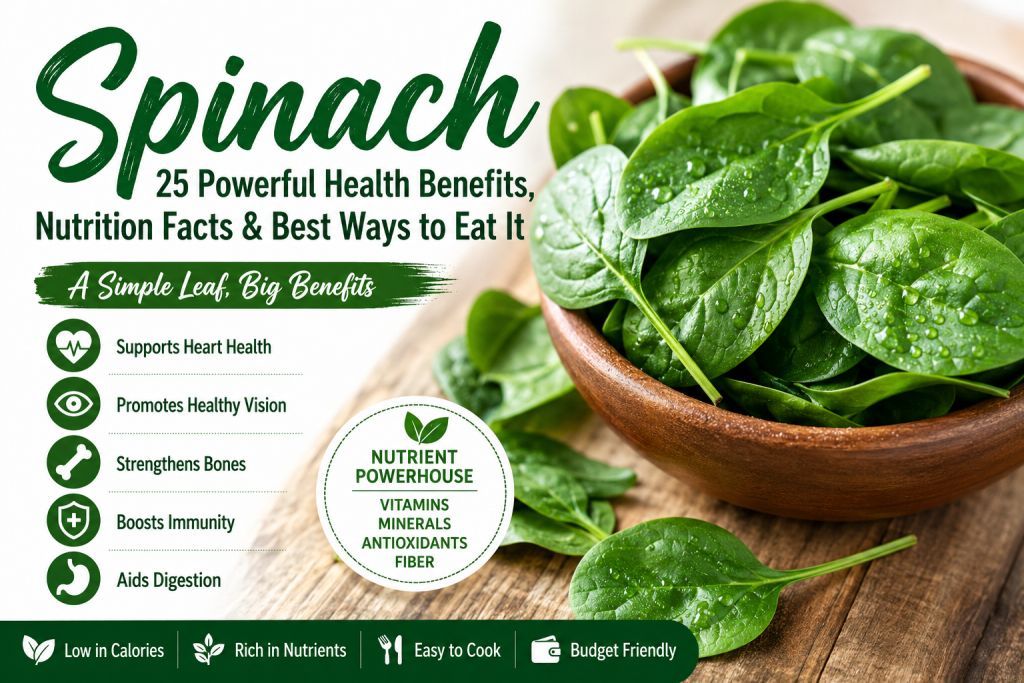
Spinach has earned its reputation as one of the healthiest vegetables you can add to your plate. Whether blended into a morning smoothie, tossed into a salad, or cooked alongside your favorite dinner, spinach delivers an impressive amount of nutrients without adding many calories.
For adults over 40 and seniors, eating nutrient-rich foods becomes even more important. Our bodies naturally change with age, making it essential to choose foods that support heart health, strong bones, healthy muscles, good vision, and a strong immune system. Spinach checks all of those boxes.
Many Americans are looking for simple ways to improve their diet without following restrictive meal plans. Spinach is one of those foods that makes healthy eating easier because it’s affordable, easy to prepare, and available year-round in almost every grocery store.
In this guide, you’ll learn everything you need to know about spinach—from its impressive nutrition profile to practical ways to include it in your daily meals. You’ll also discover who should limit spinach intake, common mistakes people make, and answers to the most frequently asked questions.
Why Spinach Matters for Your Health
Modern diets often contain too much processed food and not enough vegetables. This imbalance can make it difficult to get the vitamins and minerals your body needs every day.
Spinach helps fill that nutritional gap naturally.
Here are a few reasons spinach deserves a place in your weekly grocery cart:
- Low in calories
- Rich in vitamins and minerals
- Excellent source of antioxidants
- Supports healthy aging
- Easy to prepare
- Budget-friendly
- Works in countless recipes
- Available fresh and frozen throughout the year
Unlike trendy superfoods that can be expensive or difficult to find, spinach remains one of the most accessible nutrient-dense vegetables available in the United States.
What Is Spinach?
Spinach is a leafy green vegetable that belongs to the amaranth family. Although it originated thousands of years ago in Persia, it has become a staple vegetable in American kitchens.
Today, spinach is commonly sold as:
- Fresh baby spinach
- Mature spinach leaves
- Frozen spinach
- Canned spinach
- Organic spinach
- Pre-washed salad mixes
Its mild flavor makes it incredibly versatile. Unlike stronger greens, spinach blends well into many dishes without overpowering other ingredients.
Many people enjoy spinach in:
- Salads
- Omelets
- Pasta
- Soups
- Smoothies
- Sandwiches
- Wraps
- Stir-fries
- Casseroles
- Pizza toppings
Spinach Nutrition Facts
One of the biggest reasons spinach stands out is its exceptional nutritional value.
Nutrition Per 100 Grams of Raw Spinach
| Nutrient | Amount |
|---|---|
| Calories | 23 |
| Protein | 2.9 g |
| Carbohydrates | 3.6 g |
| Fiber | 2.2 g |
| Sugar | 0.4 g |
| Fat | 0.4 g |
| Water | 91% |
Vitamins Found in Spinach
Spinach is especially rich in:
- Vitamin A
- Vitamin C
- Vitamin K
- Vitamin E
- Folate
- Vitamin B6
Minerals Found in Spinach
Spinach also contains valuable minerals including:
- Iron
- Magnesium
- Potassium
- Calcium
- Manganese
- Phosphorus
- Zinc
This impressive combination of nutrients makes spinach one of the most nutrient-dense vegetables available.
Why Spinach Is Considered a Superfood
The word “superfood” isn’t an official medical term, but nutrition experts often use it to describe foods that provide exceptional nutritional value.
Spinach fits that description because it contains:
- Essential vitamins
- Important minerals
- Dietary fiber
- Plant compounds
- Antioxidants
- Anti-inflammatory nutrients
Unlike supplements, spinach delivers these nutrients naturally as part of a whole food.
Eating a variety of vegetables—including spinach—can support an overall healthy dietary pattern recommended by health professionals.
25 Powerful Health Benefits of Spinach
1. Spinach Supports Heart Health
Heart disease remains one of the leading health concerns in the United States.
Spinach contains potassium, magnesium, dietary nitrates, and antioxidants that support normal cardiovascular function as part of a balanced diet.
Replacing processed side dishes with vegetables like spinach may also help improve overall diet quality.
2. Spinach Helps Maintain Healthy Blood Pressure
Potassium helps balance sodium levels in the body.
Many Americans consume more sodium than recommended, making potassium-rich foods especially valuable.
Adding spinach to meals is one simple way to increase potassium intake naturally.
3. Spinach Promotes Healthy Vision
Spinach contains two important antioxidants:
- Lutein
- Zeaxanthin
These nutrients are concentrated in the eyes and are associated with maintaining healthy vision as people age.
They’re also found in several other leafy green vegetables, but spinach is one of the richest dietary sources.
4. Spinach Supports Bone Health
One serving of spinach provides a significant amount of vitamin K.
Vitamin K plays an important role in maintaining normal bone health by supporting the body’s natural bone-building processes.
Spinach also contributes calcium and magnesium, two minerals involved in healthy bones.
5. Spinach Helps Build a Strong Immune System
Your immune system depends on several nutrients working together.
Spinach supplies:
- Vitamin C
- Vitamin A
- Folate
- Iron
- Antioxidants
Together, these nutrients support normal immune function as part of a healthy diet.
6. Spinach Provides Plant-Based Iron
Iron helps transport oxygen throughout the body.
Although spinach contains non-heme iron, which is absorbed less efficiently than iron from animal foods, pairing spinach with vitamin C-rich foods such as oranges, strawberries, or bell peppers can improve absorption.
7. Spinach Supports Healthy Digestion
Fiber is essential for digestive health.
Spinach contributes dietary fiber that helps:
- Promote regular bowel movements
- Support beneficial gut bacteria
- Increase fullness after meals
- Improve overall digestive health
8. Spinach May Help with Healthy Weight Management
Spinach is naturally:
- Low in calories
- High in water
- Rich in fiber
This combination makes meals more satisfying without significantly increasing calorie intake.
For example, adding spinach to scrambled eggs or sandwiches increases volume and nutrients while keeping meals relatively light.
9. Spinach Supports Healthy Skin
Healthy skin starts with proper nutrition.
Spinach provides nutrients involved in maintaining healthy skin, including:
- Vitamin A
- Vitamin C
- Vitamin E
- Antioxidants
These nutrients help support normal skin repair and protect cells from everyday oxidative stress.
10. Spinach Contributes to Healthy Brain Function
As we age, supporting brain health becomes increasingly important.
Spinach contains folate, vitamin K, antioxidants, and other plant compounds that researchers continue to study for their role in healthy cognitive aging.
While no single food can prevent memory decline, regularly eating leafy greens fits well within dietary patterns associated with healthy aging.
How Spinach Supports Healthy Aging
Healthy aging isn’t about finding one miracle food. Instead, it’s about consistently eating nutrient-rich foods that help your body function at its best over time.
Spinach is especially valuable for adults over 40 because it provides several nutrients that become increasingly important with age, including vitamin K, magnesium, potassium, folate, and antioxidants. These nutrients help support healthy bones, muscles, eyesight, and the cardiovascular system.
Including spinach in your meals a few times each week is a practical habit that can contribute to long-term wellness when combined with regular physical activity, quality sleep, and other healthy lifestyle choices.
People who enjoy balanced eating patterns often find spinach easy to incorporate into breakfast, lunch, and dinner, making it one of the most convenient vegetables for everyday nutrition.
More Health Benefits of Spinach
11. Spinach Supports Muscle Function
Magnesium and potassium are important for normal muscle function.
Adults who stay active—whether through walking, gardening, swimming, or strength training—can benefit from foods that provide these minerals naturally.
12. Spinach Helps Maintain Energy Levels
Spinach contains iron, folate, and magnesium, nutrients involved in energy metabolism.
While spinach isn’t a quick energy booster like caffeine, it can help support steady energy levels as part of a balanced diet.
13. Spinach Provides Powerful Antioxidants
Antioxidants help protect cells from oxidative stress caused by normal metabolism and environmental factors.
Spinach contains several antioxidants, including:
- Lutein
- Zeaxanthin
- Beta-carotene
- Vitamin C
- Vitamin E
14. Spinach Supports Healthy Blood Sugar Management
Spinach is low in carbohydrates and high in fiber, making it a smart vegetable choice for people who are monitoring their blood sugar levels.
Including non-starchy vegetables like spinach in meals may help improve overall meal balance.
15. Spinach Helps Reduce Diet-Related Inflammation
Leafy greens contain plant compounds that are associated with anti-inflammatory dietary patterns.
A diet rich in vegetables, fruits, whole grains, nuts, and healthy fats is generally linked to lower levels of chronic inflammation.
16. Spinach Supports Eye Health During Aging
Lutein and zeaxanthin are especially important for adults over 50.
These antioxidants accumulate in the retina and help filter harmful blue light.
17. Spinach Helps Increase Vegetable Intake
Many Americans struggle to meet daily vegetable recommendations.
Spinach is an easy solution because it can be added to foods people already enjoy, such as:
- Eggs
- Pasta
- Soups
- Sandwiches
- Smoothies
- Rice dishes
18. Spinach Supports Hydration
Because spinach is about 91% water, it contributes to overall fluid intake.
Hydration becomes increasingly important as people age, and water-rich vegetables can help support daily hydration goals.
19. Spinach Provides Folate for Cell Health
Folate plays a role in cell growth and normal DNA synthesis.
Adequate folate intake is important throughout adulthood.
20. Spinach Supports Healthy Cholesterol Levels
Spinach contains fiber and plant compounds that fit well within heart-healthy eating patterns recommended by many nutrition experts.
21. Spinach Helps Create More Satisfying Meals
Adding spinach increases the volume of a meal without adding many calories.
This can help people feel fuller and more satisfied after eating.
22. Spinach Supports Recovery After Exercise
The minerals and antioxidants in spinach may help support normal recovery processes following physical activity.
23. Spinach Contributes to Overall Nutrient Intake
Even a small serving of spinach provides multiple vitamins and minerals, making it an efficient way to improve overall nutrient intake.
24. Spinach Is Easy to Include in Daily Meals
Some healthy foods require special preparation. Spinach does not.
You can add it directly to many recipes with minimal effort.
25. Spinach Supports Long-Term Healthy Eating Habits
Sustainable nutrition matters more than short-term diets.
Because spinach is affordable, versatile, and widely available, it’s easier to include regularly than many trendy health foods.
The Science Behind Spinach Nutrition
Why Is Spinach So Nutrient Dense?
Spinach leaves contain a high concentration of vitamins, minerals, and protective plant compounds relative to their calorie content.
A large bowl of raw spinach may contain fewer than 50 calories while still providing substantial amounts of vitamin K, vitamin A, and folate.
What Happens When You Cook Spinach?
Cooking spinach causes the leaves to wilt and lose water volume.
This means a cooked serving contains a more concentrated amount of certain nutrients per cup.
Cooking can also reduce oxalates, compounds that naturally occur in spinach.
Fresh vs Frozen Spinach: Which Is Better?
Both can be excellent choices.
| Fresh Spinach | Frozen Spinach |
|---|---|
| Great for salads | Often less expensive |
| Crunchier texture | Lasts longer |
| No thawing needed | Convenient for cooking |
| Best for raw dishes | Picked and frozen quickly |
| Shorter shelf life | Excellent for soups and casseroles |
If your fresh spinach often goes bad before you use it, frozen spinach may be the more practical option.
Raw vs Cooked Spinach
Benefits of Raw Spinach
- Higher vitamin C content
- Fresh texture
- Ideal for salads and sandwiches
- Easy to add to smoothies
Benefits of Cooked Spinach
- Smaller volume makes it easier to eat more
- Better absorption of some nutrients
- Lower oxalate content
- Gentler for some digestive systems
Best Approach
Many nutrition professionals recommend eating both raw and cooked spinach throughout the week to benefit from the advantages of each.
Best Ways to Eat Spinach
Spinach Breakfast Ideas
- Add spinach to scrambled eggs
- Mix into omelets
- Blend into a smoothie
- Stir into oatmeal with savory toppings
Spinach Lunch Ideas
- Spinach salad with grilled chicken
- Turkey and spinach wrap
- Soup with spinach added at the end
- Spinach and bean salad
Spinach Dinner Ideas
- Sautéed spinach with garlic
- Spinach pasta
- Spinach stuffed chicken
- Vegetable stir-fry with spinach
- Spinach and mushroom casserole
Easy Spinach Smoothie Recipe
2-Minute Spinach Smoothie
Quick & easy
1 cup fresh spinach
1 banana
1/2 cup frozen berries
1 cup milk or unsweetened almond milk
1 tablespoon ground flaxseed (optional)
Blend until smooth.
This is an easy way to increase your spinach intake without dramatically changing the flavor of your breakfast.
Common Mistakes to Avoid When Eating Spinach
1. Buying Too Much at Once
Fresh spinach can spoil quickly. Buy amounts you can realistically use within a few days.
2. Not Washing Fresh Spinach
Even pre-washed spinach may benefit from an additional rinse.
3. Overcooking Spinach
Spinach cooks very quickly. Overcooking can affect texture and reduce some heat-sensitive nutrients.
4. Relying on Spinach Alone for Iron
Spinach contributes iron, but a varied diet is important for meeting overall iron needs.
5. Forgetting Healthy Fats
Some nutrients in spinach are better absorbed when eaten with healthy fats such as:
- Olive oil
- Avocado
- Nuts
- Seeds
6. Adding Too Much Salt
Spinach is naturally flavorful. Heavy amounts of salt can reduce the overall healthfulness of the dish.
Practical Tips for Adding More Spinach to Your Diet
Try these simple habits:
- Keep a bag of spinach in the refrigerator.
- Add a handful to eggs every morning.
- Stir spinach into soup just before serving.
- Use spinach instead of lettuce on sandwiches.
- Freeze extra spinach before it spoils.
- Blend spinach into pasta sauce for extra nutrients.
- Mix spinach into rice or quinoa dishes.
Small additions can add up significantly over the course of a week.
A Simple Weekly Spinach Plan
| Day | Easy Spinach Idea |
|---|---|
| Monday | Spinach omelet |
| Tuesday | Spinach salad |
| Wednesday | Spinach smoothie |
| Thursday | Soup with spinach |
| Friday | Spinach pasta |
| Saturday | Turkey and spinach wrap |
| Sunday | Sautéed spinach side dish |
This approach keeps meals varied while helping you enjoy spinach several times each week.
Common Mistakes to Avoid When Eating Spinach
Spinach is one of the healthiest vegetables you can eat, but a few common mistakes can reduce its nutritional value or make it less enjoyable.
1. Only Eating Spinach One Way
If you only eat spinach in salads, you may get tired of it quickly.
Instead, try rotating between:
- Fresh salads
- Smoothies
- Omelets
- Soups
- Pasta dishes
- Sandwiches
- Stir-fries
- Grain bowls
Variety makes it easier to eat spinach consistently.
2. Overcooking Spinach
Cooking spinach for too long can reduce some heat-sensitive nutrients, such as vitamin C.
A quick sauté or light steaming is often enough to soften the leaves while preserving much of their nutritional value.
3. Forgetting Healthy Fats
Some nutrients in spinach, including beta-carotene and vitamin K, are better absorbed when eaten with a small amount of healthy fat.
Good choices include:
- Olive oil
- Avocado
- Nuts
- Seeds
- Salmon
- Eggs
4. Ignoring Food Safety
Fresh spinach should always be washed unless the package clearly states it has been pre-washed and is ready to eat.
Store spinach in the refrigerator and use it before it becomes slimy or develops an unpleasant odor.
5. Depending on Spinach Alone
No single food provides everything your body needs.
A healthy diet should also include:
- Fruits
- Whole grains
- Lean proteins
- Healthy fats
- Other colorful vegetables
- Dairy or fortified alternatives
Who Should Be Careful When Eating Spinach?
Although spinach is nutritious, it isn’t the best choice for everyone.
People Taking Blood Thinners
Spinach is naturally high in vitamin K.
If you take blood-thinning medications such as warfarin, don’t suddenly increase or decrease your spinach intake without talking to your healthcare provider. The goal is to keep your vitamin K intake consistent rather than avoiding spinach completely.
People Prone to Kidney Stones
Spinach contains oxalates, which may contribute to certain types of kidney stones in susceptible individuals.
If you’ve been advised to follow a low-oxalate diet, ask your healthcare provider or a registered dietitian how much spinach is appropriate for you.
People with Certain Kidney Conditions
Some kidney conditions require limiting potassium intake. Since spinach contains potassium, your healthcare provider may recommend portion limits depending on your individual needs.
Individuals with Food Allergies
Although uncommon, spinach allergies can occur. Seek medical care if you experience symptoms such as hives, swelling, or difficulty breathing after eating spinach.
Practical Tips for Buying and Storing Spinach
Choosing and storing spinach properly helps maintain its freshness and flavor.
How to Choose Fresh Spinach
Look for:
- Bright green leaves
- Crisp texture
- No yellowing
- No slimy spots
- No strong odor
Baby spinach is more tender and works well in salads, while mature spinach is excellent for cooking.
How to Store Spinach
- Refrigerate immediately after purchase.
- Keep it in its original container or a breathable produce bag.
- Avoid excess moisture.
- Use within several days for the best quality.
Frozen spinach can be stored for several months in the freezer and is convenient for cooked dishes.
Frequently Asked Questions About Spinach
Is spinach healthier raw or cooked?
Both forms are healthy.
Raw spinach provides more vitamin C, while cooked spinach makes certain nutrients, such as iron and calcium, more available for absorption. Including both in your diet offers a variety of nutritional benefits.
Can I eat spinach every day?
For most healthy adults, yes. Eating moderate portions of spinach daily can be part of a balanced diet. It’s also a good idea to include a variety of other vegetables throughout the week.
Does spinach contain protein?
Yes, spinach contains a small amount of plant protein. While it’s not a high-protein food, it can contribute to your overall daily protein intake when combined with foods like beans, eggs, fish, dairy, or lean meats.
Is spinach good for weight loss?
Spinach can support weight management because it’s low in calories, high in water, and contains fiber that helps you feel satisfied after meals.
Is frozen spinach as healthy as fresh spinach?
Yes. Frozen spinach is picked and frozen quickly after harvest, helping preserve many of its nutrients. It’s a convenient and affordable option for soups, casseroles, and smoothies.
What foods pair well with spinach?
Spinach pairs well with:
- Eggs
- Salmon
- Chicken
- Turkey
- Mushrooms
- Tomatoes
- Bell peppers
- Garlic
- Olive oil
- Avocados
- Berries
- Citrus fruits
- Whole-grain pasta
- Brown rice
Is spinach a good source of iron?
Yes, spinach provides non-heme iron, a plant-based form of iron. Eating spinach with vitamin C-rich foods like oranges, strawberries, or bell peppers can help improve iron absorption.
Final Thoughts
Spinach has remained one of the world’s most respected leafy greens for good reason. It’s affordable, versatile, and packed with vitamins, minerals, antioxidants, and fiber that support overall health.
Whether your goal is maintaining a healthy heart, supporting your eyesight, strengthening your bones, or simply eating more vegetables, spinach is a smart addition to your meals.
The key isn’t to treat spinach as a miracle food but as one important part of a balanced lifestyle. Pair it with a variety of colorful fruits and vegetables, whole grains, lean proteins, healthy fats, regular physical activity, and adequate sleep to support long-term wellness.
Small changes often lead to lasting results. Adding spinach to your shopping list and including it in a few meals each week is a simple habit that can make healthy eating easier for years to come.
Disclaimer: This article is intended for educational purposes only and should not replace professional medical advice, diagnosis, or treatment. If you have a medical condition, dietary restrictions, or take prescription medications, consult your healthcare provider or a registered dietitian before making significant dietary changes.
Helpful External Resources
For additional evidence-based nutrition information, visit:
- U.S. Department of Agriculture (USDA): https://www.myplate.gov
- Academy of Nutrition and Dietetics: https://www.eatright.org
- Centers for Disease Control and Prevention (CDC) Nutrition: https://www.cdc.gov/nutrition
Also Read –
Salmon Benefits: Powerful Reasons to Eat More Salmon
Blueberries: 25 Powerful Health Benefits for a Healthier Life
30 Super Foods for a Healthier You: Eat Better Every Day
Written by
Kanhaiya Solanki is a dedicated online researcher, content writer, and blogger passionate about publishing high-quality, research-based articles. His goal is to provide accurate, easy-to-understand, and practical information on health, technology, senior care, and lifestyle topics for readers worldwide.