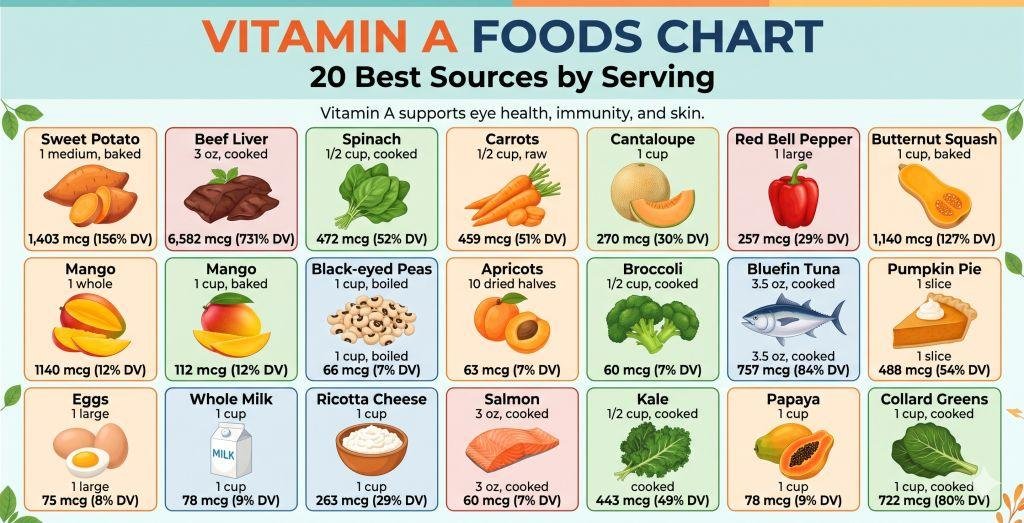
If you are looking for a vitamin A foods chart, the good news is that you have plenty of options. Vitamin A comes from foods such as sweet potatoes, carrots, spinach, eggs, dairy products, certain fish, and liver, while many colorful fruits and vegetables provide carotenoids that the body can convert into vitamin A.
Vitamin A is a fat-soluble vitamin that plays important roles in normal vision, immune function, reproduction, growth, and the maintenance of tissues throughout the body.
For adults over 50, getting enough vitamin A is generally more about eating a varied diet than taking a high-dose supplement. In the United States, vitamin A deficiency is uncommon, but inadequate intake can still occur in people whose diets are limited or who have conditions that affect nutrient absorption.
This guide provides a practical vitamin A foods chart, explains how much vitamin A adults need, compares animal and plant sources, and covers the benefits, risks, supplements, and simple ways to include vitamin A-rich foods in everyday meals.
Quick Answer: What Foods Are High in Vitamin A?
Some of the richest and most practical vitamin A foods include:
- Beef liver
- Baked sweet potatoes
- Cooked spinach
- Carrots
- Red sweet peppers
- Cantaloupe
- Mango
- Eggs
- Fortified breakfast cereal
- Milk
- Ricotta cheese
- Broccoli
- Salmon
- Herring
- Dried apricots
- Pumpkin
- Winter squash
- Kale and other dark leafy greens
Plant foods often provide provitamin A carotenoids, particularly beta-carotene. Animal foods and fortified foods can provide preformed vitamin A, such as retinol. Your body handles these forms differently, which is one reason vitamin A is measured in micrograms of retinol activity equivalents (mcg RAE).
What Is Vitamin A?
Vitamin A is an essential fat-soluble vitamin. “Fat-soluble” means the body can store it, particularly in the liver, rather than needing to eliminate all of it quickly through urine.
Vitamin A is involved in several important biological processes. It helps maintain normal vision, supports immune function, contributes to reproduction and growth, and helps maintain tissues and organs.
Vitamin A is not just one substance. The diet provides it in different forms.
Preformed Vitamin A
Preformed vitamin A is found mainly in animal foods and fortified products. Examples include:
- Liver
- Fish
- Eggs
- Milk and dairy products
- Some fortified cereals
These foods contain forms of vitamin A that the body can use directly after digestion and metabolism.
Provitamin A Carotenoids
Provitamin A carotenoids are plant compounds that the body can convert into vitamin A.
Beta-carotene is the best-known example.
You will commonly find these compounds in:
- Carrots
- Sweet potatoes
- Spinach
- Pumpkin
- Winter squash
- Cantaloupe
- Mango
- Red and orange peppers
The bright orange, yellow, and red colors of many fruits and vegetables are partly due to carotenoids.
Vitamin A Foods Chart
The following chart is based primarily on vitamin A values reported by the NIH Office of Dietary Supplements. Amounts can vary with food variety, preparation, serving size, and brand. The Daily Value for vitamin A is 900 mcg RAE for adults and children age 4 and older.
| Food | Typical Serving | Vitamin A (mcg RAE) | Approx. % DV |
|---|---|---|---|
| Beef liver, pan-fried | 3 oz | 6,582 | 731% |
| Sweet potato, baked in skin | 1 whole | 1,403 | 156% |
| Spinach, frozen, boiled | ½ cup | 573 | 64% |
| Pumpkin pie | 1 piece | 488 | 54% |
| Carrots, raw | ½ cup | 459 | 51% |
| Herring, Atlantic, pickled | 3 oz | 219 | 24% |
| Milk, skim, fortified | 1 cup | 149 | 17% |
| Cantaloupe | ½ cup | 135 | 15% |
| Ricotta cheese, part-skim | ½ cup | 133 | 15% |
| Red sweet pepper, raw | ½ cup | 117 | 13% |
| Mango | 1 whole | 112 | 12% |
| Fortified breakfast cereal | 1 serving | 90 | 10% |
| Hard-boiled egg | 1 large | 75 | 8% |
| Black-eyed peas, boiled | 1 cup | 66 | 7% |
| Dried apricots | 5 pieces | 63 | 7% |
| Broccoli, boiled | ½ cup | 60 | 7% |
| Salmon, sockeye, cooked | 3 oz | 59 | 7% |
| Tomato juice | ¾ cup | 42 | 5% |
| Plain low-fat yogurt | 1 cup | 32 | 4% |
| Light tuna, canned in oil | 3 oz | 20 | 2% |
The very high number for beef liver is important to notice. Liver is extremely concentrated in preformed vitamin A, so it is not a food that most people need to eat frequently to obtain adequate vitamin A.
What Stands Out From the Chart?
You do not need liver or supplements to get vitamin A.
A baked sweet potato, for example, can provide more than the adult Daily Value in one serving. Carrots, spinach, red peppers, cantaloupe, mango, and other produce can also make meaningful contributions.
This is one reason a varied diet works well: you can get vitamin A from several different foods without relying on a single source.
How Much Vitamin A Do Adults Need?
Vitamin A requirements depend on age and sex.
For adults age 51 and older, the NIH recommends:
| Adult Group | Recommended Vitamin A |
|---|---|
| Men 51+ | 900 mcg RAE/day |
| Women 51+ | 700 mcg RAE/day |
| Pregnant adults | 770 mcg RAE/day |
| Breastfeeding adults | 1,300 mcg RAE/day |
The FDA’s Daily Value used on Nutrition Facts labels is 900 mcg RAE per day for adults and children age 4 and older.
These numbers represent average recommended daily intake, not a number that must be hit perfectly every single day.
Preformed Vitamin A vs. Provitamin A
Understanding the difference between these two forms can make the vitamin A foods chart much easier to interpret.
| Feature | Preformed Vitamin A | Provitamin A Carotenoids |
|---|---|---|
| Common form | Retinol and retinyl esters | Beta-carotene and related carotenoids |
| Main sources | Liver, fish, dairy, eggs | Fruits and vegetables |
| Body conversion needed | No | Yes |
| Common foods | Liver, milk, eggs | Carrots, sweet potatoes, spinach |
| Excess concern | More important | Different safety profile |
| Main role | Vitamin A activity | Can be converted to vitamin A |
The body converts provitamin A carotenoids into vitamin A as needed. The conversion is not as straightforward as simply counting the amount of beta-carotene in a food, which is why nutrition recommendations use RAE.
Best Vitamin A Foods Explained
1. Sweet Potatoes
Sweet potatoes are among the easiest foods to include when you want more provitamin A carotenoids.
One whole baked sweet potato provides about 1,403 mcg RAE in the NIH’s selected-food table.
Try a baked sweet potato as a side dish, add roasted cubes to a salad, or mash it with a little olive oil and cinnamon.
2. Carrots
Carrots are a familiar source of beta-carotene.
A half-cup of raw carrots provides about 459 mcg RAE, or roughly half of the FDA Daily Value.
You can eat them raw, roast them, add them to soups, or combine shredded carrots with leafy greens for a simple salad.
3. Spinach
Spinach provides vitamin A mainly through carotenoids.
A half-cup of boiled frozen spinach provides about 573 mcg RAE.
Spinach is also versatile. Add it to eggs, soups, pasta dishes, beans, or a vegetable omelet.
4. Beef Liver
Beef liver is one of the most concentrated food sources of preformed vitamin A.
Three ounces of pan-fried beef liver contain about 6,582 mcg RAE.
That is several times the adult Daily Value.
Because of this concentration, liver should not be treated like an everyday vitamin A food. People who regularly eat liver or take vitamin A supplements should pay attention to their total intake of preformed vitamin A.
5. Red Sweet Peppers
Red peppers provide carotenoids as well as other nutrients.
A half-cup serving contains about 117 mcg RAE according to the NIH table.
They are especially easy to add to salads, omelets, sandwiches, soups, and stir-fries.
6. Cantaloupe
Cantaloupe is a useful fruit source of provitamin A carotenoids.
A half-cup provides about 135 mcg RAE.
It can make an easy breakfast or snack, especially when paired with plain yogurt.
7. Mango
Mango contains carotenoids and can add vitamin A to a diet without requiring a vegetable-heavy meal.
One whole mango provides about 112 mcg RAE in the NIH’s selected-food table.
8. Eggs
Eggs provide a smaller amount of vitamin A than many colorful vegetables, but they can still contribute.
One large hard-boiled egg provides approximately 75 mcg RAE.
Eggs can be especially practical for breakfast or a quick lunch.
9. Fortified Milk and Cereal
Some foods have vitamin A added during processing.
Fortified skim milk provides about 149 mcg RAE per cup in the NIH table, while a serving of breakfast cereal fortified with 10% of the Daily Value provides about 90 mcg RAE.
Check the Nutrition Facts label because fortification levels vary.
10. Fish
Certain fish provide vitamin A, although they may not contain as much as liver or some vegetables.
Herring provides about 219 mcg RAE per 3-ounce serving in the NIH table, while cooked sockeye salmon provides about 59 mcg RAE.
Fish can also contribute protein and, depending on the species, omega-3 fatty acids.
For another practical nutrient guide, see our Omega-3 foods chart.
Benefits of Vitamin A
Supports Normal Vision
Vitamin A is essential for normal vision. The retina uses vitamin A-related compounds in the process of detecting light.
Severe deficiency can interfere with normal vision, particularly in low-light conditions.
However, taking extra vitamin A when you already get enough does not mean your eyesight will automatically become sharper.
Supports Immune Function
Vitamin A plays an important role in normal immune function.
It contributes to maintaining tissues and supports several processes involved in the body’s immune response.
Helps Maintain Normal Tissues
Vitamin A is involved in the formation and maintenance of epithelial tissues, which form protective surfaces throughout the body.
This is one reason vitamin A is important beyond vision.
Supports Normal Reproduction and Development
Vitamin A participates in reproduction, growth, and development.
For healthy adults, the practical goal is adequate intake rather than consuming unusually large amounts.
Provides Carotenoids From Plant Foods
Many vitamin A-rich vegetables also provide a range of other nutrients and plant compounds.
For example, carrots and sweet potatoes provide carotenoids along with fiber and other nutrients.
That makes food-based vitamin A intake useful as part of an overall healthy eating pattern.
Vitamin A and Eye Health
Vitamin A is strongly connected with normal vision, but it is important not to oversimplify the relationship.
Eating carrots does not give you superhuman eyesight.
Instead, vitamin A helps the eyes perform normal physiological functions. Severe vitamin A deficiency can cause serious vision problems, but this is uncommon in the United States.
For adults over 50, eye health involves much more than vitamin A.
A broader eye-friendly eating pattern can include:
- Dark leafy greens
- Colorful vegetables
- Fruits
- Eggs
- Fish
- Nuts and seeds
- Whole grains
- Adequate protein
You can also read our related Eye Healthy Foods Chart for a broader look at nutrients associated with healthy vision.
Vitamin A for Adults Over 50
Growing older does not automatically mean you need more vitamin A.
For adults age 51 and older, the recommended amount remains 900 mcg RAE for men and 700 mcg RAE for women.
The bigger issue for many older adults is maintaining a varied diet.
Some people eat less as they age. Others have difficulty chewing, changes in taste, digestive problems, or medical conditions that affect nutrient absorption.
A simple strategy is to include colorful produce regularly rather than trying to calculate every nutrient.
For example:
Breakfast: Eggs with spinach and whole-grain toast
Lunch: Chicken salad with carrots and red pepper
Snack: Cantaloupe or mango
Dinner: Baked salmon with roasted sweet potato and broccoli
This kind of eating pattern provides much more than vitamin A alone.
For more healthy-aging nutrition ideas, you can also explore our Fiber Intake Chart by Age and Calcium Intake Chart by Age.
Potential Risks of Too Much Vitamin A
Vitamin A is essential, but more is not always better.
Because preformed vitamin A is fat-soluble, the body can store excess amounts. Regularly consuming excessive amounts of preformed vitamin A can lead to toxicity.
The Adult Upper Limit
For adults, the tolerable upper intake level for preformed vitamin A is 3,000 mcg RAE per day. This includes intake from foods, beverages, and supplements containing preformed vitamin A.
This is an upper limit, not a recommended target.
Importantly, this limit applies to preformed vitamin A rather than beta-carotene and other provitamin A carotenoids.
Symptoms of Excessive Preformed Vitamin A
Very high intake can cause symptoms such as:
- Severe headache
- Nausea
- Dizziness
- Blurred vision
- Muscle aches
- Coordination problems
Long-term excessive intake may also contribute to dry skin, painful joints or muscles, fatigue, and abnormal liver test results.
What About Too Many Carrots?
Eating carrots, sweet potatoes, or other beta-carotene-rich vegetables is not the same as taking high-dose preformed vitamin A.
Very high beta-carotene intake can sometimes cause a harmless yellow-orange skin color called carotenodermia. It generally improves when intake decreases.
Vitamin A Supplements
Most people should not automatically take a vitamin A supplement simply because they want to improve their nutrition.
Many multivitamins already contain vitamin A, and some supplements provide substantial amounts.
Vitamin A supplements may contain:
- Retinyl acetate
- Retinyl palmitate
- Beta-carotene
- A combination of forms
Read the label carefully rather than looking only at the total number next to “vitamin A.” The form matters when considering the upper limit for preformed vitamin A.
Some medications can also interact with vitamin A supplements. For example, the NIH notes interactions involving orlistat and certain prescription retinoids.
If you regularly take medications, check with your doctor or pharmacist before starting a high-dose vitamin A supplement.
Simple Vitamin A Meal Ideas
You do not need complicated recipes to eat more vitamin A-rich foods.
Breakfast
Spinach and egg breakfast
- 2 eggs
- Sautéed spinach
- Whole-grain toast
- Fresh cantaloupe
This combines eggs and spinach with a fruit source of carotenoids.
Lunch
Colorful chicken salad
- Grilled chicken
- Romaine or spinach
- Shredded carrots
- Red bell pepper
- Tomatoes
- Olive-oil-based dressing
Snack
Yogurt and mango
- Plain yogurt
- Fresh mango
- Small handful of nuts
Dinner
Salmon and sweet potato
- Baked salmon
- Roasted sweet potato
- Steamed broccoli
- Side salad
This provides vitamin A alongside protein, fiber, and other nutrients.
Seven Practical Ways to Get More Vitamin A
1. Eat Something Orange or Green Every Day
Carrots, sweet potatoes, spinach, pumpkin, and winter squash are easy choices.
2. Rotate Your Sources
You don’t have to eat carrots every day.
Use spinach one day, sweet potato another, and red peppers or pumpkin on another.
3. Choose Whole Foods First
For most people, food is a practical way to obtain vitamin A and other nutrients at the same time.
4. Read Fortified Food Labels
Milk and breakfast cereals may contain added vitamin A.
Check the Nutrition Facts label to see how much you’re getting.
5. Don’t Treat Liver Like an Everyday Food
Liver contains an exceptionally high amount of preformed vitamin A.
If you eat it regularly, take its vitamin A content into account.
6. Check Your Multivitamin
If you use a multivitamin, look at the amount and form of vitamin A it contains before adding another vitamin A supplement.
7. Focus on Overall Dietary Quality
Vitamin A is only one nutrient.
A diet containing vegetables, fruits, whole grains, protein foods, healthy fats, and adequate fiber will generally be more useful than focusing heavily on one vitamin.
Common Vitamin A Myths
Myth 1: Carrots are the only food that provides vitamin A.
Fact: Carrots are a good source, but sweet potatoes, spinach, red peppers, cantaloupe, mango, dairy products, eggs, fish, and liver can also provide vitamin A or its precursors.
Myth 2: More vitamin A always means better eyesight.
Fact: Vitamin A is necessary for normal vision, but consuming extra vitamin A when your intake is already adequate does not guarantee better eyesight.
Myth 3: All vitamin A comes from animal foods.
Fact: Animal foods can provide preformed vitamin A, while many plant foods provide provitamin A carotenoids that the body can convert into vitamin A.
Myth 4: Beta-carotene and vitamin A are exactly the same thing.
Fact: Beta-carotene is a provitamin A carotenoid. The body can convert some of it into vitamin A, but the conversion is not identical to consuming preformed vitamin A.
Myth 5: Vitamin A supplements are harmless because vitamin A is essential.
Fact: High intakes of preformed vitamin A can cause toxicity. Adults have an upper limit of 3,000 mcg RAE per day for preformed vitamin A.
Myth 6: Older adults automatically need high-dose vitamin A.
Fact: Adults age 51 and older have the same general RDA by sex as younger adults: 900 mcg RAE for men and 700 mcg RAE for women.
Who Should Be More Careful?
Adults Taking Multiple Supplements
If you use a multivitamin plus individual supplements, check whether more than one product contains vitamin A.
People Taking Certain Medications
Vitamin A supplements can interact with some medications. Orlistat can reduce vitamin A absorption, while certain prescription retinoids can increase the risk of excessive vitamin A exposure.
People With Certain Medical Conditions
Medical conditions that affect fat absorption can also affect absorption of fat-soluble vitamins such as vitamin A.
If you have a digestive or absorption disorder, ask your healthcare professional whether you need nutritional testing.
People Who Regularly Eat Liver
Because liver can contain extremely high amounts of preformed vitamin A, frequent consumption deserves more attention than eating ordinary servings of carrots or sweet potatoes.
Pregnant or Potentially Pregnant Individuals
High doses of preformed vitamin A can cause birth defects during pregnancy. Anyone who is pregnant or could become pregnant should avoid high-dose vitamin A supplements unless specifically recommended by a healthcare professional.
How to Get Started
If you want to improve your vitamin A intake, keep it simple.
Step 1: Add One Colorful Vegetable
Start with carrots, sweet potatoes, spinach, pumpkin, or red peppers.
Step 2: Add a Fruit Source
Cantaloupe and mango are easy choices.
Step 3: Include Normal Protein Foods
Eggs and fish can contribute vitamin A while also providing protein and other nutrients.
Step 4: Check Your Labels
Look at fortified milk, cereal, and supplements.
Step 5: Don’t Chase High Numbers
The goal is adequate vitamin A, not the highest possible intake.
Step 6: Review Supplements
If you already take a multivitamin or vitamin A product, check its form and amount before adding anything else.
Frequently Asked Questions
What foods are highest in vitamin A?
Beef liver is extremely high in preformed vitamin A. Sweet potatoes, spinach, carrots, and other colorful vegetables are also excellent food sources, particularly for provitamin A carotenoids.
What is the best vitamin A food for adults over 50?
There is no single best food. Sweet potatoes, carrots, spinach, red peppers, eggs, dairy foods, and fish can all fit into a balanced diet.
How much vitamin A does a woman over 50 need?
Women age 51 and older generally need 700 mcg RAE per day.
How much vitamin A does a man over 50 need?
Men age 51 and older generally need 900 mcg RAE per day.
Are carrots high in vitamin A?
Yes. A half-cup of raw carrots provides about 459 mcg RAE, according to the NIH’s selected-food table.
Is sweet potato high in vitamin A?
Yes. One whole baked sweet potato provides approximately 1,403 mcg RAE in the NIH table.
Are eggs a good source of vitamin A?
Eggs provide vitamin A, although they contain less than foods such as liver, sweet potatoes, and spinach. One large hard-boiled egg provides about 75 mcg RAE.
Can you get vitamin A from vegetables?
Yes. Vegetables such as carrots, sweet potatoes, spinach, broccoli, and red peppers provide provitamin A carotenoids or vitamin A.
Is vitamin A good for your eyes?
Yes. Vitamin A is essential for normal vision. However, taking extra vitamin A beyond what your body needs does not automatically improve eyesight.
Can you get too much vitamin A from food?
It depends on the form and food. Liver is extremely high in preformed vitamin A, while plant foods primarily provide provitamin A carotenoids. The adult upper limit of 3,000 mcg RAE applies to preformed vitamin A.
Is beta-carotene the same as vitamin A?
No. Beta-carotene is a provitamin A carotenoid that your body can convert into vitamin A.
Should adults over 50 take vitamin A supplements?
Not automatically. Most people should focus on getting adequate nutrients from a varied diet. Supplements may be appropriate in specific circumstances, but high-dose vitamin A should not be taken without professional guidance.
Can vitamin A help the immune system?
Vitamin A is important for normal immune function. However, taking extra vitamin A is not a substitute for a balanced diet, vaccination, sleep, physical activity, or appropriate medical care.
What happens if you don’t get enough vitamin A?
Severe deficiency can interfere with normal vision and immune function. Vitamin A deficiency is uncommon in the United States, but people with restricted diets or certain absorption problems may be at greater risk.
What is the easiest way to get more vitamin A?
Add one or two colorful foods to your regular meals. For example, put spinach in eggs, add carrots to lunch, eat a sweet potato with dinner, or have cantaloupe as a snack.
Final Takeaway
A vitamin A foods chart can make healthy eating easier because it shows that you have many choices.
You can get vitamin A from both animal and plant foods. Sweet potatoes, carrots, spinach, red peppers, cantaloupe, mango, eggs, dairy products, and fish can all contribute to your intake. Liver is particularly concentrated in preformed vitamin A and should not be treated like an everyday vitamin source.
For adults over 50, the goal is usually simple: eat a varied diet that regularly includes colorful vegetables, fruits, protein foods, and fortified foods when appropriate.
There is no need to chase extremely high vitamin A numbers. In fact, excessive intake of preformed vitamin A, especially from supplements or very concentrated sources, can be harmful.
If you already eat a varied diet, you may be getting more vitamin A than you realize.
Medical Disclaimer
This article is for general educational and informational purposes only. It does not replace individualized medical advice, diagnosis, or treatment. Vitamin A needs can vary based on diet, medical conditions, medications, pregnancy status, and other factors. If you are considering a high-dose vitamin A supplement or have concerns about nutrient deficiency, speak with a qualified healthcare professional.
Trusted Sources
- NIH Office of Dietary Supplements — Vitamin A and Carotenoids
- NIH Office of Dietary Supplements — Vitamin A, Health Professional Fact Sheet
- FDA — Daily Value Reference Guide
- USDA FoodData Central
Related EverAgeWell reading:
- Eye Healthy Foods Chart
- Vitamin C Foods Chart
- Omega-3 Foods Chart
- Fiber Intake Chart by Age
- Calcium Intake Chart by Age
Written by
Kanhaiya Solanki is a dedicated online researcher, content writer, and blogger passionate about publishing high-quality, research-based articles. His goal is to provide accurate, easy-to-understand, and practical information on health, technology, senior care, and lifestyle topics for readers worldwide.