Calcium is best known for helping keep bones and teeth strong, but your body uses this mineral for much more. Calcium also plays a role in normal muscle movement, nerve signaling, blood clotting, and other important body functions.
So how much calcium do you actually need? The answer depends mainly on your age and, for some age groups, sex. For adults, the recommended amount generally ranges from 1,000 to 1,200 milligrams (mg) per day. Women age 51 and older need 1,200 mg daily, while men ages 51–70 need 1,000 mg and men 71 and older need 1,200 mg.
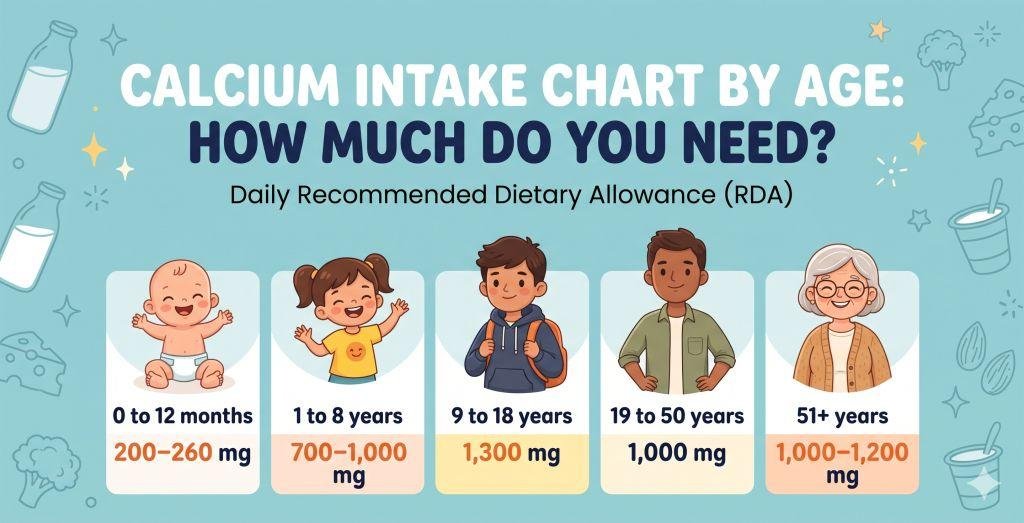
This calcium intake chart by age can help you understand your daily target and identify practical ways to get enough calcium from food.
For adults over 50, the goal isn’t simply to take a calcium pill every day. It’s to build a balanced eating pattern that provides enough calcium while also paying attention to vitamin D, protein, physical activity, medications, and overall bone health.
Quick Answer: How Much Calcium Do You Need?
For most adults, the recommended daily calcium intake is:
- Adults 19–50: 1,000 mg per day
- Women 51 and older: 1,200 mg per day
- Men 51–70: 1,000 mg per day
- Men 71 and older: 1,200 mg per day
Calcium needs are generally higher for teenagers because their bones are still developing. Adults over 50, particularly women after menopause, should pay close attention to getting adequate calcium as part of an overall bone-health strategy.
The recommended amount is a daily average, not a number you have to hit perfectly every single day.
Calcium Intake Chart by Age
Here is a straightforward calcium requirements chart based on current U.S. National Institutes of Health guidance.
| Age or Life Stage | Recommended Calcium Per Day |
|---|---|
| Birth–6 months | 200 mg* |
| 7–12 months | 260 mg* |
| 1–3 years | 700 mg |
| 4–8 years | 1,000 mg |
| 9–13 years | 1,300 mg |
| 14–18 years | 1,300 mg |
| 19–50 years | 1,000 mg |
| Women 51+ | 1,200 mg |
| Men 51–70 | 1,000 mg |
| Men 71+ | 1,200 mg |
| Pregnant or breastfeeding teens | 1,300 mg |
| Pregnant or breastfeeding adults | 1,000 mg |
*Infant values are adequate intakes rather than recommended dietary allowances.
For the readers most interested in this article, the important numbers are the adult ones:
Women age 51 and older: 1,200 mg daily
Men age 51–70: 1,000 mg daily
Men age 71 and older: 1,200 mg daily
These numbers represent total calcium intake from food, beverages, supplements, and other sources.
What Is Calcium and Why Does Your Body Need It?
Calcium is an essential mineral. Your body cannot make it, so you need to obtain it through food or supplements.
Most of the body’s calcium is stored in bones and teeth. Bones aren’t completely static structures, however. They are continually being broken down and rebuilt in a process called bone remodeling. Calcium is part of that ongoing process.
Calcium also supports:
- Normal muscle contraction
- Nerve transmission
- Blood clotting
- Normal blood vessel function
- Hormone secretion
- Bone and tooth structure
This is why calcium isn’t only a “bone mineral.”
Your body carefully regulates the amount of calcium circulating in your blood. When dietary intake isn’t sufficient, the body can draw calcium from bone stores to help maintain normal blood calcium levels.
That makes adequate calcium intake one part of maintaining healthy bones over the long term.
Why Calcium Matters More After 50
Aging doesn’t automatically mean you need to take calcium supplements.
It does mean bone health deserves more attention.
Bone remodeling changes throughout adulthood. In women, bone loss can accelerate around menopause because of changes in estrogen levels. Calcium absorption also tends to decline with age.
Adults over 50 should therefore think about calcium as part of a bigger picture that includes:
- Adequate vitamin D
- Sufficient protein
- Regular weight-bearing activity
- Muscle-strengthening exercise
- A balanced diet
- Avoiding tobacco
- Limiting excessive alcohol
- Maintaining appropriate body weight
- Managing medical conditions that affect bone health
Calcium alone isn’t a complete osteoporosis-prevention strategy.
If you’re concerned about bone density, ask your healthcare professional whether you need a bone density test or other evaluation.
Calcium Needs for Men and Women
One of the confusing parts of calcium recommendations is that the amount changes according to age and sex.
Women Age 51 and Older
Women generally need 1,200 mg of calcium per day starting at age 51.
This is particularly relevant around and after menopause, when changes in estrogen can accelerate bone remodeling.
That doesn’t mean every woman over 50 needs a calcium supplement. A woman who regularly eats yogurt, milk or fortified alternatives, tofu, cheese, and other calcium-containing foods may already be getting close to her daily target.
Men Age 51–70
Men ages 51 through 70 generally need 1,000 mg per day.
Men sometimes overlook bone health because osteoporosis is often associated with women. But men can also experience bone loss and fractures as they age.
Adequate calcium is therefore important for men as well.
Men Age 71 and Older
The recommended intake increases to 1,200 mg per day for men age 71 and older.
At this age, maintaining strength, balance, mobility, and adequate nutrition becomes particularly important.
Calcium should be viewed as one piece of that larger strategy.
Best Calcium-Rich Foods
Food is generally a practical place to start when trying to meet your calcium needs.
Some of the richest common sources include dairy foods, fortified beverages, calcium-set tofu, and certain fish eaten with their bones.
| Food | Approximate Calcium |
|---|---|
| Plain low-fat yogurt, 8 oz | 415 mg |
| Calcium-fortified orange juice, 1 cup | 349 mg |
| Part-skim mozzarella, 1.5 oz | 333 mg |
| Canned sardines with bones, 3 oz | 325 mg |
| Nonfat milk, 1 cup | 299 mg |
| Calcium-fortified soymilk, 1 cup | 299 mg |
| Whole milk, 1 cup | 276 mg |
| Calcium-set firm tofu, ½ cup | 253 mg |
| Canned salmon with bones, 3 oz | 181 mg |
Values vary among brands and products, so check the Nutrition Facts label when possible.
Dairy Foods
Milk, yogurt, and cheese are among the easiest ways for many Americans to add calcium to their diets.
For example, a cup of milk with breakfast and a serving of yogurt later in the day can provide a substantial portion of the daily requirement.
Fortified Plant-Based Beverages
Some soy, almond, and other plant-based beverages are fortified with calcium.
Don’t assume every plant-based milk contains the same amount. Check the label.
Fortified soy milk can be particularly useful because it provides calcium along with protein.
Sardines and Canned Salmon
Canned sardines and salmon with edible bones can provide meaningful amounts of calcium.
The bones are soft enough to eat, and they are an important source of the mineral.
Calcium-Set Tofu
Tofu made with calcium sulfate can be a useful calcium source.
However, calcium content varies depending on how the tofu was processed. Check the nutrition label when available.
Leafy Green Vegetables
Kale, broccoli, cabbage, and bok choy can contribute calcium to a balanced diet.
One interesting point is that the amount of calcium absorbed isn’t determined only by the number printed on the nutrition label. Certain compounds in some plants can reduce calcium absorption. For example, calcium absorption from spinach is relatively low compared with milk.
That doesn’t make spinach an unhealthy food. It simply means you shouldn’t rely on spinach alone to meet your calcium needs.
How Vitamin D Helps Calcium Absorption
Calcium and vitamin D are often mentioned together for a good reason.
Vitamin D helps your intestines absorb calcium and is important for maintaining adequate calcium and phosphate levels for normal bone mineralization.
This means you can consume plenty of calcium but still need adequate vitamin D for normal calcium absorption and bone health.
For adults, the NIH recommends 600 IU (15 mcg) of vitamin D daily through age 70 and 800 IU (20 mcg) daily after age 70.
Vitamin D can come from:
- Fatty fish
- Fortified milk
- Fortified plant beverages
- Some fortified cereals
- Eggs in smaller amounts
- Sun exposure
- Dietary supplements when appropriate
If you are concerned about vitamin D deficiency, talk with a healthcare professional rather than automatically taking high-dose supplements.
You can also read our related vitamin and nutrition resources on EverAgeWell for additional healthy-aging information.
Food Calcium vs. Calcium Supplements
One of the most common questions is whether people over 50 should take a calcium supplement.
The answer is: not necessarily.
If your diet consistently provides enough calcium, you may not need a supplement.
Supplements can be useful when someone cannot meet their nutritional needs through food alone, but they should not automatically be treated as a replacement for a balanced diet.
Calcium Carbonate
Calcium carbonate is a common form of calcium supplement.
It is absorbed best when taken with food.
It is also found in some calcium-containing antacids.
Calcium Citrate
Calcium citrate is another common form.
It can be absorbed without food and may be easier for some older adults with lower stomach acid to absorb.
Take Smaller Amounts at One Time
The body generally absorbs calcium supplements more efficiently when individual doses are 500 mg or less rather than taking a very large amount at once.
That is one reason it is often better to spread calcium intake throughout the day.
How Much Calcium Is Too Much?
More calcium isn’t automatically better.
The NIH establishes an upper intake level for calcium from all sources.
For adults ages 19–50, the upper limit is 2,500 mg per day.
For adults age 51 and older, the upper limit is 2,000 mg per day.
This is not a recommended target. It is the maximum daily intake unlikely to pose a risk for most healthy people.
Consistently consuming excessive calcium, particularly from supplements, can contribute to problems such as constipation and may increase the risk of kidney stones in some people. Research on calcium supplements and cardiovascular disease has produced mixed results, so high-dose supplementation should not be considered automatically safe.
The practical lesson is simple:
Don’t take large amounts of calcium simply because you think more will protect your bones.
Calcium Supplements and Medications
This is particularly important for adults over 50 because many people take prescription or over-the-counter medications.
Calcium supplements can interfere with the absorption of certain medications.
For example, calcium can interfere with absorption of levothyroxine, a thyroid medication. NIH guidance notes that calcium carbonate supplements should be separated from levothyroxine by four hours according to the medication labeling.
Calcium can also interact with certain antibiotics, including some quinolone antibiotics.
If you take prescription medications regularly, ask your pharmacist or healthcare professional how to schedule calcium supplements.
Don’t change prescription medication timing on your own.
Eight Practical Ways to Get Enough Calcium
1. Start With Breakfast
Try:
- Yogurt with berries
- Oatmeal made with milk
- Calcium-fortified cereal with milk
- Fortified soy milk with eggs and whole-grain toast
A calcium-rich breakfast makes it easier to meet your daily target without thinking about calcium all day.
2. Include a Calcium Source at Lunch
A lunch might include:
- Turkey and cheese on whole-grain bread
- Yogurt with a salad
- Tofu and vegetable bowl
- Bean and cheese burrito
3. Use Fortified Foods Wisely
Look for calcium on the Nutrition Facts label.
Fortified orange juice, plant-based beverages, cereals, and other foods can contribute significantly.
4. Don’t Rely on One Food
You don’t need to drink several glasses of milk every day if you don’t enjoy milk.
Calcium can come from a combination of dairy products, fortified foods, tofu, fish, and vegetables.
5. Pay Attention to Vitamin D
Calcium and vitamin D work together in bone health.
Make sure your overall diet provides adequate vitamin D as well.
6. Keep Moving
Walking, climbing stairs, dancing, resistance training, and other weight-bearing or muscle-strengthening activities can support healthy bones and physical function.
For older adults, balance exercises are also valuable because preventing falls is an important part of fracture prevention.
7. Check Your Supplements
If you take a multivitamin, calcium supplement, antacid, or other products, look at the labels.
You may be getting more calcium than you realize from several different products.
8. Ask Before Starting High-Dose Calcium
If you think you need a calcium supplement, discuss the amount and type with a healthcare professional, particularly if you have kidney problems, a history of kidney stones, or take prescription medications.
Sample Day of Calcium-Rich Foods
Here’s one practical example for an older adult.
Breakfast
- 1 cup calcium-fortified milk or soy milk
- Oatmeal
- Berries
- One egg
Lunch
- Grilled chicken and vegetable sandwich with cheese
- Side salad
- Yogurt
Snack
- Fruit
- Small serving of nuts
Dinner
- Salmon
- Steamed broccoli
- Brown rice
- Calcium-fortified beverage if desired
The exact calcium total will depend on the products and portions you choose.
The point isn’t to follow this menu exactly. It’s to show how calcium can be spread naturally throughout the day instead of relying on one giant serving or supplement.
For more healthy-food ideas, you can also explore EverAgeWell’s 30 Super Foods for a Healthier You.
Calcium and Overall Healthy Aging
Calcium doesn’t work in isolation.
For adults over 50, a strong bone-health routine can include adequate calcium, vitamin D, protein, physical activity, and good overall nutrition.
Maintaining muscle is also important because stronger muscles can help with mobility and physical independence.
Weight management can be part of this picture as well, but older adults should avoid overly restrictive diets that make it difficult to get enough protein and essential nutrients.
If you’re interested in healthy weight ranges, our Ideal Weight Chart by Height provides a useful starting point. Remember that BMI and weight charts are screening tools, not individualized medical targets.
Common Calcium Myths
Myth 1: Everyone over 50 needs a calcium supplement.
Fact: Not necessarily. Many people can meet their calcium requirements through food. Supplements may be appropriate when dietary intake is inadequate or when recommended by a healthcare professional.
Myth 2: More calcium means stronger bones.
Fact: Calcium is necessary for bone health, but excessive intake isn’t automatically better. Bone health also depends on vitamin D, physical activity, protein, hormones, medications, and other factors.
Myth 3: Men don’t need to worry about calcium.
Fact: Men need calcium too. Men ages 51–70 generally need 1,000 mg per day, increasing to 1,200 mg after age 70.
Myth 4: Milk is the only good source of calcium.
Fact: Milk is a convenient source, but calcium also comes from yogurt, cheese, fortified beverages, tofu made with calcium sulfate, sardines with bones, canned salmon with bones, and some vegetables.
Myth 5: Spinach is the best calcium vegetable.
Fact: Spinach contains calcium, but much of it is poorly absorbed because of oxalates. Vegetables such as kale, broccoli, and bok choy can provide calcium that is more readily absorbed.
Myth 6: A calcium supplement is harmless because calcium is natural.
Fact: Calcium is essential, but high supplemental intakes can cause problems and may interact with medications. More isn’t always better.
Myth 7: Calcium alone can prevent every fracture.
Fact: Calcium is important, but fracture risk depends on many factors, including bone density, age, falls, medications, muscle strength, and overall health.
Who Should Be More Careful?
Some people should get individualized advice before increasing calcium substantially.
Adults Over 50
Adults over 50 should pay attention to adequate calcium intake, but they should also consider vitamin D, exercise, protein, and other bone-health factors.
People With Kidney Stones
People with a history of kidney stones should discuss calcium intake and supplements with a healthcare professional.
Do not dramatically change your calcium intake based on an online chart alone.
People With Kidney Disease
Kidney problems can affect calcium and phosphorus balance.
People with chronic kidney disease may have different nutritional needs and should follow guidance from their healthcare team.
People Taking Prescription Medications
Calcium can interfere with some medicines.
If you take thyroid medication, certain antibiotics, or other prescription drugs, ask about possible interactions.
People Taking Multiple Supplements
It’s easy to accidentally double up.
For example, you might get calcium from a multivitamin, a dedicated calcium supplement, and a calcium-containing antacid.
Check all labels before adding another supplement.
People With a History of Osteoporosis
If you’ve been diagnosed with osteoporosis or have already experienced a fragility fracture, a calcium chart alone isn’t enough.
Your healthcare professional may recommend bone-density testing, vitamin D evaluation, prescription treatment, exercise, or other measures depending on your situation.
How to Get Started
If you’re over 50 and want to improve your calcium intake, don’t make it complicated.
Step 1: Know Your Target
Remember:
- Women 51+: 1,200 mg/day
- Men 51–70: 1,000 mg/day
- Men 71+: 1,200 mg/day
Step 2: Look at What You Already Eat
Before buying supplements, review a typical day’s food.
Do you eat yogurt, milk, cheese, fortified soy milk, tofu, or other calcium-containing foods?
Step 3: Read Food Labels
Look for the calcium amount on the Nutrition Facts label.
This is especially useful for fortified foods because calcium content can vary significantly among brands.
Step 4: Spread Calcium Through the Day
Instead of trying to consume your entire calcium requirement in one meal, include smaller amounts throughout the day.
Step 5: Consider Vitamin D
Adequate vitamin D supports calcium absorption.
If you’re concerned about deficiency, ask your healthcare professional whether testing or supplementation is appropriate.
Step 6: Review Supplements
Add up calcium from all supplements and calcium-containing medications.
Step 7: Don’t Chase a Bigger Number
The goal is adequate intake, not maximum intake.
Frequently Asked Questions
How much calcium do adults need per day?
Most adults need between 1,000 and 1,200 mg of calcium per day, depending on age and sex. Women 51 and older and men 71 and older generally need 1,200 mg daily.
How much calcium does a woman over 50 need?
A woman age 51 or older generally needs 1,200 mg of calcium per day from food, beverages, and supplements combined.
How much calcium does a man over 50 need?
Men ages 51–70 generally need 1,000 mg daily. Men age 71 and older need 1,200 mg daily.
Is 1,200 mg of calcium a day too much?
No. For women 51 and older and adults 71 and older, 1,200 mg is the recommended daily intake. It is important to distinguish the recommended amount from the upper limit.
Can you get enough calcium without milk?
Yes. Yogurt, cheese, calcium-fortified plant beverages, calcium-set tofu, canned sardines with bones, canned salmon with bones, and certain vegetables can contribute calcium.
What is the best calcium-rich food?
There isn’t one single “best” food. Yogurt, milk, fortified beverages, cheese, sardines with bones, and calcium-set tofu can all provide meaningful amounts.
Should I take calcium and vitamin D together?
They are often discussed together because vitamin D helps the body absorb calcium. However, whether you personally need supplements depends on your diet, health, medications, and nutritional status.
Is calcium better from food or supplements?
For many people, food is a practical way to meet calcium needs. Supplements can be useful when dietary intake is insufficient, but high-dose supplementation isn’t appropriate for everyone.
What happens if you don’t get enough calcium?
Long-term inadequate calcium intake can contribute to weakened bone mineralization and may increase the risk of bone problems. The body can draw calcium from bone stores to maintain blood calcium levels.
Can too much calcium be harmful?
Yes. Excessive calcium intake, particularly from supplements, can cause side effects such as constipation and may increase kidney-stone risk in some people. Very high intake isn’t a strategy for stronger bones.
How much calcium is too much for adults over 50?
The tolerable upper intake level for adults age 51 and older is 2,000 mg per day from all sources. This is an upper limit, not a recommended daily target.
Can calcium supplements interfere with medications?
Yes. Calcium can interfere with the absorption of certain medications, including levothyroxine and some antibiotics. If you take prescription medicines, ask your pharmacist or healthcare professional about appropriate timing.
Is calcium important for men over 70?
Yes. Men age 71 and older have a recommended calcium intake of 1,200 mg per day. Bone health remains important throughout later adulthood.
Does vitamin D help calcium absorption?
Yes. Vitamin D promotes calcium absorption in the digestive tract and helps maintain calcium and phosphate levels needed for normal bone mineralization.
Can I get calcium from plant-based foods?
Yes. Calcium can come from fortified plant beverages, calcium-set tofu, kale, broccoli, bok choy, and other foods. Fortification varies, so checking the Nutrition Facts label is useful.
Reliable Sources and Further Reading
For readers who want to verify the recommendations or learn more:
- NIH Office of Dietary Supplements — Calcium: Calcium Fact Sheet for Consumers
- NIH Office of Dietary Supplements — Calcium for Health Professionals: Calcium Fact Sheet for Health Professionals
- NIH Office of Dietary Supplements — Vitamin D: Vitamin D Fact Sheet
- USDA FoodData Central: USDA FoodData Central
Final Takeaway
A calcium intake chart by age is a useful starting point, especially for adults over 50 who want to protect long-term bone health.
For women age 51 and older, the recommended intake is 1,200 mg per day. Men generally need 1,000 mg from ages 51–70 and 1,200 mg after age 70.
But reaching that number doesn’t necessarily mean taking a calcium pill.
For many people, a combination of yogurt, milk or fortified alternatives, cheese, tofu, fish with edible bones, and calcium-containing vegetables can provide much of what the body needs.
The bigger picture matters, too. Adequate vitamin D, regular physical activity, sufficient protein, muscle strength, and good overall nutrition all contribute to healthy aging.
If you have kidney disease, a history of kidney stones, osteoporosis, or take prescription medications, talk with a healthcare professional before making major changes to your calcium intake or starting a supplement.
The goal isn’t to get the most calcium possible. The goal is to get enough, consistently, in a way that fits your overall health.
Medical Disclaimer
This article is intended for general educational and informational purposes only. It does not provide individualized medical advice, diagnosis, or treatment. Calcium needs can vary based on health conditions, medications, diet, and other factors. If you have questions about calcium supplements, bone health, kidney problems, or medication interactions, speak with a qualified healthcare professional.
Related EverAgeWell Reading
- Ideal Weight Chart by Height — useful for comparing healthy weight ranges across different heights.
- BMI Chart for Adults — explains adult BMI categories and how to interpret them.
- Cholesterol Levels Chart — helpful when looking at weight alongside heart-health numbers.
- Blood Glucose Level Chart — explains common blood glucose ranges and what the numbers mean.
- Blood Pressure Chart for Seniors — useful for adults over 50 monitoring another important health measurement.
- How to Keep Your Mind Sharp at Any Age — additional healthy-aging reading for adults over 50.
Written by
Kanhaiya Solanki is a dedicated online researcher, content writer, and blogger passionate about publishing high-quality, research-based articles. His goal is to provide accurate, easy-to-understand, and practical information on health, technology, senior care, and lifestyle topics for readers worldwide.