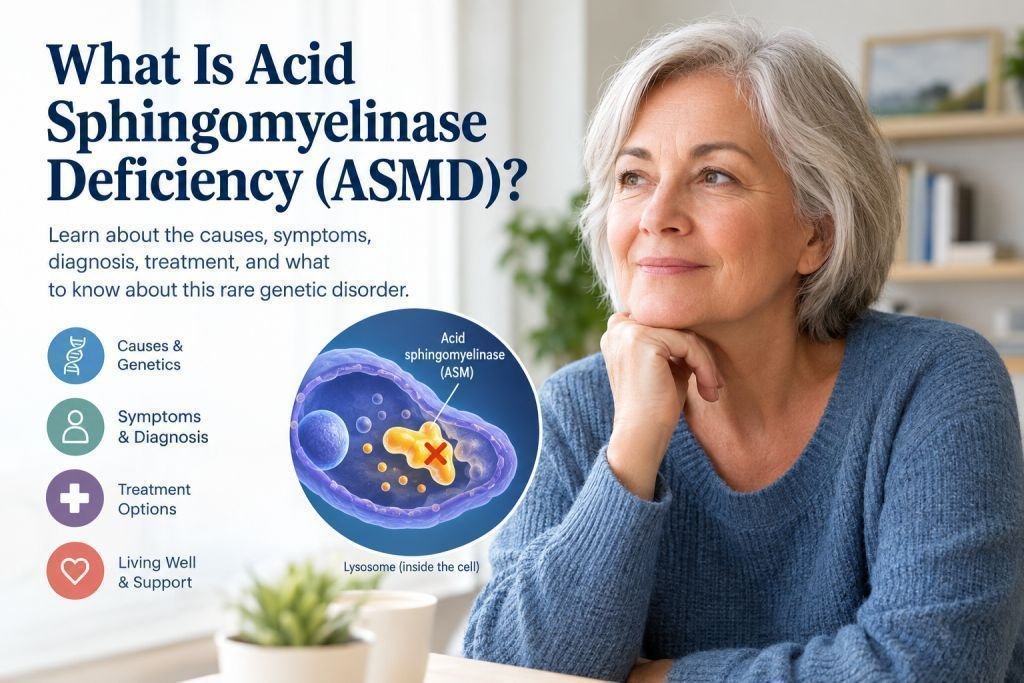
If you or someone in your family has recently heard the term acid sphingomyelinase deficiency (ASMD), it is understandable to have questions. The name sounds complicated, but the basic idea is fairly straightforward: ASMD is a rare inherited metabolic disorder in which the body does not make enough working acid sphingomyelinase, an enzyme needed to break down a fatty substance called sphingomyelin.
When this enzyme is deficient, sphingomyelin can accumulate inside cells, particularly in organs such as the spleen, liver, and lungs. Depending on the form of ASMD, the condition can also affect the nervous system. The disease varies considerably from one person to another. Some forms become apparent during infancy, while chronic forms can persist into adulthood.
ASMD was historically known by names including Niemann-Pick disease type A, type B, and type A/B. Today, many specialists use ASMD because it better describes the underlying enzyme deficiency and the spectrum of disease.
For adults over 50, ASMD is not something caused by getting older, eating a particular food, or having high cholesterol. It is a genetic condition, although a person with a milder form may not receive a diagnosis until adulthood.
This guide explains what ASMD is, what causes it, possible symptoms, how doctors diagnose it, available treatment in the United States, nutrition and lifestyle considerations, and questions patients commonly ask.
Quick Answer: What Is ASMD?
Acid sphingomyelinase deficiency is a rare inherited disorder caused by changes in the SMPD1 gene. These changes reduce the activity of an enzyme called acid sphingomyelinase. As a result, sphingomyelin accumulates in cells and can gradually affect organs and tissues.
Key points:
- ASMD is genetic and inherited; it is not caused by diet or lifestyle.
- It can affect the lungs, liver, spleen, bones, blood cells, and sometimes the nervous system.
- Symptoms and severity vary widely.
- Chronic forms can occur in people who survive into adulthood.
- Diagnosis generally involves enzyme testing and genetic testing.
- In the U.S., olipudase alfa (Xenpozyme) is FDA-approved for non-central-nervous-system manifestations of ASMD in adults and children.
- Treatment decisions should be made with physicians experienced in rare metabolic disorders.
What Causes Acid Sphingomyelinase Deficiency?
ASMD is caused by disease-causing variants in the SMPD1 gene.
That gene provides instructions for making acid sphingomyelinase. Normally, this enzyme helps cells break down sphingomyelin inside structures called lysosomes. Lysosomes can be thought of as the cell’s recycling centers.
When acid sphingomyelinase activity is severely reduced, sphingomyelin is not processed normally. It accumulates inside cells, particularly cells involved in the body’s organs and tissues.
ASMD is inherited in an autosomal recessive pattern. In simple terms, an affected person generally inherits a disease-causing SMPD1 variant from both parents.
This also means parents may carry a variant without having ASMD themselves.
Importantly, ASMD is not caused by eating fatty foods. Changing the amount of fat in your diet cannot correct the underlying enzyme deficiency.
How ASMD Affects the Body
Because sphingomyelin can accumulate in different tissues, ASMD is considered a multisystem disorder.
The spleen
An enlarged spleen, called splenomegaly, is common in chronic forms of ASMD.
A large spleen can contribute to abdominal fullness or discomfort and may affect blood-cell levels because the spleen can trap blood cells.
Low platelet levels, known as thrombocytopenia, can increase bleeding concerns in some people.
The liver
Sphingomyelin accumulation can enlarge the liver and contribute to liver abnormalities.
The severity varies considerably. Some people have relatively stable liver involvement, while others develop more significant liver disease.
The lungs
Lung involvement is an important feature of chronic ASMD.
Stored material can affect lung tissue and interfere with normal breathing. Some people experience reduced exercise tolerance, shortness of breath, or chronic respiratory problems.
This is one reason unexplained lung disease combined with an enlarged liver and spleen can sometimes prompt doctors to consider ASMD.
The bones
People with ASMD may have reduced bone density, including osteopenia or osteoporosis.
For adults over 50, bone health deserves particular attention because age itself is associated with increasing risk of fractures and bone loss. If someone with ASMD already has bone involvement, their healthcare team may monitor bone density and consider appropriate calcium, vitamin D, exercise, and medical treatment.
The nervous system
Neurologic involvement varies according to the form of ASMD.
The severe infantile form can cause significant neurologic deterioration. Some people with intermediate forms can also develop neurologic manifestations.
The chronic visceral form, historically called Niemann-Pick disease type B, generally does not have the same central nervous system involvement seen in the severe forms.
The Three Main Forms of ASMD
ASMD exists along a spectrum rather than as three completely separate diseases.
| Feature | Infantile neurovisceral ASMD | Chronic neurovisceral ASMD | Chronic visceral ASMD |
|---|---|---|---|
| Historical name | Niemann-Pick type A | Niemann-Pick type A/B | Niemann-Pick type B |
| Typical onset | Infancy | Variable | Childhood to adulthood |
| Liver/spleen involvement | Often severe | Common | Common |
| Lung involvement | Common | Common | Common |
| Nervous system involvement | Severe | Variable | Generally absent |
| Adult survival | Uncommon in severe untreated disease | Possible | Common |
| Current disease-specific therapy | May address non-CNS disease | May address non-CNS disease | May address non-CNS disease |
The boundaries between these forms are not always sharp. ASMD is better understood as a continuum of disease severity.
Signs and Symptoms of ASMD
Symptoms depend heavily on the person’s particular form of the disorder.
1. Enlarged spleen
A doctor may discover an enlarged spleen during an examination or imaging study.
Some people notice abdominal fullness or discomfort, especially after eating.
2. Enlarged liver
Liver enlargement may occur along with an enlarged spleen.
Because many liver problems have no obvious symptoms early on, imaging and laboratory testing may be important.
3. Shortness of breath
Lung involvement may cause shortness of breath, reduced stamina, coughing, or difficulty keeping up with activities that were previously comfortable.
A gradual decline in exercise tolerance should not automatically be blamed on aging.
4. Abnormal blood counts
ASMD can affect blood-cell counts, particularly platelets.
Depending on the severity, this may contribute to easy bruising or bleeding.
5. Abnormal cholesterol levels
Chronic ASMD can be associated with an unusual lipid profile.
This is important because an abnormal cholesterol test may initially appear to be an ordinary cardiovascular risk issue. In someone with other ASMD features, however, the overall pattern may provide a diagnostic clue.
6. Bone-density problems
Osteopenia or osteoporosis can occur.
For an older adult, this matters because a hip, spine, or other major fracture can have significant effects on independence and quality of life.
7. Abdominal discomfort
An enlarged liver or spleen may create pressure or fullness in the abdomen.
Persistent or unexplained abdominal symptoms deserve medical evaluation rather than being assumed to be a normal part of aging.
8. Reduced exercise tolerance
A person may gradually find that walking uphill, climbing stairs, or doing household chores leaves them more winded than before.
This can have several possible causes, including heart or lung disease, anemia, medications, and deconditioning. ASMD is rare, so doctors generally consider the broader clinical picture rather than assuming ASMD immediately.
9. Neurologic or developmental symptoms in certain forms
The severe and intermediate forms can involve the nervous system.
The type and severity of neurologic involvement vary substantially from one individual to another.
10. Symptoms may not tell the whole story
One of the challenges with ASMD is that the severity of organ involvement does not always match how a person feels.
Someone may have significant enlargement of the spleen or liver without dramatic symptoms.
That is why regular monitoring is often important after diagnosis.
How Is ASMD Diagnosed?
ASMD cannot reliably be diagnosed from symptoms alone.
Doctors may suspect it when a person has a combination of findings such as an enlarged liver and spleen, lung abnormalities, unusual blood counts, or other features that do not have an obvious explanation.
Enzyme testing
Testing can measure acid sphingomyelinase activity.
Very low enzyme activity can support the diagnosis. GeneReviews notes that affected individuals typically have less than 10% of normal enzyme activity, although test interpretation depends on the laboratory and clinical situation.
Genetic testing
Doctors may test the SMPD1 gene for disease-causing variants.
Confirmation generally combines biochemical testing with molecular genetic testing rather than relying on a single symptom or laboratory result.
Additional tests
Depending on the individual, doctors may evaluate:
- Liver and spleen size
- Blood counts
- Liver function
- Cholesterol and other lipid measurements
- Lung function
- Bone density
- Imaging studies
- Neurologic function when appropriate
A metabolic specialist, geneticist, pulmonologist, hepatologist, hematologist, or other specialist may be involved depending on the person’s symptoms.
ASMD vs. Gaucher Disease and Other Conditions
ASMD can resemble other rare storage disorders.
For example, Gaucher disease can also cause an enlarged liver and spleen and abnormal blood counts. Other conditions can cause enlarged organs or interstitial lung disease as well.
| Feature | ASMD | Gaucher disease | Common liver/lung disorders |
|---|---|---|---|
| Genetic condition | Yes | Yes | Usually varies |
| SMPD1 involvement | Yes | No | No |
| Sphingomyelin accumulation | Yes | No | No |
| Enlarged spleen/liver | Common | Common | Possible |
| Lung involvement | Possible/common in ASMD | Less characteristic | Depends on condition |
| Confirmed by specialized testing | Yes | Yes | Depends on diagnosis |
The distinction matters because treatment and long-term monitoring differ between diseases. Specialized biochemical and genetic testing can help separate ASMD from other lysosomal storage disorders.
Treatment for Acid Sphingomyelinase Deficiency
There is currently no simple cure that removes the underlying genetic cause of ASMD.
However, treatment has changed significantly with the availability of enzyme replacement therapy.
Olipudase alfa (Xenpozyme)
In the United States, the FDA has approved olipudase alfa (Xenpozyme) for the treatment of non-central-nervous-system manifestations of ASMD in adult and pediatric patients.
It is an enzyme replacement therapy (ERT). The treatment supplies an enzyme intended to help the body break down accumulated sphingomyelin.
Xenpozyme is administered by intravenous infusion by a healthcare professional, generally on an every-two-week schedule once the maintenance phase is reached. Treatment begins with a gradual dose-escalation process rather than immediately using the full maintenance dose.
Clinical studies have evaluated outcomes such as lung function, spleen volume, liver volume, and platelet counts. The FDA describes meaningful improvements in lung function and spleen size in the pivotal adult study, with additional evidence involving liver size and other disease measures.
Importantly, olipudase alfa does not treat central nervous system manifestations because the enzyme does not address disease in the brain.
Treatment safety
Xenpozyme carries an FDA boxed warning for potentially serious hypersensitivity reactions, including anaphylaxis.
Infusion-associated reactions can also occur. The FDA prescribing information recommends monitoring for these reactions and monitoring liver enzymes during treatment, particularly during dose escalation.
Possible adverse reactions reported in clinical studies include symptoms such as headache, fever, cough, abdominal symptoms, joint pain, diarrhea, and low blood pressure. The exact risks vary by age and individual circumstances.
Treatment should therefore be managed by an experienced healthcare team rather than attempted or adjusted independently.
What Role Does Nutrition Play in ASMD?
Nutrition is important in ASMD, but it is important to understand what nutrition can and cannot do.
There is no special ASMD diet that can replace the missing enzyme.
Eating less fat, avoiding sugar, or taking supplements does not correct the SMPD1-related enzyme deficiency.
Instead, nutrition is generally part of supportive care.
A balanced eating pattern
For many adults, a balanced diet can include:
- Vegetables and fruits
- Whole grains
- Beans and lentils
- Fish and other lean protein sources
- Eggs, poultry, or other appropriate protein foods
- Nuts and seeds when appropriate
- Dairy or fortified alternatives
- Healthy sources of unsaturated fats
The exact diet should reflect the person’s liver function, cholesterol profile, nutritional status, medications, and other medical conditions.
Cholesterol deserves individual attention
People with chronic ASMD can have abnormal lipid levels. Doctors may recommend standard cardiovascular risk management when appropriate.
Do not assume that every abnormal cholesterol result is simply an ASMD symptom, however. Adults over 50 can also have ordinary age-related cardiovascular risk factors.
A clinician should interpret cholesterol levels in the context of the person’s overall health.
Bone health
Because bone-density problems can occur in ASMD, adequate calcium and vitamin D intake may be important.
Some people may need a bone-density test or additional treatment for osteoporosis.
Do not take large doses of vitamin D, calcium, or other supplements without discussing them with a healthcare professional.
Avoid extreme diets
Very restrictive diets, prolonged fasting, or aggressive weight-loss programs are generally not a good idea without medical supervision, particularly for someone with a chronic multisystem disorder.
The goal should be adequate nutrition and a healthy body composition—not trying to “diet away” ASMD.
Benefits of Appropriate ASMD Treatment and Monitoring
Treatment does not mean that every symptom will disappear. The goal is to reduce disease burden, preserve organ function, and maintain quality of life.
Better management of organ involvement
Enzyme replacement can reduce sphingomyelin accumulation in affected non-CNS organs.
Potential improvement in lung function
Clinical trials have shown improvement in measures of lung function in treated adults.
Reduction in spleen and liver size
Studies have also demonstrated reductions in spleen and liver volume with treatment.
Better long-term monitoring
Even when someone feels well, regular monitoring can identify changes in lung function, blood counts, liver health, bone density, or other systems before complications become severe.
The 2023 international consensus guidelines emphasize comprehensive, multisystem assessment and ongoing management for people with ASMD.
Potential Risks and Complications
ASMD can affect several organ systems, so complications vary.
Possible concerns include:
- Enlarged liver and spleen
- Reduced lung function
- Low platelet counts
- Bleeding or bruising problems
- Abnormal lipid levels
- Liver disease
- Reduced bone density
- Neurologic complications in certain forms
- Reduced exercise capacity
- Nutritional difficulties in some patients
People with significant splenomegaly may also need to avoid activities that carry a risk of abdominal trauma because an enlarged spleen is more vulnerable to injury.
For adults over 50, another consideration is that ASMD may exist alongside common conditions such as high blood pressure, diabetes, arthritis, osteoporosis, or cardiovascular disease. Your healthcare team should consider all of these rather than treating ASMD in isolation.
Practical Daily Health Strategies
ASMD requires individualized medical care, but several everyday habits can support general health.
1. Keep regular medical appointments
Rare diseases can involve several organ systems. A coordinated care team can help track changes over time.
2. Monitor breathing changes
Tell your clinician about new or worsening shortness of breath, persistent cough, or declining exercise tolerance.
3. Protect bone health
Ask whether you need bone-density screening, particularly if you have additional osteoporosis risk factors.
4. Stay physically active within your limits
Gentle walking, strength training, balance exercises, or other appropriate activity can support overall health.
However, people with significant spleen enlargement should ask their healthcare team which activities are safe.
5. Avoid smoking
Smoking can add unnecessary stress to already vulnerable lungs.
6. Review medications regularly
Adults over 50 often take several medications. Your doctor or pharmacist should periodically review them for interactions, side effects, and continued necessity.
7. Don’t rely on supplements marketed as a cure
There is no supplement proven to correct the underlying enzyme deficiency.
Be especially cautious of products advertised as “detox,” “enzyme-boosting,” or “natural cures” for ASMD.
8. Keep vaccination and preventive care up to date
Routine preventive care remains important even when you are managing a rare disease.
9. Ask questions about clinical trials
Research continues in rare metabolic diseases. A specialist can explain whether any clinical trials are appropriate for a particular form of ASMD.
A Real-Life Example
Imagine a 58-year-old who has been told for years that their mildly abnormal liver tests and low platelet count are unrelated problems.
They also notice that they get winded more easily when walking uphill.
A routine ultrasound shows an enlarged spleen and liver. Further evaluation eventually raises the possibility of a lysosomal storage disorder. Specialized enzyme testing and genetic testing identify ASMD.
The important lesson is not that every adult with these findings has ASMD. These symptoms are much more commonly caused by other conditions.
The lesson is that a rare diagnosis can sometimes explain a pattern of findings that previously seemed unrelated.
Once diagnosed, the person can receive appropriate monitoring and discuss disease-specific treatment with a specialist.
Common Myths About ASMD
Myth: ASMD is caused by eating too much fat.
Fact: No. ASMD is an inherited genetic disorder involving the SMPD1 gene and deficient acid sphingomyelinase activity. Diet does not cause the underlying disease.
Myth: ASMD is simply high cholesterol.
Fact: No. Abnormal lipid levels can occur with chronic ASMD, but ASMD is a genetic lysosomal storage disorder involving sphingomyelin accumulation.
Myth: If an adult has ASMD, it must be a mild disease.
Fact: Chronic forms can persist into adulthood, but severity varies substantially from person to person.
Myth: A healthy diet can cure ASMD.
Fact: Good nutrition can support overall health, but it cannot replace the missing acid sphingomyelinase enzyme.
Myth: ASMD only affects children.
Fact: Some forms begin in infancy, but chronic forms can survive into adulthood and may be diagnosed later.
Myth: Enzyme replacement therapy cures every aspect of ASMD.
Fact: Olipudase alfa is approved for non-CNS manifestations. It does not treat central nervous system disease.
Myth: Feeling well means ASMD is no longer affecting the body.
Fact: Some organ involvement can progress without dramatic symptoms, which is why appropriate monitoring matters.
Who Should Be More Careful?
ASMD is rare, so there is no reason for the average healthy adult to worry about having it simply because they have fatigue, high cholesterol, or an enlarged liver.
Extra attention may be appropriate for people who:
- Already have a confirmed ASMD diagnosis
- Have a family history of ASMD
- Have unexplained enlargement of the liver and spleen
- Have unexplained chronic lung involvement along with organ enlargement
- Have unusual blood counts in combination with other ASMD features
- Have a known SMPD1 variant
- Are taking or considering treatment for ASMD
Adults over 50
For older adults, the key is avoiding the assumption that every new symptom is “just aging.”
At the same time, ASMD is so uncommon that common causes should be investigated first when appropriate.
A careful physician looks at the complete pattern rather than focusing on a single abnormal test.
People taking multiple medications
Older adults often take several prescription and over-the-counter medicines.
Tell every member of your healthcare team about all medications and supplements. This is particularly important if you are receiving specialized treatment such as enzyme replacement therapy.
People with liver or lung disease
Existing liver or respiratory conditions can make it harder to determine which symptoms are related to ASMD.
Specialist evaluation can help separate overlapping conditions.
How to Get Started After an ASMD Diagnosis
A new rare-disease diagnosis can feel overwhelming. You do not need to solve everything at once.
Step 1: Confirm the diagnosis
Ask your healthcare team what testing established the diagnosis and whether both enzyme activity and genetic findings support it.
Step 2: Understand your ASMD type
Ask whether your clinical picture is considered chronic visceral, chronic neurovisceral, or another form on the ASMD spectrum.
Step 3: Establish a baseline
Your healthcare team may assess lung function, liver and spleen size, blood counts, lipid levels, bone health, and other relevant systems.
Step 4: Ask about disease-specific treatment
For eligible U.S. patients, ask whether olipudase alfa is appropriate.
Step 5: Build a monitoring plan
Find out which tests need to be repeated and how often.
Step 6: Review nutrition and exercise
A registered dietitian or appropriate specialist can help develop an eating and activity plan based on your individual health.
Step 7: Discuss family testing
Because ASMD is inherited, genetic counseling can help relatives understand whether they may be carriers or may need testing.
Frequently Asked Questions About ASMD
1. Is acid sphingomyelinase deficiency a rare disease?
Yes. ASMD is a rare inherited lysosomal storage disorder caused by reduced acid sphingomyelinase activity.
2. What gene causes ASMD?
The SMPD1 gene. Disease-causing variants in both copies of this gene can lead to ASMD.
3. Can adults have acid sphingomyelinase deficiency?
Yes. Chronic forms of ASMD can persist into adulthood, particularly chronic visceral ASMD.
4. Can ASMD be cured with diet?
No. Diet cannot correct the underlying genetic enzyme deficiency.
Nutrition is still important for maintaining strength, bone health, cardiovascular health, and adequate nutritional status.
5. Is ASMD the same as Niemann-Pick disease?
ASMD includes conditions historically called Niemann-Pick disease types A, A/B, and B. Modern terminology often uses ASMD to describe this spectrum of disease.
6. Does ASMD affect the liver?
Yes. Liver enlargement and other liver-related abnormalities can occur because sphingomyelin accumulates in affected cells.
7. Does ASMD affect the lungs?
Yes. Lung involvement can be an important part of chronic ASMD and may reduce lung function or exercise tolerance.
8. Is there a treatment for ASMD in the United States?
Yes. The FDA has approved olipudase alfa (Xenpozyme) for non-central-nervous-system manifestations of ASMD in adults and children.
9. How often is Xenpozyme given?
It is administered by intravenous infusion, with a gradual dose-escalation schedule followed by maintenance treatment generally given every two weeks. The exact regimen is determined by the prescribing information and the patient’s medical team.
10. Can Xenpozyme cause side effects?
Yes. Infusion-associated reactions and hypersensitivity reactions can occur, including serious reactions. Liver enzyme elevations can also occur, particularly during dose escalation.
11. Does Xenpozyme treat brain or nervous-system involvement?
No. The FDA indication is for non-central-nervous-system manifestations, and current enzyme replacement therapy does not address central nervous system disease.
12. Should someone with ASMD avoid fatty foods?
Not automatically. ASMD is not caused by dietary fat. A person’s diet should be individualized based on overall health, cholesterol levels, liver function, nutritional needs, and other conditions.
13. Can ASMD cause low platelets?
Yes. Thrombocytopenia can occur, particularly in chronic disease involving the spleen.
14. Can someone with ASMD exercise?
Often, yes, but the activity should match the person’s medical condition. People with significant spleen enlargement should discuss activity restrictions with their healthcare team because abdominal trauma can be dangerous.
15. Should family members be tested for ASMD?
Genetic counseling can help determine who may benefit from testing. Because ASMD is inherited in an autosomal recessive pattern, relatives may be carriers even when they have no symptoms.
Final Takeaway
Acid sphingomyelinase deficiency (ASMD) is a rare inherited disorder in which low activity of the acid sphingomyelinase enzyme causes sphingomyelin to accumulate in cells. The disease can affect the spleen, liver, lungs, bones, blood, and, in some forms, the nervous system.
For adults, particularly those living with chronic ASMD, the most important step is not trying to manage the condition with diet or supplements alone. A proper diagnosis and ongoing care from clinicians familiar with rare metabolic diseases can help identify organ involvement and determine whether disease-specific treatment is appropriate.
For eligible adults and children in the United States, olipudase alfa (Xenpozyme) provides an FDA-approved enzyme replacement option for non-central-nervous-system manifestations of ASMD.
If you or a family member has unexplained enlargement of the liver or spleen, chronic lung findings, unusual blood counts, or a confirmed SMPD1 variant, ask your healthcare professional whether evaluation by a metabolic or genetic disease specialist would be appropriate.
Medical Disclaimer
This article is for general educational purposes only and is not a substitute for individualized medical advice, diagnosis, or treatment. ASMD is a rare and complex condition, and recommendations can vary based on the individual’s symptoms, genetic findings, organ involvement, medications, and overall health. If you have been diagnosed with ASMD or think you may have it, discuss your situation with a qualified healthcare professional or specialist.
Also Read:
- Salmon Benefits: Powerful Reasons to Eat More Salmon
- Blueberries: 25 Powerful Health Benefits for a Healthier Life
- 30 Super Foods for a Healthier You: Eat Better Every Day
Written by:
Kanhaiya Solanki is a dedicated online researcher, content writer, and blogger passionate about publishing high-quality, research-based articles. His goal is to provide accurate, easy-to-understand, and practical information on health, technology, senior care, and lifestyle topics for readers worldwide.