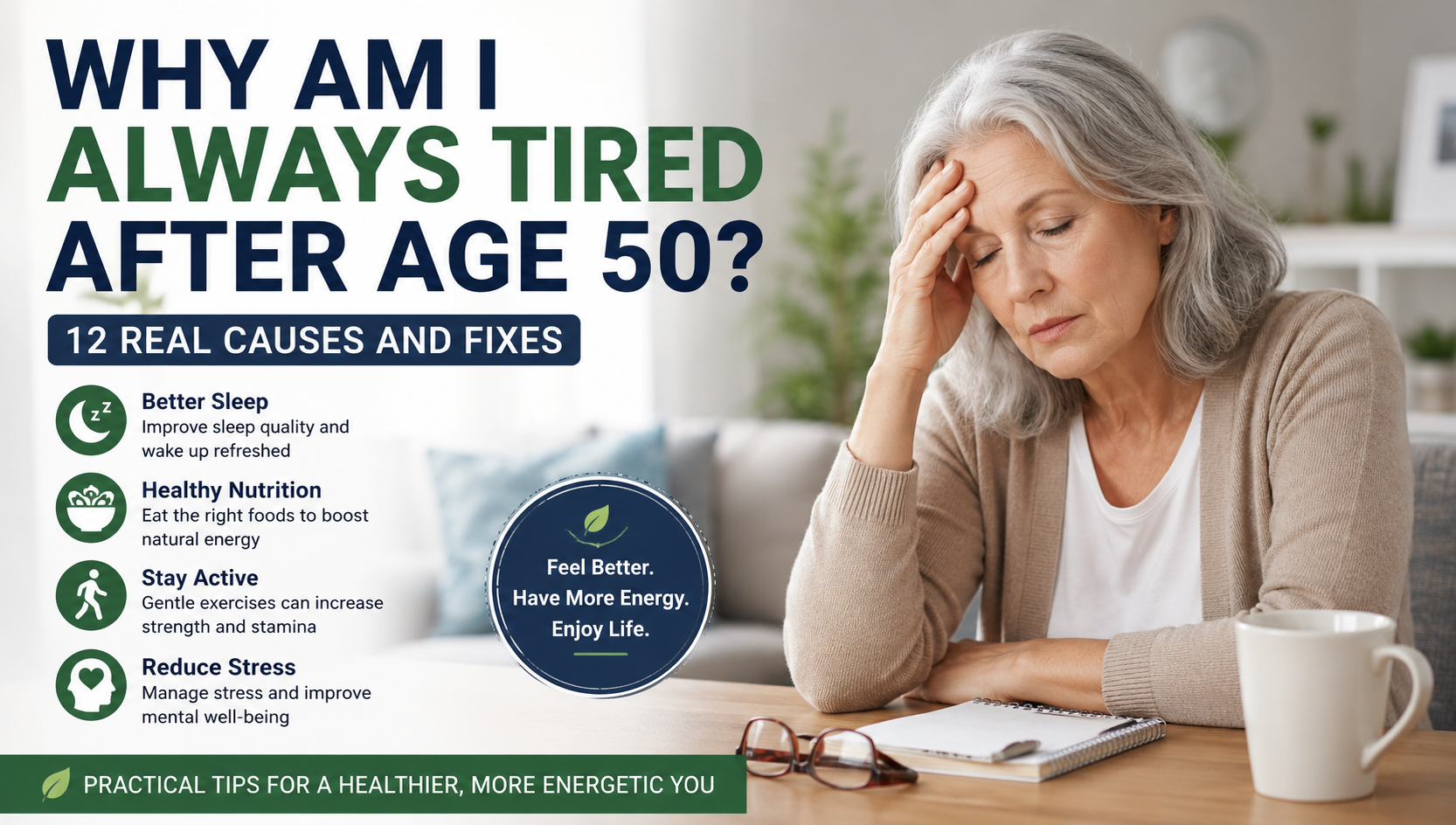
Feeling exhausted all the time after turning 50 can be frustrating. Many adults notice that their energy levels are not what they used to be. You may wake up tired, feel sleepy during the afternoon, or struggle to stay active through the evening.
The good news is that constant fatigue is not something you simply have to accept as a normal part of aging.
In many cases, there are specific reasons behind low energy after 50. Some are related to lifestyle habits, while others may involve sleep quality, stress, nutrition, medications, or health conditions.
Understanding the possible causes can help you make smarter choices and improve your daily energy naturally.
Why This Topic Matters
Millions of Americans over 50 deal with ongoing tiredness every day. Some assume it is “just aging,” but fatigue can affect every part of life:
- Work performance
- Relationships
- Physical activity
- Mental focus
- Mood
- Sleep quality
- Motivation
Low energy may also make it harder to stay active and healthy. Over time, this can create a cycle where inactivity causes even more fatigue.
The earlier you identify the reason behind your tiredness, the easier it may be to improve your quality of life.
Is It Normal to Feel Tired After 50?
A slight decrease in energy with age can happen naturally. Your body changes over time:
- Muscle mass slowly decreases
- Metabolism becomes slower
- Hormonal shifts occur
- Sleep patterns change
- Recovery takes longer
However, feeling exhausted every single day is not always normal.
If you constantly think, “Why am I always tired after age 50?” it may be your body signaling that something needs attention.
Common Causes of Fatigue After Age 50
1. Poor Sleep Quality
One of the biggest reasons people over 50 feel tired is poor sleep.
Even if you spend 7–8 hours in bed, your sleep may not be deep or restorative.
Common sleep problems include:
- Sleep apnea
- Frequent nighttime waking
- Restless legs
- Snoring
- Stress-related insomnia
- Light sleep patterns
Many adults over 50 also wake up earlier than they used to.
Signs your sleep may be the problem:
- Morning headaches
- Dry mouth
- Daytime sleepiness
- Brain fog
- Irritability
- Needing multiple naps
2. Lack of Physical Activity
It sounds backward, but being inactive often makes fatigue worse.
As people age, many become less active because of work schedules, joint pain, or retirement lifestyle changes. Unfortunately, sitting too much can lower stamina and circulation.
Regular movement helps:
- Improve oxygen flow
- Support heart health
- Build endurance
- Improve sleep
- Boost mood
Even a daily walk can make a noticeable difference.
3. Dehydration
Older adults are more likely to become dehydrated because thirst signals weaken with age.
Mild dehydration may cause:
- Fatigue
- Dizziness
- Headaches
- Dry skin
- Confusion
- Weakness
Many people simply do not drink enough water throughout the day.
Simple hydration tips:
| Habit | Benefit |
|---|---|
| Drink water with meals | Helps consistency |
| Carry a water bottle | Encourages sipping |
| Eat fruits with water content | Supports hydration |
| Limit excess alcohol | Prevents dehydration |
4. Nutritional Deficiencies
Poor nutrition is another major answer to the question, “Why am I always tired after age 50?”
Your body may not absorb nutrients as efficiently with age.
Low levels of these nutrients can contribute to fatigue:
- Iron
- Vitamin B12
- Vitamin D
- Magnesium
- Protein
Skipping meals or relying heavily on processed foods may also reduce energy levels.
5. Stress and Mental Exhaustion
Many adults over 50 carry heavy emotional responsibilities.
Examples include:
- Caring for aging parents
- Financial stress
- Health concerns
- Career burnout
- Loneliness after retirement
- Relationship stress
Chronic stress increases cortisol levels, which can affect sleep, energy, and mood.
Mental fatigue often feels just as draining as physical fatigue.
6. Hormonal Changes
Hormones influence energy more than many people realize.
For women:
Menopause and post-menopause can contribute to:
- Sleep disturbances
- Hot flashes
- Mood changes
- Fatigue
For men:
Lower testosterone levels may lead to:
- Reduced motivation
- Lower stamina
- Muscle loss
- Tiredness
Hormonal shifts are common after 50 and may affect daily energy.
7. Medication Side Effects
Certain medications may cause drowsiness or fatigue.
Examples include some medications used for:
- Blood pressure
- Allergies
- Anxiety
- Depression
- Pain management
Never stop medications without medical advice, but it may help to discuss side effects with your healthcare provider.
8. Sleep Apnea
Sleep apnea becomes more common with age and often goes undiagnosed.
It causes repeated pauses in breathing during sleep, reducing oxygen levels and disrupting rest.
Warning signs include:
- Loud snoring
- Waking up choking
- Extreme daytime sleepiness
- Morning headaches
- Poor concentration
Many people feel exhausted for years before discovering sleep apnea was the cause.
9. Blood Sugar Fluctuations
Energy crashes may happen when blood sugar levels rise and fall quickly.
Eating large amounts of:
- Sugary snacks
- Soda
- White bread
- Pastries
can lead to temporary energy boosts followed by crashes.
Balanced meals are often better for maintaining steady energy.
10. Underlying Health Conditions
Sometimes ongoing fatigue may relate to medical conditions such as:
- Thyroid disorders
- Diabetes
- Heart disease
- Depression
- Chronic pain
- Anemia
This is why persistent fatigue should never be ignored.
Scientific and Practical Explanation of Fatigue After 50
As people age, the body naturally becomes less efficient at producing and using energy.
Several biological changes happen over time:
Reduced Muscle Mass
After age 50, muscle mass decreases gradually. Less muscle can reduce strength and endurance.
Changes in Sleep Cycles
Older adults often spend less time in deep sleep, which affects recovery.
Slower Metabolism
Your metabolism slows with age, meaning your body processes energy differently.
Increased Inflammation
Chronic low-level inflammation may increase fatigue and discomfort.
Lower Mitochondrial Efficiency
Mitochondria are the “energy factories” inside cells. Aging can reduce how effectively they produce energy.
These changes do not mean fatigue is unavoidable, but they explain why energy may feel different after 50.
Best Foods for More Energy After 50
Diet plays a huge role in daily energy levels.
Protein-Rich Foods
Protein helps support muscles and steady energy.
Good choices include:
- Eggs
- Greek yogurt
- Fish
- Chicken
- Beans
- Lentils
- Cottage cheese
High-Fiber Foods
Fiber supports balanced blood sugar and digestion.
Examples:
- Oatmeal
- Brown rice
- Vegetables
- Apples
- Berries
- Whole grains
Healthy Fats
Healthy fats may help support brain function and long-lasting energy.
Examples include:
- Avocados
- Nuts
- Olive oil
- Seeds
- Salmon
Foods Rich in Vitamin B12
Vitamin B12 supports nerve function and energy production.
Foods include:
- Eggs
- Fish
- Dairy products
- Fortified cereals
Iron-Rich Foods
Low iron can contribute to fatigue.
Healthy iron sources:
- Spinach
- Lean beef
- Beans
- Tofu
- Pumpkin seeds
Sample Daily Energy-Boosting Meal Plan
| Meal | Example |
|---|---|
| Breakfast | Oatmeal with berries and nuts |
| Snack | Greek yogurt |
| Lunch | Grilled chicken salad |
| Snack | Apple with peanut butter |
| Dinner | Salmon with vegetables and brown rice |
| Hydration | Water throughout the day |
Exercises That May Help Reduce Fatigue After 50
Many adults avoid exercise because they already feel tired. But gentle movement often increases energy over time.
Walking
Walking improves circulation and stamina.
Try:
- 20–30 minutes daily
- Indoor mall walking
- Short walks after meals
Strength Training
Light resistance exercises help maintain muscle mass.
Options include:
- Resistance bands
- Bodyweight exercises
- Light dumbbells
Stretching and Mobility Work
Stretching may reduce stiffness and improve movement.
Popular options:
- Yoga
- Chair stretching
- Tai chi
Swimming
Swimming is low-impact and easier on joints.
It can help improve:
- Heart health
- Flexibility
- Endurance
Sleep Habits That Improve Energy
If you are asking “why am I always tired after age 50,” improving sleep habits may help more than anything else.
Keep a Consistent Sleep Schedule
Going to bed and waking up at similar times helps regulate the body clock.
Reduce Screen Time Before Bed
Phones and TVs may interfere with melatonin production.
Try limiting screens 1 hour before sleep.
Avoid Heavy Meals Late at Night
Large meals close to bedtime can disrupt sleep quality.
Create a Comfortable Sleep Environment
Helpful changes may include:
- Cooler room temperature
- Dark curtains
- Comfortable mattress
- White noise machine
Limit Late-Day Caffeine
Coffee late in the day may affect sleep even if you fall asleep easily.
Stress and Emotional Burnout After 50
Fatigue is not always physical.
Emotional exhaustion can leave people feeling drained every day.
Some adults over 50 experience:
- Caregiver stress
- Empty nest feelings
- Social isolation
- Retirement adjustment
- Grief or loss
Mental health matters just as much as physical health.
Helpful ways to reduce emotional fatigue:
- Spend time outdoors
- Stay socially connected
- Join community groups
- Practice relaxation techniques
- Talk to trusted friends
- Consider professional support if needed
Common Mistakes That Make Fatigue Worse
Skipping Breakfast
Skipping meals may lead to low energy and overeating later.
Relying on Sugar for Energy
Sugary foods often create temporary energy spikes followed by crashes.
Ignoring Sleep Problems
Many people normalize poor sleep instead of addressing it.
Staying Sedentary
Too much sitting can worsen fatigue and stiffness.
Drinking Too Little Water
Mild dehydration is extremely common after 50.
Overusing Energy Drinks
Energy drinks may temporarily mask exhaustion while worsening sleep later.
Who Should Be Careful?
Some symptoms should not be ignored.
Talk with a healthcare provider if fatigue is accompanied by:
- Chest pain
- Sudden weight loss
- Severe shortness of breath
- Fainting
- Ongoing depression
- Memory problems
- Persistent weakness
- Blood in stool
Fatigue that suddenly becomes severe deserves medical attention.
Practical Daily Habits That May Improve Energy
Here are realistic habits many adults find helpful:
Morning Habits
- Open curtains for sunlight
- Drink water first thing
- Eat a protein-rich breakfast
- Take a short walk
Afternoon Habits
- Avoid heavy lunches
- Stretch every hour
- Get fresh air
- Limit sugary snacks
Evening Habits
- Keep dinner lighter
- Reduce caffeine late in the day
- Create a calming bedtime routine
Can Weight Gain Cause Fatigue After 50?
Yes, excess weight may contribute to tiredness.
Carrying extra weight can affect:
- Sleep quality
- Joint pain
- Heart health
- Breathing
- Physical stamina
Even modest weight loss may improve energy and mobility in some adults.
How Long Does It Take to Feel More Energetic?
Energy improvements vary from person to person.
Some people notice changes within:
- A few days of better sleep
- A couple weeks of regular walking
- A month of improved nutrition
Consistency matters more than perfection.
Small habits repeated daily often produce the best long-term results.
FAQs
Why am I always tired after age 50 even when I sleep enough?
You may be dealing with poor sleep quality rather than lack of sleep time. Conditions like sleep apnea, stress, medications, or nutritional deficiencies may also contribute.
Is fatigue after 50 a normal part of aging?
Some energy changes are normal, but constant exhaustion is not something you should ignore.
What vitamin deficiency causes tiredness in older adults?
Low vitamin B12, vitamin D, iron, and magnesium levels are commonly linked to fatigue.
What foods help increase energy naturally after 50?
Protein-rich foods, whole grains, fruits, vegetables, nuts, and healthy fats may help support stable energy.
Can dehydration make seniors feel tired?
Yes. Even mild dehydration may cause fatigue, dizziness, and weakness in older adults.
When should I see a doctor about fatigue?
Seek medical advice if fatigue becomes severe, sudden, or is combined with symptoms like chest pain, breathing issues, or unexplained weight loss.
Final Thoughts
If you keep asking yourself, “Why am I always tired after age 50?” you are definitely not alone.
Fatigue after 50 can happen for many reasons, including sleep problems, stress, inactivity, poor nutrition, hormonal changes, and health conditions. The important thing is not to dismiss ongoing exhaustion as “just getting older.”
Small lifestyle changes can sometimes make a surprisingly big difference.
Better sleep habits, regular movement, balanced meals, hydration, and stress management may help improve daily energy over time. And if fatigue continues, it is always wise to speak with a healthcare professional to rule out underlying medical issues.
Listening to your body is one of the smartest health decisions you can make after 50.
Disclaimer
This article is for informational purposes only and should not replace professional medical advice, diagnosis, or treatment. Always consult a qualified healthcare provider regarding persistent fatigue or health concerns.
Also Read –