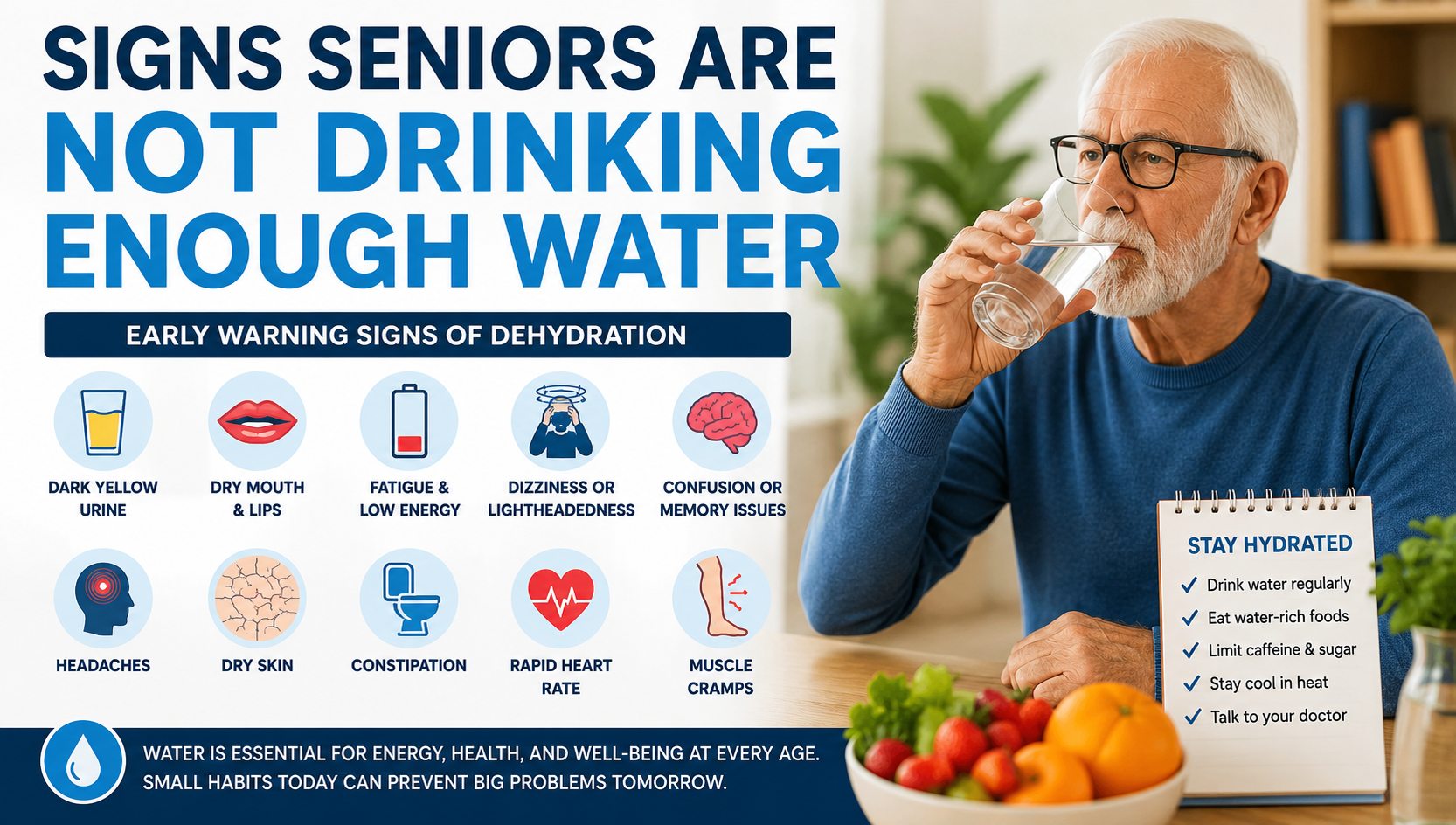
Staying hydrated becomes more important with age, yet many older adults do not drink enough water every day. Mild dehydration can sneak up slowly, and the symptoms are often mistaken for normal aging. Fatigue, dizziness, dry skin, headaches, and confusion may all point to one common issue: not getting enough fluids.
Understanding the signs seniors are not drinking enough water can help families and caregivers catch dehydration early and prevent more serious health problems. The good news is that small daily habits can make a big difference.
In this guide, you’ll learn:
- Early warning signs of dehydration in seniors
- Why older adults are at higher risk
- How much water seniors may need
- Easy hydration tips for everyday life
- Common mistakes to avoid
- When to seek medical advice
Why This Topic Matters
Many people assume dehydration only happens during hot summer weather. In reality, older adults can become dehydrated at any time of year.
As people age, the body naturally holds less water. Seniors may also experience a weaker sense of thirst, meaning they do not feel thirsty even when their body needs fluids. Certain medications, mobility issues, and medical conditions can make the problem worse.
According to health experts, dehydration in older adults can increase the risk of:
- Falls
- Urinary tract infections
- Kidney problems
- Confusion and memory issues
- Hospitalization
- Heat-related illness
For seniors living alone, dehydration may go unnoticed for days. That is why recognizing the signs early matters so much.
What Happens When Seniors Don’t Drink Enough Water?
Water supports nearly every function in the body. It helps regulate temperature, lubricates joints, aids digestion, and supports brain function.
When fluid intake drops too low, the body struggles to work properly. Even mild dehydration can affect mood, energy, and balance.
Older adults are especially vulnerable because aging changes the way the body manages fluids.
Why Seniors Are More Likely to Become Dehydrated
Here are some common reasons older adults may not drink enough water:
| Reason | Explanation |
|---|---|
| Reduced thirst sensation | Seniors may not feel thirsty even when dehydrated |
| Medication side effects | Diuretics and some blood pressure medicines increase fluid loss |
| Mobility limitations | Difficulty getting drinks or using the bathroom |
| Fear of frequent urination | Some seniors intentionally drink less |
| Memory problems | Forgetting to drink water regularly |
| Illness | Fever, vomiting, or diarrhea increase fluid loss |
| Hot weather | Older bodies struggle more with temperature control |
Common Signs Seniors Are Not Drinking Enough Water
Recognizing dehydration early can help prevent serious complications.
1. Dark Yellow Urine
One of the clearest signs of dehydration is dark-colored urine.
Healthy hydration usually produces light yellow urine. When the body lacks fluids, urine becomes darker and more concentrated.
Watch for:
- Amber or deep yellow urine
- Strong odor
- Reduced urination
This is often one of the first signs seniors are not drinking enough water.
2. Dry Mouth and Cracked Lips
A dry mouth may seem minor, but it often signals low fluid intake.
Seniors who are dehydrated may notice:
- Sticky saliva
- Dry tongue
- Cracked lips
- Difficulty swallowing
Some medications can also contribute to dry mouth, which may make drinking uncomfortable.
3. Fatigue and Low Energy
Feeling unusually tired is another common dehydration symptom in older adults.
When the body lacks fluids, blood circulation becomes less efficient. This can lead to:
- Weakness
- Daytime sleepiness
- Lack of motivation
- Reduced physical stamina
Many seniors assume fatigue is simply part of aging, but hydration may play a role.
4. Dizziness or Lightheadedness
Dehydration can lower blood pressure and reduce blood flow to the brain.
This may cause:
- Dizziness when standing up
- Feeling faint
- Loss of balance
- Increased fall risk
Falls are a major concern for older adults, making hydration especially important.
5. Confusion or Memory Problems
One surprising sign seniors are not drinking enough water is mental confusion.
Even mild dehydration may affect brain function.
Symptoms may include:
- Forgetfulness
- Trouble concentrating
- Irritability
- Sudden confusion
- Slower thinking
In severe cases, dehydration can mimic symptoms of dementia or cognitive decline.
6. Headaches
A dehydration headache may feel dull, throbbing, or persistent.
Older adults sometimes overlook headaches as stress or fatigue, but low fluid intake is a common cause.
Drinking water throughout the day may help reduce dehydration-related headaches.
7. Dry Skin
Skin naturally becomes thinner with age, but dehydration can make dryness worse.
Signs include:
- Flaky skin
- Rough texture
- Reduced elasticity
- Itching
A simple hydration test sometimes used at home is gently pinching the skin on the back of the hand. If it does not return quickly, dehydration may be present. However, aging skin naturally changes elasticity, so this test is not always reliable for seniors.
8. Constipation
Not drinking enough water can slow digestion.
Many seniors struggle with constipation because:
- The colon absorbs extra water from waste
- Stools become harder and drier
- Bowel movements become less frequent
Hydration and fiber often work together to support digestive health.
9. Rapid Heart Rate
The heart must work harder when the body lacks fluids.
This may cause:
- Faster pulse
- Heart palpitations
- Feeling weak after activity
Severe dehydration requires medical attention, especially in older adults with heart conditions.
10. Muscle Cramps
Water helps muscles function properly.
Low hydration levels can contribute to:
- Leg cramps
- Muscle tightness
- Weakness during walking or exercise
This becomes more common during hot weather or after physical activity.
Early Warning Signs vs. Severe Dehydration
Understanding the difference between mild and serious dehydration is important.
| Mild to Moderate Signs | Severe Signs |
|---|---|
| Dry mouth | Confusion or disorientation |
| Fatigue | Rapid heartbeat |
| Dark urine | Very low urine output |
| Headache | Fainting |
| Mild dizziness | Sunken eyes |
| Thirst | Difficulty waking up |
Severe dehydration can become a medical emergency.
If symptoms become serious, seek professional medical care immediately.
How Much Water Should Seniors Drink?
There is no single number that works for everyone.
Fluid needs depend on:
- Age
- Body size
- Activity level
- Climate
- Medical conditions
- Medications
Many health experts recommend older adults aim for around 6 to 8 cups of fluids daily unless advised otherwise by a healthcare provider.
Water is best, but fluids can also come from:
- Herbal tea
- Milk
- Soup
- Fruits
- Vegetables
Some seniors may need fluid restrictions due to kidney or heart conditions, so medical guidance matters.
Best Hydrating Foods for Seniors
Water is not the only source of hydration.
Many foods contain high amounts of water and can help older adults stay hydrated.
Fruits With High Water Content
| Fruit | Approximate Water Content |
|---|---|
| Watermelon | 92% |
| Strawberries | 91% |
| Cantaloupe | 90% |
| Oranges | 86% |
| Peaches | 89% |
Vegetables That Help Hydration
- Cucumbers
- Lettuce
- Celery
- Tomatoes
- Zucchini
These foods can support hydration while also providing vitamins and minerals.
Easy Ways Seniors Can Drink More Water
Building simple habits often works better than forcing large amounts of water at once.
Keep Water Nearby
A reusable water bottle or lightweight cup makes drinking more convenient.
Seniors are more likely to sip water regularly when it is within reach.
Drink Small Amounts Frequently
Large glasses of water can feel overwhelming.
Instead:
- Sip throughout the day
- Drink during meals
- Take water with medications if appropriate
Small habits add up.
Add Flavor Naturally
Some older adults avoid water because they find it bland.
Try adding:
- Lemon slices
- Cucumber
- Mint
- Berries
Natural flavor can make hydration more enjoyable.
Eat More Soups and Broths
Warm soups can increase fluid intake, especially during colder months.
Low-sodium options are generally better for heart health.
Create a Daily Hydration Routine
Routine makes hydration easier to remember.
Example:
- Water after waking up
- Drink with meals
- Sip during TV time
- Water before bedtime if appropriate
Consistency matters more than perfection.
Can Coffee and Tea Cause Dehydration?
This is a common question among seniors.
Moderate amounts of coffee and tea usually still contribute to overall fluid intake. However, drinks with caffeine may slightly increase urination in some people.
Balance is important.
Too much caffeine may:
- Increase bathroom trips
- Affect sleep
- Reduce appetite
Water should remain the primary source of hydration.
Best Drinks for Older Adults
Here are some hydration-friendly options for seniors:
| Drink | Benefits |
|---|---|
| Water | Best overall hydration |
| Herbal tea | Warm and soothing |
| Milk | Provides protein and calcium |
| Low-sugar electrolyte drinks | Helpful during illness or heat |
| Soup broth | Adds fluids and nutrients |
Common Mistakes Seniors Make With Hydration
Waiting Until They Feel Thirsty
By the time thirst appears, mild dehydration may already be present.
Older adults often need to drink proactively.
Drinking Too Little to Avoid Bathroom Trips
Some seniors intentionally reduce fluids because they worry about:
- Incontinence
- Nighttime urination
- Limited mobility
Unfortunately, this can worsen dehydration and urinary health problems.
Relying Only on Sugary Drinks
Soda and sugary beverages are not ideal hydration choices.
Excess sugar may:
- Increase blood sugar spikes
- Add unnecessary calories
- Affect energy levels
Ignoring Illness-Related Fluid Loss
Fever, vomiting, diarrhea, and sweating increase fluid needs.
Hydration becomes especially important during illness.
Who Should Be Extra Careful?
Certain seniors face a higher risk of dehydration.
Older Adults Living Alone
Without reminders or assistance, fluid intake may decline.
Seniors With Memory Problems
Conditions affecting memory may cause people to forget to drink water.
Caregiver reminders can help.
People Taking Diuretics
“Water pills” increase urine output and may raise dehydration risk.
Seniors With Diabetes
High blood sugar can increase fluid loss through urination.
Adults Over Age 85
Very advanced age increases vulnerability to dehydration complications.
Scientific Explanation: Why Aging Affects Hydration
Several age-related changes increase dehydration risk.
Reduced Body Water
Older adults naturally have less total body water than younger adults.
This means fluid balance changes more quickly.
Kidney Function Changes
Aging kidneys may not conserve water as effectively.
This can increase fluid loss.
Decreased Thirst Signals
The brain becomes less responsive to dehydration signals over time.
Many seniors simply do not feel thirsty enough.
Medication Effects
Common medications linked to dehydration include:
- Diuretics
- Laxatives
- Some blood pressure medications
- Certain antidepressants
Always discuss medication concerns with a healthcare professional.
Practical Daily Hydration Plan for Seniors
Here is a simple hydration example many older adults can follow.
| Time of Day | Hydration Habit |
|---|---|
| Morning | 1 glass of water after waking |
| Breakfast | Herbal tea or water |
| Mid-morning | Fruit snack with water |
| Lunch | Soup or water |
| Afternoon | Refill water bottle |
| Dinner | Water with meal |
| Evening | Small glass of water if appropriate |
Signs of Dehydration During Hot Weather
Summer heat can quickly worsen dehydration.
Watch for:
- Excess sweating
- Heat exhaustion
- Weakness outdoors
- Dry skin
- Confusion after heat exposure
Older adults should avoid prolonged heat exposure and drink fluids regularly during warm weather.
Hydration Tips for Family Caregivers
Caregivers often play an important role in helping seniors stay hydrated.
Helpful Strategies
- Offer fluids regularly instead of waiting for requests
- Use cups that are easy to hold
- Track daily fluid intake
- Provide hydrating snacks
- Encourage hydration during medications
Simple reminders can prevent serious health problems.
When to Contact a Doctor
Mild dehydration can often improve with fluids, but some symptoms require medical attention.
Seek professional care if a senior experiences:
- Severe confusion
- Fainting
- Very low urination
- Persistent vomiting
- Rapid heartbeat
- Severe weakness
- Signs of heat stroke
This article is for educational purposes only and should not replace medical advice. Always consult a qualified healthcare professional for personal medical concerns.
Frequently Asked Questions
What are the first signs seniors are not drinking enough water?
Early signs often include dark urine, dry mouth, fatigue, headaches, and dizziness.
Why do older adults get dehydrated easily?
Aging reduces thirst sensation and changes how the body stores water. Medications and medical conditions can also contribute.
How can you tell if an elderly person is dehydrated?
Common signs include confusion, weakness, dry skin, reduced urination, and lightheadedness.
Is drinking too much water dangerous for seniors?
Yes, excessive water intake may cause problems in some cases, especially for seniors with kidney or heart conditions. Balanced hydration is important.
What drinks hydrate seniors best?
Water is usually the best option. Herbal tea, milk, soups, and water-rich foods can also help.
Can dehydration cause confusion in elderly adults?
Yes. Dehydration may affect brain function and sometimes leads to confusion or trouble concentrating.
How much water should seniors drink daily?
Many older adults benefit from around 6 to 8 cups of fluids daily, though individual needs vary.
Final Thoughts
Understanding the signs seniors are not drinking enough water can help families protect the health and safety of older loved ones.
Dehydration often develops gradually. What looks like fatigue, forgetfulness, or normal aging may actually be a lack of fluids. Paying attention to small warning signs can prevent bigger health issues later.
The good news is that hydration does not need to be complicated. A few simple daily habits — drinking water regularly, eating hydrating foods, and staying mindful during hot weather — can make a meaningful difference.
For seniors, caregivers, and family members alike, hydration is one of the easiest wellness habits to support overall health and quality of life.
Also Read –
Easy Protein Meals for Seniors Living Alone