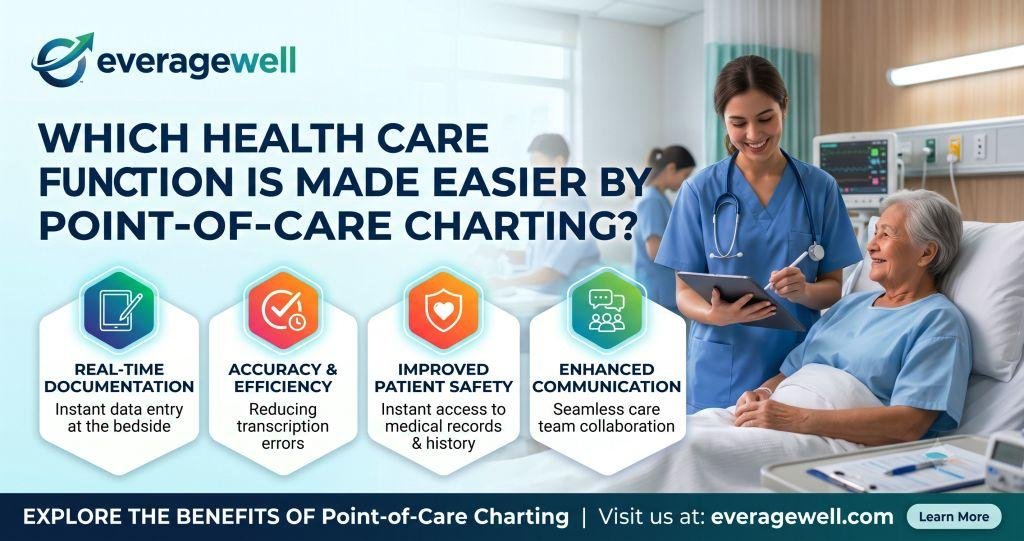
The health care function made easier by point-of-care charting is entering patient data during a home care visit. In other words, a health care professional can document observations, vital signs, medications, services provided, and other relevant information while caring for the patient rather than waiting until later.
This matters because home health professionals often work away from a traditional office or hospital workstation. Being able to record information at the location where care occurs can make documentation more timely and reduce the need to rely on memory after the visit.
Point-of-care charting is also part of a broader shift toward electronic health records and digital documentation. Modern electronic records can give authorized members of a care team access to current patient information, which can support communication and coordination.
For adults over 50 and their families, this technology may not seem important at first. But accurate documentation can matter when someone receives care from multiple providers, takes several medications, or moves between home care, primary care, specialists, and hospitals.
In this guide, we’ll explain the answer clearly, look at how point-of-care charting works, compare it with traditional documentation, and explain why accurate real-time charting matters in modern health care.
Quick Answer: What Health Care Function Is Made Easier?
Answer: Entering patient data during a home care visit.
Point-of-care charting allows a health care professional to document patient information at the time and place where care is provided.
For example, during a home health visit, a professional may record:
- Blood pressure and pulse
- Temperature or oxygen saturation
- Patient-reported symptoms
- Medication information
- Changes in the patient’s condition
- Care or services provided
- Patient response to care
- Follow-up needs
Instead of writing everything down and entering it into a system later, information can be recorded during the visit using an appropriate electronic device or documentation system.
The key idea is real-time or near-real-time documentation at the point where care is delivered.
What Is Point-of-Care Charting?
Point-of-care charting means documenting patient information where care is actually being provided.
The “point of care” could be a patient’s home, clinic, hospital room, rehabilitation facility, nursing facility, or another health care setting.
The important distinction is when and where the information is entered.
Traditional documentation might involve providing care first, taking handwritten notes, and entering information into a record later. Point-of-care charting attempts to move the documentation process closer to the actual patient encounter.
For example, imagine a home health nurse visits an older adult recovering at home after a hospital stay.
During the visit, the nurse checks the patient’s blood pressure, reviews medications, observes mobility, asks about symptoms, and documents the care provided.
With point-of-care charting, that information can be entered during the visit instead of waiting until the professional returns to the office.
Electronic health records can contain medical history, diagnoses, medications, progress notes, test results, vital signs, allergies, prescriptions, treatment plans, and other information.
Why Does Real-Time Documentation Matter?
The longer someone waits to document an encounter, the greater the possibility that small details may be forgotten or recorded less precisely.
Accurate documentation also gives other authorized members of the health care team a clearer picture of what happened.
The Agency for Healthcare Research and Quality notes that accurate and complete documentation can support continuity of care, communication, patient safety, and clinical decision-making.
Why Is Point-of-Care Charting Especially Useful in Home Care?
Home care is one of the clearest examples of where point-of-care charting is useful.
A home health professional may see several patients in different locations throughout the day. There may not be a convenient desktop computer available in each home.
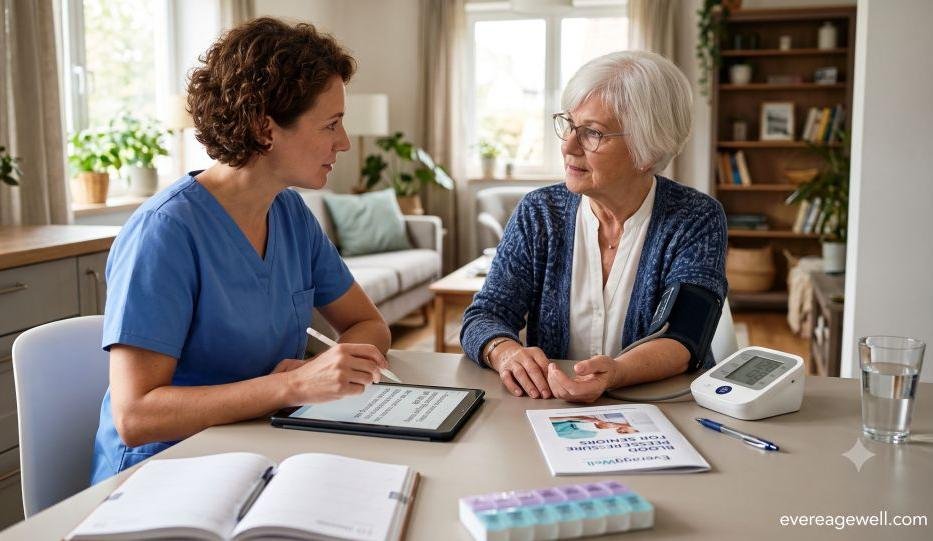
A mobile documentation system can allow information to be entered during or immediately after the visit, depending on the organization’s workflow and technology.
This makes entering patient data during a home care visit the best answer to the commonly asked question.
It does not mean point-of-care charting has no other advantages. It can support communication, care coordination, clinical documentation, and workflow. But entering patient information during a home visit is the specific health care function highlighted by this question.
Point-of-Care Charting vs. Traditional Charting
| Feature | Point-of-Care Charting | Traditional/Later Charting |
|---|---|---|
| Where information is entered | At or near the care location | Often after the visit |
| Timing | During or shortly after care | May occur later |
| Patient information | Recorded close to the encounter | Relies more heavily on notes taken earlier |
| Home visits | Particularly useful | Can require later office or system entry |
| Communication | Information may become available sooner | Information may not appear until documentation is completed |
| Workflow | Can integrate documentation into the visit | Documentation may be a separate task |
| Risk of delayed entry | Generally reduced | Greater potential for delay |
| Accuracy | Can capture details while fresh | May depend on memory or handwritten notes |
The exact benefits depend on the software, workflow, training, connectivity, and policies of the health care organization.
10 Ways Point-of-Care Charting Makes Health Care Easier
1. It Makes Patient Data Entry More Convenient
The most direct benefit is convenience.
A health care professional does not necessarily need to wait until returning to an office to document basic information from a home visit.
For example, after checking a patient’s blood pressure, the reading can be documented as part of the visit.
That is particularly useful when professionals are moving between multiple patients and locations.
2. It Helps Keep Documentation Closer to the Actual Visit
Details are generally easier to document when the encounter is still fresh.
A home care professional may see several patients in one day. Waiting until much later to reconstruct each encounter can create an unnecessary documentation burden.
Point-of-care systems can make documentation part of the care workflow rather than a completely separate task.
This does not automatically guarantee perfect documentation. Training, software design, and careful review still matter.
3. It Can Improve Access to Current Patient Information
Electronic health records can provide authorized health professionals with access to patient information from different locations.
The Office of the National Coordinator for Health Information Technology says EHRs can provide quick access to patient records and support more coordinated and efficient care.
For someone receiving care from several professionals, having current information available can be especially valuable.
4. It Can Support Communication Among Care Team Members
A patient’s care may involve a primary care clinician, nurse, specialist, pharmacist, physical therapist, home health professional, and family caregiver.
Each person may see a different part of the patient’s health situation.
Well-maintained electronic documentation can help authorized members of the care team work from the same basic information.
ONC explains that EHRs can help reduce fragmentation by organizing and distributing patient information among authorized providers.
5. It Can Support Continuity of Care
Continuity of care means that important information follows the patient as care changes.
Consider an older adult who is discharged from a hospital and receives home health services.
The home care professional may need to understand what happened during the hospitalization, what medications are being used, and what follow-up care is planned.
Good documentation can help preserve that information.
AHRQ emphasizes that documentation is important for continuity, communication, and patient safety.
6. It Can Reduce Duplicate Data Entry
Some electronic documentation systems are designed to reuse appropriate information or connect different parts of a health record.
That can reduce unnecessary repetition.
For example, a patient’s existing demographic information may already be available rather than requiring the professional to enter it repeatedly.
However, automation should not replace professional review. Information still needs to be checked for accuracy.
7. It Can Support Clinical Decision-Making
Point-of-care documentation itself does not diagnose a patient.
However, information entered into an electronic record can sometimes interact with clinical decision-support tools.
For example, EHR systems may provide alerts, reminders, or access to evidence-based information.
Research has explored ways of integrating decision-support resources directly into clinical workflows so that relevant information is available without requiring clinicians to leave the EHR.
This is one reason accurate data entry matters.
Incorrect information can be just as problematic in a digital system as incorrect information on paper.
8. It Can Help With Medication Documentation
Medication information is an important part of many patient records.
An electronic health record may include medication lists, allergies, prescriptions, and treatment plans.
For an older adult taking multiple medications, maintaining accurate medication information can be particularly important.
Point-of-care documentation can help a professional record medication-related observations during a visit.
It does not mean the system should be trusted blindly. Medication lists can become outdated, and patients should tell their health care professionals about medications, supplements, and changes.
9. It Can Support Care Coordination
Older adults often have more than one health care provider.
A person might see a primary care clinician for routine care, a cardiologist for heart concerns, an endocrinologist for diabetes, and a physical therapist after an injury.
When information is accurately documented and appropriately shared, care can become less fragmented.
ONC identifies better information sharing, medication and allergy lists, order entry, and standardized care plans among potential benefits of EHR-based care coordination.
10. It Can Create a More Complete Record of Care
A medical record is more than a list of diagnoses.
It can include observations, test results, medications, treatment plans, vital signs, allergies, progress notes, and other information.
A complete record can help health professionals understand what has happened over time.
That long-term view becomes particularly useful when a patient has several chronic conditions or sees multiple providers.
How Point-of-Care Charting Supports Older Adults
Adults over 50 may have more complicated health histories than younger adults.
A person may have several medications, previous surgeries, chronic conditions, recurring laboratory tests, or appointments with different specialists.
This makes accurate documentation increasingly important.
For example, imagine a 72-year-old who receives home health services after a hospital stay.
During a home visit, the professional notices that the patient appears more tired than during the previous visit and documents the observation along with relevant measurements and the patient’s report.
That information may help the appropriate care team understand the patient’s changing situation.
It does not replace clinical judgment, but it gives the care team better information to work with.
For patients who monitor health numbers at home, understanding those measurements can also be useful.
For example, EverageWell has educational resources such as its Blood Pressure Chart for Seniors and Heart Rate Chart for Seniors.
These types of charts can help readers understand common health measurements, although personal treatment decisions should come from a qualified health professional.
Does Point-of-Care Charting Diagnose Illnesses?
No. Point-of-care charting is a documentation process, not a diagnosis by itself.
A health professional may record symptoms, measurements, observations, and other clinical information while providing care.
Those data may contribute to clinical assessment, but charting itself does not determine what disease a person has.
Diagnosis requires appropriate clinical evaluation and professional judgment.
This distinction is important because it is easy to confuse documenting information with interpreting information.
An electronic system might provide decision-support alerts or relevant information, but that does not turn documentation software into an independent diagnostician.
AHRQ notes that accurate diagnostic documentation is important for communication, continuity, safety, and clinical decision-making.
Does Point-of-Care Charting Make Billing Easier?
It can support billing and coding processes, but billing is not the primary answer to this question.
Complete clinical documentation can provide information needed for accurate coding and billing.
ONC specifically identifies legible, complete documentation as something that can facilitate accurate coding and billing.
However, point-of-care charting is fundamentally about documenting care close to where it occurs.
Billing generally involves additional administrative and financial processes after or alongside the clinical encounter.
So if a multiple-choice question asks:
“Which health care function is made easier by point-of-care charting?”
and the choices include:
- Education of health care students
- Entering patient data during a home care visit
- Diagnosing an illness
- Sending bills for services
the best answer is:
Entering patient data during a home care visit.
Common Challenges and Limitations
Point-of-care charting can be useful, but it is not automatically better simply because it is digital.
Technology Problems
Poor internet connectivity, software problems, device failures, or system outages can interfere with documentation.
Organizations need appropriate backup procedures and technical support.
Documentation Errors
Electronic systems do not prevent mistakes.
A professional can still enter the wrong number, select the wrong option, or fail to update outdated information.
Privacy and Security
Health information is sensitive.
Organizations must use appropriate safeguards to protect patient information and control access.
Patients should also be cautious about sharing personal health information through unsecured devices or platforms.
Documentation Burden
Electronic documentation can sometimes become burdensome.
AHRQ has noted that clinicians often report feeling overwhelmed by documentation, which is why workflow design and team-based approaches matter.
Too Much Information
More information is not always better.
A medical record can become difficult to use if it contains excessive irrelevant information, duplicate entries, or poorly organized notes.
Good documentation should be accurate, relevant, clear, and understandable.
Common Myths About Point-of-Care Charting
Myth: Point-of-care charting is only used in hospitals.
Fact: It can be used in many settings, including home care, outpatient clinics, nursing facilities, and other locations where patient care occurs.
Myth: Point-of-care charting means the computer diagnoses the patient.
Fact: Charting records information. Diagnosis still requires appropriate clinical assessment and professional judgment.
Myth: Digital documentation automatically prevents errors.
Fact: Electronic systems can improve organization and access to information, but incorrect data entry and incomplete documentation can still occur.
Myth: Point-of-care charting is the same as billing.
Fact: Documentation can support coding and billing, but point-of-care charting primarily concerns documenting patient care close to the time and place it occurs.
Myth: Older adults do not benefit from health technology.
Fact: Older adults may benefit indirectly when accurate electronic information improves communication and coordination among the professionals involved in their care.
Myth: More documentation always means better care.
Fact: Documentation should be accurate and clinically useful. Excessive or poorly organized information can make records harder to understand.
Who Benefits From Point-of-Care Documentation?
Point-of-care documentation can be useful for several groups.
Home Health Professionals
This is the most directly relevant group for the question.
They frequently provide care outside traditional clinical facilities and need practical ways to document visits.
Nurses and Other Direct-Care Professionals
Professionals who regularly record observations, assessments, interventions, and patient responses may benefit from integrated documentation tools.
Physicians and Advanced Practice Clinicians
They may benefit from timely access to information and organized patient records.
Patients and Caregivers
Patients do not usually perform the professional documentation themselves, but they may benefit when accurate information is available to the care team.
Older Adults With Multiple Providers
This group may particularly benefit from better coordination because information can otherwise become fragmented across different clinicians and care settings.
How the Point-of-Care Charting Process Works
A typical workflow may look something like this:
Step 1: The Professional Arrives at the Care Location
For home health, this may be the patient’s home.
Step 2: Patient Information Is Reviewed
The professional reviews relevant information already available in the patient’s record.
Step 3: The Patient Is Assessed
Depending on the visit, this may include asking questions, checking vital signs, observing physical function, reviewing medications, and discussing symptoms.
Step 4: Information Is Documented
Relevant findings and care provided are entered into the documentation system.
Step 5: The Record Is Reviewed
The professional checks the entry for accuracy and completeness according to the organization’s procedures.
Step 6: Appropriate Information Becomes Available to the Care Team
When the system and permissions allow, authorized members of the health care team may use the updated information for ongoing care.
This workflow can reduce the gap between providing care and documenting care.
A Real-Life Example
Consider Maria, a 68-year-old woman receiving home health care after a hospital stay.
Her home health nurse arrives in the morning.
Maria reports feeling more tired than usual. The nurse checks her vital signs, reviews her medications, asks about her appetite and daily activities, and documents the visit.
Instead of waiting until the end of the day to reconstruct the encounter, the nurse records the relevant information during the visit using the organization’s point-of-care documentation system.
Later, an authorized member of Maria’s care team can review the information when appropriate.
This example illustrates the central purpose of point-of-care charting:
The information is documented close to the time and place where care is delivered.
It does not mean the computer decides what is wrong with Maria. It does not replace the nurse’s judgment. It simply helps capture and organize information.
How Patients Can Benefit From Better Documentation
Patients can play a role in improving the quality of their health records too.
If you’re over 50, consider keeping an up-to-date list of:
- Prescription medications
- Over-the-counter medications
- Vitamins and supplements
- Medication allergies
- Major medical conditions
- Previous surgeries
- Important test results
- Names of major health care providers
- Questions you want to ask at your next appointment
You may also want to track health measurements that your clinician has specifically asked you to monitor.
For example, EverageWell provides educational resources on blood glucose levels, cholesterol, blood pressure, and heart rate.
A health chart can help you understand a number, but the number should always be considered in context.
How to Get Started With Better Health Information
If you’re a patient or caregiver, you don’t need sophisticated technology to improve your health information habits.
1. Keep Your Medication List Current
Bring an updated list to appointments.
2. Record Questions Before Appointments
Writing questions down can help you remember important concerns.
3. Know Your Usual Health Measurements
If your clinician recommends home monitoring, understand what you’re measuring and when you should report unusual results.
4. Ask Where Your Records Are Stored
Many health systems provide patient portals where patients can view portions of their health information.
5. Check for Errors
If you notice incorrect information in your record, ask the appropriate health care organization how to request a correction.
6. Don’t Self-Diagnose From a Chart
A single blood pressure, glucose, heart rate, or laboratory value rarely tells the entire health story.
Use health information as a tool for communication with your health care team rather than as a substitute for professional evaluation.
Frequently Asked Questions
1. Which health care function is made easier by point-of-care charting?
Entering patient data during a home care visit. Point-of-care charting allows health professionals to document relevant patient information where care is being provided.
2. What does point-of-care charting mean?
It means documenting patient care information at or close to the location and time of care. It is commonly associated with electronic documentation systems.
3. Is point-of-care charting the same as electronic health records?
Not exactly. Point-of-care charting describes a documentation approach, while an electronic health record is the broader digital record containing patient health information.
4. Why is point-of-care charting useful for home health care?
It makes it easier to document information during a home visit. Home health professionals may work at multiple locations, so documenting information where care occurs can fit naturally into their workflow.
5. Can point-of-care charting improve communication?
It can support communication when accurate information is appropriately available to authorized members of the care team. EHRs are designed to help coordinate information across providers and settings.
6. Does point-of-care charting diagnose a disease?
No. It documents information that may be relevant to assessment and treatment, but diagnosis requires appropriate clinical evaluation.
7. Can point-of-care charting help with billing?
It can support billing and coding by creating complete documentation of care. However, billing is a separate administrative process.
8. Is point-of-care charting only for nurses?
No. Different health professionals may use electronic documentation systems depending on their role, workplace, and scope of practice.
9. Why is accurate documentation important for older adults?
Because older adults may have multiple conditions, medications, and health care providers. Accurate information can support continuity and coordination of care.
10. Can electronic charting prevent medical errors?
It may help reduce some information-related problems, but it cannot eliminate errors. Incorrect data entry, incomplete information, poor workflows, and technical problems can still occur.
11. What information may be included in an electronic health record?
It can include medical history, diagnoses, medications, progress notes, test results, vital signs, allergies, prescriptions, and treatment plans.
12. Is point-of-care charting useful outside the home?
Yes. Similar documentation approaches may be used in clinics, hospitals, nursing facilities, rehabilitation settings, and other care environments.
13. Can patients see information entered into their health record?
Sometimes. Patient access depends on the health system, portal, type of information, and applicable policies and regulations.
14. Why shouldn’t patients rely entirely on health charts?
Because health numbers require context. A blood pressure or glucose value may mean different things depending on the person’s medical history, medications, symptoms, and circumstances.
15. What is the simplest way to remember the answer?
Think: point of care = document where care happens. For the commonly asked question, that means entering patient data during a home care visit.
Final Takeaway
The answer to “which health care function is made easier by point-of-care charting?” is entering patient data during a home care visit.
The major advantage is straightforward: health care professionals can document relevant patient information closer to the time and place where care is delivered.
Point-of-care charting does not replace clinical judgment, diagnose diseases automatically, or eliminate documentation errors. Its value comes from making the documentation process more integrated with patient care.
For older adults, accurate documentation can be particularly important because health care often involves multiple providers, medications, tests, and transitions between settings.
Good documentation gives the care team better information to work with. When that information is accurate, complete, secure, and appropriately shared, it can support continuity, communication, care coordination, and safer health care.
Medical Disclaimer
This article is intended for general educational and informational purposes only. It does not provide individualized medical, legal, or health care advice and should not replace guidance from a qualified health professional. If you have questions about your medical records, treatment, medications, or health condition, speak with your doctor or another qualified health care professional.
Trusted Sources
- Office of the National Coordinator for Health Information Technology — Benefits of EHRs
- ONC — Improve Care Coordination
- ONC — Improved Patient Care Using EHRs
- Agency for Healthcare Research and Quality — Diagnostic Documentation
- AHRQ — Challenges and Opportunities in Diagnostic Documentation
- AHRQ — Team Approach to EHR Documentation