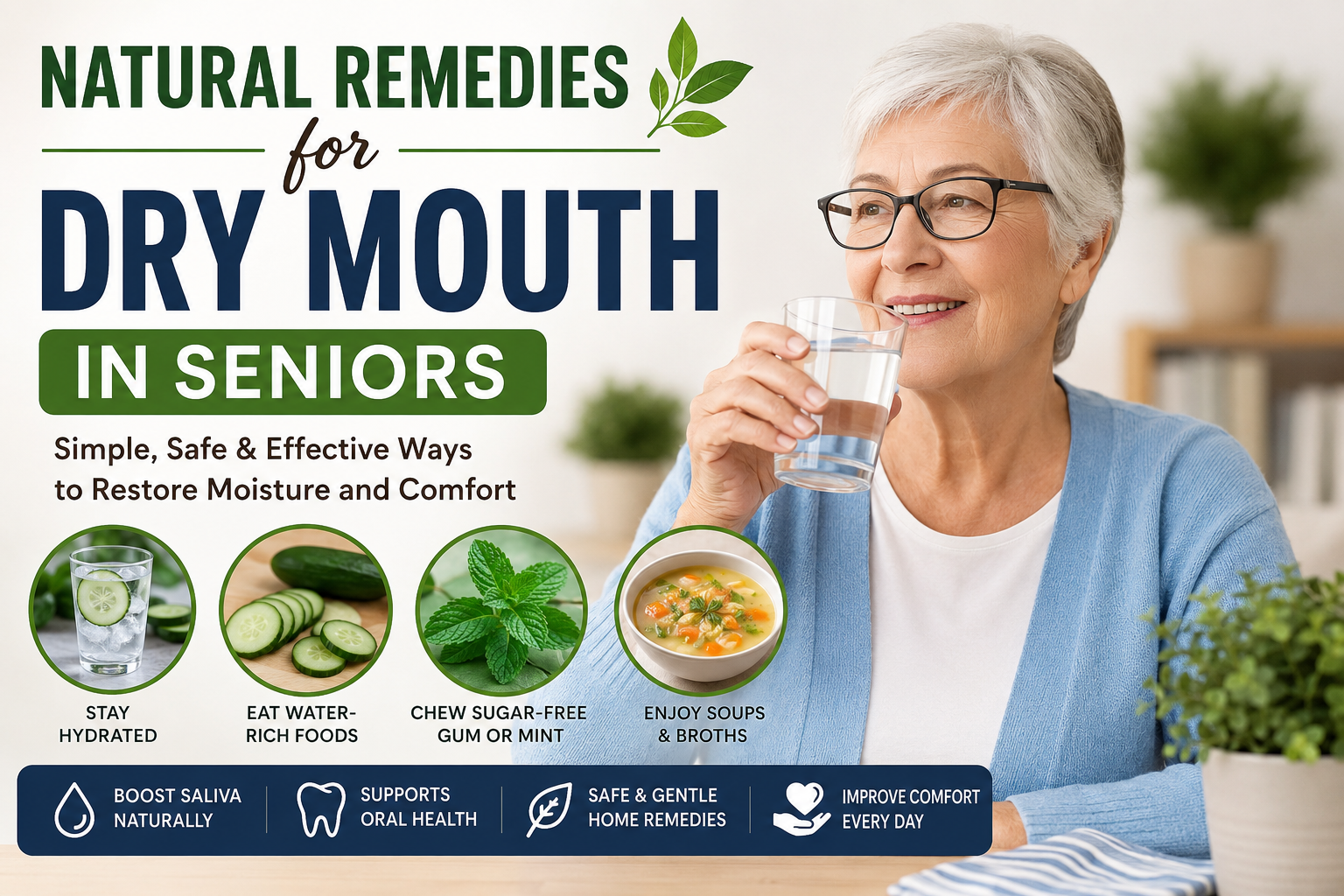
Dry mouth is one of the most common yet overlooked health concerns among older adults. If you or a loved one frequently wakes up with a dry, sticky feeling in the mouth, struggles to swallow food, or constantly reaches for water, you’re not alone.
Many seniors experience dry mouth due to aging, medications, dehydration, or certain health conditions. While occasional dryness may seem minor, persistent dry mouth can affect comfort, nutrition, speech, sleep quality, and oral health.
The good news is that there are several natural remedies for dry mouth in seniors that may help improve moisture levels and reduce discomfort. In many cases, simple lifestyle changes and home remedies can make a noticeable difference.
This guide covers the causes, benefits of treatment, practical solutions, foods to eat, mistakes to avoid, and frequently asked questions about managing dry mouth naturally.
What Is Dry Mouth?
Dry mouth, medically known as xerostomia, occurs when the salivary glands do not produce enough saliva to keep the mouth adequately moist.
Saliva plays a critical role in everyday health. It helps:
- Lubricate the mouth
- Support digestion
- Protect teeth from decay
- Control bacteria
- Aid swallowing
- Improve speech
When saliva production decreases, seniors may experience discomfort and an increased risk of dental problems.
Why This Topic Matters
The number of older Americans continues to grow, and many seniors take multiple medications daily. Unfortunately, hundreds of common medications list dry mouth as a side effect.
Ignoring the problem can lead to:
- Tooth decay
- Gum disease
- Mouth infections
- Difficulty eating
- Poor nutrition
- Sleep disturbances
- Reduced quality of life
Learning about natural remedies for dry mouth in seniors may help older adults stay comfortable and maintain better oral health.
Common Causes of Dry Mouth in Seniors
Medication Side Effects
This is one of the most common causes.
Medications that may contribute include:
- Blood pressure medications
- Antidepressants
- Allergy medicines
- Pain medications
- Diuretics
- Sleep aids
Dehydration
Older adults often have a reduced sense of thirst, making dehydration more likely.
Medical Conditions
Certain conditions may affect saliva production, including:
- Diabetes
- Parkinson’s disease
- Alzheimer’s disease
- Autoimmune disorders
- Stroke-related complications
Mouth Breathing
Breathing through the mouth during sleep can worsen dryness.
Smoking and Tobacco Use
Tobacco products can irritate oral tissues and contribute to dry mouth symptoms.
Signs and Symptoms of Dry Mouth
Symptoms may vary from person to person.
Common signs include:
- Sticky feeling in the mouth
- Frequent thirst
- Cracked lips
- Dry tongue
- Bad breath
- Difficulty chewing
- Trouble swallowing
- Hoarseness
- Burning sensation in the mouth
- Increased cavities
If symptoms persist, consulting a healthcare professional is recommended.
Benefits of Addressing Dry Mouth Early
Treating dry mouth can improve more than just comfort.
| Benefit | Why It Matters |
|---|---|
| Better Oral Health | Helps reduce cavity risk |
| Easier Eating | Supports healthy nutrition |
| Improved Speech | Makes conversations easier |
| Better Sleep | Reduces nighttime discomfort |
| Fresher Breath | Helps control odor-causing bacteria |
| Enhanced Quality of Life | Improves daily comfort |
Scientific Explanation Behind Dry Mouth
Saliva consists mostly of water, along with enzymes, proteins, and minerals that protect oral tissues.
As people age, saliva production does not necessarily stop. However, factors such as medications, chronic illnesses, and dehydration can interfere with normal gland function.
When saliva levels drop:
- Bacteria multiply more easily
- Food particles remain in the mouth longer
- Teeth lose natural protection
- Oral tissues become irritated
This is why managing dry mouth is important for overall health.
Best Natural Remedies for Dry Mouth in Seniors
1. Drink Water Consistently Throughout the Day
One of the simplest natural remedies for dry mouth in seniors is regular hydration.
Instead of drinking large amounts at once:
- Take small sips frequently
- Carry a reusable water bottle
- Drink water with meals
- Keep water by the bedside
Consistent hydration may help maintain moisture levels throughout the day.
2. Use a Humidifier at Night
Indoor air can become very dry, especially during winter.
A humidifier adds moisture to the air and may help reduce nighttime dry mouth.
Benefits include:
- Improved breathing comfort
- Better sleep quality
- Reduced mouth dryness upon waking
3. Chew Sugar-Free Gum
Chewing stimulates saliva production naturally.
Look for:
- Sugar-free options
- Xylitol-containing gum
Many seniors find chewing gum after meals helpful for relieving dryness.
4. Suck on Sugar-Free Lozenges
Sugar-free lozenges may encourage saliva flow and provide temporary relief.
Choose products that:
- Contain xylitol
- Are low in acid
- Do not contain added sugar
5. Eat Water-Rich Fruits
Many fruits contain high amounts of water and can contribute to hydration.
Good choices include:
- Watermelon
- Strawberries
- Cantaloupe
- Peaches
- Oranges
These foods may help increase moisture while providing valuable nutrients.
6. Include Cucumbers in Daily Meals
Cucumbers are over 90% water.
They make an excellent snack and can help support hydration throughout the day.
Try them in:
- Salads
- Sandwiches
- Snack trays
7. Limit Caffeine Intake
Excess caffeine may worsen dryness for some individuals.
Consider reducing:
- Coffee
- Energy drinks
- Highly caffeinated teas
You don’t necessarily need to eliminate caffeine entirely, but moderation can help.
8. Avoid Alcohol-Based Mouthwash
Many mouthwashes contain alcohol, which can dry oral tissues.
Instead, look for:
- Alcohol-free mouthwash
- Moisturizing oral rinses
- Products designed for dry mouth
9. Breathe Through Your Nose
Mouth breathing can increase dryness significantly.
If nasal congestion is a problem, addressing the underlying cause may help improve nighttime symptoms.
10. Eat More Soups and Broths
Moist foods are generally easier to eat when experiencing dry mouth.
Examples include:
- Vegetable soup
- Chicken broth
- Lentil soup
- Bone broth
These options may provide hydration while supporting nutrition.
11. Reduce Salty Foods
Highly salty foods can worsen mouth dryness.
Examples include:
- Potato chips
- Processed snacks
- Salted nuts
- Fast food
Reducing sodium intake may help minimize discomfort.
12. Use Olive Oil for Temporary Lubrication
Some people find that a small amount of olive oil can provide temporary moisture inside the mouth.
This is not a cure, but it may offer short-term comfort.
13. Increase Omega-3 Fatty Acids
Emerging research suggests omega-3 fats may support overall oral health.
Sources include:
- Salmon
- Sardines
- Walnuts
- Flaxseeds
- Chia seeds
14. Stay Physically Active
Light exercise can support circulation and overall hydration habits.
Activities may include:
- Walking
- Stretching
- Chair exercises
- Water aerobics
15. Maintain Excellent Oral Hygiene
Proper oral care remains essential.
Daily habits should include:
- Brushing twice daily
- Flossing regularly
- Routine dental checkups
- Cleaning dentures properly
What Foods Help Dry Mouth Naturally?
Best Foods
| Food | Benefit |
|---|---|
| Watermelon | High water content |
| Cucumber | Hydrating |
| Celery | Encourages chewing and saliva |
| Apples | Stimulates saliva production |
| Yogurt | Smooth texture |
| Oatmeal | Easy to swallow |
| Soups | Adds moisture |
Foods to Limit
| Food | Reason |
|---|---|
| Salty snacks | Can worsen dryness |
| Sugary candy | Increases cavity risk |
| Alcohol | May dry tissues |
| Spicy foods | Can irritate the mouth |
| Excess caffeine | May contribute to dryness |
What Drinks May Help Dry Mouth?
Some beverages are more supportive than others.
Good options include:
- Plain water
- Sparkling water without sugar
- Herbal tea
- Milk
- Coconut water (in moderation)
Limit:
- Alcoholic beverages
- Sugary sodas
- Energy drinks
Lifestyle Changes for Long-Term Relief
Many seniors find the best results come from combining several strategies.
Consider:
- Staying hydrated daily
- Eating balanced meals
- Managing chronic conditions
- Visiting the dentist regularly
- Reviewing medications with a healthcare provider
- Avoiding tobacco products
Small improvements often add up over time.
Common Mistakes to Avoid
Waiting Too Long to Address Symptoms
Persistent dry mouth should not be ignored.
Drinking Only When Thirsty
Many older adults become dehydrated before they actually feel thirsty.
Using Sugary Candies
While candy may temporarily increase saliva, sugar can increase cavity risk.
Skipping Dental Visits
Dry mouth increases the importance of regular dental care.
Overusing Caffeinated Beverages
Coffee and tea are popular, but excessive intake may worsen symptoms in some people.
Who Should Be Careful?
Certain individuals should seek medical advice if dry mouth becomes severe.
This includes seniors who:
- Have diabetes
- Experience rapid weight loss
- Develop mouth sores
- Have difficulty swallowing
- Notice major dental problems
- Experience symptoms lasting several weeks
A healthcare provider can help determine whether medications or medical conditions are contributing to the problem.
Frequently Asked Questions
What is the best natural remedy for dry mouth in seniors?
Regular hydration is often the most effective first step. Drinking water consistently throughout the day may help improve comfort and oral moisture.
Can dry mouth be a sign of a health condition?
Yes. Conditions such as diabetes, autoimmune disorders, and neurological diseases may contribute to dry mouth symptoms.
Does chewing gum help dry mouth?
Yes. Sugar-free gum can stimulate saliva production and provide temporary relief.
Which foods are best for dry mouth?
Water-rich foods such as watermelon, cucumber, oranges, and soups are commonly recommended.
Can medications cause dry mouth in older adults?
Absolutely. Many prescription and over-the-counter medications list dry mouth as a side effect.
Is dry mouth dangerous?
Dry mouth itself is usually not dangerous, but long-term dryness can increase the risk of cavities, gum disease, and oral infections.
Should seniors drink more water for dry mouth?
Adequate hydration often helps, although water alone may not completely solve dry mouth caused by medications or medical conditions.
Important Disclaimer
This article is for educational purposes only and should not replace professional medical advice, diagnosis, or treatment. Seniors experiencing persistent or worsening dry mouth should consult a qualified healthcare professional or dentist for personalized recommendations.
Final Thoughts
Dry mouth can be frustrating, especially for seniors trying to enjoy meals, sleep comfortably, and maintain good oral health. Fortunately, many natural remedies for dry mouth in seniors are simple, affordable, and easy to incorporate into daily life.
Small habits such as drinking water regularly, eating hydrating foods, using a humidifier, chewing sugar-free gum, and maintaining excellent oral hygiene can often provide meaningful relief.
While home remedies can be helpful, persistent symptoms should always be discussed with a healthcare provider. Identifying the underlying cause is an important step toward long-term comfort and better overall health.
Recommended External Resources:
- National Institute of Dental and Craniofacial Research: https://www.nidcr.nih.gov
- American Dental Association: https://www.ada.org
Related Keywords
- dry mouth treatment for elderly
- how to increase saliva naturally
- xerostomia home remedies
- dry mouth causes in seniors
- best foods for dry mouth
Also Read –
Easy Lunch Ideas for Diabetic Elderly: 15 Healthy and Delicious Meals
How Seniors Can Lower Blood Sugar Naturally: 15 Proven Ways That Really Work