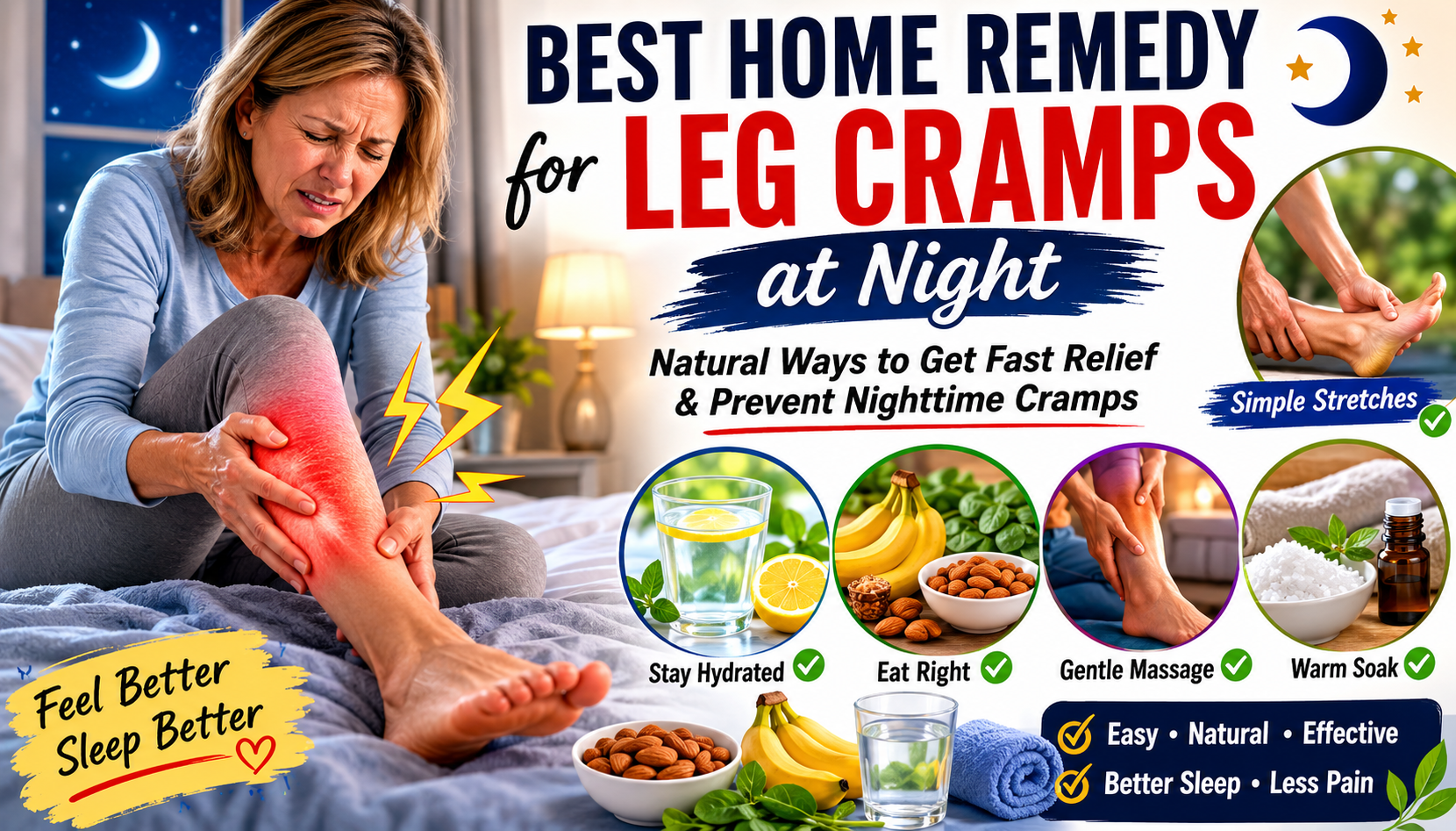
If you’ve ever been jolted awake by a sudden, painful muscle spasm in your calf or foot, you’re not alone. Nighttime leg cramps affect millions of Americans, especially adults over 40 and seniors. The pain can be intense enough to interrupt sleep and leave lingering soreness the next day.
Many people search for the best home remedy for leg cramps at night because they want fast, natural relief without relying on medications. The good news is that several simple remedies may help reduce the frequency and severity of nighttime leg cramps.
In this guide, you’ll learn why leg cramps happen, what causes them, and the most effective home remedies that may help you sleep more comfortably.
What Are Nighttime Leg Cramps?
Nighttime leg cramps are sudden, involuntary muscle contractions that usually occur in the calves, feet, or thighs while sleeping or resting.
They often:
- Happen without warning
- Cause sharp, intense pain
- Last from a few seconds to several minutes
- Leave muscles sore afterward
- Disrupt sleep quality
Although they are usually harmless, recurring leg cramps can affect overall well-being and quality of life.
Why This Topic Matters
Sleep is essential for physical recovery, mental health, and healthy aging. When leg cramps repeatedly interrupt sleep, people may experience:
- Daytime fatigue
- Irritability
- Reduced concentration
- Lower energy levels
- Poor overall sleep quality
For older adults, nighttime leg cramps can become particularly frustrating because they may occur several times per week.
Finding the best home remedy for leg cramps at night can help improve comfort and support better sleep habits.
What Causes Leg Cramps at Night?
Several factors may contribute to nighttime leg cramps.
Dehydration
One of the most common causes is not drinking enough fluids throughout the day.
When the body becomes dehydrated, muscles may become more prone to cramping.
Muscle Fatigue
Standing for long periods, exercising intensely, or overworking muscles can trigger cramps later at night.
Mineral Imbalances
Low levels of certain minerals may affect muscle function, including:
- Potassium
- Magnesium
- Calcium
- Sodium
Poor Circulation
Reduced blood flow to the legs may increase cramping risk in some individuals.
Sitting for Long Periods
Extended periods of inactivity may contribute to muscle tightness and cramping.
Aging
Older adults experience leg cramps more frequently due to natural changes in muscles and nerves.
Certain Medications
Some medications may increase the likelihood of muscle cramps. If cramps begin after starting a new medication, speak with your healthcare provider.
Best Home Remedy for Leg Cramps at Night
Many people wonder what the single best home remedy for leg cramps at night is.
While there is no universal cure that works for everyone, experts often recommend a combination of hydration, stretching, and proper nutrition.
1. Stretch the Affected Muscle Immediately
When a cramp strikes:
- Straighten your leg.
- Pull your toes toward your shin.
- Hold the stretch for 20–30 seconds.
This simple technique is often the fastest natural relief method.
2. Drink More Water Throughout the Day
Proper hydration supports healthy muscle function.
A practical goal is to drink water consistently rather than waiting until you’re thirsty.
Signs of dehydration may include:
- Dark urine
- Dry mouth
- Fatigue
- Headaches
3. Apply Heat
A heating pad, warm towel, or warm bath can help relax tight muscles.
Heat may improve circulation and reduce muscle tension.
4. Gentle Massage
Massaging the cramped area can encourage relaxation and improve blood flow.
Use slow, gentle pressure rather than aggressive rubbing.
5. Walk Around
Standing up and walking slowly may help release muscle tightness and stop a cramp more quickly.
How Hydration Helps Prevent Nighttime Leg Cramps
Many people underestimate the role of hydration.
Muscles rely on fluids and electrolytes to contract and relax properly.
When fluid levels drop:
- Muscles may become more irritable
- Nerve signals may be affected
- Cramping risk can increase
Hydration Tips
| Tip | Benefit |
|---|---|
| Drink water throughout the day | Supports muscle function |
| Increase fluids during hot weather | Replaces lost fluids |
| Hydrate after exercise | Helps recovery |
| Limit excessive alcohol | Reduces dehydration risk |
| Monitor urine color | Easy hydration indicator |
Foods That May Help Reduce Nighttime Leg Cramps
Nutrition plays an important role in muscle health.
Bananas
Bananas provide potassium, which supports muscle contractions.
Sweet Potatoes
Rich in potassium and magnesium.
Avocados
Contain healthy fats and important minerals.
Yogurt
Provides calcium and protein.
Spinach
Offers magnesium, potassium, and antioxidants.
Nuts and Seeds
Good sources of magnesium.
Examples include:
- Almonds
- Pumpkin seeds
- Sunflower seeds
Beans
Contain several nutrients linked to muscle function.
Salmon
Provides protein, vitamin D, and healthy fats.
Can Magnesium Help Leg Cramps?
Magnesium is often discussed as a natural remedy.
It plays a role in:
- Muscle contraction
- Nerve function
- Energy production
Foods rich in magnesium include:
- Spinach
- Pumpkin seeds
- Almonds
- Black beans
- Whole grains
Before taking supplements, consult a healthcare professional, especially if you have kidney disease or take prescription medications.
Best Stretches Before Bed
A bedtime stretching routine may help reduce cramp frequency.
Calf Stretch
Stand facing a wall.
- Place one foot behind the other.
- Keep the back heel on the floor.
- Lean forward gently.
- Hold for 30 seconds.
Seated Hamstring Stretch
- Sit on the floor.
- Extend one leg.
- Reach toward your toes.
- Hold for 20–30 seconds.
Toe Flex Stretch
- Sit comfortably.
- Pull toes upward gently.
- Hold for 20 seconds.
Ankle Circles
Rotate each ankle:
- 10 circles clockwise
- 10 circles counterclockwise
Scientific Explanation Behind Night Leg Cramps
Researchers continue studying the exact cause of nighttime leg cramps.
Current evidence suggests they may result from:
- Overactive nerves
- Muscle fatigue
- Reduced flexibility
- Changes in muscle control associated with aging
Nighttime positioning may also contribute.
When feet point downward during sleep, calf muscles remain shortened. This may increase the chance of sudden contractions.
That is one reason stretching before bed often helps many people.
Additional Natural Remedies That May Help
Warm Bath Before Bed
A warm bath may help muscles relax after a long day.
Regular Physical Activity
Moderate exercise supports circulation and flexibility.
Good options include:
- Walking
- Swimming
- Cycling
- Gentle yoga
Supportive Footwear
Poor footwear may contribute to muscle strain.
Choose shoes with:
- Good arch support
- Proper fit
- Adequate cushioning
Elevate Your Legs
Some individuals find mild relief by elevating their legs for a short period before bedtime.
Improve Sleep Position
Try avoiding positions that keep toes pointed downward for long periods.
What Should You Do During a Leg Cramp?
If a cramp occurs:
- Stay calm.
- Stretch the muscle.
- Massage the area.
- Walk slowly.
- Apply warmth.
- Drink water.
Most cramps improve within minutes.
Common Mistakes to Avoid
Many people unknowingly make cramping worse.
Ignoring Hydration
Waiting until you’re thirsty may not be enough.
Skipping Stretching
Tight muscles are often more prone to cramping.
Overexercising
Sudden increases in physical activity can strain muscles.
Sitting Too Long
Take movement breaks throughout the day.
Self-Diagnosing Serious Conditions
Frequent or severe cramps may require medical evaluation.
Who Is Most Likely to Experience Nighttime Leg Cramps?
Certain groups experience them more often.
Older Adults
Age-related muscle changes increase risk.
Athletes
Heavy training may trigger cramps.
People Who Stand All Day
Muscle fatigue can develop after long work shifts.
Pregnant Women
Pregnancy-related changes may increase cramping.
People With Certain Medical Conditions
Conditions involving nerves, circulation, or metabolism may contribute.
Who Should Be Careful?
While occasional leg cramps are common, medical attention may be needed if cramps:
- Occur very frequently
- Become increasingly severe
- Cause weakness
- Cause swelling
- Cause skin color changes
- Interfere significantly with daily life
Seek medical advice if symptoms persist.
Important Disclaimer
This article is for educational purposes only and does not replace professional medical advice, diagnosis, or treatment. Always consult a qualified healthcare provider regarding persistent symptoms or health concerns.
Frequently Asked Questions
What is the best home remedy for leg cramps at night?
Stretching the affected muscle, staying hydrated, and maintaining proper mineral intake are among the most commonly recommended natural remedies.
Does drinking water stop leg cramps?
Hydration may help prevent some cramps, especially when dehydration contributes to muscle irritation.
Why do leg cramps happen only at night?
Muscle fatigue, nerve activity, reduced movement during sleep, and sleeping positions may contribute to nighttime cramps.
Can magnesium help with leg cramps?
Some people find magnesium helpful, particularly if dietary intake is low. Speak with your healthcare provider before using supplements.
What foods help prevent leg cramps?
Foods rich in potassium, magnesium, and calcium may support muscle function. Examples include bananas, spinach, yogurt, beans, and nuts.
Are nighttime leg cramps dangerous?
Most are harmless, but recurring or severe cramps should be evaluated by a healthcare professional.
Does walking help leg cramps?
Yes. Gentle walking often helps relax the muscle and improve circulation.
Can exercise prevent leg cramps?
Regular moderate exercise and stretching may help reduce the frequency of cramps for many people.
Final Thoughts
Finding the best home remedy for leg cramps at night often involves a combination of healthy habits rather than a single miracle solution. Staying hydrated, stretching regularly, eating nutrient-rich foods, and maintaining an active lifestyle can make a meaningful difference for many people.
If you occasionally wake up with a painful calf cramp, you’re certainly not alone. Small changes in your daily routine may help reduce nighttime discomfort and improve your sleep quality over time.
The key is consistency. A few minutes of stretching before bed, proper hydration during the day, and attention to overall muscle health can go a long way toward preventing those frustrating middle-of-the-night cramps.
5 Related Keywords
- how to stop leg cramps at night naturally
- home remedies for calf cramps
- nighttime muscle cramps treatment
- foods that prevent leg cramps
- leg cramps while sleeping