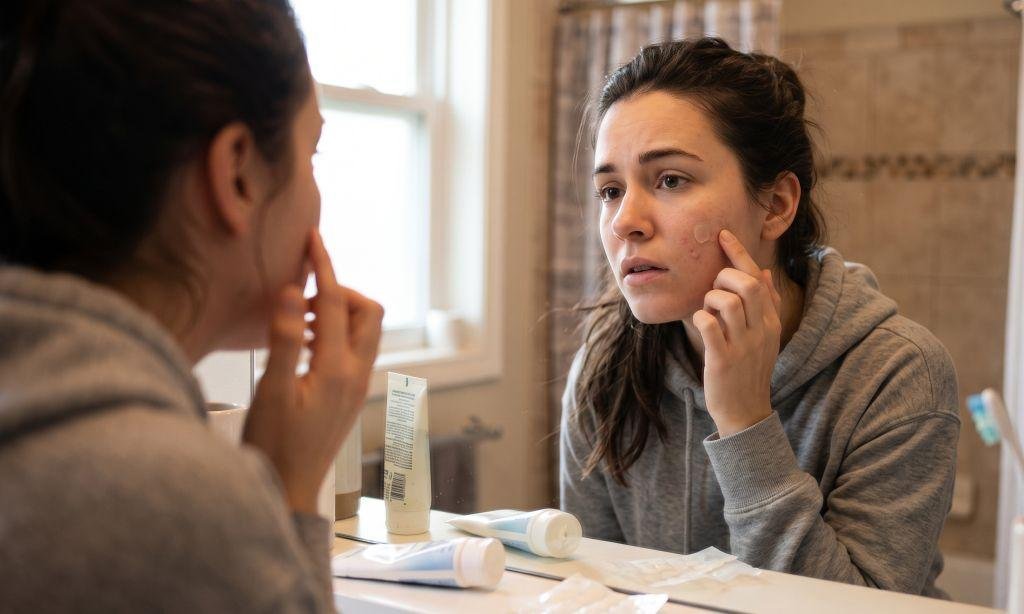
Do pimple patches actually work, or are those little stickers simply another skincare trend?
If you’ve walked through a drugstore or browsed skincare products online recently, you’ve probably seen pimple patches. They’re small, usually round stickers designed to cover individual pimples. Some are clear and nearly invisible. Others contain ingredients such as salicylic acid or benzoyl peroxide.
They look simple, but the idea behind them is more interesting than it first appears.
The short answer is that pimple patches can help with certain types of pimples, particularly surface-level, fluid-filled or opened blemishes. However, they aren’t a complete treatment for acne and won’t work equally well on every type of breakout.
One of their biggest advantages may actually be something very simple: they put a physical barrier between your fingers and the pimple.
That matters because squeezing, picking, or repeatedly touching a blemish can irritate the skin and increase the chance of discoloration and scarring. The American Academy of Dermatology recommends avoiding picking and squeezing acne, particularly deeper and painful pimples.
So, are pimple patches worth trying?
For the right kind of pimple, they can be a useful part of a simple skincare routine. But knowing which pimple to patch — and which one needs a different approach — is the key.
Why Does This Topic Matter?
Acne isn’t only a teenage problem.
Adults can experience pimples, blackheads, whiteheads, and other forms of acne well beyond their teenage years. According to the American Academy of Dermatology, acne affects nearly 50 million Americans each year and can occur in adults as well as adolescents.
For someone who gets one or two unexpected pimples, a pimple patch may seem like an easy solution.
Maybe you have an important meeting tomorrow.
Maybe a family event is coming up.
Maybe you simply woke up and noticed a red bump on your cheek that wasn’t there yesterday.
That’s where a small acne patch can be appealing. It can cover the spot, discourage touching, and in some cases absorb fluid from a surface-level blemish.
But there’s an important distinction between treating one pimple and treating acne as a condition.
A patch may help manage an individual spot. It generally isn’t designed to prevent every future breakout, unclog every pore, or treat deep acne.
Understanding that difference can save you money and frustration.
Do Pimple Patches Actually Work?
Yes, but their effectiveness depends heavily on the type of pimple you’re dealing with.
Most traditional pimple patches are made with hydrocolloid, a material also used in certain wound dressings. Hydrocolloid can absorb fluid from a moist or draining lesion while creating a protective covering over the area.
According to Cleveland Clinic, pimple patches can be particularly useful for new or opened pimples because they can absorb fluid and help prevent further picking.
The American Academy of Dermatology also lists hydrocolloid acne patches as an option for protecting a surface-level pimple while it heals.
However, the patch doesn’t magically pull every type of acne out of your skin.
That’s where some of the advertising around pimple patches can create unrealistic expectations.
Do Pimple Patches Actually Work on Every Type of Acne?
No.
Acne comes in different forms, and different types of blemishes behave differently.
For example:
- A small surface-level pustule may respond well to a hydrocolloid patch.
- A pimple that has opened and is producing fluid may be particularly suitable for a hydrocolloid patch.
- A small inflamed spot may benefit from being covered so you don’t touch it.
- A blackhead usually isn’t going to disappear simply because you placed a sticker over it.
- A deep, painful nodule or cyst generally requires a different approach.
- Widespread or recurring acne may need a broader acne treatment plan.
The AAD explains that blackheads and whiteheads are caused by clogged pores, while nodules and cysts develop deeper in the skin and can cause scarring.
That’s why the question isn’t simply, “Do pimple patches actually work?”
A better question is:
What kind of pimple do I have, and is a patch appropriate for it?
How Do Hydrocolloid Pimple Patches Work?
The main ingredient in many traditional acne patches is hydrocolloid.
Hydrocolloid is designed to interact with moisture. When placed over a moist lesion, it can absorb fluid and create a gel-like environment underneath the dressing.
Think of it less like a vacuum cleaner pulling a pimple out of your skin and more like a small protective dressing.
A hydrocolloid patch can:
- Absorb some fluid from an opened or draining blemish
- Keep the area covered
- Reduce the temptation to pick or squeeze
- Protect the spot from repeated touching
- Help maintain a protected healing environment
Cleveland Clinic describes hydrocolloid pimple patches as a type of wound-healing dressing adapted for individual blemishes.
This explains why you may sometimes notice a patch turning white or cloudy after wearing it.
That doesn’t necessarily mean the patch has “pulled the entire pimple out.” It generally means the hydrocolloid has absorbed moisture and fluid.
What Happens When a Pimple Patch Turns White?
This is one of the most common questions about acne patches.
A patch may start out clear but become white or cloudy after several hours.
That’s usually associated with the hydrocolloid absorbing moisture.
The white appearance can be satisfying because it gives you a visible indication that the dressing has interacted with fluid from the blemish.
However, don’t interpret that as proof that the patch has removed the root cause of your acne.
A pimple is part of a larger process involving clogged pores, oil, dead skin cells, inflammation, and other factors. A patch primarily works at the surface.
Do Pimple Patches Actually Work Better on Popped Pimples?
Hydrocolloid patches can be especially useful after a pimple has opened and is leaking fluid.
But that doesn’t mean you should intentionally pop your pimples so you can use a patch.
That’s an important distinction.
The American Academy of Dermatology recommends resisting the temptation to pop or squeeze pimples. Picking can increase inflammation and may increase the risk of discoloration and scarring.
If a pimple has already opened accidentally or because you picked it, gently clean the area and consider a hydrocolloid patch designed for acne.
In other words:
Use a patch to protect a pimple. Don’t create a wound just so you can use a patch.
Can Pimple Patches Help With Redness?
They may make an individual blemish look less noticeable, particularly when the patch protects the area from additional irritation.
Some people also find that a covered pimple appears less red after the patch has been removed.
But you should be careful about expecting a dramatic overnight transformation.
Redness is associated with inflammation, and inflammation can have deeper causes than what a surface sticker can address.
If you regularly develop red, swollen, painful pimples, it’s worth looking beyond spot patches and considering a broader acne treatment strategy.
Do Pimple Patches Work on Blackheads?
Generally, traditional hydrocolloid patches aren’t the best tool for blackheads.
Blackheads are clogged pores. The dark color isn’t simply dirt sitting on top of your skin. The AAD explains that the dark appearance occurs because material inside an open pore reacts with oxygen.
Covering a blackhead with a hydrocolloid sticker doesn’t address the underlying clogged pore in the same way that an acne treatment designed to unclog pores can.
If blackheads are your main concern, a consistent acne skincare routine may be more appropriate than relying on individual patches.
Do Pimple Patches Work on Whiteheads?
They can be useful for some surface-level whiteheads, particularly when there is a visible fluid-filled component.
A patch can also serve another purpose: keeping you from touching the spot.
That’s important because whiteheads can be tempting to squeeze.
Instead of using your fingernails, you can place a patch over the area and leave it alone.
The goal isn’t necessarily to make the whitehead disappear instantly. The goal is to protect the blemish and allow the skin to settle without additional mechanical irritation.
Do Pimple Patches Work on Deep, Painful Pimples?
This is where expectations should be lowered.
Deep, painful pimples are often different from small surface blemishes.
The AAD notes that acne nodules and cysts develop deep under the skin and may require professional treatment.
A traditional hydrocolloid sticker may not reach the deeper inflammation responsible for a painful bump.
You may still find a patch useful as a protective barrier if you’re tempted to touch the area, but it shouldn’t be considered a complete treatment for deep acne.
If you repeatedly get large, painful pimples, talk with a dermatologist rather than repeatedly trying stronger and stronger spot products.
What Is the Difference Between Hydrocolloid and Medicated Pimple Patches?
Not all pimple patches are the same.
There are two broad categories you’ll commonly encounter.
Hydrocolloid Pimple Patches
These primarily work as protective dressings.
They can be useful for:
- Surface-level pimples
- Open or draining blemishes
- Preventing picking
- Absorbing moisture and fluid
- Protecting irritated skin
They may be a good starting point if your skin is sensitive and you want something simple.
Medicated Pimple Patches
Some patches contain additional ingredients, such as:
- Salicylic acid
- Benzoyl peroxide
- Tea tree oil
- Other acne-focused ingredients
These products are intended to do more than simply cover the blemish.
However, more ingredients aren’t automatically better.
If you have sensitive skin, adding an active ingredient can sometimes cause irritation. Cleveland Clinic notes that ingredients such as salicylic acid or tea tree oil may irritate already sensitive skin in some people.
A simple hydrocolloid patch may therefore be preferable for someone whose main goal is protection rather than aggressive spot treatment.
How Should You Use a Pimple Patch?
Using one correctly is fairly simple.
Step 1: Clean Your Skin
Wash your face gently.
You don’t need to scrub aggressively to make the patch work better. In fact, harsh scrubbing can irritate acne-prone skin.
Step 2: Dry the Area
A patch generally adheres best to clean, dry skin.
Avoid putting moisturizer, facial oil, or other products directly underneath the patch unless the product instructions specifically say otherwise.
Step 3: Apply the Patch
Place the patch directly over the blemish.
Press it gently into place.
Step 4: Leave It Alone
Follow the instructions on the package regarding how long to wear it.
Many patches are designed to stay on for several hours or overnight.
Step 5: Remove Gently
Peel the patch away slowly.
Don’t aggressively scrape or rub the skin afterward.
Step 6: Reassess the Area
If the blemish still needs protection, you can follow the product’s instructions for replacing the patch.
If the skin looks irritated, stop using the product and allow the area to recover.
Should You Wear a Pimple Patch Overnight?
Many people choose to wear pimple patches overnight.
This can be convenient because you’re less likely to touch the area while sleeping.
Nighttime use can also give the patch several uninterrupted hours on the skin.
However, always follow the specific product instructions. Different patches use different materials and active ingredients.
If you notice burning, significant redness, itching, swelling, or worsening irritation, remove the patch.
Can You Put a Pimple Patch on a Popped Pimple?
If a pimple has already opened, a hydrocolloid patch may help protect the area and absorb fluid.
But again, intentionally popping a pimple isn’t recommended simply to make a patch more effective.
Picking and squeezing can increase irritation and may contribute to scarring or discoloration.
If you’ve already popped one, focus on gentle care instead of repeatedly squeezing the remaining material.
Clean the area, avoid touching it, and consider a suitable hydrocolloid patch.
What Should You Put Under a Pimple Patch?
For most hydrocolloid patches, the simplest approach is best.
Clean skin should generally be dry before application.
Avoid layering several strong acne products underneath the patch unless the product directions specifically recommend doing so.
For example, combining multiple irritating ingredients can leave you with a red, peeling patch of skin instead of a calmer blemish.
If you already use acne medications such as adapalene, benzoyl peroxide, salicylic acid, or azelaic acid, consider how the patch fits into your overall routine.
The AAD lists several of these ingredients among established acne treatments, but the appropriate choice depends on the type and severity of acne.
Can Pimple Patches Prevent New Pimples?
Usually, you shouldn’t think of a basic pimple patch as an acne-prevention treatment.
A patch covers the pimple that is already there.
It doesn’t necessarily prevent the next clogged pore from developing.
This is one of the biggest limitations of pimple patches.
If you frequently experience acne, prevention generally requires a consistent skincare and acne-treatment routine rather than applying stickers one spot at a time.
The AAD notes that acne treatment aims not only to clear existing acne but also to prevent new breakouts and reduce the risk of scarring.
What Ingredients Actually Help Acne?
Depending on the type of acne, several topical ingredients may be useful.
Salicylic Acid
Salicylic acid can help with clogged pores and is commonly used in acne products.
It may be particularly useful for people dealing with blackheads and whiteheads.
Benzoyl Peroxide
Benzoyl peroxide is an established acne treatment that helps reduce acne-causing bacteria and inflammation.
The AAD’s updated acne guidelines strongly recommend topical benzoyl peroxide as one evidence-based acne treatment.
Adapalene
Adapalene is a topical retinoid that helps with clogged pores and acne.
It is available without a prescription in the United States.
Azelaic Acid
Azelaic acid can be used for acne and may also be useful when discoloration after acne is a concern.
The right ingredient depends on your skin, the type of acne you have, and how sensitive your skin is.
Can Older Adults Get Acne?
Absolutely.
Although acne is strongly associated with teenagers, adults can experience breakouts too.
For adults over 40, a new or persistent facial eruption shouldn’t automatically be assumed to be ordinary acne.
There are several conditions that can resemble acne, including folliculitis and perioral dermatitis. The AAD recommends professional evaluation when you’re unsure whether a recurring skin problem is actually acne.
This is particularly important if you’ve suddenly developed frequent breakouts later in life.
A dermatologist can examine the skin and determine whether you’re dealing with acne or another skin condition.
Why Does Acne Sometimes Get Worse With Age?
Getting older doesn’t automatically mean you’ll never get another pimple.
Hormonal changes, medications, skincare products, stress, friction, and other factors can influence the skin.
Some people also develop acne for the first time as adults.
That’s one reason it’s better to avoid blaming a breakout on poor hygiene.
Acne isn’t simply a matter of having a dirty face.
Excessive washing and scrubbing can actually irritate the skin.
The AAD recommends gentle skincare rather than trying to scrub acne away.
Can Diet Cause Pimples?
The relationship between diet and acne can be complicated.
It’s tempting to blame one particular food every time a pimple appears, but acne usually has multiple contributing factors.
Rather than eliminating large numbers of foods without a clear reason, focus on an overall balanced eating pattern.
A practical approach includes:
- Plenty of vegetables
- Fruits
- Whole grains
- Adequate protein
- Healthy sources of fats
- Sufficient water
- Reasonable portions of highly processed foods
If you notice that a particular food consistently seems connected with your breakouts, keeping a simple food and skin diary may help you identify a pattern.
But don’t assume that one food is the sole cause of acne.
Can Stress Cause Pimples?
Stress and skin health can interact, although acne isn’t simply a “stress problem.”
When life gets busy, people may also sleep less, touch their faces more, change their diet, skip skincare, or use new products.
All of those things can influence the skin.
Instead of looking for one magic solution, focus on the basics:
- Get consistent sleep.
- Keep your skincare routine simple.
- Avoid repeatedly touching your face.
- Clean items that regularly contact your face.
- Manage stress with activities you enjoy.
- Treat existing acne appropriately.
Common Mistakes to Avoid With Pimple Patches
1. Popping the Pimple First
Don’t pop a pimple just because you think the patch will work better afterward.
This can cause additional irritation.
2. Putting a Patch on Dirty or Oily Skin
A patch may not adhere properly if the skin underneath is covered with oil, moisturizer, or makeup.
Clean and dry the area first.
3. Assuming Every Patch Is the Same
Read the ingredient list.
A plain hydrocolloid patch is different from one containing multiple active ingredients.
4. Using Too Many Active Ingredients
If your skin is already irritated, adding several acne treatments at once can make things worse.
Introduce products carefully.
5. Leaving a Patch on Longer Than Recommended
Follow the package instructions.
Longer isn’t automatically better.
6. Using Patches for Severe Acne Instead of Getting Treatment
If you have many painful pimples, deep nodules, cysts, or scarring, a patch shouldn’t be your only strategy.
The AAD recommends professional care for deep acne because these lesions can scar.
7. Expecting Overnight Acne Prevention
A pimple patch can be helpful for one blemish.
It isn’t a complete acne prevention program.
Who Should Be Careful With Pimple Patches?
Most people can use properly formulated acne patches without major problems, but some people may need extra caution.
Be particularly careful if you have:
- Very sensitive skin
- A known adhesive allergy
- Eczema or easily irritated skin
- Broken skin around the intended area
- A history of reactions to acne ingredients
- Significant redness or swelling after using patches
If a patch causes burning, itching, swelling, blistering, or worsening redness, remove it.
For repeated reactions, consider talking with a healthcare professional or dermatologist.
When Should You See a Dermatologist?
A few occasional pimples usually aren’t a medical emergency.
However, persistent or severe acne deserves more attention.
Consider seeing a dermatologist if:
- You repeatedly develop deep, painful pimples.
- Your acne is leaving scars.
- You have frequent breakouts despite consistent treatment.
- Acne covers large areas of your face, chest, or back.
- Your skin problem is getting worse.
- You aren’t sure whether the bumps are actually acne.
- Acne is affecting your confidence or daily life.
The NHS also recommends professional assessment for moderate or severe acne, nodules, cysts, or acne that isn’t responding adequately to treatment.
What Is the Best Way to Treat a Single Pimple?
If you have one annoying pimple, keep your routine simple.
A reasonable approach is:
- Gently cleanse the skin.
- Avoid squeezing or picking.
- Use an appropriate acne treatment if needed.
- Consider a hydrocolloid patch for a surface-level blemish.
- Leave the area alone.
- Protect your skin from excessive sun exposure.
- Give the skin time to heal.
The AAD recommends several evidence-based topical acne treatments, including benzoyl peroxide, adapalene, azelaic acid, and salicylic acid, depending on the type of acne.
Pimple Patch vs. Acne Cream: Which One Should You Use?
These products serve different purposes.
| Product | Main Purpose | Best For |
|---|---|---|
| Hydrocolloid pimple patch | Protects and absorbs fluid | Surface-level or opened pimples |
| Salicylic acid product | Helps unclog pores | Blackheads, whiteheads, some pimples |
| Benzoyl peroxide | Targets acne-related bacteria and inflammation | Certain inflammatory acne |
| Adapalene | Helps prevent clogged pores and new acne | Ongoing acne management |
| Moisturizer | Supports skin barrier | Dry or irritated acne-prone skin |
| Sunscreen | Protects skin from UV exposure | Daily skin protection |
A patch isn’t necessarily a replacement for an acne medication.
Think of it as one tool in your skincare toolbox.
Can Pimple Patches Reduce Acne Scars?
They may indirectly help reduce the chance of making a blemish worse by discouraging picking.
But a patch shouldn’t be marketed or viewed as a guaranteed scar-prevention treatment.
Acne scars can develop because of inflammation and skin injury, particularly with deeper acne.
The best way to reduce the risk of scarring is to manage acne appropriately and avoid squeezing or picking.
If you’re already developing acne scars, a dermatologist can discuss treatment options based on the type of scarring you have.
Do Pimple Patches Actually Work Overnight?
They can make a noticeable difference in some surface-level pimples overnight, particularly if the blemish contains fluid and the patch is doing what hydrocolloid is designed to do.
But “work overnight” doesn’t mean “cure acne overnight.”
A patch may reduce the amount of fluid, protect the spot, or make it look calmer.
Deep inflammation may take much longer to settle.
If a product promises that every pimple will disappear by morning, be skeptical.
Skin doesn’t always follow a predictable timetable.
Are Pimple Patches Safe for Sensitive Skin?
It depends on the patch.
A simple hydrocolloid patch may be easier for some people with sensitive skin to tolerate than a medicated patch containing several active ingredients.
However, the adhesive itself can irritate some people.
If you have sensitive skin, consider starting with a small area and pay attention to how your skin reacts.
Avoid stacking multiple irritating treatments underneath the patch.
Are Expensive Pimple Patches Better?
Not necessarily.
Price doesn’t automatically tell you whether a pimple patch will work for your particular blemish.
A basic hydrocolloid patch may be perfectly reasonable if your goal is to cover and protect a surface-level pimple.
More expensive patches may include additional ingredients, different shapes, thinner materials, or cosmetic features.
The important question is whether those features actually match your skin’s needs.
Read the ingredient list rather than choosing based solely on packaging or price.
Frequently Asked Questions
Do pimple patches actually work?
Yes, pimple patches can work for certain surface-level blemishes. Hydrocolloid patches can absorb fluid and protect the area from touching and picking. However, they don’t treat every type of acne and are generally less useful for deep nodules, cysts, and blackheads.
How long should you leave a pimple patch on?
Follow the instructions provided by the manufacturer. Many patches are designed to remain on for several hours or overnight. Remove the patch if it causes significant irritation.
Can I sleep with a pimple patch on?
Many acne patches are designed for overnight use. Check the product instructions and make sure the skin is clean and dry before applying it.
Should I pop a pimple before using a patch?
No. You shouldn’t intentionally pop a pimple simply to make a patch more effective. Picking and squeezing can increase irritation and may raise the risk of discoloration or scarring.
Do pimple patches work on blackheads?
Traditional hydrocolloid patches aren’t generally the best treatment for blackheads because blackheads are clogged pores. Acne ingredients designed to help unclog pores may be more appropriate.
Do pimple patches work on cystic acne?
They generally aren’t sufficient for deep cystic or nodular acne. Deep painful acne can require professional treatment, particularly when it is recurring or causing scars.
Can pimple patches remove acne scars?
No. A pimple patch isn’t a treatment for established acne scars. It may help discourage picking, which can be useful for protecting an active blemish, but existing scars require a different approach.
Can I put makeup over a pimple patch?
Some thin patches are designed to be less visible and may work under or with makeup. Check the specific product instructions. Avoid applying makeup in a way that irritates the skin or prevents the patch from adhering properly.
Are hydrocolloid patches better than medicated patches?
Neither is automatically better. Hydrocolloid patches mainly provide protection and absorb fluid, while medicated patches may contain ingredients intended to treat acne. Your skin type and type of pimple should guide the choice.
Can adults over 40 use pimple patches?
Yes. Adults can develop acne, and a suitable pimple patch may be used for an occasional surface-level blemish. However, if new acne begins suddenly or persists later in adulthood, consider discussing it with a dermatologist to confirm the diagnosis and identify possible contributing factors.
A Simple Pimple-Patch Routine
If you occasionally get one stubborn pimple, you don’t need a complicated 10-step routine.
Try this simple approach:
Morning
- Gently cleanse your face.
- Apply a suitable moisturizer.
- Use broad-spectrum sunscreen.
- Treat acne according to your established routine.
Evening
- Remove makeup and sunscreen.
- Gently cleanse.
- Apply your regular acne treatment if appropriate.
- Use a hydrocolloid patch on a suitable surface-level blemish.
- Avoid touching or squeezing the area.
The most important part may be the least exciting: consistency.
Acne treatment often takes time. The NHS notes that many acne treatments can take weeks or months to show their full effect, so changing products constantly may make it harder to know what is actually helping.
Final Thoughts
So, do pimple patches actually work?
Yes, but their usefulness has limits.
A good hydrocolloid pimple patch can be a practical option for an individual surface-level blemish. It can absorb fluid, cover the area, and create a physical barrier that makes picking more difficult.
That’s valuable, especially if you have a habit of touching or squeezing pimples.
But a pimple patch isn’t a universal acne cure.
It isn’t designed to solve every clogged pore, blackhead, deep cyst, or recurring acne problem. If you’re regularly experiencing painful or persistent breakouts, a broader acne treatment plan may be more appropriate.
The simplest takeaway is this:
Use pimple patches for what they are good at — protecting and managing certain individual blemishes — but don’t expect a sticker to replace proper acne care.
And remember that your skin doesn’t need to be perfect to be healthy.
If you’re dealing with persistent, painful, or unusual breakouts, getting an accurate diagnosis from a dermatologist can be much more useful than trying one new product after another.
Health Disclaimer: This article is for general educational purposes and is not a substitute for professional medical advice, diagnosis, or treatment. Skin conditions can look similar but require different treatments. If you have severe, persistent, painful, or worsening acne, or you’re concerned about scarring or a new skin problem, speak with a qualified healthcare professional or dermatologist.
Recommended External Resources
For additional evidence-based information, readers can consult the American Academy of Dermatology’s acne resources, which cover acne types, treatment, skincare, and professional care. American Academy of Dermatology — Acne Resource Center
You can also review Cleveland Clinic’s dermatologist-reviewed explanation of pimple patches for additional information about hydrocolloid patches and their limitations. Cleveland Clinic — How Pimple Patches Work
Also Read:
What Is Acne? Causes, Symptoms, Treatment, and Prevention
5 Places Body Acne Can Appear: Causes, Treatment and Prevention
What Is Acid Sphingomyelinase Deficiency (ASMD)?
Written by:
Kanhaiya Solanki is a dedicated online researcher, content writer, and blogger passionate about publishing high-quality, research-based articles. His goal is to provide accurate, easy-to-understand, and practical information on health, technology, senior care, and lifestyle topics for readers worldwide.