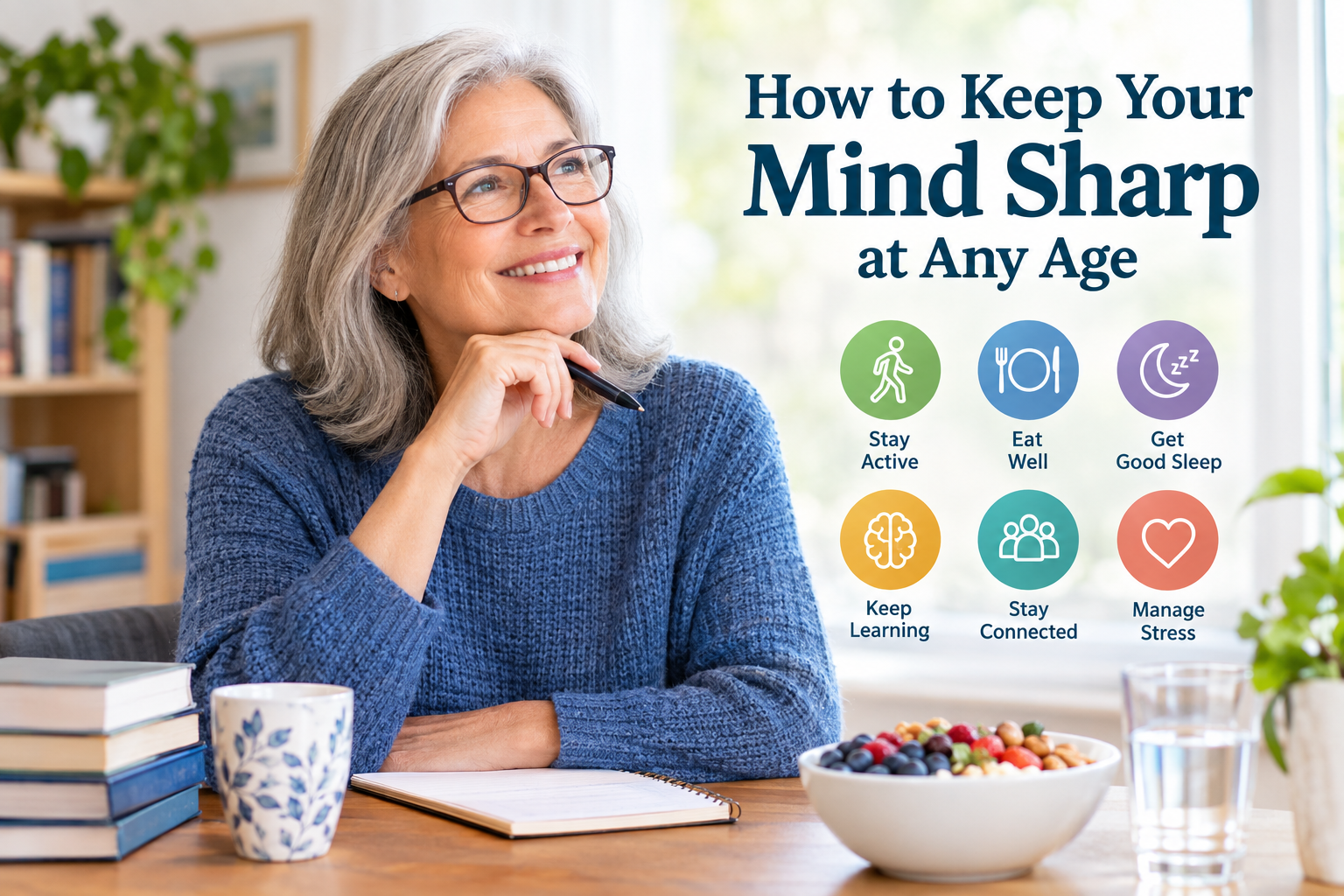
Getting older does not automatically mean losing your memory, focus, or ability to learn new things. Some changes in thinking are a normal part of aging, but many habits that support heart health, sleep, movement, and social connection can also support brain health.
If you are wondering how to keep your mind sharp at any age, the answer is not one magic food, supplement, puzzle, or brain-training app. A healthier approach is to build several everyday habits that work together: stay physically active, get enough sleep, eat a nutrient-rich diet, keep learning, stay socially connected, manage conditions such as high blood pressure and diabetes, and address hearing or vision problems.
For adults over 50, these habits can be especially useful because brain health is closely connected with overall health. The National Institute on Aging describes cognitive health as the ability to think, learn, and remember clearly and notes that both lifestyle and environmental factors can affect it.
This guide explains practical ways to protect your cognitive health without turning your life into a complicated health project.
Quick Answer: How Do You Keep Your Mind Sharp?
The most practical way to keep your mind sharp is to take care of your brain and your whole body at the same time.
Focus on these habits:
- Move your body regularly, including walking and strength exercises.
- Aim for about 7–9 hours of sleep each night.
- Eat mostly vegetables, fruits, whole grains, beans, nuts, fish, and other nutritious foods.
- Keep learning something that challenges you.
- Maintain regular social contact with family, friends, neighbors, or community groups.
- Manage blood pressure, blood sugar, cholesterol, and other chronic conditions.
- Do not ignore hearing or vision problems.
- Avoid smoking and limit alcohol.
- Use calendars, lists, routines, and other memory aids when helpful.
- Talk with a healthcare professional about noticeable or worsening changes in memory or thinking.
There is no guaranteed method for preventing dementia, but healthy lifestyle choices can support overall brain health and may help reduce some risk factors associated with cognitive decline.
What Does It Mean to Keep Your Mind Sharp?
“Keeping your mind sharp” is not a medical diagnosis. In everyday language, it generally means maintaining your ability to pay attention, remember information, learn, make decisions, solve problems, communicate, and handle ordinary activities.
Cognitive health is one part of overall brain health. The brain also plays important roles in movement, emotions, and processing information from the senses.
It is also important to have realistic expectations.
A 70-year-old may not process new information exactly like a 25-year-old. It may take longer to remember a person’s name or learn a new phone app. That does not automatically mean something is wrong.
The goal is not to stay exactly the same forever. The goal is to support your abilities, remain independent, and notice meaningful changes early.
Is Some Forgetfulness Normal With Age?
Yes. Occasional forgetfulness can happen as people get older.
For example, you might:
- Walk into a room and forget why you went there.
- Occasionally forget someone’s name and remember it later.
- Misplace your keys from time to time.
- Take longer to learn how to use a new device.
- Need to write down appointments instead of relying entirely on memory.
The National Institute on Aging notes that these types of mild memory changes can occur with normal aging. More concerning problems interfere with everyday activities.
Examples that deserve medical attention include repeatedly getting lost in familiar places, having difficulty managing bills, struggling to follow familiar directions, repeatedly asking the same questions, or experiencing significant changes in judgment or behavior.
The important point is this: forgetfulness is not automatically dementia, but persistent or disruptive changes should not simply be dismissed as aging.
10 Practical Ways to Keep Your Mind Sharp
1. Make Regular Physical Activity Part of Your Week
One of the most useful things you can do for both your body and brain is move regularly.
Walking, swimming, cycling, dancing, gardening, and other activities can help support cardiovascular health, mood, sleep, strength, and physical independence.
The National Institute on Aging notes that physical activity may also benefit aspects of cognitive function, including planning, task switching, and filtering out irrelevant information. Federal physical activity guidelines recommend at least 150 minutes of moderate physical activity per week for adults.
You do not have to start with a complicated workout.
Try:
- A 20–30 minute walk most days.
- Taking the stairs when appropriate.
- Gardening or doing yard work.
- Joining a walking group.
- Dancing to music at home.
- Adding resistance exercises two or more days a week if appropriate for you.
If you have been inactive for a long time or have a medical condition, ask your healthcare professional how to increase activity safely.
2. Protect Your Sleep
Sleep is not wasted time. Your brain uses sleep for important processes related to learning, memory, attention, mood, and daytime functioning.
Adults, including older adults, generally need about 7–9 hours of sleep each night. During sleep, the brain cycles through different stages that contribute to memory and restoration.
If your sleep is consistently poor, look at the basics first:
- Keep a fairly consistent bedtime and wake time.
- Keep your bedroom comfortable and quiet.
- Avoid large meals close to bedtime.
- Limit caffeine late in the day.
- Avoid late-afternoon or evening naps.
- Exercise regularly, but not immediately before bed.
- Talk with a doctor if you regularly wake up exhausted or have trouble sleeping.
Persistent sleep problems can sometimes be related to conditions such as insomnia or sleep apnea and deserve professional attention.
3. Eat for Your Heart and Your Brain
There is no single “best brain food” that can guarantee better memory.
Instead, think about your overall eating pattern.
A Mediterranean-style eating pattern is commonly emphasized in brain and cardiovascular health research. It generally includes vegetables, fruits, whole grains, beans, nuts, seeds, fish, and healthy fats while limiting heavily processed foods and excess added sugars.
The American Heart Association notes that healthy eating patterns can support cardiovascular health and are also associated with brain health.
A simple plate might include:
Breakfast:
Oatmeal with berries, walnuts, and plain yogurt.
Lunch:
A large salad with beans or grilled salmon, whole-grain bread, and fruit.
Dinner:
Roasted vegetables, brown rice or another whole grain, and grilled chicken or fish.
Snack:
An apple with a small amount of peanut butter or a handful of unsalted nuts.
The USDA also recommends that older adults eat a variety of vegetables, fruits, grains, protein foods, and dairy or fortified soy alternatives while limiting excess added sugars, saturated fat, and sodium.
4. Keep Learning New Things
Your brain benefits from being challenged.
That does not mean you need to spend an hour every day solving difficult puzzles.
Try learning something that genuinely interests you:
- A new language.
- Photography.
- Gardening techniques.
- A musical instrument.
- Cooking recipes.
- Painting.
- Computer skills.
- Genealogy.
- A new card game.
- A craft.
- A new exercise routine.
NIA-supported research indicates that certain forms of cognitive training can improve specific thinking skills in older adults. However, evidence is not strong enough to say that every commercial “brain-training” game prevents dementia.
The best activity is often one that is challenging enough to require attention and interesting enough that you will actually continue doing it.
5. Stay Socially Connected
Your brain does not operate in isolation.
Conversations require you to listen, remember, respond, interpret emotions, and adapt to another person’s words. Social activities can also give your days structure and purpose.
Consider:
- Having regular meals with family.
- Joining a walking group.
- Volunteering.
- Attending a library or community event.
- Joining a church or community organization if that is meaningful to you.
- Calling a friend instead of only texting.
- Taking a class with other adults.
- Playing cards or board games with friends.
NIA research describes social engagement as an important part of healthy aging, and studies have associated greater social engagement with better cognitive health in later life.
You do not need a huge social circle. A few meaningful relationships can be valuable.
6. Keep Blood Pressure and Other Health Conditions Under Control
Brain health is closely connected to blood-vessel health.
High blood pressure, diabetes, high cholesterol, stroke, and other health problems can affect the brain.
That is why keeping regular medical appointments matters even when you feel fine.
Ask your healthcare professional about:
- Blood pressure.
- Blood sugar.
- Cholesterol.
- Medications and possible side effects.
- Depression or persistent mood changes.
- Sleep problems.
- Hearing and vision.
- Other health conditions that may affect daily functioning.
NIA specifically recommends managing chronic health conditions and discussing medications that may affect memory, sleep, or brain function.
7. Don’t Ignore Hearing Problems
Hearing has a surprisingly important relationship with brain health.
When hearing becomes difficult, conversations can require much more effort. A person may also withdraw from social situations because following conversations becomes frustrating.
NIA reports that hearing loss is common among older adults and that untreated hearing loss is associated with faster cognitive decline. Research has also examined whether treating hearing loss can slow cognitive decline in some older adults.
If you frequently ask people to repeat themselves, turn the television volume up very high, or struggle to understand conversations in restaurants, consider getting your hearing checked.
8. Take Care of Your Vision
Good vision makes it easier to read, walk safely, recognize faces, use technology, and participate in activities.
Difficulty seeing can also discourage someone from reading, driving, exercising, or socializing.
Keep up with recommended eye examinations and discuss new or worsening vision changes with an eye-care professional.
Maintaining your senses is not simply about convenience. Vision and hearing help the brain receive and process information throughout the day.
9. Give Your Brain a Reason to Pay Attention
Routine is useful, but too much mental autopilot can make life feel monotonous.
Look for small ways to become more engaged.
Instead of simply watching a television program, discuss it with someone afterward. When reading, pause and explain the main idea in your own words. When learning something new, take notes rather than passively watching.
You can also challenge yourself by:
- Memorizing a short shopping list.
- Taking a different safe walking route.
- Learning the names of new people.
- Reading about an unfamiliar subject.
- Teaching something you know to someone else.
The goal is not to “exercise your brain” every waking moment. It is simply to remain curious and mentally involved.
10. Avoid Smoking and Be Careful With Alcohol
Smoking damages blood vessels and contributes to many serious health problems, making quitting an important part of protecting overall health.
Alcohol deserves a thoughtful approach as well. NIA recommends limiting alcohol as part of maintaining cognitive health. Alcohol can also interact dangerously with some medications.
If you drink, discuss your individual situation with your healthcare professional, particularly if you take medications or have liver, heart, balance, or other health problems.
Foods That Support Brain and Overall Health
Rather than looking for one miracle food, build meals around a variety of nutrient-dense foods.
Foods to Eat More Often
Consider including:
- Leafy green vegetables
- Broccoli and other vegetables
- Berries and other whole fruits
- Beans and lentils
- Oatmeal and other whole grains
- Nuts and seeds
- Fish
- Plain yogurt or other nutritious dairy foods
- Eggs
- Lean poultry
- Olive oil and other unsaturated fats
These foods provide combinations of protein, fiber, vitamins, minerals, and healthy fats.
Foods to Limit
Try to keep highly processed foods, excess added sugars, and foods high in saturated fat and sodium from dominating your diet.
That does not mean you can never have dessert, pizza, chips, or a favorite restaurant meal.
A sustainable diet is usually more useful than an extremely restrictive one.
Why Exercise Matters for the Aging Brain
Exercise helps the brain in several ways indirectly as well as directly.
Physical activity supports cardiovascular health, sleep, mood, balance, strength, and independence. Those benefits matter because the brain depends on a healthy body.
For example, regular walking can help you remain mobile. Better mobility may make it easier to visit friends, shop for healthy food, attend community activities, and stay socially engaged.
NIA reports that exercise can improve mood and sleep and may help maintain certain aspects of cognitive function.
A practical weekly goal could include:
| Activity | Simple starting point |
|---|---|
| Walking | 20–30 minutes most days |
| Strength | 2 days per week |
| Balance | A few minutes most days |
| Stretching | Several days per week |
| Social movement | Walking with a friend or group |
Your routine should match your fitness level and medical needs.
A Simple Daily Routine for a Sharper Mind
You do not need a complicated schedule.
Morning
- Wake around the same time each day.
- Drink water and eat a nutritious breakfast.
- Take a walk or do another form of movement.
- Read something interesting for 10–20 minutes.
Afternoon
- Eat a balanced lunch.
- Do something mentally engaging.
- Call or meet someone.
- Complete errands or household activities that keep you moving.
Evening
- Eat a reasonable dinner.
- Spend some time with family or friends.
- Reduce stimulating activities before bedtime.
- Prepare for tomorrow using a calendar or written list.
- Aim for a consistent bedtime.
The important thing is consistency, not perfection.
Common Mistakes That Can Work Against Brain Health
Relying on a “memory supplement”
Many products marketed as memory boosters make impressive claims without strong evidence. NIA advises caution with products that promise to improve memory or prevent dementia. Some may also interact with medications.
Sitting most of the day
You do not have to become a marathon runner. But spending most of the day sitting can make it harder to maintain strength, mobility, and overall health.
Treating poor sleep as normal
Occasional bad nights happen. Chronic sleep problems deserve attention.
Staying isolated
You can be surrounded by people and still feel lonely. Make an intentional effort to maintain meaningful connections.
Ignoring hearing or vision changes
Difficulty hearing or seeing can gradually affect communication, independence, and participation in daily activities.
Assuming every memory problem is “just aging”
That can delay diagnosis of treatable problems.
Common Myths About Keeping Your Mind Sharp
Myth: Forgetfulness always means dementia.
Fact: Occasional forgetfulness can be a normal part of aging. Dementia involves more serious cognitive changes that interfere with everyday life.
Myth: Crossword puzzles alone can prevent dementia.
Fact: Puzzles can be enjoyable and mentally stimulating, but there is not enough evidence to say that doing puzzles alone prevents dementia. A broader approach to brain and physical health makes more sense.
Myth: You cannot improve your brain health after 50.
Fact: Many lifestyle and health factors remain changeable later in life. NIA notes that physical activity, healthy eating, social engagement, sleep, and management of health conditions can all play roles in cognitive health.
Myth: You need expensive supplements.
Fact: A healthy diet is the foundation. Supplements may be appropriate for particular deficiencies or medical situations, but they are not a substitute for a nutritious diet or medical care.
Myth: Older adults need less sleep.
Fact: Older adults generally still need about 7–9 hours of sleep per night.
Myth: You should avoid exercise because you are getting older.
Fact: Physical activity is beneficial for most adults, including older adults. The appropriate activity and intensity depend on individual health and fitness.
Myth: A single food can make your memory better.
Fact: Brain health is influenced by many factors. Overall dietary quality is more important than relying on one particular food.
Who Should Be More Careful?
Most healthy adults can work on these habits gradually. However, some people should get individualized guidance.
Talk with a healthcare professional before making major changes if you have:
- Heart or lung disease.
- Significant balance problems.
- Diabetes.
- High blood pressure.
- A history of stroke.
- Significant hearing or vision loss.
- A neurological condition.
- Severe sleep problems.
- Multiple prescription medications.
- New or rapidly changing memory symptoms.
Adults over 50 who notice a meaningful change in memory should not automatically assume it is normal aging. Some memory problems can be related to medication effects, sleep disorders, depression, vitamin deficiencies, thyroid problems, or other medical conditions.
How to Get Started
If the idea of changing your lifestyle feels overwhelming, start with three habits.
Step 1: Walk
Start with a comfortable walk several days a week. Increase gradually as your fitness improves.
Step 2: Improve One Meal
Instead of completely changing your diet, upgrade one meal.
For example, replace a sugary breakfast with oatmeal, berries, and nuts.
Step 3: Challenge Your Brain
Spend 15–30 minutes learning something you genuinely enjoy.
Step 4: Contact Someone
Call a friend, relative, neighbor, or community group.
Step 5: Check Your Sleep
Ask yourself whether you are consistently getting enough sleep and whether you wake feeling rested.
Step 6: Review Your Health
At your next medical appointment, ask about blood pressure, cholesterol, blood sugar, medications, hearing, vision, and any changes in memory.
Small steps are easier to maintain than an ambitious routine that lasts two weeks.
Frequently Asked Questions
1. How can I keep my mind sharp as I get older?
Stay physically active, sleep adequately, eat a nutritious diet, keep learning, remain socially connected, manage chronic health conditions, and address hearing or vision problems.
2. Can you improve memory after age 50?
You can support cognitive health at any age. However, there is no guaranteed method that restores or prevents all age-related memory changes.
3. What is the best exercise for brain health?
There is no single exercise that is best for everyone. Walking, aerobic activity, strength training, balance exercises, and enjoyable activities can all contribute to overall health.
4. How much sleep do adults over 50 need?
Most older adults need approximately 7–9 hours of sleep each night.
5. What foods are good for brain health?
Vegetables, fruits, whole grains, beans, nuts, seeds, fish, and other nutrient-dense foods can fit into a brain-healthy eating pattern. Mediterranean-style eating is one dietary pattern associated with cardiovascular and brain health.
6. Are eggs good for your brain?
Eggs provide protein and several nutrients and can be part of a balanced diet. Whether they fit your diet in a particular amount depends on your overall eating pattern and individual health needs.
7. Do brain games really work?
Some structured cognitive training has shown benefits for particular cognitive skills, but commercial brain-training apps should not be assumed to prevent dementia. Evidence varies by type of training.
8. Is forgetting names normal as you age?
Occasionally forgetting a name and remembering it later can happen with normal aging. Repeated or worsening memory problems that interfere with daily life deserve medical evaluation.
9. Can walking help keep your mind sharp?
Walking supports physical and cardiovascular health and may benefit aspects of cognitive function. It is also an accessible way to remain active and socially engaged.
10. Does hearing loss affect memory?
Hearing loss is associated with cognitive decline in older adults. Treating hearing problems may have benefits, although research is still examining the full relationship between hearing treatment and long-term cognitive outcomes.
11. Can loneliness affect brain health?
Social isolation and loneliness can affect overall health and well-being. Research has also associated greater social engagement with better cognitive health in older adults.
12. Are memory supplements necessary?
Not necessarily. Supplements are not a replacement for a healthy diet, physical activity, sleep, or appropriate medical care. Be particularly cautious with products claiming to prevent dementia or dramatically improve memory.
13. What is the difference between normal aging and dementia?
Normal aging can involve occasional forgetfulness. Dementia causes more significant cognitive problems that interfere with everyday activities such as managing finances, driving, cooking, communicating, or navigating familiar places.
14. When should I see a doctor about memory problems?
Make an appointment if memory or thinking changes are persistent, worsening, concerning to you or your family, or interfering with everyday activities.
15. Can lifestyle changes prevent Alzheimer’s disease?
There is currently no guaranteed lifestyle program that prevents Alzheimer’s disease. However, maintaining physical health, being active, eating well, managing cardiovascular risk factors, sleeping adequately, and staying socially and mentally engaged may support brain health and address modifiable risk factors.
Final Takeaway
Learning how to keep your mind sharp at any age does not require a complicated brain-training program or expensive supplement.
For adults over 50, the most practical strategy is to look at the bigger picture: move regularly, sleep 7–9 hours, eat a nutrient-rich diet, keep your mind engaged, maintain meaningful relationships, manage health conditions, and take care of hearing and vision.
And don’t panic about every forgotten name or misplaced set of keys. Some changes in memory are a normal part of aging. What matters is noticing when changes become persistent or begin interfering with everyday life.
Your brain is part of your whole body. Taking care of one often means taking care of the other.
Medical Disclaimer
This article is for general educational and wellness information only. It is not intended to diagnose, treat, cure, or prevent any disease or medical condition and does not replace individualized advice from a qualified healthcare professional. If you have new, worsening, or concerning changes in memory, thinking, mood, sleep, hearing, or daily functioning, speak with your doctor or another qualified healthcare provider.
Also Read:
What Is Acne? Causes, Symptoms, Treatment, and Prevention
5 Places Body Acne Can Appear: Causes, Treatment and Prevention
What Is Acid Sphingomyelinase Deficiency (ASMD)?
Written by:
Kanhaiya Solanki is a dedicated online researcher, content writer, and blogger passionate about publishing high-quality, research-based articles. His goal is to provide accurate, easy-to-understand, and practical information on health, technology, senior care, and lifestyle topics for readers worldwide.