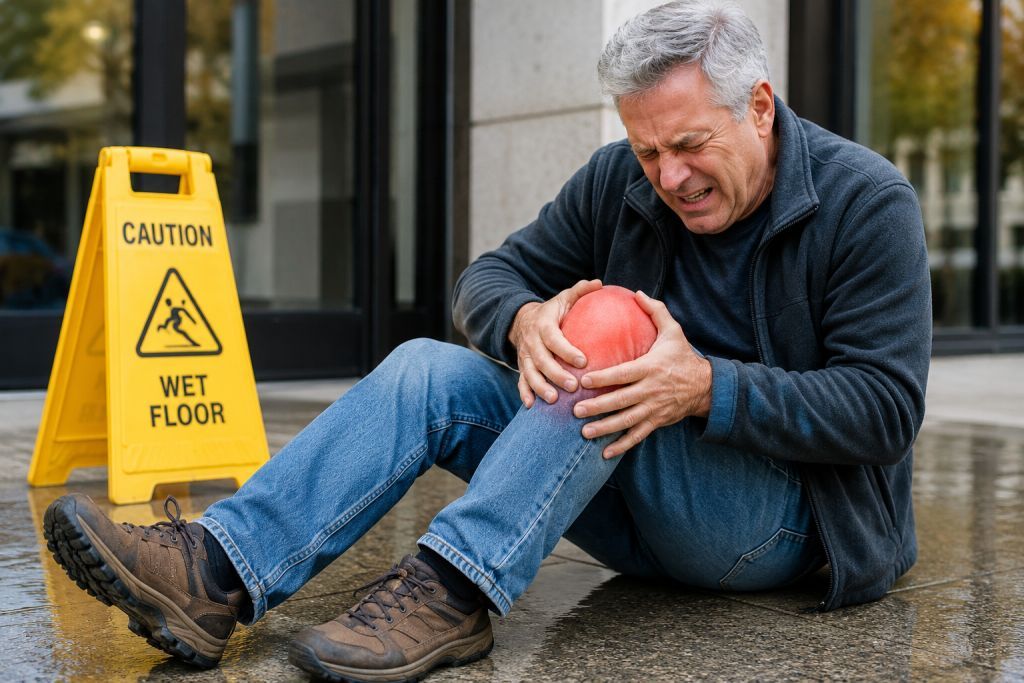
A slip and fall knee injury can happen in an instant. One missed step on a wet floor, an icy sidewalk, or an uneven surface is all it takes to injure one of the most important joints in your body. While some knee injuries are mild and improve with rest, others can involve torn ligaments, damaged cartilage, or broken bones that require medical attention.
If you’ve recently experienced a slip and fall knee injury, you’re probably wondering how serious it is, what you should do first, and how long recovery might take. These are common concerns, especially for adults over 40 and older adults, whose joints may already have some natural wear and tear.
The good news is that many knee injuries recover well with the right care, early treatment, and a gradual return to activity. Knowing what symptoms to watch for and when to seek professional help can make a significant difference in your recovery.
In this guide, you’ll learn what causes a slip and fall knee injury, common symptoms, treatment options, recovery expectations, and practical steps you can take to protect your knee and reduce the risk of future injuries.
Why This Topic Matters
Falls remain one of the leading causes of injury among adults in the United States. Whether the fall happens at home, in a grocery store, at work, or outdoors, the knee often absorbs much of the impact.
The knee is responsible for supporting your body weight during everyday movements such as:
- Walking
- Standing up
- Climbing stairs
- Squatting
- Getting in and out of a vehicle
- Exercising
Because the knee handles so much stress every day, even a relatively minor fall can lead to pain, swelling, stiffness, or instability.
For older adults, recovery may take longer because of age-related changes in muscles, tendons, and cartilage. Conditions like arthritis or osteoporosis can also make injuries more complicated.
Learning about a slip and fall knee injury helps you:
- Recognize serious warning signs early
- Start appropriate home care
- Know when medical evaluation is necessary
- Reduce the chance of long-term complications
- Return to normal activities safely
What Is a Slip and Fall Knee Injury?
A slip and fall knee injury refers to any damage to the knee that occurs after slipping, tripping, or falling onto the ground. The injury may affect one or several parts of the knee joint.
The knee is made up of several important structures that work together:
| Knee Structure | Function |
|---|---|
| Bones | Provide support and movement |
| Cartilage | Cushions the joint |
| Ligaments | Keep the knee stable |
| Tendons | Connect muscles to bones |
| Meniscus | Acts as a shock absorber |
| Bursa | Reduces friction around the joint |
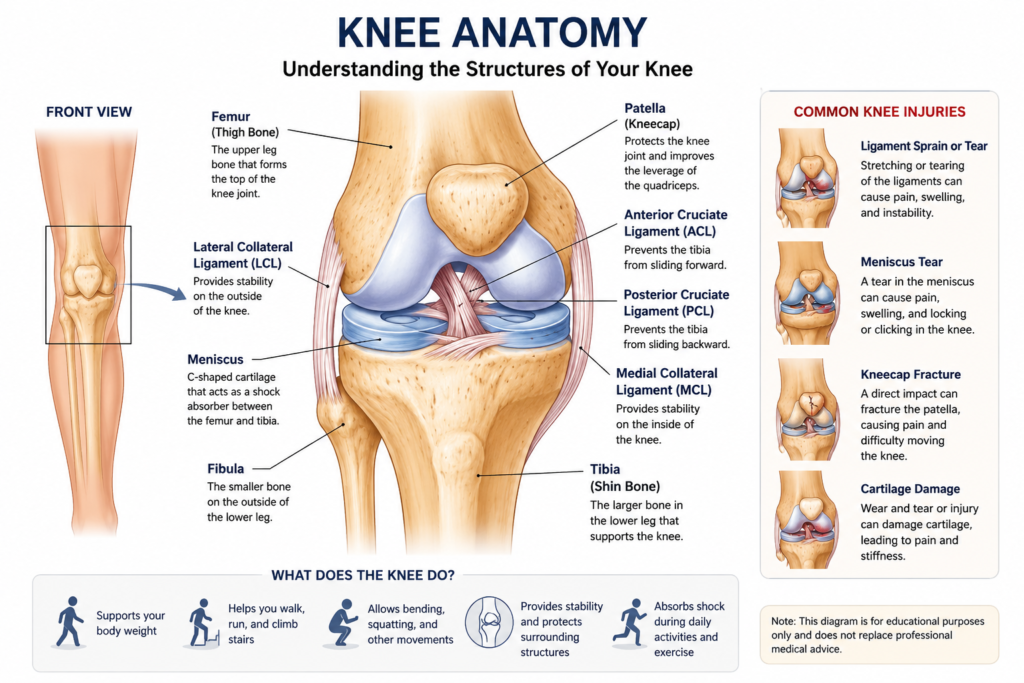
Depending on how you landed, one or more of these structures can become injured.
Some injuries heal within a few weeks, while others require months of rehabilitation.
How Does a Slip and Fall Knee Injury Happen?
A slip and fall knee injury usually occurs when unexpected force twists, bends, or directly impacts the knee.
Common situations include:
Wet Floors
Freshly mopped floors, spilled drinks, or rainy entrances increase the risk of slipping.
Ice and Snow
Winter weather creates slippery sidewalks and driveways that commonly lead to knee injuries.
Uneven Sidewalks
Broken pavement or loose bricks can cause sudden trips.
Loose Rugs
Area rugs without non-slip backing are a common hazard inside homes.
Stairs
Missing a step may place tremendous force on the knee during a fall.
Sports Activities
Running, hiking, basketball, pickleball, and recreational sports can involve slips that injure the knee.
Workplace Accidents
Construction sites, warehouses, restaurants, and factories often have surfaces where slipping hazards exist.
What Parts of the Knee Can Be Injured?
A slip and fall knee injury doesn’t always involve a broken bone. Soft tissues are frequently affected.
Ligaments
Ligaments stabilize the knee and prevent excessive movement.
A fall can stretch or tear important ligaments, including:
- ACL
- PCL
- MCL
- LCL
Ligament injuries often cause instability and pain during walking.
Meniscus
The meniscus is a piece of cartilage that cushions the knee.
Twisting during a fall may tear the meniscus, leading to:
- Locking
- Clicking
- Swelling
- Pain when twisting
Tendons
Falls may strain or tear tendons around the kneecap.
Pain often worsens while climbing stairs or standing from a chair.
Cartilage
Cartilage damage may not seem severe at first but can gradually contribute to chronic pain if left untreated.
Kneecap
Direct impact can bruise or fracture the kneecap, making bending the knee difficult.
Common Types of Slip and Fall Knee Injuries
Several injuries are commonly diagnosed after a slip and fall knee injury.
Knee Bruise (Contusion)
This is one of the mildest injuries.
Symptoms include:
- Tenderness
- Mild swelling
- Skin discoloration
- Pain when kneeling
Recovery often occurs within a few weeks.
Knee Sprain
A sprain involves stretched or partially torn ligaments.
Common symptoms include:
- Swelling
- Instability
- Difficulty walking
- Pain with movement
Meniscus Tear
This injury often occurs when the knee twists during a fall.
Symptoms may include:
- Popping sensation
- Locking
- Swelling within a day
- Difficulty bending
Ligament Tear
More severe falls may tear one or more ligaments.
Signs include:
- Immediate swelling
- Knee giving out
- Severe pain
- Reduced range of motion
Patella Fracture
A direct fall onto the kneecap can cause a fracture.
Possible symptoms include:
- Inability to straighten the leg
- Severe swelling
- Sharp pain
- Visible deformity
Knee Dislocation
Although uncommon, a severe fall can dislocate the knee.
This is considered a medical emergency and requires immediate evaluation.
What Are the Symptoms of a Slip and Fall Knee Injury?
Symptoms vary depending on the severity of the injury.
Common signs include:
- Pain immediately after the fall
- Swelling
- Bruising
- Stiffness
- Difficulty bending the knee
- Trouble walking
- Feeling unstable
- Popping or clicking sounds
- Warmth around the joint
- Tenderness when touched
Some people notice symptoms right away, while others develop pain several hours after the accident.
Can Symptoms Appear Later?
Yes. It’s not unusual for a slip and fall knee injury to feel relatively mild immediately after the fall, only for symptoms to worsen over the next 24 to 48 hours.
This delayed response often happens because swelling and inflammation take time to develop. You might initially walk without much discomfort, but later notice increasing stiffness, pain when climbing stairs, or difficulty fully bending the knee.
For that reason, it’s important to monitor your symptoms even if the injury seems minor at first. If pain, swelling, or instability continues to increase, a medical evaluation is recommended.
Who Is Most at Risk for a Slip and Fall Knee Injury?
Although anyone can experience a slip and fall knee injury, certain groups face a higher risk due to age, lifestyle, or work environment.
People who may be more vulnerable include:
- Adults over 40
- Older adults with balance issues
- Individuals with knee arthritis
- People who have had previous knee injuries
- Workers in physically demanding jobs
- Athletes and recreational sports participants
- Individuals with reduced muscle strength or poor balance
- People taking medications that may cause dizziness
Recognizing these risk factors can help you take preventive steps and seek timely care if an injury occurs.
When Should You See a Doctor for a Slip and Fall Knee Injury?
Many minor knee injuries improve with rest and self-care over a few days. However, some injuries involve ligaments, cartilage, or bones that require prompt medical evaluation. Knowing the difference can help prevent long-term complications.
Seek medical care if you experience:
- Severe or worsening knee pain
- Significant swelling that develops quickly
- Inability to bear weight on the injured leg
- A knee that feels unstable or gives out
- A popping sound at the time of injury followed by swelling
- Difficulty fully bending or straightening the knee
- A visible deformity
- Numbness or tingling below the knee
- Fever, redness, or warmth that may suggest infection
- Pain that does not improve after several days of home care
If you cannot stand, suspect a broken bone, or have severe bleeding after the fall, seek emergency medical attention immediately.
How Is a Slip and Fall Knee Injury Diagnosed?
A healthcare provider will begin by asking questions about how the injury happened. The details of your fall often provide important clues about the type of damage that may have occurred.
You may be asked:
- Where did you fall?
- Did your knee twist during the fall?
- Did you hear or feel a pop?
- Were you able to walk afterward?
- Where is the pain located?
- Have you injured this knee before?
Next comes a physical examination. Your provider will look for swelling, bruising, tenderness, range of motion, and signs of instability.
Depending on your symptoms, imaging tests may be recommended.
X-rays
X-rays help identify:
- Fractures
- Bone alignment
- Arthritis
- Certain joint abnormalities
Although X-rays do not show soft tissue injuries well, they are often the first imaging test after a fall.
MRI
An MRI provides detailed images of soft tissues and is especially useful for diagnosing:
- ACL tears
- Meniscus tears
- Cartilage damage
- Tendon injuries
- Ligament injuries
CT Scan
A CT scan may be ordered when complex fractures are suspected or when additional bone detail is needed.
Ultrasound
In some situations, ultrasound helps evaluate tendon injuries or fluid around the knee.
What Should You Do Immediately After a Slip and Fall Knee Injury?
The first 24 to 48 hours are important. Proper care during this period may reduce swelling and discomfort.
Many healthcare providers recommend the RICE approach for mild injuries.
| Step | What to Do |
|---|---|
| Rest | Limit activities that increase pain. |
| Ice | Apply an ice pack for 15–20 minutes every few hours during the first two days. Wrap the ice pack in a towel to protect your skin. |
| Compression | Use an elastic compression bandage if advised by your healthcare provider. |
| Elevation | Raise your leg above heart level when resting to help reduce swelling. |
Avoid applying heat immediately after the injury, as it may increase swelling during the early phase.
Should You Walk on an Injured Knee?
This is one of the most common questions after a slip and fall knee injury.
The answer depends on the severity of the injury.
You may be able to walk carefully if:
- Pain is mild
- There is little swelling
- The knee feels stable
- You can bear weight comfortably
Avoid walking if:
- The knee gives out
- Pain is severe
- You cannot put weight on the leg
- Swelling develops rapidly
- You suspect a fracture
Using crutches or a knee brace may be recommended until you are evaluated by a healthcare professional.
Treatment Options for a Slip and Fall Knee Injury
Treatment depends on the specific injury, your age, activity level, and overall health.
Home Care for Mild Injuries
Many mild sprains and bruises improve with conservative treatment.
Home care may include:
- Rest
- Ice therapy
- Compression
- Elevation
- Gradual return to activity
- Gentle stretching when appropriate
Follow your healthcare provider’s advice before restarting exercise or sports.
Pain Relief
Over-the-counter pain relievers may help reduce discomfort and inflammation for some people. However, they are not appropriate for everyone, especially individuals with certain medical conditions or those taking blood thinners.
Always follow the label directions or consult your healthcare provider if you have questions about which medication is appropriate for you.
Physical Therapy
Physical therapy is often one of the most effective treatments after a slip and fall knee injury.
A physical therapist can help you:
- Improve flexibility
- Strengthen supporting muscles
- Restore balance
- Improve stability
- Reduce stiffness
- Return safely to normal activities
Consistently following a prescribed exercise program often leads to better long-term outcomes.
Knee Braces
Depending on the injury, a brace may provide temporary support while healing occurs.
Different braces serve different purposes, including:
- Compression sleeves
- Hinged braces
- Stabilizing braces
- Immobilizers
A healthcare provider can recommend the most appropriate option.
Injections
Some people with ongoing pain or underlying arthritis may benefit from injections recommended by a medical specialist.
These are generally considered after conservative treatments have not provided enough relief.
Surgery
Not every slip and fall knee injury requires surgery.
However, surgery may be recommended for:
- Complete ligament tears
- Certain meniscus tears
- Complex fractures
- Tendon ruptures
- Severe cartilage damage
Recovery following surgery often includes physical therapy and gradual rehabilitation.
How Long Does It Take to Recover From a Slip and Fall Knee Injury?
Recovery varies widely depending on the type and severity of the injury.
The table below provides general recovery estimates. Individual recovery times may differ.
| Injury | Typical Recovery Time |
|---|---|
| Mild bruise | 1–2 weeks |
| Mild sprain | 2–6 weeks |
| Moderate ligament injury | 6–12 weeks |
| Meniscus injury | Several weeks to several months |
| Fracture | 2–4 months or longer |
| Surgical recovery | Several months depending on the procedure |
Returning to strenuous activity too soon may delay healing or increase the risk of another injury.
What Factors Can Slow Recovery?
Healing doesn’t happen at the same pace for everyone. Several factors can influence how quickly your knee recovers.
These include:
- Older age
- Smoking
- Diabetes
- Obesity
- Poor circulation
- Previous knee injuries
- Osteoarthritis
- Inadequate rehabilitation
- Returning to activity too quickly
Addressing these factors when possible may improve recovery outcomes.
Can a Slip and Fall Knee Injury Lead to Long-Term Problems?
Sometimes it can, especially if a serious injury is left untreated.
Possible long-term complications include:
- Chronic knee pain
- Persistent swelling
- Reduced flexibility
- Joint instability
- Recurrent falls
- Cartilage degeneration
- Earlier development or worsening of osteoarthritis
- Difficulty participating in daily activities
Early evaluation and following your treatment plan can reduce the likelihood of these complications.
What Questions Should You Ask Your Healthcare Provider?
If you’re being evaluated for a slip and fall knee injury, consider asking:
- What type of injury do I have?
- Do I need imaging tests?
- Can I safely walk on this knee?
- Should I wear a brace?
- Would physical therapy help?
- How long should I avoid exercise?
- What activities should I avoid during recovery?
- What symptoms would require another medical visit?
Being informed helps you take an active role in your recovery and understand what to expect in the weeks ahead.
Best Exercises for Recovering From a Slip and Fall Knee Injury
Once your healthcare provider says it’s safe to begin moving your knee, gentle exercises can help restore flexibility, strength, and stability. Starting too soon or pushing through pain can slow healing, so always follow professional guidance.
Recovery is usually gradual. It’s normal to feel mild stiffness when beginning exercises, but sharp pain is a sign to stop and consult your healthcare provider.
1. Heel Slides
Heel slides help improve knee flexibility.
How to do it:
- Lie on your back with both legs straight.
- Slowly slide the heel of your injured leg toward your hips.
- Bend the knee as far as comfortable.
- Slowly straighten the leg again.
Aim for 10 to 15 repetitions.
2. Straight Leg Raises
This exercise strengthens the muscles that support the knee without putting excessive stress on the joint.
Steps:
- Lie flat on your back.
- Keep the injured leg straight.
- Tighten your thigh muscle.
- Raise your leg about 12 inches.
- Hold for a few seconds.
- Lower it slowly.
Repeat 10 to 15 times.
3. Quad Sets
Strong quadriceps help stabilize the knee.
How to perform:
- Sit with your leg straight.
- Tighten the muscles on the front of your thigh.
- Hold for five seconds.
- Relax.
Repeat 15 to 20 times.
4. Hamstring Stretch
Gentle stretching helps reduce stiffness.
Stretch only until you feel mild tension. Never bounce or force the movement.
5. Calf Raises
As healing progresses, calf raises improve balance and strengthen the lower leg.
Stand near a chair for support if needed.
Raise onto your toes slowly, hold briefly, then lower yourself back down.
Low-Impact Activities That May Help Recovery
After the initial healing phase, many people benefit from low-impact exercise.
Examples include:
- Walking on level ground
- Stationary cycling
- Swimming
- Water aerobics
- Gentle yoga
- Tai Chi
These activities place less stress on the knee than running or jumping while helping improve mobility and strength.
Foods That Support Healing After a Slip and Fall Knee Injury
Food cannot repair a knee injury by itself, but a balanced diet provides the nutrients your body needs during recovery.
Protein
Protein supports muscle maintenance and tissue repair.
Good choices include:
- Chicken
- Turkey
- Fish
- Eggs
- Greek yogurt
- Cottage cheese
- Beans
- Lentils
- Tofu
Vitamin C
Vitamin C plays an important role in collagen production.
Foods rich in vitamin C include:
- Oranges
- Strawberries
- Kiwi
- Bell peppers
- Broccoli
- Tomatoes
Calcium
Healthy bones depend on adequate calcium intake.
Good sources include:
- Milk
- Yogurt
- Cheese
- Fortified plant-based milk
- Kale
- Sardines
Vitamin D
Vitamin D helps the body absorb calcium and supports bone health.
Sources include:
- Fatty fish
- Egg yolks
- Fortified dairy products
- Fortified cereals
Omega-3 Fatty Acids
Omega-3 fats may support overall joint health as part of a balanced diet.
Food sources include:
- Salmon
- Tuna
- Sardines
- Walnuts
- Chia seeds
- Flaxseed
Zinc
Zinc supports normal wound healing.
Foods rich in zinc include:
- Lean beef
- Pumpkin seeds
- Chickpeas
- Oats
- Cashews
Staying Hydrated Matters
Proper hydration supports overall health and helps your body function efficiently during recovery.
Aim to drink enough fluids throughout the day unless your healthcare provider has advised otherwise due to a medical condition.
Water should be your primary beverage, while sugary drinks should be limited.
Home Remedies That May Help
For mild injuries, these home care strategies may improve comfort during recovery.
- Continue using ice during the early stage if swelling persists.
- Elevate your leg when sitting or lying down.
- Wear supportive footwear.
- Avoid standing for long periods.
- Gradually increase activity as pain improves.
- Maintain a healthy body weight to reduce stress on the knee.
- Follow your physical therapy plan if one has been prescribed.
Remember that home remedies should not replace professional medical care when symptoms are severe or persistent.
Common Mistakes to Avoid After a Slip and Fall Knee Injury
Many people unintentionally delay recovery by making simple mistakes.
Ignoring Persistent Pain
Some soreness is expected, but ongoing or worsening pain deserves medical evaluation.
Returning to Exercise Too Soon
Feeling better doesn’t always mean the tissues have fully healed.
Returning to sports or strenuous work too early increases the risk of reinjury.
Skipping Rehabilitation Exercises
Strength and flexibility don’t return automatically.
Consistently performing recommended exercises is often one of the most important parts of recovery.
Wearing Unsupportive Shoes
Shoes with poor support may increase stress on the knees and affect balance.
Remaining Completely Inactive
While rest is important initially, too much inactivity can lead to stiffness and muscle weakness.
Follow your healthcare provider’s advice about when to begin gentle movement.
Ignoring Swelling
Persistent swelling may indicate that the knee is not healing as expected.
If swelling continues despite home care, schedule a medical evaluation.
How Can You Help Prevent Another Slip and Fall Knee Injury?
Although not every fall can be avoided, reducing common hazards can lower your risk.
Improve Home Safety
Simple changes around the house can make a big difference.
Consider:
- Removing loose rugs
- Cleaning spills immediately
- Improving lighting
- Installing grab bars in bathrooms
- Using handrails on stairs
- Keeping walkways free of clutter
Wear Proper Footwear
Choose shoes that provide:
- Good traction
- Proper arch support
- Non-slip soles
- A secure fit
Replace worn-out shoes that no longer provide adequate grip.
Stay Physically Active
Regular exercise helps maintain:
- Leg strength
- Balance
- Coordination
- Flexibility
Even moderate activity can reduce the likelihood of future falls.
Maintain a Healthy Weight
Excess body weight places additional stress on the knees with every step.
Gradual, sustainable weight management can improve joint health and mobility.
Be Cautious During Bad Weather
When sidewalks are wet, icy, or snowy:
- Walk slowly.
- Use handrails when available.
- Wear shoes with good traction.
- Avoid rushing.
Who Should Be Especially Careful?
While everyone can experience a slip and fall knee injury, certain individuals should be extra cautious because they may face a higher risk of serious injury or slower recovery.
This includes:
- Adults over age 60
- People with osteoporosis
- Individuals with osteoarthritis
- People recovering from knee replacement surgery
- Athletes returning to sports
- Workers whose jobs involve climbing, lifting, or standing for long periods
- Individuals with diabetes or circulation problems
- Anyone with a history of repeated falls
These groups may benefit from earlier medical evaluation and a personalized rehabilitation plan.
Frequently Asked Questions
1. How do I know if my slip and fall knee injury is serious?
If you cannot bear weight, your knee feels unstable, swelling develops quickly, or pain is severe, you should seek medical evaluation as soon as possible.
2. Can I walk after a slip and fall knee injury?
If your pain is mild and the knee feels stable, you may be able to walk carefully. However, if walking causes significant pain or the knee gives out, avoid putting weight on it until you’ve been evaluated by a healthcare provider.
3. How long does swelling last after a slip and fall knee injury?
Minor swelling may improve within a few days, while more serious injuries can remain swollen for several weeks. Persistent or worsening swelling should be evaluated by a healthcare professional.
4. Will every knee injury require surgery?
No. Most bruises, mild sprains, and many strains heal with conservative treatment such as rest, physical therapy, and gradual rehabilitation. Surgery is generally reserved for more severe injuries.
5. Can I drive with a knee injury?
Driving may not be safe if your injury limits your ability to control the pedals, causes significant pain, or you’re taking medications that affect alertness. Discuss this with your healthcare provider before driving.
6. Is it normal to hear clicking in my knee after a fall?
Occasional clicking without pain may not be serious, but persistent clicking accompanied by pain, swelling, or locking should be assessed by a healthcare provider.
7. Can a slip and fall knee injury lead to arthritis?
A significant knee injury may increase the risk of developing post-traumatic osteoarthritis later in life, especially if the joint surface or cartilage was damaged. Early treatment and rehabilitation may help reduce this risk.
Final Thoughts
A slip and fall knee injury can range from a minor bruise to a serious injury involving ligaments, cartilage, or bone. While many people recover with conservative treatment, the key is recognizing when an injury needs professional medical attention.
If your symptoms are mild, following a recovery plan that includes rest, gradual movement, proper nutrition, and prescribed exercises can support healing. Avoid rushing back into normal activities, as doing too much too soon may delay recovery or increase the risk of another injury.
For more severe injuries, early diagnosis and appropriate treatment can improve long-term outcomes and help you regain strength, stability, and confidence in your daily activities.
Remember that every person’s recovery is different. Factors such as age, overall health, the type of injury, and commitment to rehabilitation all influence how quickly healing occurs. Staying patient and following your healthcare provider’s recommendations gives your knee the best chance for a full recovery.
Whether your injury happened at home, at work, while exercising, or simply walking on a slippery surface, taking your symptoms seriously is one of the smartest steps you can take for your long-term joint health.
Medical Disclaimer
This article is intended for educational and informational purposes only and should not be considered medical advice. It is not a substitute for evaluation, diagnosis, or treatment by a qualified healthcare professional. If you have severe pain, significant swelling, difficulty bearing weight, numbness, a visible deformity, or symptoms that worsen after a fall, seek prompt medical care. Always consult your healthcare provider before starting new exercises, using medications, or making significant changes to your treatment plan.
Trusted Resources
For additional evidence-based information about knee injuries and fall prevention, visit these trusted organizations:
- American Academy of Orthopaedic Surgeons (AAOS)
- Mayo Clinic – Knee Pain Guide
- Centers for Disease Control and Prevention (CDC) – Fall Prevention
- National Institute on Aging – Prevent Falls and Fractures
Also Read –
Salmon Benefits: Powerful Reasons to Eat More Salmon
Blueberries: 25 Powerful Health Benefits for a Healthier Life
30 Super Foods for a Healthier You: Eat Better Every Day
Written by
Kanhaiya Solanki is a dedicated online researcher, content writer, and blogger passionate about publishing high-quality, research-based articles. His goal is to provide accurate, easy-to-understand, and practical information on health, technology, senior care, and lifestyle topics for readers worldwide.CategoriesHealth & Wellness