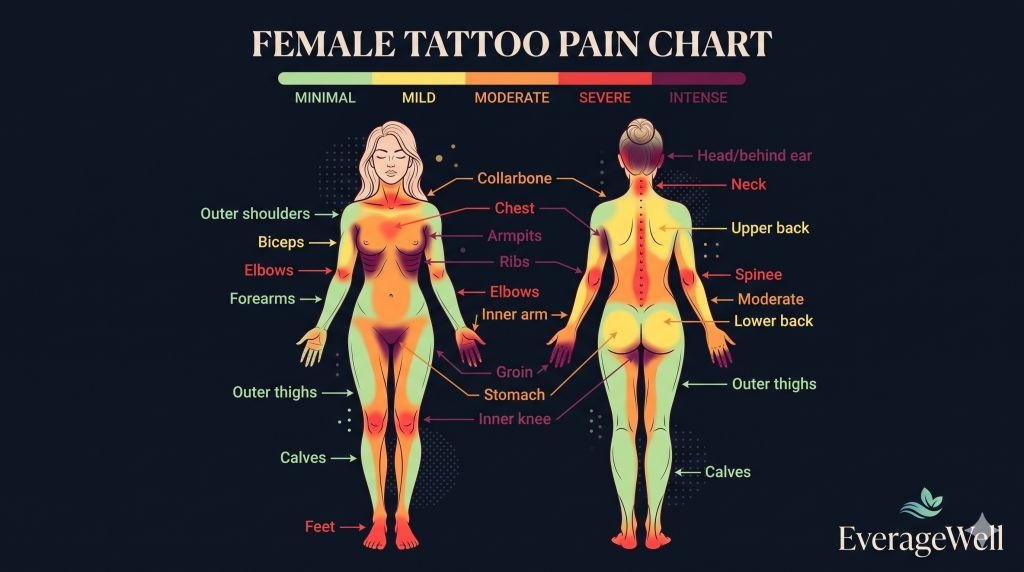
Getting a tattoo can be an exciting way to celebrate a meaningful memory, express your personality, or mark an important life event. But before choosing a design, many women have one practical question: How much is it going to hurt?
A tattoo pain chart female guide can help you compare common tattoo placements, from the upper arm and outer thigh to the ribs, ankle, wrist, and feet. Generally, areas with more cushioning and fewer sensitive nerve endings tend to be more comfortable, while thin-skinned and bony areas often hurt more.
However, there is no universal pain ranking that applies to every woman. Your pain tolerance, the size of the tattoo, the artist’s technique, and the amount of time spent working on one area can all influence the experience.
Age and skin condition can also matter. Women considering their first tattoo in their 50s, 60s, or later may want to pay particular attention to skin sensitivity, medications, healing, and existing health conditions.
This guide explains tattoo pain levels by body part, which placements may be easier for beginners, what tattooing feels like, and how to prepare for a more comfortable experience.
Quick Answer: Which Tattoo Spots Hurt the Least?
For many women, the outer upper arm, outer thigh, calf, and fleshy parts of the shoulder are among the more comfortable places to get a tattoo.
Areas that commonly cause more discomfort include the ribs, sternum, armpit, inner elbow, knees, ankles, feet, hands, and fingers.
Here is a quick comparison:
- Generally less painful: Outer upper arm, outer thigh, calf, and shoulder.
- Moderate discomfort: Forearm, upper back, and fleshy areas of the upper chest.
- Often more painful: Ribs, spine, inner elbow, kneecap, ankle, and feet.
- Frequently very sensitive: Armpit, fingers, toes, and other areas with thin skin or many sensitive nerve endings.
These categories are approximate, not medical measurements. A small tattoo in a sensitive location can feel more intense than a larger tattoo somewhere with more cushioning.
What Is a Female Tattoo Pain Chart?
A female tattoo pain chart is a general guide that compares the expected discomfort of getting tattooed on different parts of the body.
Tattooing involves repeatedly inserting needles into the skin to deposit pigment. This process stimulates sensory nerves, which is why getting a tattoo usually involves some degree of pain.
The amount of discomfort depends partly on the anatomy of the area being tattooed.
For example, the outer thigh often has more cushioning than the ankle. The ankle also has prominent bones and relatively little soft tissue in some locations. As a result, many people find an ankle tattoo more uncomfortable.
The same general principle applies to other areas of the body, although individual experiences vary.
Does a Tattoo Pain Chart Specifically Apply to Women?
Not entirely.
Women may have different experiences because of differences in anatomy, skin sensitivity, body composition, previous pain experiences, and individual health conditions. However, there is not enough evidence to assign every woman a reliable pain score based on sex alone.
A tattoo pain chart is best treated as a practical estimate rather than a scientifically validated ranking.
It can help you narrow down your options, but your own experience may differ from what the chart suggests.
Female Tattoo Pain Chart by Body Part
The following table provides an approximate guide to common tattoo locations.
Pain levels are descriptive estimates, not scores established through clinical testing.
| Tattoo Location | Estimated Pain Level | Why It May Hurt | Beginner-Friendly? |
|---|---|---|---|
| Outer upper arm | Low to moderate | Generally has cushioning and thicker skin | Yes |
| Outer thigh | Low to moderate | Often has substantial soft tissue | Yes |
| Shoulder | Low to moderate | Many areas have good muscle coverage | Yes |
| Calf | Low to moderate | Muscle provides cushioning in many spots | Often |
| Forearm | Low to moderate | Usually accessible and relatively well padded | Often |
| Upper back | Low to moderate | Depends on proximity to the shoulder blades and spine | Often |
| Inner forearm | Moderate | Skin and nerve sensitivity vary by location | Often |
| Biceps | Low to moderate | Outer areas may be more comfortable than inner areas | Often |
| Lower back | Moderate | Sensitivity varies with proximity to the spine and hips | Sometimes |
| Upper chest | Moderate to high | The sternum and collarbone can be sensitive | Sometimes |
| Wrist | Moderate to high | Relatively little cushioning in some areas | Sometimes |
| Inner biceps | Moderate to high | Often more sensitive than the outer arm | Sometimes |
| Kneecap | High | Bony structure and sensitive surrounding tissue | Less ideal for a first tattoo |
| Ribs | High | Thin tissue and proximity to bone | Less ideal for a first tattoo |
| Spine | High | Bony anatomy and individual sensitivity | Less ideal for a first tattoo |
| Ankle | Moderate to high | Prominent bones and limited cushioning | Sometimes |
| Feet and toes | High | Thin skin and sensitive structures | Less ideal for a first tattoo |
| Fingers | High | Limited cushioning and frequent movement | Less ideal for a first tattoo |
| Armpit | High | Sensitive skin and many nerve structures | Less ideal for a first tattoo |
These estimates are intended to help with planning. The exact location, tattoo design, technique, and individual anatomy can change the experience considerably.
1. Outer Upper Arm: A Comfortable Starting Point
The outer upper arm is often recommended to people getting their first tattoo.
This area generally has enough soft tissue to provide some cushioning, and many people find it easier to tolerate than the ribs, wrists, or feet.
It also offers room for different designs, including flowers, names, meaningful dates, small illustrations, and larger decorative pieces.
Why it may be a good choice: You can start with a relatively small design and learn how your body responds to tattooing without committing to an especially sensitive location.
For women over 50, it may also be practical to choose a location that is easy to inspect during healing.
Remember that skin condition and previous scarring can affect how the area responds. Ask an experienced tattoo artist to assess the proposed placement before proceeding.
2. Outer Thigh: Often a Lower-Pain Option
The outer thigh is another popular location for women who want a tattoo without starting in one of the more sensitive areas.
Many people find it relatively comfortable because the area often has more soft tissue than the ankle, shin, or kneecap.
It also provides plenty of space for designs such as flowers, butterflies, meaningful quotations, or larger artistic patterns.
What to consider: Larger tattoos can take several hours, and even a relatively comfortable area may become increasingly sore as the session continues.
If you are concerned about pain, consider a smaller design first rather than planning an extensive tattoo in one sitting.
3. Shoulder: A Versatile Placement
The shoulder can be a practical choice for first-time tattoo recipients.
The fleshy outer portion is often more comfortable than the collarbone or the area directly over the shoulder blade.
Popular designs include floral arrangements, initials, small symbols, and artwork that extends toward the upper arm.
Pain depends on the exact placement. A design that wraps toward the collarbone or moves closer to a bony edge may feel more uncomfortable.
Practical tip: Ask your artist to mark the proposed design on your skin before beginning. This lets you compare placements and choose one that fits your preferences.
4. Forearm: A Manageable Option for Many Women
The forearm is a common location for both small and medium-sized tattoos.
The outer forearm is often relatively manageable, although the inner forearm may feel more sensitive in certain areas.
A simple line-art design, a small flower, or a meaningful symbol can work well here.
The forearm is also relatively easy to see during healing, which can make routine aftercare more convenient.
One consideration is sun exposure. If your arms are frequently exposed outdoors, protecting the healed tattoo from sunlight can help preserve its appearance.
5. Calf: Comfortable for Some, Sensitive for Others
The calf has substantial muscle coverage in many areas, which may make it more comfortable than the shin or ankle.
However, the experience varies with the exact location. The area closer to the shinbone or ankle may be more sensitive.
Calf tattoos can accommodate a range of designs, from small flowers to detailed illustrations.
If you spend a lot of time standing or walking, ask your tattoo artist how to manage activity and clothing during the early healing period.
6. Wrist: Small Tattoo, Noticeable Discomfort
Wrist tattoos are popular because they can be subtle, meaningful, and easy to see.
However, a small design does not automatically mean a painless experience.
The wrist has relatively little cushioning in some areas, and the skin may feel sensitive when tattooed.
A small wrist tattoo may still be manageable, but it can be uncomfortable for someone who is especially sensitive to sharp or stinging sensations.
If you prefer this placement, consider a small design and discuss the expected session length with your artist.
7. Inner Biceps and Inner Elbow: More Sensitive Areas
The inner upper arm can feel more sensitive than the outer upper arm.
The inner elbow, sometimes called the elbow ditch, may be particularly uncomfortable because the skin is relatively thin and the area contains sensitive structures.
These locations can also be awkward to position during a longer session.
If this is your first tattoo, you may prefer to begin with the outer upper arm and consider the inner arm for a future design.
8. Ribs and Sternum: Often Among the More Painful Locations
Rib tattoos are frequently described as painful because the skin lies relatively close to the rib cage, with less cushioning in some areas.
The sternum, which is the bone in the center of the chest, can also be sensitive.
Breathing creates natural movement in the chest, so remaining comfortably positioned during a longer session may require extra attention.
This does not mean a rib tattoo is impossible to tolerate. Many people choose this placement successfully. However, it is sensible to consider the size of the design, the length of the appointment, and your personal comfort level.
If you are new to tattooing, a smaller design in a less sensitive location may be a more comfortable introduction.
9. Ankles, Feet, and Toes: Small Areas With Sensitive Spots
Ankle and foot tattoos can look delicate, but these locations may hurt more than expected.
The skin is relatively thin in many places, and there is less cushioning around prominent bones.
Foot tattoos can also be inconvenient during healing because shoes and socks may rub against the area.
If you choose a foot tattoo, discuss how to keep the site clean and protect it from unnecessary friction while it heals.
For adults who have diabetes, circulation problems, or reduced sensation in their feet, a discussion with a healthcare professional is particularly important before getting a tattoo in this location.
10. Fingers and Armpits: Consider Carefully
Finger tattoos may be painful because the area has limited cushioning and sensitive structures. They also face frequent friction from everyday activities.
Armpit tattoos can be especially uncomfortable because of the sensitivity of the skin and the surrounding nerve structures.
Both areas require careful consideration of placement and healing.
Finger tattoos may also fade or blur more quickly than tattoos in some other locations because of friction, skin characteristics, and repeated hand washing.
For a first tattoo, it may be easier to start with a location that offers more cushioning and is simpler to care for.
Tattoo Pain Scale: Low, Moderate, and High
A simple three-level scale can help you compare placements without treating pain as an exact measurement.
Low Pain: Generally More Comfortable Areas
Common examples include:
- Outer upper arm
- Outer thigh
- Fleshy shoulder
- Many areas of the calf
These locations often have more cushioning than bony areas.
However, a long session or extensive shading can still become uncomfortable.
Moderate Pain: Noticeable but Often Manageable
Examples may include:
- Forearm
- Inner forearm
- Upper back
- Inner upper arm
- Lower back
- Wrist
Pain varies substantially within each region. A tattoo close to a bone may feel different from one just a few inches away.
High Pain: Sensitive or Bony Areas
Examples include:
- Ribs
- Sternum
- Spine
- Inner elbow
- Kneecap
- Ankle
- Feet
- Fingers
- Armpit
These locations may involve thinner skin, limited cushioning, or increased sensitivity.
Important: There is no universal 1-to-10 pain score for every tattoo location. Online numerical charts are estimates, and personal experiences differ.
Why Tattoo Pain Differs Between Women
Two women can get tattoos in the same location and describe very different experiences.
Several factors may help explain why.
1. Individual Pain Tolerance
People differ in how they experience and respond to pain.
Someone who tolerates waxing, injections, or other uncomfortable procedures well may still find tattooing unpleasant. One experience does not reliably predict another.
Pain tolerance is not a test of toughness, and there is no benefit in forcing yourself to continue when you need a break.
2. Tattoo Size and Session Length
A small tattoo may require less time under the needle than a large, detailed design.
Long sessions can become more uncomfortable because the skin has been repeatedly worked on.
If you want a large tattoo but are concerned about pain, ask whether the design can be completed over multiple appointments.
3. Line Work and Shading
Different tattooing techniques can create different sensations.
Fine lines may feel sharp or stinging, while repeated shading can feel scratchy or increasingly irritating.
The sensation also depends on the equipment, the artist’s technique, and the condition of your skin.
4. Placement and Anatomy
Thin skin, prominent bones, and limited cushioning may increase discomfort in certain areas.
However, anatomy varies from person to person. A pain chart cannot accurately predict every individual’s experience.
5. Stress and Anxiety
Feeling tense or anxious can make an uncomfortable experience harder to manage.
Knowing what to expect, communicating with your artist, and arranging a comfortable appointment may help you feel more prepared.
Slow, relaxed breathing can also help you manage ordinary procedural discomfort.
6. Sleep, Food, and Hydration
Arriving exhausted, hungry, or dehydrated may make a tattoo appointment harder to tolerate.
Try to get a normal night’s sleep, eat a balanced meal beforehand, and drink water.
These habits do not eliminate tattoo pain, but they can help you avoid adding preventable discomfort to the experience.
7. Skin Sensitivity and Health Conditions
Existing skin irritation, certain medical conditions, and some medications may affect your comfort or healing.
Tell your healthcare professional and tattoo artist about relevant concerns before the appointment.
Do not stop prescribed medication simply to make tattooing easier.
Does Tattoo Pain Change After Age 50?
It can, but age alone does not determine how much a tattoo will hurt.
As people age, skin commonly becomes thinner, drier, and less elastic. Some older adults also experience increased bruising, slower wound healing, or skin conditions that affect their suitability for tattooing.
These changes do not automatically mean you cannot get a tattoo after 50.
Instead, they make it particularly important to assess the condition of the proposed tattoo site and consider your overall health.
What Should Women Over 50 Consider?
Before booking an appointment, consider the following:
- Skin condition: Avoid tattooing over irritated, infected, or damaged skin.
- Medications: Blood thinners and some other medications may affect bleeding or healing. Ask your prescriber about your individual risks.
- Diabetes: Poorly controlled blood sugar can interfere with wound healing and increase infection risk.
- Circulation: Reduced circulation can make wounds more difficult to heal, particularly on the lower legs and feet.
- Immune health: Some conditions and treatments can affect your ability to fight infection.
- Scarring: People prone to raised scars or keloids may have an increased risk of developing them after tattooing.
The location matters, too. A tattoo on the outer upper arm may be more practical than one on the foot for someone with circulation problems.
For additional general wellness information, readers can explore EverAgeWell’s guide to natural pain relief for seniors. It discusses pain management in everyday life, although it is not a treatment guide for tattoo pain.
How to Prepare for a Less Painful Tattoo
You cannot make tattooing completely painless, but preparation may help you manage the experience.
1. Choose a Suitable Location
If this is your first tattoo, consider the outer upper arm, shoulder, or outer thigh.
Choose a placement that fits your design, comfort level, and ability to care for the area afterward.
2. Start With a Manageable Design
A smaller design can help you understand how you respond to tattooing.
You can always discuss a larger project after you have experienced a session and learned what works for you.
3. Eat Before Your Appointment
Have a normal meal before you go.
Avoid arriving hungry, particularly if your appointment will last several hours.
If you have diabetes, follow your usual care plan and ask your healthcare professional about any appointment-specific considerations.
4. Get Enough Sleep
A good night’s sleep may help you feel more comfortable and prepared.
You do not need a special sleep routine. Simply avoid deliberately sacrificing sleep before a long appointment.
5. Drink Water
Arrive normally hydrated.
You do not need to drink excessive amounts of water. Just maintain your usual healthy hydration habits.
6. Avoid Alcohol Before Tattooing
Alcohol can affect judgment and may influence bleeding. Avoid drinking before your appointment.
Ask your artist whether any other substances or medications could create concerns.
7. Discuss Pain-Relief Products Before Using Them
Do not automatically apply numbing creams or take pain medication before a tattoo.
Some topical products can cause skin reactions, and their ingredients and safe use vary. Certain medications may increase bleeding or create other risks.
Ask your tattoo artist and healthcare professional whether a specific product is appropriate for you.
8. Tell Your Artist When You Need a Break
You do not need to remain uncomfortable just to prove you can tolerate pain.
Agree on a simple signal for pausing the session.
An experienced artist should be willing to discuss breaks, positioning, and reasonable adjustments.
9. Follow Aftercare Instructions
Your artist should explain how to clean and protect the tattoo while it heals.
Follow the instructions provided, and avoid picking at scabs or exposing the area to unnecessary friction.
If the skin becomes increasingly painful, develops spreading redness, or shows signs of infection, seek medical advice.
Tattoo Safety, Healing, and Potential Risks
Tattoo pain is only one part of the decision.
A permanent tattoo involves breaking the skin, which creates an opportunity for infection and other complications.
The U.S. Food and Drug Administration warns that contaminated tattoo ink can cause infections, even when an ink container appears sealed. Tattoo pigments can also trigger allergic reactions or other skin problems.
Infection
An infection can develop when contaminated ink or nonsterile equipment introduces microorganisms into the skin.
Choose a professional studio that follows applicable health requirements and proper hygiene procedures.
Ask how needles and other equipment are sterilized, whether single-use supplies are opened in front of you, and how cross-contamination is prevented.
Allergic Reactions
Some people develop reactions to tattoo pigments.
Possible signs include a persistent rash, itching, swelling, or bumps in the tattooed area.
Seek medical advice if you suspect an allergic reaction.
Scarring
Tattooing can lead to scarring, and people who are prone to keloids may have an increased risk.
A keloid is a raised scar that grows beyond the boundaries of the original injury.
If you have a history of keloids, discuss the risks with a healthcare professional before getting tattooed.
Healing Time
A new tattoo is a wound, and healing varies with the size and location of the design and your individual health.
Follow your artist’s aftercare instructions, keep the area clean as directed, and avoid unnecessary rubbing or picking.
Do not assume that increasing pain is simply part of the process. Worsening pain, spreading redness, pus, fever, or chills may indicate an infection and warrant prompt medical attention.
Common Tattoo Pain Myths
Myth 1: Tattoos on Women Always Hurt Less Than Tattoos on Men
Fact: There is no reliable rule that women experience less tattoo pain than men. Individual sensitivity, anatomy, placement, and tattooing technique all matter.
Myth 2: A Small Tattoo Is Always Painless
Fact: A small tattoo may require less time, but a sensitive location can still hurt considerably.
Myth 3: The Most Painful Tattoo Spot Is the Same for Everyone
Fact: Pain rankings are approximate. A location that feels manageable to one person may be much more uncomfortable to another.
Myth 4: You Need to Tolerate Pain Without Taking Breaks
Fact: Breaks are reasonable when agreed upon with your artist. There is no need to treat pain tolerance as a competition.
Myth 5: Older Women Should Avoid Tattoos Entirely
Fact: Age alone does not rule out tattooing. Skin condition, medications, circulation, diabetes, immune health, and healing ability are more useful considerations.
Myth 6: Numbing Creams Are Safe for Everyone
Fact: Safety depends on the product, ingredients, amount used, application area, and individual health. Ask an appropriate healthcare professional before using a numbing product.
Myth 7: A Clean-Looking Studio Guarantees a Safe Tattoo
Fact: A clean appearance is not enough to establish that all equipment and ink are safe. Proper hygiene, sterile procedures, and appropriate ink handling are essential.
Who Should Be More Careful Before Getting a Tattoo?
Most healthy adults can consider tattooing after weighing the benefits and risks. However, some people should seek individualized guidance before proceeding.
Adults Over 50
Older adults may have thinner skin, increased bruising, or conditions that influence wound healing.
Discuss any relevant concerns with your healthcare professional, especially if you have a history of slow-healing wounds.
People With Diabetes
Diabetes can affect circulation, immune function, and wound healing, particularly when blood sugar is poorly controlled.
Before getting a tattoo, ask your healthcare professional whether your condition is well managed enough for the procedure and which locations, if any, should be avoided.
People Taking Blood Thinners
Certain anticoagulants and antiplatelet medications can increase bleeding.
Do not stop or change prescribed medication without medical guidance. Ask your prescriber about the risks of tattooing in your particular situation.
People With Immune-System Conditions
Some medical conditions and treatments can reduce the body’s ability to fight infection.
If you take immune-suppressing medication or receive cancer treatment, discuss timing and infection risk with your treating clinician.
People Prone to Keloids
If you have developed raised scars after previous injuries, piercings, or procedures, you may be more likely to develop a keloid after tattooing.
Consider professional medical advice before making a decision.
People With Existing Skin Problems
Avoid tattooing over active skin infections, inflamed areas, or unexplained rashes.
If you have a chronic skin condition, ask a dermatologist whether tattooing could worsen it.
How to Choose the Right Tattoo Placement
The best location is not necessarily the one with the lowest pain rating.
You should also consider how the design will look, how easy the area is to care for, and whether your health or daily activities create special concerns.
Use these steps to make a more informed choice.
Step 1: Decide how much pain you are comfortable managing.
If you are anxious about your first tattoo, start by exploring placements generally considered less painful.
Step 2: Consider the design.
Small, simple artwork may be a practical starting point. Larger designs and extensive shading can require longer sessions.
Step 3: Think about healing.
Consider whether clothing, shoes, work, exercise, or daily routines will repeatedly rub against the tattoo.
Step 4: Review your health and medications.
Discuss concerns about diabetes, circulation, immune health, bleeding, or skin conditions with your healthcare professional.
Step 5: Choose a reputable professional.
Ask questions about hygiene, equipment, ink handling, and aftercare before agreeing to the procedure.
Step 6: Give yourself permission to change your mind.
You should feel comfortable with the design, location, and artist before proceeding.
Frequently Asked Questions About the Female Tattoo Pain Chart
1. What is the least painful place for a woman to get a tattoo?
The outer upper arm, outer thigh, shoulder, and calf are often among the less painful options. However, the exact experience depends on individual anatomy, the design, and the tattooing technique.
2. What is the most painful tattoo spot for females?
The ribs, sternum, armpit, inner elbow, feet, fingers, and other sensitive or bony areas are commonly described as more painful. There is no single location that is the most painful for every woman.
3. Is a female tattoo pain chart different from a male tattoo pain chart?
The general placement patterns are similar. Individual anatomy, skin sensitivity, cushioning, and pain tolerance are more useful considerations than assuming that one sex always experiences more pain.
4. Does a tattoo on the ribs hurt more than one on the arm?
For many people, yes. Rib tattoos often involve thin tissue close to bone, while the outer upper arm generally has more cushioning. However, individual experiences vary.
5. Is the wrist a painful place for a tattoo?
The wrist can be moderately to highly uncomfortable because some areas have limited cushioning and sensitive structures. The size and exact placement of the design can affect the experience.
6. How painful is an ankle tattoo?
Ankle tattoos may hurt more than tattoos on fleshy areas because the skin is close to prominent bones and has limited cushioning in some locations.
7. Are thigh tattoos less painful than rib tattoos?
Outer thigh tattoos are generally considered less painful than rib tattoos because the thigh often has more soft tissue. The inner thigh may be more sensitive than the outer thigh.
8. Does tattoo shading hurt more than outlining?
It can feel different. Fine-line work may feel sharp or stinging, while repeated shading can feel scratchy and irritating. The overall experience depends on technique, duration, and location.
9. How can I make a tattoo hurt less?
Choose a suitable location, eat beforehand, get enough sleep, stay normally hydrated, and communicate with your artist. Discuss any numbing products with a healthcare professional before using them.
10. Is it safe to use numbing cream before a tattoo?
Not every numbing cream is appropriate for tattooing. Ingredients, concentration, application area, and individual health affect safety. Ask a healthcare professional before using one, and do not apply a product over a large area or under a covering unless its instructions and a qualified professional specifically support that use.
11. Does getting a tattoo hurt more after age 50?
Not necessarily. Age alone does not predict tattoo pain, but skin changes and health conditions can affect comfort and healing. Consider your skin condition, medications, and medical history before booking an appointment.
12. Can women with diabetes get tattoos?
Some people with diabetes may be able to get tattoos, but diabetes can increase the risk of infection or delayed healing, particularly when poorly controlled. Consult your healthcare professional before proceeding.
13. How long does tattoo pain last after the appointment?
Mild soreness, redness, and swelling can occur during early healing. The duration varies by tattoo size, location, and individual response. Pain that worsens rather than improves, particularly with spreading redness or fever, requires medical attention.
14. Are small tattoos better for beginners?
They can be a practical starting point because they may require less time. However, a small tattoo in a highly sensitive location may still hurt more than a larger design in a less sensitive area.
15. What is the best first tattoo placement for women over 50?
For many people, the outer upper arm or outer thigh may be a practical choice. The best placement depends on skin condition, health, circulation, medications, and personal preferences. A healthcare professional can help assess relevant medical concerns.
Final Takeaway: Use the Tattoo Pain Chart Female Guide to Plan Ahead
A tattoo pain chart female guide can help you understand which body parts are generally more comfortable and which are more sensitive.
The outer upper arm, outer thigh, shoulder, and calf are often reasonable places to consider for a first tattoo. Ribs, feet, fingers, and other bony or sensitive areas may be more uncomfortable.
Still, pain is only one factor in choosing a tattoo. Consider the design, session length, healing requirements, and your personal health.
If you are over 50, have a chronic medical condition, take medication that affects bleeding or immunity, or have a history of poor wound healing, discuss your plans with a healthcare professional before proceeding.
The best tattoo is one you feel comfortable choosing, getting, and caring for afterward.
Medical Disclaimer
This article is for general educational purposes only and does not replace individualized medical advice, diagnosis, or treatment. Tattooing carries risks, including infection, allergic reactions, and scarring. Consult a qualified healthcare professional about your personal risks, particularly if you have a chronic health condition or take prescription medication.
Related Health Guides From EverAgeWell
If you’re trying to monitor your health after 50, hydration is only one piece of the picture. These related EverAgeWell guides may also help:
- [Healthy Blood Pressure Chart by Age] — understand blood pressure categories and what changes after 50. Healthy Blood Pressure Chart by Age
- [Normal Blood Pressure Chart] — a straightforward guide to adult blood pressure numbers. Normal Blood Pressure Chart
- [Blood Pressure Chart for Seniors] — helpful for understanding blood pressure readings in older adults. Blood Pressure Chart for Seniors
- [Blood Glucose Level Chart] — learn how fasting glucose, A1C, and other glucose measurements differ. Blood Glucose Level Chart
- [Heart Rate Chart for Seniors] — understand normal resting pulse ranges and factors that can affect heart rate. Heart Rate Chart for Seniors
Written by
Kanhaiya Solanki is a dedicated online researcher, content writer, and blogger passionate about publishing high-quality, research-based articles. His goal is to provide accurate, easy-to-und