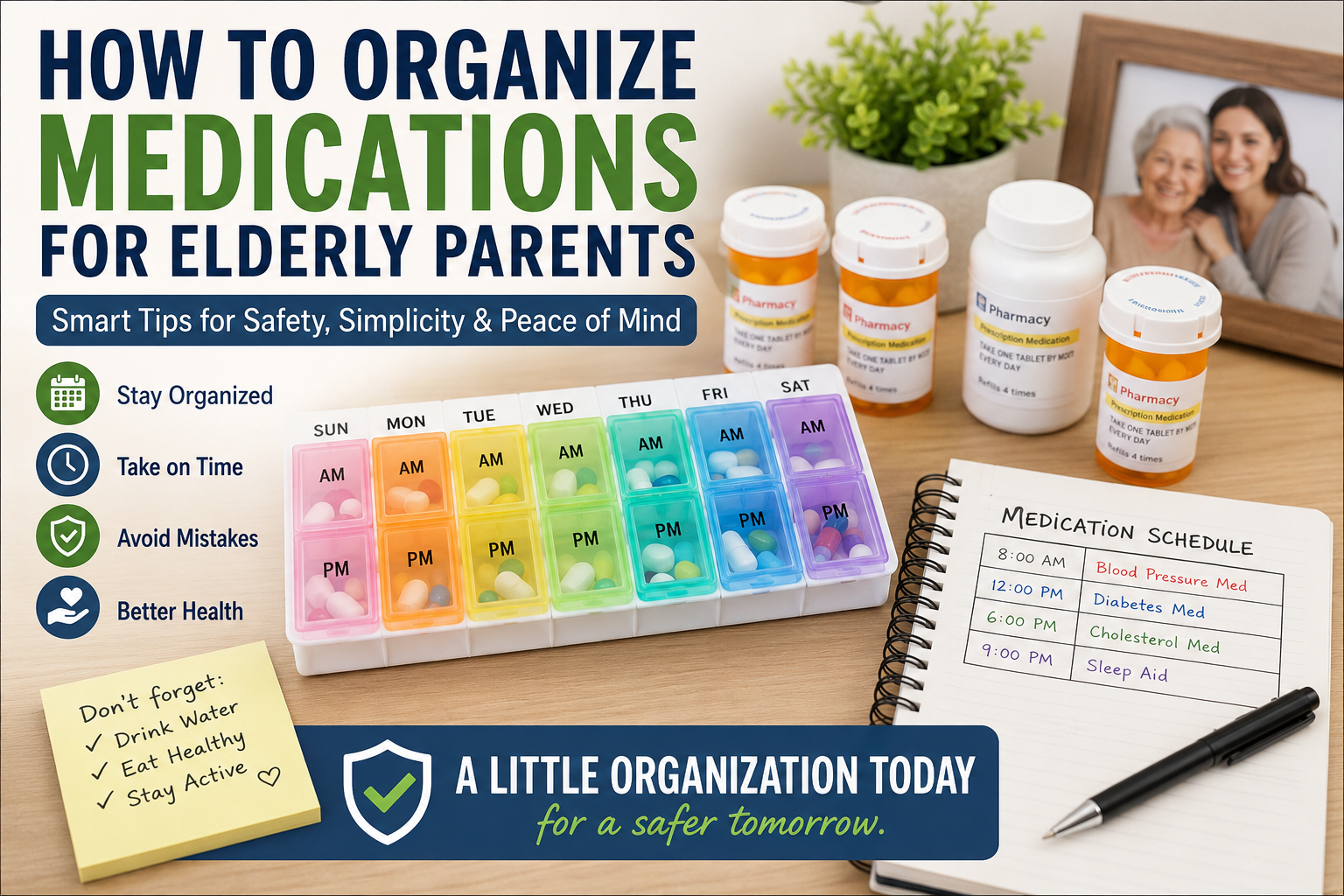
Managing medications for aging parents can feel overwhelming, especially when multiple prescriptions, vitamins, and over-the-counter products are involved. Learning how to organize medications for elderly parents is one of the most important steps caregivers can take to reduce confusion, prevent missed doses, and improve overall health and safety.
Whether your parent lives independently, with family, or in an assisted living community, having a reliable medication management system can make daily life easier for everyone involved. The right approach doesn’t have to be complicated. In many cases, simple routines and thoughtful organization are enough to dramatically reduce medication errors.
This guide covers practical strategies, common mistakes, and proven methods that families across the United States can use to keep medications organized and accessible.
Why Does Organizing Medications for Elderly Parents Matter?
As people age, they often develop multiple health conditions that require several medications each day. High blood pressure, diabetes, arthritis, heart disease, and cholesterol management may all require separate prescriptions.
When medications become difficult to track, problems can happen quickly:
- Missed doses
- Double doses
- Taking medicine at the wrong time
- Mixing medications incorrectly
- Using expired prescriptions
- Forgetting refill dates
Even small mistakes can affect treatment plans and increase the risk of hospital visits. A simple organization system creates consistency and gives both seniors and caregivers greater peace of mind.
Understanding the Challenges Seniors Face
Many older adults experience changes that make medication management more difficult.
Memory Changes
Forgetting whether a morning pill was already taken is extremely common.
Vision Problems
Small labels and similar-looking bottles can easily be confused.
Arthritis or Limited Mobility
Opening childproof caps may become frustrating or impossible.
Multiple Doctors
Different specialists may prescribe medications without full awareness of other prescriptions unless records are carefully maintained.
Changing Dosages
Temporary medication adjustments can create confusion if old instructions remain nearby.
Recognizing these challenges helps caregivers build systems that prevent mistakes before they happen.
Benefits of Organizing Medications Properly
Creating an organized medication routine offers benefits that extend beyond simply remembering pills.
Better Medication Adherence
People are more likely to follow treatment plans when medications are easy to locate and clearly scheduled.
Reduced Stress for Family Caregivers
Instead of wondering whether medications were taken, caregivers can quickly verify daily doses.
Lower Risk of Dangerous Errors
A structured system minimizes accidental overdoses or skipped medications.
Easier Communication with Healthcare Providers
An updated medication list allows doctors and pharmacists to review treatments accurately.
Improved Independence
Many seniors can continue managing medications themselves when given clear organizational tools.
What Happens When Medications Are Poorly Organized?
Poor organization often leads to avoidable problems.
| Problem | Possible Result |
|---|---|
| Missed doses | Reduced treatment effectiveness |
| Double dosing | Increased side effects |
| Expired medications | Lower effectiveness or safety concerns |
| Mixed bottles | Wrong medication taken |
| Forgotten refills | Interrupted treatment |
| Multiple storage areas | Confusion and lost medications |
These risks become more significant as the number of prescriptions increases.
Step 1: Create a Complete Medication Inventory
The first step in learning how to organize medications for elderly parents is knowing exactly what they take.
Include:
- Prescription medications
- Over-the-counter medicines
- Vitamins
- Herbal supplements
- Eye drops
- Inhalers
- Creams and ointments
- Injectable medications
Record:
- Medication name
- Strength
- Dosage
- Frequency
- Prescribing doctor
- Purpose
- Pharmacy information
Keep printed copies in multiple locations, including with emergency documents.
Step 2: Remove Expired and Unnecessary Medications
Many households accumulate old prescriptions over the years.
Check expiration dates and safely dispose of medications that:
- Have expired
- Were discontinued
- Are duplicates
- Are no longer needed
- Have unclear labels
Keeping outdated medications increases confusion and raises the chance of accidental use.
Never throw medications into shared containers where they may be mistaken for active prescriptions.
Step 3: Store Medications in One Primary Location
One of the biggest mistakes families make is storing medications throughout the house.
Avoid placing some pills:
- In kitchen drawers
- In bedroom tables
- In purses
- In bathrooms
- Near coffee makers
- In multiple cabinets
Instead, designate one consistent storage area that is:
- Dry
- Cool
- Easy to access
- Away from direct sunlight
- Out of reach of young children and pets
Keeping everything together simplifies daily routines.
Is the Bathroom Medicine Cabinet Really the Best Place?
Surprisingly, not always.
Bathrooms experience humidity from showers, which may affect certain medications over time.
A bedroom drawer, hallway cabinet, or climate-controlled closet often provides a more stable environment.
Always follow storage instructions listed on prescription labels.
Step 4: Use a Weekly Pill Organizer
For many families, a weekly pill organizer is one of the easiest ways to improve medication management.
Options include:
- Daily organizers
- Weekly organizers
- Morning and evening compartments
- Four-times-per-day organizers
- Monthly organizers
Benefits include:
- Quick visual confirmation
- Reduced bottle handling
- Easier travel
- Faster morning routines
- Fewer missed doses
Many caregivers prepare organizers every Sunday for the upcoming week.
Choosing the Right Pill Organizer
Not every organizer works for every person.
Consider:
Large Compartments
Helpful for multiple medications.
Easy-Open Lids
Ideal for seniors with arthritis.
Clearly Printed Labels
Morning, afternoon, evening, and bedtime sections reduce confusion.
Portable Design
Useful for appointments and travel.
Locking Features
Beneficial when grandchildren regularly visit.
Selecting an organizer that matches daily habits increases long-term success.
Step 5: Create a Simple Medication Schedule
Consistency matters more than complexity.
Build a chart that lists:
| Time | Medication | Dose |
|---|---|---|
| 8:00 AM | Blood pressure medication | 1 tablet |
| 8:00 AM | Vitamin D | 1 capsule |
| 12:00 PM | Diabetes medication | 1 tablet |
| 6:00 PM | Cholesterol medication | 1 tablet |
| 9:00 PM | Sleep medication | As prescribed |
Post the schedule somewhere visible, such as near the kitchen calendar or refrigerator.
Match Medication Times With Daily Habits
Rather than relying on memory alone, connect medications to routines already established.
Examples include:
- Breakfast
- Morning coffee
- Lunch
- Evening news
- Dinner
- Brushing teeth
- Bedtime reading
Habit stacking makes remembering medications much easier.
Step 6: Color-Code When Appropriate
Simple visual cues help many seniors.
Ideas include:
- Blue sticker for morning medications
- Yellow sticker for afternoon medications
- Green sticker for evening medications
- Red sticker for emergency medications
Use consistent colors across organizers and schedules.
Avoid overly complicated systems that create additional confusion.
Should Family Members Double-Check Medications?
If memory issues are developing, having another person verify medications can significantly reduce mistakes.
Caregivers might:
- Refill weekly organizers
- Review refill dates
- Check medication lists monthly
- Confirm doctor changes
- Observe unusual side effects
Even independent seniors often appreciate occasional oversight.
Step 7: Keep Bottles With Original Labels
Even when using organizers, never discard prescription bottles immediately.
Original containers provide:
- Prescription numbers
- Pharmacy contact information
- Dosage instructions
- Expiration dates
- Physician information
- Refill details
Store bottles together in case verification becomes necessary.
How Often Should Medication Lists Be Updated?
Update immediately whenever:
- A doctor changes dosage
- A medication stops
- A new prescription begins
- Supplements are added
- Pharmacies change
- Allergies are discovered
Review the complete list every few months to ensure it stays accurate.
Practical Example
Imagine an 80-year-old father taking eight different medications each day.
Previously, bottles were scattered between the kitchen, bedroom, and bathroom. Refills were forgotten, and doses were occasionally missed.
After creating one medication station, using a weekly organizer, and posting a printed schedule on the refrigerator, daily confusion decreased dramatically. Family members could quickly verify whether medications had been taken, and refill reminders became much easier to track.
This kind of simple system often provides meaningful improvements without requiring expensive technology.
Disclaimer
This article is intended for educational purposes only and should not replace personalized medical advice. Always follow instructions provided by licensed healthcare professionals and consult your doctor or pharmacist before making changes to medication schedules or storage practices.
Scientific and Practical Explanation: Why Medication Organization Matters
Medication management is about more than staying organized. It directly supports treatment plans by helping people take medications correctly and consistently. Health experts often refer to this as medication adherence, which means taking medicines exactly as prescribed.
For older adults, medication adherence can become challenging due to memory changes, vision problems, hearing loss, reduced mobility, or complicated schedules involving multiple prescriptions. Even one missed or duplicated dose may affect blood pressure, blood sugar, pain management, or other health conditions.
An organized medication system reduces these risks by creating predictable routines and making it easier to identify mistakes before they become serious.
Best Tips to Organize Medications for Elderly Parents
1. Maintain One Master Medication List
Keep a single document that includes:
- Prescription medications
- Over-the-counter medicines
- Vitamins
- Herbal supplements
- Allergies
- Emergency contacts
- Pharmacy information
- Primary care physician information
Store printed copies at home and carry one during medical appointments.
2. Review Medications Every Doctor Visit
Bring the complete medication list whenever your parent sees a healthcare provider.
Ask questions like:
- Is this medication still necessary?
- Are there duplicate prescriptions?
- Can any medicines be combined?
- Are there possible interactions?
Regular reviews may simplify treatment plans.
3. Set Digital Reminders
Technology can provide helpful backup.
Popular reminder methods include:
- Smartphone alarms
- Smart watches
- Voice assistants
- Calendar notifications
- Medication reminder apps
Choose reminders that match your parent’s comfort level with technology.
4. Refill Prescriptions Before They Run Out
Running out of medication often leads to missed doses.
Develop a refill routine by:
- Checking bottles weekly
- Ordering refills when one week remains
- Marking refill dates on calendars
- Signing up for pharmacy reminder services if available
5. Separate Morning and Evening Medications
Mixing all pills together increases confusion.
Many families prefer organizers with labeled compartments:
- Morning
- Noon
- Evening
- Bedtime
This creates a quick visual confirmation that medications were taken.
6. Travel With a Medication Plan
Whether visiting family or taking vacations, prepare ahead.
Pack:
- Enough medication for extra days
- Original prescription bottles
- Medication schedule
- Emergency contact numbers
- Physician information
Never wait until arrival to organize medications.
7. Monitor Side Effects
Organization also means observing changes.
Watch for:
- Dizziness
- Sleepiness
- Confusion
- Falls
- Appetite changes
- Unusual fatigue
Record symptoms and discuss concerns with healthcare professionals.
8. Keep Emergency Information Accessible
Include:
- Medication list
- Allergies
- Blood type if known
- Emergency contacts
- Insurance information
- Physician contacts
This information can be extremely valuable during emergencies.
9. Label Everything Clearly
If vision is limited, consider:
- Large-print labels
- High-contrast stickers
- Magnifying devices
- Written schedules with larger fonts
Simple adjustments can significantly improve independence.
10. Involve Elderly Parents in the Process
Even when family members help, include seniors in decisions whenever possible.
Encourage them to:
- Learn medication names
- Understand purposes
- Ask questions
- Participate in weekly organizer preparation
Active involvement supports confidence and autonomy.
Should You Use Automatic Pill Dispensers?
Automatic dispensers can be useful for seniors who struggle with memory or complex medication schedules.
Potential benefits include:
- Locked compartments
- Timed releases
- Audible reminders
- Reduced accidental double dosing
- Caregiver monitoring features
However, they are not necessary for every family. A simple weekly organizer may work perfectly well for many households.
Foods and Drinks That Can Affect Medications
Certain foods may interact with medications.
Depending on the prescription, healthcare providers may recommend avoiding or limiting:
- Alcohol
- Grapefruit or grapefruit juice
- Excessive caffeine
- High-sodium processed foods
- Certain herbal supplements
Never stop eating specific foods without discussing concerns with a qualified healthcare professional.
Healthy Lifestyle Habits That Support Medication Success
Medication organization works best when paired with healthy daily habits.
Helpful practices include:
- Drinking enough water unless otherwise instructed
- Following balanced meal plans
- Maintaining regular sleep schedules
- Staying physically active within personal ability
- Attending follow-up appointments
- Monitoring blood pressure or blood sugar when recommended
These habits complement medical treatment and improve consistency.
Common Mistakes to Avoid
Many medication errors happen because of simple oversights.
Storing Medications in Multiple Rooms
Searching different cabinets increases confusion.
Mixing Pills Into One Unlabeled Container
Without labels, identification becomes difficult.
Ignoring Expiration Dates
Expired medications may not work as intended.
Skipping Doses to Save Money
Changing prescribed schedules without medical guidance can reduce treatment effectiveness.
Sharing Medications
Prescription medications are intended only for the individual they were prescribed for.
Failing to Update Medication Lists
Doctor changes should be reflected immediately.
Assuming Supplements Are Always Safe
Natural products can still interact with prescription medications.
Who Should Be Especially Careful?
Some elderly individuals require additional attention.
These include seniors who:
- Take five or more medications daily
- Have memory impairment
- Live alone
- Recently left the hospital
- Have vision problems
- Have arthritis affecting hand strength
- Manage diabetes or heart disease
- Frequently visit multiple specialists
Extra organization and caregiver involvement may reduce medication-related risks.
Frequently Asked Questions
How can I organize medications for elderly parents without making them feel controlled?
Involve them in decisions and explain that the goal is safety and independence rather than supervision. Respect their preferences whenever possible.
What is the best pill organizer for seniors?
The best organizer depends on individual needs. Many seniors benefit from weekly organizers with clearly labeled morning and evening compartments and easy-open lids.
How often should medication organizers be filled?
Most caregivers prepare organizers once each week. Review prescriptions before refilling to ensure dosages remain current.
Should vitamins be included in the medication organizer?
Yes, if they are part of the daily routine and approved by the healthcare provider. Including them helps maintain consistency.
Is it safe to remove pills from original bottles?
Many families transfer medications into pill organizers for convenience, but original labeled bottles should still be kept for reference, refill information, and verification.
What if my parent keeps forgetting medications despite reminders?
Discuss the issue with a healthcare professional. Additional strategies such as caregiver supervision, automatic dispensers, or medication management services may help.
How can siblings coordinate medication responsibilities?
Create a shared medication calendar or checklist that allows family members to confirm refills, appointments, and organizer preparation.
Final Thoughts
Learning how to organize medications for elderly parents is one of the most practical ways to support healthy aging and reduce unnecessary stress for the entire family. A thoughtful system built around clear schedules, organized storage, updated medication lists, and consistent routines can help prevent avoidable mistakes while encouraging greater independence.
No single method works for every household. Some families rely on simple weekly pill organizers, while others benefit from digital reminders or automatic dispensers. The best approach is the one that fits your parent’s abilities, preferences, and medical needs while remaining easy to maintain over time.
Remember that medication organization is not a one-time project. Review the system regularly, update medication lists after every medical appointment, and communicate openly with healthcare professionals whenever changes occur. Small improvements made today can contribute to safer, more confident medication management tomorrow.
Suggested Outbound Resources
For additional educational information, consider referencing reputable organizations such as:
- U.S. Food and Drug Administration (FDA)
- National Institute on Aging (NIA)
- Centers for Disease Control and Prevention (CDC)
These trusted sources provide guidance on medication safety, healthy aging, and caregiver resources.