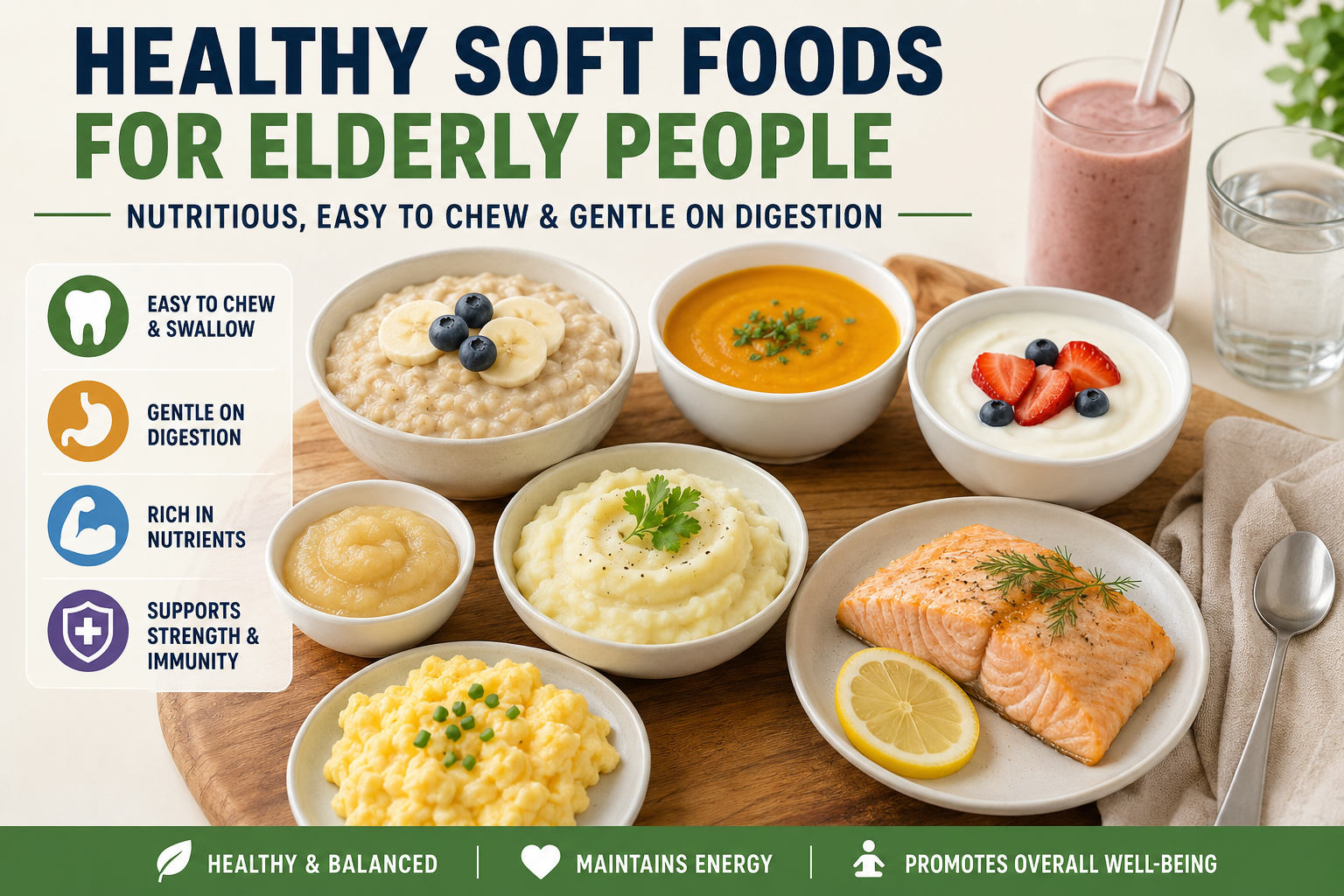
Healthy soft foods for elderly people can improve nutrition, digestion, and comfort. Discover the best soft meals, snacks, and eating tips for seniors.
Finding healthy soft foods for elderly people can make everyday eating easier, safer, and more enjoyable. Many seniors experience changes in chewing ability, digestion, appetite, or dental health as they age. Because of this, hard or dry foods may become uncomfortable or even unsafe.
Soft foods are often recommended for older adults recovering from illness, dental procedures, swallowing problems, or general aging-related changes. But soft foods should not mean boring foods. Seniors still need balanced nutrition, protein, fiber, healthy fats, vitamins, and minerals to stay strong and active.
The good news is that there are many delicious and nutritious soft foods that are easy to prepare and enjoyable to eat. From creamy oatmeal and yogurt to mashed sweet potatoes and tender fish, healthy options are available for every meal of the day.
This guide covers the best healthy soft foods for elderly people, practical meal ideas, common mistakes to avoid, and helpful nutrition tips for caregivers and families.
Why Healthy Soft Foods for Elderly People Matter
As people get older, eating habits often change. Some seniors lose interest in food because eating becomes difficult or uncomfortable. Others may avoid nutritious foods simply because they are too hard to chew.
This can lead to:
- Weight loss
- Weakness
- Low energy
- Poor immune function
- Muscle loss
- Dehydration
- Vitamin deficiencies
Healthy soft foods for elderly people help solve many of these problems by making meals easier to chew, swallow, and digest while still providing important nutrients.
For example, an older adult with sensitive gums may struggle with steak or raw vegetables but can comfortably eat scrambled eggs, cottage cheese, mashed avocado, or soft-cooked salmon.
The goal is to improve both comfort and nutrition at the same time.
Common Reasons Seniors Need Soft Foods
There are many reasons older adults may switch to a soft food diet.
Dental Problems
Missing teeth, dentures, gum disease, or mouth pain can make crunchy foods difficult to eat.
Swallowing Difficulties
Some seniors develop dysphagia, a condition that affects swallowing safely.
According to the National Institute on Aging, swallowing problems become more common with age and certain medical conditions.
Recovery After Surgery or Illness
Soft foods are often easier during recovery from:
- Dental surgery
- Stroke
- Illness
- Digestive problems
- Throat treatments
Reduced Appetite
Soft foods may feel more appealing and easier to tolerate when appetite decreases.
Digestive Sensitivity
Aging digestive systems may tolerate softer foods better than greasy or highly processed meals.
Nutritional Needs of Older Adults
Even though calorie needs may decrease with age, nutrient needs often stay the same or increase.
Healthy soft foods for elderly people should include:
| Nutrient | Why It Matters |
|---|---|
| Protein | Helps maintain muscle strength |
| Calcium | Supports bones |
| Fiber | Helps digestion |
| Healthy fats | Supports brain and heart health |
| Vitamin D | Important for immunity and bones |
| Potassium | Supports heart and muscles |
| Water | Prevents dehydration |
Many seniors accidentally eat too little protein because meat can be difficult to chew. This is why soft protein-rich foods become especially important.
Benefits of Healthy Soft Foods for Elderly People
Easier Chewing and Swallowing
Soft foods reduce discomfort during meals and may lower choking risk.
Better Nutrition Intake
When foods are easier to eat, seniors are more likely to finish meals and meet nutritional needs.
Improved Digestion
Soft meals are often gentler on the digestive system.
Increased Hydration
Many soft foods contain water, including soups, yogurt, fruits, and smoothies.
More Comfortable Eating Experience
Enjoyable meals can improve mood and quality of life.
Best Healthy Soft Foods for Elderly People
Protein-Rich Healthy Soft Foods for Elderly People
Protein helps preserve muscle mass and strength, which becomes increasingly important with age.
Scrambled Eggs
Scrambled eggs are soft, affordable, and packed with protein.
They are also easy to customize with cheese, spinach, or avocado.
Greek Yogurt
Greek yogurt provides:
- Protein
- Calcium
- Probiotics
Choose plain or low-sugar versions when possible.
Cottage Cheese
Cottage cheese is naturally soft and easy to chew.
It works well with fruit or blended into meals.
Soft Fish
Tender fish like salmon or cod is easier to chew than tougher meats.
Salmon also provides omega-3 fatty acids that support heart and brain health.
Tofu
Soft tofu is an excellent plant-based protein source.
It blends easily into soups, smoothies, or stir-fries.
Beans and Lentils
Well-cooked beans and lentils become soft and nutrient-rich.
Try:
- Lentil soup
- Mashed black beans
- Split pea soup
Soft Fruits and Vegetables
Fruits and vegetables provide fiber, vitamins, and antioxidants.
Bananas
Bananas are naturally soft and easy to digest.
They also contain potassium.
Applesauce
Unsweetened applesauce is a gentle alternative to raw apples.
Avocados
Avocados contain healthy fats and a creamy texture.
They can be spread on soft bread or mashed into meals.
Sweet Potatoes
Mashed sweet potatoes are nutritious, filling, and easy to prepare.
Cooked Carrots
Steamed or roasted carrots become soft and slightly sweet.
Stewed Fruits
Stewed pears, peaches, or berries are easier to chew than raw fruit.
Healthy Soft Breakfast Foods for Elderly People
Breakfast can set the tone for energy throughout the day.
Oatmeal
Oatmeal is one of the best healthy soft foods for elderly people because it provides:
- Fiber
- Warmth
- Easy digestion
Add fruit, cinnamon, or nut butter for extra nutrition.
Smoothies
Smoothies can help seniors who struggle with appetite.
Try blending:
- Greek yogurt
- Banana
- Berries
- Milk
- Peanut butter
Soft Whole-Grain Pancakes
Whole-grain pancakes with mashed fruit can provide energy and fiber.
Cream of Wheat
This warm cereal is gentle and easy to eat.
Soft Lunch and Dinner Ideas
Chicken Soup
Tender chicken and soft vegetables create a comforting meal.
Mashed Potatoes
Mashed potatoes become healthier when mixed with:
- Olive oil
- Greek yogurt
- Sweet potatoes
- Cauliflower
Soft Pasta
Well-cooked pasta with sauce is easier to chew.
Rice Bowls
Soft rice with beans, fish, or shredded chicken works well for many seniors.
Mac and Cheese
Homemade versions can provide protein and calories for seniors with low appetite.
Soft Casseroles
Casseroles combine multiple nutrients in one easy-to-eat dish.
Nutritious Soft Snacks
Healthy snacks can help older adults maintain energy between meals.
Yogurt Cups
Easy, convenient, and rich in calcium.
Pudding Made With Milk
Homemade pudding can add calories and protein.
Hummus
Hummus pairs well with soft pita or cooked vegetables.
Soft Cheese
Cheese provides calcium and protein.
Chia Pudding
Chia seeds soften overnight and provide fiber and omega-3 fats.
What Makes a Soft Food Healthy?
Not every soft food is nutritious.
Some processed soft foods contain high amounts of:
- Sugar
- Sodium
- Artificial ingredients
- Saturated fat
Healthy soft foods for elderly people should ideally include:
- Lean protein
- Fiber
- Vitamins
- Healthy fats
- Natural ingredients
For example:
| Better Choice | Less Healthy Choice |
|---|---|
| Greek yogurt | Sugary pudding |
| Oatmeal | Sugary cereal |
| Mashed sweet potatoes | French fries |
| Smoothies | Milkshakes |
| Homemade soup | Instant noodles |
Scientific and Practical Explanation
As adults age, several physical changes can affect eating.
These may include:
- Reduced saliva production
- Slower digestion
- Decreased taste sensitivity
- Weaker chewing muscles
- Medication side effects
Research from the Academy of Nutrition and Dietetics highlights the importance of nutrient-dense meals for older adults, especially protein and hydration.
Soft foods help reduce physical strain during eating while still allowing seniors to meet nutritional needs.
Texture also matters psychologically. Seniors are more likely to eat regularly when meals are appealing and comfortable.
Best Tips for Preparing Healthy Soft Foods for Elderly People
Add Protein Whenever Possible
Protein supports muscle maintenance.
Easy additions include:
- Powdered milk
- Greek yogurt
- Eggs
- Protein smoothies
Use Herbs and Mild Seasonings
Taste sensitivity may decline with age.
Herbs can improve flavor without too much salt.
Avoid Extremely Dry Foods
Dry foods may increase choking risk.
Examples include:
- Crackers
- Dry toast
- Tough meat
Serve Smaller Meals More Often
Large meals may feel overwhelming.
Smaller portions throughout the day often work better.
Make Foods Visually Appealing
Colorful meals encourage appetite.
Even soft meals should look appetizing.
Easy Soft Meal Ideas for Seniors
| Meal | Example |
|---|---|
| Breakfast | Oatmeal with banana |
| Snack | Greek yogurt with berries |
| Lunch | Lentil soup and soft bread |
| Snack | Smoothie with peanut butter |
| Dinner | Salmon with mashed sweet potatoes |
| Dessert | Chia pudding |
Hydration and Soft Foods for Seniors
Dehydration is common among older adults.
Soft foods with high water content can help.
Examples include:
- Soup
- Watermelon
- Yogurt
- Smoothies
- Applesauce
- Pudding
The Centers for Disease Control and Prevention recommends staying hydrated, especially for older adults who may not feel thirsty as often.
Common Mistakes to Avoid
Relying Too Much on Processed Foods
Soft packaged foods are convenient but may lack nutrition.
Ignoring Protein Intake
Some seniors mainly eat carbs because they are easier to chew.
This can contribute to muscle loss.
Serving Bland Meals Every Day
Flavor matters. Repetitive meals can reduce appetite.
Not Monitoring Swallowing Problems
Persistent coughing or choking during meals should not be ignored.
Overcooking Everything
Foods should be soft, not flavorless mush.
Texture and taste still matter.
Who Should Be Careful With Certain Soft Foods?
Some seniors may need personalized dietary guidance.
People With Diabetes
Watch sugar intake in:
- Pudding
- Ice cream
- Sweetened yogurt
- Sugary smoothies
Seniors With Kidney Disease
Potassium and sodium levels may need monitoring.
Individuals With Swallowing Disorders
Certain textures may still be unsafe.
A speech therapist or healthcare professional may recommend texture-modified diets.
People With Food Allergies
Always review ingredients carefully.
Frequently Asked Questions
What are the best healthy soft foods for elderly people?
Some of the best options include:
- Oatmeal
- Yogurt
- Scrambled eggs
- Mashed sweet potatoes
- Soft fish
- Soups
- Smoothies
- Cottage cheese
These foods are nutritious and easier to chew.
Are soft foods good for elderly people with dentures?
Yes. Healthy soft foods for elderly people are often easier to manage with dentures and may reduce gum irritation.
How can seniors get enough protein on a soft food diet?
Good soft protein options include:
- Eggs
- Greek yogurt
- Cottage cheese
- Soft fish
- Tofu
- Protein smoothies
- Beans
What foods should elderly people avoid if chewing is difficult?
Hard, crunchy, or dry foods may be difficult.
Examples include:
- Nuts
- Tough steak
- Hard crackers
- Popcorn
- Raw vegetables
Are smoothies healthy for seniors?
Yes, when balanced properly.
A healthy smoothie can include:
- Fruit
- Protein
- Healthy fats
- Milk or yogurt
Avoid excessive added sugar.
Can soft foods help elderly people gain weight safely?
Yes. Nutrient-dense soft foods like avocado, yogurt, salmon, eggs, and smoothies may help seniors maintain or gain weight in a healthy way.
Final Thoughts
Healthy soft foods for elderly people can make a major difference in comfort, nutrition, and overall well-being. Eating should remain enjoyable at every age, even when chewing or digestion becomes more challenging.
The best soft foods are not only easy to eat but also rich in nutrients that support strength, energy, hydration, and healthy aging.
Simple meals like oatmeal, soup, scrambled eggs, yogurt, mashed vegetables, and smoothies can help seniors maintain independence and feel better throughout the day.
Families and caregivers should focus on variety, flavor, hydration, and balanced nutrition rather than simply making food soft.
Most importantly, every senior has unique dietary needs. Persistent swallowing problems, sudden weight loss, or appetite changes should always be discussed with a healthcare professional.