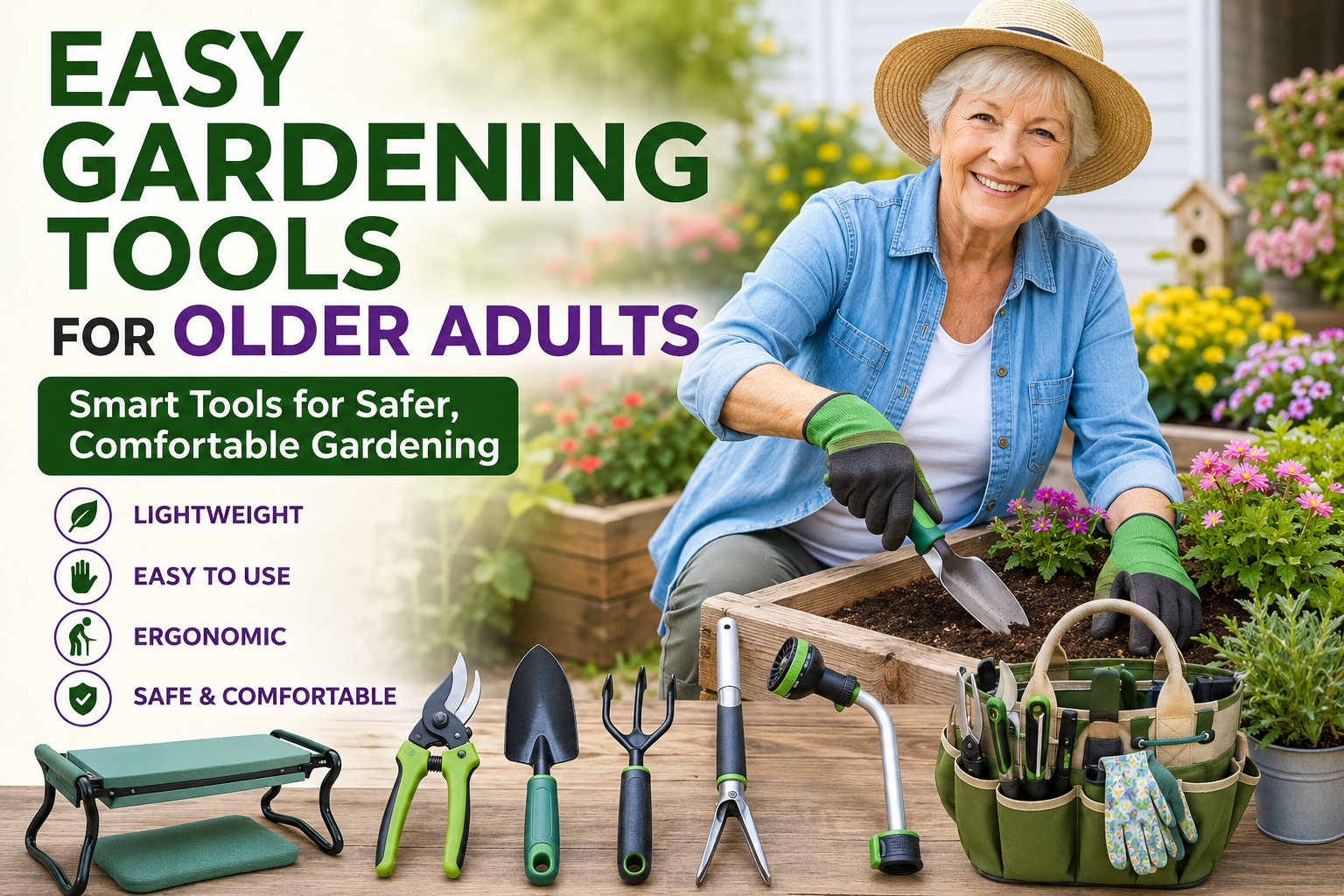
Gardening has long been one of America’s favorite hobbies. It offers fresh air, gentle physical activity, and the satisfaction of watching plants grow. As people get older, however, tasks like digging, bending, lifting, and pruning can become more challenging. The good news is that the right easy gardening tools for older adults can make those jobs much simpler and more enjoyable.
Whether you’re caring for a backyard vegetable garden, maintaining flower beds, or growing herbs on a patio, choosing ergonomic and lightweight equipment can reduce strain on your hands, knees, back, and shoulders. Many seniors continue gardening well into their retirement simply by adapting their tools and techniques.
This guide explores practical tools, smart gardening tips, and ways to create a safer and more comfortable gardening experience without giving up a hobby you love.
Why Easy Gardening Tools Matter for Older Adults
Gardening should feel rewarding, not exhausting. As muscles naturally lose strength and joints become less flexible with age, everyday gardening tasks can place extra stress on the body.
Using easy gardening tools for older adults helps reduce unnecessary effort while allowing gardeners to stay active and independent. Instead of struggling with heavy equipment or awkward positions, seniors can focus on enjoying their plants and outdoor space.
Many ergonomic tools are specifically designed with:
- Lightweight materials
- Comfortable padded grips
- Longer handles
- Easy-to-use mechanisms
- Reduced squeezing force
- Better leverage for digging and cutting
Small improvements like these can make a noticeable difference after just one afternoon in the garden.
Common Gardening Challenges Seniors Face
Every gardener experiences physical limitations differently, but several challenges become more common with age.
Hand and Wrist Pain
Arthritis and reduced grip strength can make squeezing pruners or gripping narrow handles uncomfortable.
Back Strain
Constant bending to pull weeds or plant flowers often leads to lower back discomfort.
Knee Problems
Kneeling for extended periods becomes difficult for many older adults, especially those with arthritis.
Shoulder Fatigue
Heavy watering cans and shovels may create unnecessary stress on the shoulders.
Balance Issues
Uneven garden paths and carrying equipment can increase the risk of slips or falls.
Fortunately, thoughtful tool selection can minimize many of these problems.
Benefits of Using Easy Gardening Tools for Older Adults
Switching to senior-friendly gardening equipment offers advantages beyond comfort.
| Benefit | Why It Matters |
|---|---|
| Reduced joint stress | Easier on hands, wrists, and knees |
| Better posture | Less bending and twisting |
| Increased independence | Continue gardening without assistance |
| Lower injury risk | Safer movements and improved control |
| More enjoyable experience | Gardening becomes relaxing instead of tiring |
| Longer gardening sessions | Less fatigue means more productive time outdoors |
Many retirees discover they can spend more time gardening simply because their tools work with them rather than against them.
How Ergonomic Gardening Tools Work
Ergonomic design focuses on reducing physical stress while improving efficiency.
For example, traditional hand trowels often require tight gripping and wrist twisting. Ergonomic versions usually feature thicker handles that fit naturally in the hand, reducing pressure on joints.
Similarly, ratcheting pruners multiply cutting force, allowing users to trim branches with significantly less effort.
These small engineering improvements add up over an entire gardening season.
Key ergonomic features include:
- Soft rubber grips
- Curved handles
- Lightweight aluminum construction
- Extended reach
- Spring-assisted mechanisms
- Adjustable lengths
- Anti-slip surfaces
15 Best Easy Gardening Tools for Older Adults
1. Ergonomic Hand Trowel
A comfortable hand trowel is one of the first upgrades every senior gardener should consider.
Look for:
- Thick padded grip
- Rust-resistant blade
- Lightweight construction
- Comfortable wrist angle
It’s perfect for planting flowers, herbs, and vegetables without excessive hand strain.
2. Long-Handled Weeder
Weeding often requires constant bending, which can aggravate back pain.
A long-handled weeder allows gardeners to remove weeds while standing upright.
Benefits include:
- Better posture
- Less knee pressure
- Reduced fatigue
- Faster weed removal
3. Ratchet Pruning Shears
Traditional pruners can be difficult for people with arthritis.
Ratchet pruners cut in stages, multiplying force with each squeeze and requiring much less hand strength.
Ideal for:
- Roses
- Shrubs
- Small branches
- Fruit trees
4. Garden Kneeler and Seat Combo
One of the smartest investments for older gardeners is a folding kneeler that flips into a seat.
Advantages include:
- Cushioned kneeling support
- Stable sitting position
- Easy standing assistance
- Side pockets for tools
Many users report significantly less knee discomfort after switching.
5. Lightweight Watering Wand
Instead of carrying heavy watering cans, a watering wand attached to a hose delivers water exactly where needed.
Features often include:
- Adjustable spray patterns
- Extended reach
- Reduced lifting
- Better control
It’s especially useful for hanging baskets and raised beds.
6. Telescoping Garden Rake
Adjustable handles let gardeners customize the tool length based on the task.
Shorter for tight spaces.
Longer for leaves and debris.
This versatility reduces awkward bending while improving reach.
7. Rolling Garden Cart
Rather than carrying pots, bags of soil, or tools, a rolling garden cart transports everything with minimal effort.
Many include:
- Swivel wheels
- Comfortable handles
- Storage compartments
- Durable construction
The result is less lifting and fewer trips across the yard.
8. Foam Grip Tool Covers
Sometimes replacing tools isn’t necessary.
Foam grip sleeves can fit existing handles, making them easier to hold and reducing hand fatigue.
They’re inexpensive yet surprisingly effective.
9. Lightweight Digging Fork
Heavy steel forks can quickly tire older gardeners.
Modern aluminum versions provide strength while weighing considerably less.
They’re excellent for:
- Loosening soil
- Mixing compost
- Harvesting root vegetables
10. Raised Garden Bed Tools
Raised beds pair well with specially designed shorter tools optimized for seated or standing gardening.
Benefits include:
- Less bending
- Easier planting
- Better accessibility
- Reduced strain
Many seniors find raised gardening extends their ability to enjoy the hobby for years.
11. Extendable Fruit Picker
Harvesting apples or peaches from tall branches can become risky.
An extendable fruit picker eliminates the need for unstable ladders by safely collecting fruit from the ground.
12. Electric Cultivator
Manual tilling requires significant effort.
Compact electric cultivators break up soil quickly with minimal physical work, making spring planting much easier.
13. Hose Reel with Automatic Retraction
Dragging tangled hoses around the yard often causes frustration.
Automatic reels keep hoses organized while preventing excessive pulling and twisting.
14. Battery-Powered Hedge Trimmer
Older gas-powered trimmers can be heavy and difficult to start.
Modern battery-operated versions often feature:
- Push-button starting
- Lower weight
- Reduced vibration
- Quiet operation
This makes hedge maintenance much more manageable.
15. Gardening Stool with Wheels
Rolling garden stools allow users to move along flower beds while seated.
They’re especially useful for:
- Planting bulbs
- Pulling weeds
- Harvesting vegetables
- Container gardening
Many include built-in storage beneath the seat for extra convenience.
How to Choose the Right Gardening Equipment
Not every tool suits every gardener. Before buying new equipment, consider your individual needs.
Weight
Choose the lightest tool that still feels sturdy.
Heavy equipment often causes unnecessary fatigue.
Handle Design
Look for padded, oversized handles that reduce pressure on the hands.
These are especially beneficial for arthritis sufferers.
Length
Long-handled tools reduce bending.
Adjustable models offer flexibility for different gardening tasks.
Grip Comfort
Soft materials improve control and reduce blisters during extended use.
Storage
Foldable or compact tools are easier to store and transport.
Tips for Creating a Senior-Friendly Garden
Tools are only part of the solution. The garden itself can be designed for easier maintenance.
Consider these practical improvements:
- Install raised beds
- Create wide walking paths
- Use mulch to reduce weeds
- Add benches for resting
- Keep frequently used plants close together
- Use drip irrigation to minimize watering effort
- Store tools near the garden area
- Plant low-maintenance perennials
Even small adjustments can significantly improve comfort throughout the growing season.
Why Raised Beds Pair Well with Easy Gardening Tools for Older Adults
Raised beds and ergonomic tools complement each other perfectly.
Because plants sit higher off the ground, gardeners spend less time bending or kneeling. When combined with lightweight trowels, long-handled weeders, and rolling stools, many physically demanding tasks become much easier.
Raised beds also improve soil drainage and make pest monitoring simpler, adding another layer of convenience for older adults.
Practical Tips for Gardening Longer Without Fatigue
Experienced senior gardeners often follow a few simple habits:
- Garden during cooler morning hours.
- Work in 20- to 30-minute sessions.
- Alternate between standing and sitting tasks.
- Stretch gently before and after gardening.
- Drink water regularly.
- Wear supportive shoes with good traction.
- Keep frequently used tools within easy reach.
- Listen to your body and take breaks when needed.
These habits, combined with the right equipment, can make gardening a sustainable and enjoyable part of an active lifestyle.
Common Mistakes to Avoid When Choosing Easy Gardening Tools for Older Adults
Buying the wrong gardening tools can make simple tasks harder instead of easier. Many seniors spend money on equipment that looks useful but doesn’t match their physical needs or gardening style.
Choosing Heavy Tools
A sturdy tool isn’t always the best option. Steel tools may last for years, but they can also tire your arms and shoulders quickly. Lightweight aluminum or fiberglass models often provide enough durability while being much easier to handle.
Ignoring Ergonomic Features
Small handles and hard plastic grips can put unnecessary pressure on your hands. Look for padded, non-slip handles that fit comfortably and reduce wrist strain.
Buying Too Many Specialized Tools
It’s tempting to purchase every gadget available, but multi-purpose tools often save money and storage space. An adjustable rake or interchangeable tool system can replace several individual tools.
Using Old Worn-Out Equipment
Loose handles, dull blades, and rusty tools require more force to use. Keeping tools in good condition can reduce effort and improve safety.
Skipping Safety Equipment
Even simple gardening tasks can lead to injuries without proper preparation. Gloves, supportive shoes, sunscreen, and a wide-brim hat should be part of every gardening routine.
Who Should Be Careful?
While gardening is an excellent activity for many older adults, some individuals should take extra precautions or speak with a healthcare provider before starting strenuous yard work.
This includes people who:
- Have severe arthritis or joint conditions
- Recently had surgery
- Experience balance problems
- Have uncontrolled heart or lung conditions
- Take medications that affect heat tolerance or dizziness
- Have chronic back pain that worsens with lifting or bending
In many cases, modifying gardening techniques or using adaptive equipment allows people to continue enjoying the hobby safely.
Can Easy Gardening Tools Help People With Arthritis?
Yes, many ergonomic gardening tools are specifically designed to reduce pressure on painful joints.
Features that can help include:
- Spring-loaded pruners
- Ratcheting cutting mechanisms
- Thick foam handles
- Lightweight construction
- Extended reach handles
- Electric-powered alternatives
While these tools don’t treat arthritis, they may reduce discomfort during common gardening tasks and allow people to stay active with less strain.
Smart Gardening Habits That Make Every Tool More Effective
The best equipment works even better when paired with healthy gardening habits.
Warm Up Before Starting
Gentle stretching for five to ten minutes can loosen muscles and prepare joints for activity.
Pace Yourself
Instead of spending four hours in the garden at once, break work into shorter sessions throughout the week.
Stay Hydrated
Older adults may not notice dehydration as quickly as younger people. Keep a water bottle nearby and drink regularly.
Alternate Tasks
Switch between digging, watering, pruning, and planting to avoid overusing the same muscles.
Use Containers When Possible
Container gardening reduces bending and allows plants to be placed at comfortable heights.
Seasonal Gardening Tips for Seniors
Spring
- Prepare raised beds.
- Sharpen pruning tools.
- Start with lightweight planting projects.
- Add mulch early to reduce weeds.
Summer
- Water early in the morning.
- Wear breathable clothing.
- Take frequent breaks in the shade.
- Harvest vegetables regularly.
Fall
- Clean and store tools properly.
- Plant bulbs for next season.
- Remove dead plants gradually instead of all at once.
- Use rolling carts for leaf collection.
Winter
- Organize gardening supplies.
- Clean blades and handles.
- Plan next year’s garden.
- Repair damaged equipment.
How Technology Is Making Gardening Easier
Modern innovations have made gardening more accessible than ever.
Some helpful options include:
- Battery-powered pruners
- Automatic irrigation systems
- Self-watering planters
- Smart moisture sensors
- Electric wheelbarrows
- Lightweight cordless hedge trimmers
- Rolling raised garden systems
These technologies reduce physical labor while helping gardeners maintain healthy plants with less effort.
Building a Comfortable Gardening Routine
Many experienced gardeners discover that consistency matters more than intensity.
Rather than trying to finish every project in one weekend, consider creating a weekly schedule.
| Day | Activity |
|---|---|
| Monday | Water plants and inspect for pests |
| Tuesday | Light weeding |
| Wednesday | Plant or transplant flowers |
| Thursday | Rest or indoor seed starting |
| Friday | Pruning and trimming |
| Saturday | Harvest vegetables and herbs |
| Sunday | Clean tools and plan next week |
This balanced approach prevents fatigue while keeping the garden looking its best.
Frequently Asked Questions
What are the best easy gardening tools for older adults?
The best options include ergonomic trowels, ratchet pruners, rolling garden carts, long-handled weeders, kneeler-seat combinations, lightweight watering wands, and raised bed tools that reduce bending and lifting.
Are ergonomic gardening tools worth the investment?
For many seniors, yes. They often reduce hand strain, improve comfort, and make gardening sessions longer and more enjoyable while lowering the risk of injury.
Can gardening still be good exercise for older adults?
Gardening provides gentle physical activity that encourages movement, flexibility, and time outdoors. When done safely and at an appropriate pace, it can be part of an active lifestyle.
What is the easiest type of garden for seniors to maintain?
Raised beds, container gardens, and small patio gardens generally require less bending, weeding, and maintenance than large traditional gardens.
How can older adults reduce back pain while gardening?
Using long-handled tools, raised beds, rolling stools, proper lifting techniques, and taking regular breaks can significantly reduce stress on the back.
Are electric gardening tools better than manual ones?
Battery-powered tools can be an excellent option for people with limited strength or arthritis because they reduce repetitive effort. However, lightweight manual tools remain practical for many everyday tasks.
What should seniors wear while gardening?
Comfortable clothing, supportive shoes with good traction, gardening gloves, sun protection, and a hat are all recommended for safer outdoor work.
Practical Checklist Before Buying Gardening Tools
Before making a purchase, ask yourself:
- Is the tool lightweight enough to lift comfortably?
- Does it have an ergonomic handle?
- Can I use it without bending excessively?
- Is maintenance simple?
- Does it fit my gardening style?
- Will it reduce strain rather than create more work?
- Can it serve multiple purposes?
Choosing thoughtfully often leads to better long-term satisfaction.
A Practical Disclaimer
This article is intended for educational and informational purposes only. Gardening abilities vary from person to person, and physical limitations should always be respected. Individuals with chronic medical conditions, recent injuries, or mobility concerns should consult an appropriate healthcare professional before beginning new physical activities or significantly changing their gardening routine.
Final Thoughts
Gardening doesn’t have to become more difficult with age. In fact, the right easy gardening tools for older adults can make the experience more enjoyable than ever. Lightweight equipment, ergonomic designs, raised beds, and smart planning allow many seniors to continue planting flowers, growing vegetables, and caring for outdoor spaces with confidence.
The goal isn’t to work harder—it’s to work smarter. Simple adjustments, from switching to ratchet pruners to using a rolling garden stool, can reduce strain and help you spend more time appreciating the beauty you’ve created.
Whether you’re an experienced gardener or returning to the hobby after retirement, investing in tools that fit your needs can make every season safer, more comfortable, and more rewarding.
equipment for comfortable senior gardening.
1 thought on “Easy Gardening Tools for Older Adults: 15 Smart Picks for Safer Gardening”