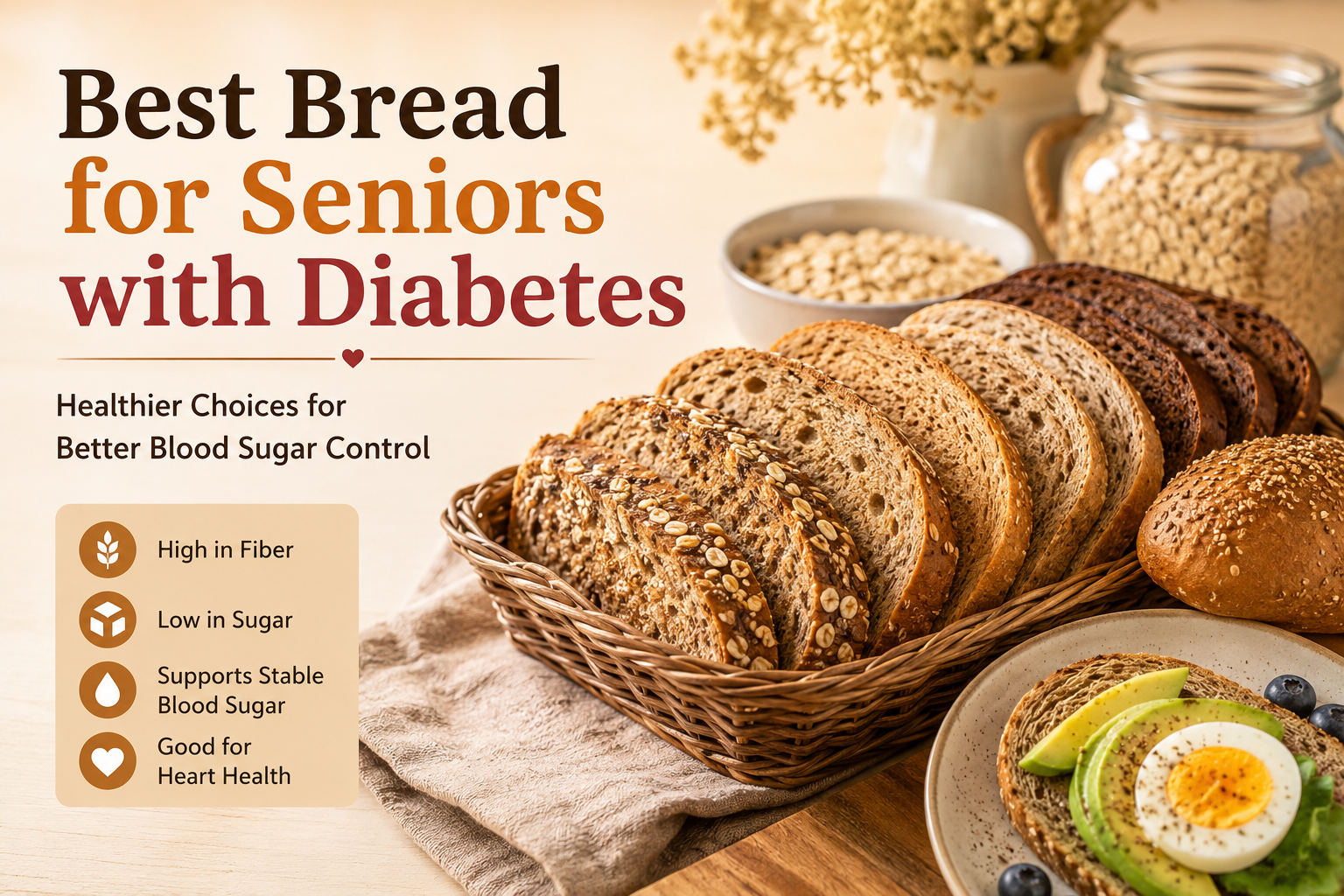
For many seniors, bread is a daily comfort food. It’s easy to make, affordable, filling, and works well with breakfast, lunch, or dinner. But for older adults living with diabetes, choosing the right bread can make a major difference in blood sugar control, energy levels, heart health, and overall wellness.
The good news is that seniors with diabetes do not have to give up bread completely. The key is learning which types of bread are healthier and which ones can quietly spike blood sugar levels.
In this guide, we’ll cover the best bread for seniors with diabetes, explain what makes bread diabetic-friendly, and share practical shopping tips that actually work in real life.
Why This Topic Matters
Diabetes affects millions of older Americans. According to the Centers for Disease Control and Prevention, adults over age 65 are one of the largest groups living with diabetes in the United States.
As people age, managing blood sugar becomes more important because seniors often face additional concerns such as heart disease, high blood pressure, reduced mobility, digestive problems, weight changes, and medication interactions.
Bread may seem harmless, but certain breads are highly processed and loaded with refined carbohydrates. These carbs break down quickly into sugar, which can cause blood glucose spikes.
Choosing the best bread for seniors with diabetes helps support more stable blood sugar levels, better digestion, improved heart health, longer-lasting energy, better weight management, and reduced cravings.
What Makes Bread Bad for Diabetes?
Not all bread is created equal.
Many traditional breads sold in grocery stores are made with refined white flour. During processing, much of the fiber and nutrients are removed. This leaves behind fast-digesting carbohydrates that can raise blood sugar quickly.
Common Ingredients That Can Spike Blood Sugar
| Ingredient | Why It’s a Problem |
|---|---|
| Enriched white flour | Low fiber and high glycemic impact |
| High fructose corn syrup | Added sugar |
| Molasses | Hidden sugar source |
| Honey | Natural but still raises blood sugar |
| Sugar | Adds unnecessary carbohydrates |
| Refined wheat flour | Digests quickly |
Bread with low fiber and high added sugar is usually the worst choice for diabetes management.
Best Bread for Seniors With Diabetes
1. Whole Grain Bread
Whole grain bread is often one of the best choices because it contains more fiber and nutrients than white bread. Fiber slows digestion, helping blood sugar rise more gradually.
Choose bread labeled:
- 100% whole grain
- 100% whole wheat
- Whole grain as the first ingredient
Avoid products that simply say “multigrain,” since that does not always mean whole grain.
Whole grain bread may help improve digestion, reduce constipation, increase fullness, and support heart health.
2. Sprouted Grain Bread
Sprouted grain bread has become increasingly popular among people looking for healthier carbohydrate options.
Brands like Ezekiel Bread are commonly recommended because they use sprouted grains and legumes instead of heavily processed flour.
Benefits of sprouted bread include:
- Higher protein content
- More fiber
- Lower glycemic response
- Better nutrient absorption
Some seniors also report that sprouted grain bread feels easier to digest.
3. Sourdough Bread
Sourdough bread may be a better option than regular white bread because of the fermentation process used during baking.
Benefits of sourdough bread:
- Slower digestion
- Better texture
- Less processed than standard white bread
- May support gut health
However, not all sourdough bread is equal. Some commercial brands still contain refined flour and added sugars. Always read the nutrition label carefully.
4. Low-Carb Bread
Low-carb bread is specifically designed for people watching their carbohydrate intake.
These breads usually contain:
- Extra fiber
- Protein
- Seeds
- Nut flours
Some varieties have only a few net carbs per slice.
Low-carb bread may work well for seniors who need stricter blood sugar control or follow lower-carb eating plans.
5. Rye Bread
Rye bread tends to digest more slowly than white bread.
Benefits of rye bread:
- Dense and filling
- Supports digestive health
- Lower glycemic effect compared to white bread
Traditional rye bread can pair well with lean proteins, eggs, or healthy sandwich fillings.
6. Flaxseed Bread
Flaxseed bread is rich in fiber, omega-3 fatty acids, and healthy fats.
The fiber in flaxseed slows carbohydrate absorption, which may help improve blood sugar stability after meals.
7. Oat Bread
Oat bread can also be a good choice when made with real whole oats and whole grain flour.
Oats contain beta-glucan, a type of soluble fiber associated with:
- Improved cholesterol levels
- Better blood sugar response
- Increased fullness
Still, seniors should avoid oat bread with excessive sugar or refined flour.
Scientific and Practical Explanation
Glycemic Index Matters
The glycemic index measures how quickly foods raise blood sugar.
Generally:
- White bread = higher GI
- Whole grain bread = lower GI
- High-fiber bread = lower GI
Fiber slows the digestion of carbohydrates, helping glucose enter the bloodstream more gradually.
Protein and Healthy Fats Also Matter
Bread eaten alone may raise blood sugar faster.
Pairing bread with:
- Eggs
- Peanut butter
- Turkey
- Tuna
- Avocado
- Greek yogurt
can slow digestion and improve blood sugar response.
Example:
Instead of white toast with jam, try whole grain toast with eggs and avocado.
Best Tips for Choosing Diabetic-Friendly Bread
Read the Ingredient List First
The first ingredient should ideally be:
- Whole wheat flour
- Whole grain flour
- Sprouted grains
If enriched flour appears first, it’s probably not the best option.
Look for Higher Fiber
Choose bread with at least 3 grams of fiber per slice.
Watch Serving Size
Even healthy bread contains carbohydrates. Always check serving size, total carbohydrates, and added sugars.
Avoid Added Sugars
Watch for hidden sugars like:
- Cane syrup
- Molasses
- Honey
- Brown rice syrup
Choose Whole Over White
Whole grain bread generally contains more nutrients and fiber than white bread.
Freeze Extra Bread
Freezing slices individually can reduce waste and make portion control easier.
Best Bread Brands for Seniors With Diabetes
| Brand | Why It’s Popular |
|---|---|
| Dave’s Killer Bread | Whole grains and seeds |
| Ezekiel Bread | Sprouted grains |
| Sara Lee Delightful | Lower calorie option |
| Nature’s Own Whole Wheat | Affordable and accessible |
| ThinSlim Foods | Low-carb varieties |
Always compare nutrition labels because formulas can change.
What Bread Should Seniors With Diabetes Avoid?
Bread types to limit:
- White bread
- Potato bread
- Hawaiian rolls
- Sweet breads
- Cinnamon raisin bread
- Highly processed sandwich bread
These products often contain refined flour, added sugar, and low fiber.
Common Mistakes to Avoid
Trusting Front Labels
Words like “multigrain” or “natural” do not always mean healthy. Always read the ingredient list.
Ignoring Portion Sizes
Eating several slices at once can still raise blood sugar significantly.
Eating Bread Alone
Bread paired with protein and healthy fats usually produces a better blood sugar response.
Assuming Gluten-Free Means Healthy
Gluten-free bread is not automatically diabetic-friendly. Many gluten-free breads contain added starches or sugars.
Skipping Blood Sugar Monitoring
Every person responds differently to carbohydrates. Seniors should monitor how different breads affect their glucose readings.
Who Should Be Careful?
Seniors With Kidney Disease
Some high-protein or seed-heavy breads may contain more potassium and phosphorus.
Seniors With Digestive Issues
Very high-fiber bread may worsen symptoms for people with IBS or sensitive digestion.
Seniors Taking Diabetes Medication
Blood sugar can drop too low if carbohydrate intake changes suddenly while taking insulin or glucose-lowering medications.
Healthy Ways Seniors Can Enjoy Bread
Breakfast
- Whole grain toast with eggs
- Peanut butter on sprouted bread
- Avocado toast
Lunch
- Turkey sandwich on rye bread
- Tuna sandwich on whole grain bread
Snack
- Toast with cottage cheese
- Half sandwich with soup
Dinner
- Small slice of sourdough with salad and grilled chicken
Can Seniors With Diabetes Eat Bread Every Day?
In many cases, yes.
The key factors are:
- Type of bread
- Portion size
- Overall diet quality
- Blood sugar response
Many dietitians recommend focusing on fiber, whole foods, and balanced meals instead of completely eliminating carbohydrates.
What Do Dietitians Recommend?
Organizations like the American Diabetes Association encourage balanced eating patterns rather than banning specific foods entirely.
Many registered dietitians recommend:
- Whole grains
- High-fiber foods
- Portion awareness
- Reduced added sugar
FAQs About the Best Bread for Seniors With Diabetes
What is the healthiest bread for seniors with diabetes?
Whole grain, sprouted grain, and high-fiber breads are often among the healthiest options.
Is sourdough bread good for diabetes?
Sourdough may be better than regular white bread because of its fermentation process.
Can seniors with diabetes eat toast?
Yes, especially when choosing whole grain or low-carb bread and pairing it with protein or healthy fats.
Is rye bread better than white bread?
In many cases, yes. Rye bread generally has more fiber and a lower glycemic effect.
How many slices of bread can a diabetic senior eat?
This depends on activity level, medications, and overall carbohydrate intake. Many seniors do well with 1–2 slices paired with balanced meals.
Is gluten-free bread healthier for diabetes?
Not always. Some gluten-free breads are highly processed and contain added sugars.
Should seniors avoid bread completely?
Most seniors do not need to eliminate bread entirely. Choosing healthier varieties and practicing portion control is usually more sustainable.
Final Thoughts
Finding the best bread for seniors with diabetes does not have to feel overwhelming.
The healthiest choices are usually higher in fiber, lower in added sugar, and made with whole grains or sprouted grains.
Small changes like switching from white bread to whole grain bread can make a noticeable difference in blood sugar control and overall health.
For seniors, the goal is not perfection. It’s about making practical, sustainable choices that support long-term wellness while still enjoying favorite foods.
A balanced diet, regular movement, hydration, and routine medical care all play an important role in diabetes management.
Also Read –
Best Grocery Discounts for Seniors in 2026
Affordable Life Insurance After Age 60: Smart Ways to Save Money and Stay Protected
Best Medical Alert Systems for Elderly: Top Picks for Safety and Peace of Mind