Getting enough fiber is an important part of a healthy diet, but how much do you actually need each day? Your recommended fiber intake changes with age and sex, and adults over 50 generally need less fiber than younger adults.
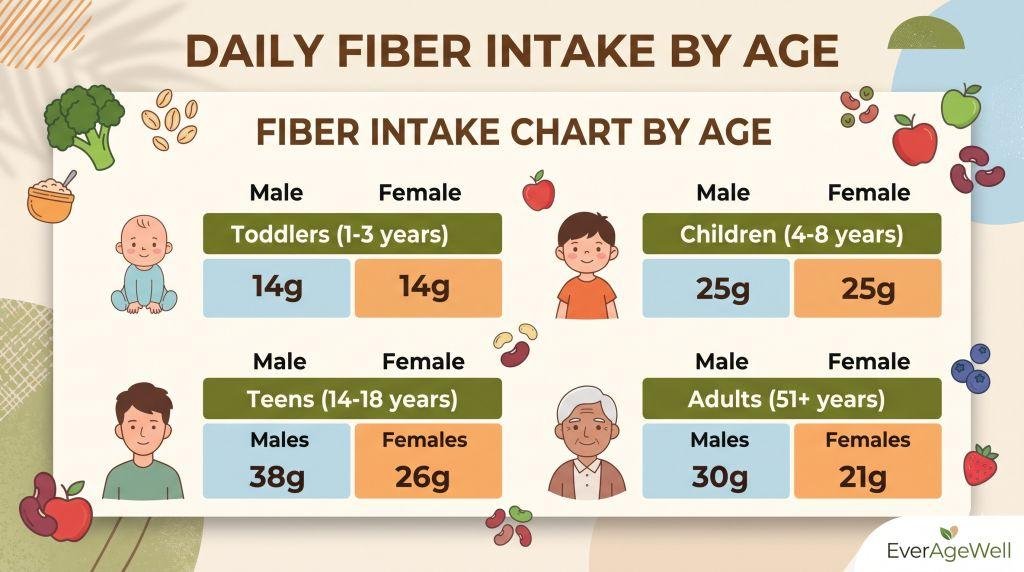
For most adults, a practical target is about 21 to 30 grams of fiber per day for women and men age 51 and older, depending on sex. Men ages 51 and older generally need about 30 grams per day, while women in the same age group need about 21 grams per day. These amounts are based on U.S. dietary reference values.
Fiber comes mainly from plant foods such as beans, lentils, fruits, vegetables, whole grains, nuts, and seeds. It supports normal digestion and can be part of an eating pattern associated with better heart and metabolic health.
For adults over 50, fiber can be especially useful because constipation can become more common with age, while appetite and overall food intake may decrease. The key is to increase fiber gradually and drink enough fluids.
In this guide, you’ll find a fiber intake chart by age, the best high-fiber foods, practical meal ideas, common mistakes, potential benefits, and answers to frequently asked questions about fiber after 50.
Quick Answer: How Much Fiber Do You Need Per Day?
For healthy adults, the commonly used U.S. Adequate Intake for total dietary fiber is:
| Age | Men | Women |
|---|---|---|
| 1–3 years | 19 g | 19 g |
| 4–8 years | 25 g | 25 g |
| 9–13 years | 31 g | 26 g |
| 14–18 years | 38 g | 26 g |
| 19–50 years | 38 g | 25 g |
| 51–70 years | 30 g | 21 g |
| Over 70 years | 30 g | 21 g |
For adults, another useful way to think about fiber is about 14 grams per 1,000 calories consumed. Individual needs can vary depending on calorie intake, health conditions, and dietary pattern.
The FDA’s current Daily Value for dietary fiber is 28 grams per day, based on a 2,000-calorie diet. That Daily Value is useful for reading food labels, but it is not a personalized target for every individual.
What Is Dietary Fiber?
Dietary fiber is a type of carbohydrate found naturally in plant foods that your body does not fully digest.
Instead of being broken down and absorbed like many carbohydrates, fiber passes through much of the digestive system. Some types of fiber are fermented by bacteria in the colon, while other types help add bulk to stool.
Fiber is found naturally in foods such as:
- Beans and lentils
- Fruits
- Vegetables
- Whole grains
- Nuts
- Seeds
- Peas
Fiber is not just about preventing constipation. A high-fiber eating pattern can also fit into a heart-healthy, nutrient-rich diet.
The FDA notes that many older adults do not get enough dietary fiber and encourages choosing foods that provide more fiber on most days.
Why Does Fiber Matter?
Fiber can help keep bowel movements regular and can make meals more filling. Certain types of fiber can also affect cholesterol absorption and the way carbohydrates are digested.
Importantly, fiber works best as part of an overall healthy diet rather than as a single “superfood” or treatment.
Fiber Intake Chart by Age
The following chart is based on U.S. Dietary Reference Intake values for total fiber.
| Age Group | Men | Women | Practical Goal |
|---|---|---|---|
| 1–3 | 19 g | 19 g | Include fruits, vegetables, beans and whole grains |
| 4–8 | 25 g | 25 g | Increase plant foods gradually |
| 9–13 | 31 g | 26 g | Include whole grains, fruits and vegetables |
| 14–18 | 38 g | 26 g | Build meals around plant foods |
| 19–50 | 38 g | 25 g | Aim for fiber-rich foods throughout the day |
| 51–70 | 30 g | 21 g | Focus on nutrient-dense fiber sources |
| 71+ | 30 g | 21 g | Prioritize fiber-rich foods that are easy to chew and digest |
The adult values are known as Adequate Intakes (AIs) rather than Recommended Dietary Allowances. The distinction matters because scientists do not have enough evidence to establish an RDA for fiber.
What About Pregnancy?
Fiber needs can change during pregnancy and breastfeeding. For example, the established Adequate Intake for fiber is 28 grams per day during pregnancy and 29 grams per day during lactation for adults.
Pregnant or breastfeeding individuals should consider their overall nutritional needs rather than focusing only on fiber.
Why Fiber Needs Change With Age
It is easy to assume that everyone should simply aim for 28 or 30 grams of fiber every day. The reality is more nuanced.
Fiber recommendations are influenced by age, sex, and calorie needs.
Adults Ages 19–50
Men generally have a higher fiber target than women during these years: about 38 grams versus 25 grams per day.
One reason is that fiber recommendations are related in part to energy intake.
Adults Ages 51–70
The recommendation decreases to about:
- 30 grams daily for men
- 21 grams daily for women
This does not mean fiber becomes unimportant after 50. It simply reflects the established dietary reference values for this age group.
Adults Over 70
The same general targets apply:
- 30 grams per day for men
- 21 grams per day for women
For older adults, food quality and tolerability matter just as much as the number of grams.
Someone who has difficulty chewing, has a small appetite, or has digestive problems may need a more individualized approach.
Soluble vs. Insoluble Fiber
You may have heard that there are two major types of fiber: soluble and insoluble.
Soluble Fiber
Soluble fiber dissolves or swells in water and can form a gel-like substance.
Foods containing soluble fiber include:
- Oatmeal
- Barley
- Beans
- Lentils
- Apples
- Citrus fruits
- Some seeds
Soluble fiber can be part of a dietary pattern that supports healthy cholesterol levels.
Insoluble Fiber
Insoluble fiber does not dissolve in water in the same way.
It is found in foods such as:
- Whole grains
- Wheat bran
- Nuts
- Vegetable skins
- Many vegetables
It adds bulk to stool and can support regular bowel movements.
Do You Need to Count Each Type?
Usually, no.
For most people, there is no need to calculate exactly how many grams of soluble versus insoluble fiber they eat.
Instead, focus on eating a variety of whole plant foods.
10 Practical Ways to Get More Fiber
1. Start Breakfast With Whole Grains
Instead of a breakfast based entirely on refined grains, try oatmeal or another whole-grain cereal.
Add berries, sliced apple, chia seeds, or ground flaxseed for additional fiber.
2. Choose Whole Fruit Instead of Juice
Whole fruit contains fiber that is largely lost when fruit is processed into juice.
Try:
- Apple with the skin
- Pear
- Orange
- Raspberries
- Blackberries
- Strawberries
Whole fruit also tends to be more filling than fruit juice.
3. Add Beans to Lunch or Dinner
Beans are one of the easiest ways to increase fiber.
Try black beans in tacos, chickpeas in salads, kidney beans in chili, or lentils in soup.
4. Keep the Edible Skin on Produce
When appropriate, eating the edible skin of fruits and vegetables can increase your fiber intake.
Examples include apples and potatoes.
Wash produce thoroughly before eating.
5. Replace Some Refined Grains
Consider replacing:
- White bread with whole-wheat bread
- White rice with brown or wild rice
- Regular pasta with whole-wheat pasta
- Refined cereal with a higher-fiber whole-grain cereal
You do not have to eliminate refined grains completely.
The goal is to make whole grains a regular part of your diet.
6. Add Nuts and Seeds
Almonds, peanuts, walnuts, chia seeds, and ground flaxseed can add fiber while also providing other nutrients.
Watch portions because nuts and seeds are calorie-dense.
7. Eat Vegetables at Lunch and Dinner
A simple goal is to include at least one vegetable at lunch and dinner.
Try broccoli, carrots, green peas, Brussels sprouts, sweet potatoes, spinach, or other vegetables you enjoy.
8. Add Lentils to Soups
Lentil soup is an easy option for adults who want a warm, filling meal.
You can also add lentils to salads, grain bowls, or vegetable dishes.
9. Read the Nutrition Facts Label
The FDA lists dietary fiber in grams and as a percentage of the Daily Value.
As a general labeling guide, 5% DV or less is considered low, while 20% DV or more is considered high.
Remember that the FDA Daily Value is based on 2,000 calories.
10. Increase Fiber Gradually
If your current diet contains very little fiber, do not suddenly jump from 10 grams to 30 grams overnight.
A rapid increase can cause:
- Gas
- Bloating
- Abdominal discomfort
- Changes in bowel habits
Increase fiber gradually and drink adequate fluids. NIDDK specifically recommends adding fiber little by little so your body can adjust.
Best High-Fiber Foods
Here are practical categories to build your diet around.
| Food Group | Examples |
|---|---|
| Beans | Black beans, kidney beans, navy beans, chickpeas |
| Lentils | Green, brown and red lentils |
| Fruits | Pears, apples, berries, oranges |
| Vegetables | Broccoli, peas, carrots, Brussels sprouts |
| Whole grains | Oatmeal, barley, whole-wheat bread, brown rice |
| Nuts | Almonds, peanuts, walnuts |
| Seeds | Chia, flax, sunflower and pumpkin seeds |
| Potatoes | Potatoes with edible skin |
| Breakfast foods | High-fiber whole-grain cereals, oatmeal |
The USDA’s MyPlate guidance recognizes beans, peas and lentils as important plant foods, while vegetables provide fiber along with nutrients such as potassium, folate and vitamin C.
For additional nutrition guidance, you can also see our [7-Day Healthy Meal Chart] on EverageWell when planning balanced meals.
Fiber Benefits for Adults Over 50
Supports Regular Bowel Movements
One of the most familiar benefits of fiber is its role in bowel regularity.
Fiber can increase stool bulk and help move waste through the digestive tract. Drinking enough fluids is also important because water helps fiber work effectively.
May Support Heart Health
Higher-fiber dietary patterns are associated with cardiovascular benefits.
The FDA notes that diets higher in dietary fiber may reduce the risk of cardiovascular disease.
However, fiber should not be viewed as a replacement for prescribed cholesterol or blood-pressure treatment.
If you’re also working on heart health, our [Cholesterol Levels Chart] can help explain common cholesterol numbers.
Can Help With Fullness
Fiber-rich foods often take longer to chew and digest and can make meals more satisfying.
This can be useful for adults trying to manage calorie intake without relying on very restrictive diets.
Fiber itself is not a magic weight-loss nutrient, but high-fiber foods can fit well into a weight-management eating pattern.
For more information about weight and height, see our [BMI Chart for Adults] and [Ideal Weight Chart by Height].
Supports a Nutrient-Dense Diet
Many high-fiber foods also provide vitamins, minerals, antioxidants, and other beneficial plant compounds.
For example, a bowl of oatmeal with berries provides much more than fiber alone.
The same is true of a bean-and-vegetable soup or a lentil salad.
Potential Problems With Too Much Fiber
More fiber is not always better.
If you suddenly consume a very large amount, you may experience:
- Gas
- Bloating
- Cramping
- Loose stools
- Constipation if fluid intake is inadequate
The solution is usually to increase fiber gradually rather than trying to reach a high number immediately.
Fiber and Fluids Go Together
When increasing fiber, pay attention to your fluid intake.
NIDDK recommends drinking enough liquids to help fiber work properly and notes that adults generally need around 22–34 grams of fiber per day depending on age and sex.
Your individual fluid needs can be different because of your health, medications, activity level, climate, and other factors.
Fiber Supplements Are Not Always Necessary
If your diet already includes plenty of fruits, vegetables, beans and whole grains, you may not need a fiber supplement.
Food sources provide fiber together with other nutrients.
Supplements such as psyllium can be useful in certain situations, but they are not automatically appropriate for everyone.
Psyllium can also interact with some medications, so people taking prescription or over-the-counter medicines should discuss regular use with a doctor or pharmacist.
How Much Fiber Should You Get at 50, 60, 70, or 80?
A common question is whether fiber needs to increase or decrease with each birthday.
The U.S. reference values group older adults together rather than providing a different target for every individual age.
At Age 50
You are near the transition between the 19–50 and 51+ recommendations.
Your appropriate target depends on your sex and individual circumstances.
At Age 60
The general target is:
- Men: about 30 grams/day
- Women: about 21 grams/day
At Age 70
The same general reference values apply:
- Men: about 30 grams/day
- Women: about 21 grams/day
At Age 80+
The same adult reference values remain applicable, but individual tolerance and health conditions become particularly important.
An 80-year-old who has a small appetite, difficulty swallowing, digestive disease, or other medical concerns may need a personalized nutrition plan.
Sample High-Fiber Day
You do not need complicated recipes to reach your daily target.
Here’s one practical example for an older adult.
Breakfast
- Oatmeal
- Raspberries or blueberries
- Ground flaxseed
- Plain Greek yogurt
Lunch
- Lentil or bean soup
- Whole-grain bread
- Side salad
- Piece of whole fruit
Afternoon Snack
- Apple with a small serving of almonds
Dinner
- Grilled chicken or fish
- Baked potato with skin
- Steamed broccoli
- Brown rice or another whole grain
Evening
If needed, a small serving of fruit or another nutritious snack can help round out the day’s intake.
The exact fiber total will depend on portion sizes and the foods selected, so use Nutrition Facts labels or a nutrition-tracking tool if you need a precise estimate.
Common Fiber Myths
Myth: Everyone should eat exactly 30 grams of fiber every day.
Fact: Fiber needs vary by age and sex. For example, the reference intake for women 51 and older is 21 grams per day, while the reference intake for men in the same age group is 30 grams.
Myth: Fiber is only important if you are constipated.
Fact: Fiber plays several roles in a healthy eating pattern and is associated with digestive and cardiovascular benefits.
Myth: Fiber supplements are better than food.
Fact: Supplements can be useful in some situations, but whole foods provide fiber along with other nutrients.
Myth: You should increase fiber as quickly as possible.
Fact: A sudden increase can cause gas and bloating. NIDDK recommends increasing fiber gradually.
Myth: All fiber-rich foods are low in calories.
Fact: Some fiber-rich foods, particularly nuts and seeds, are calorie-dense. Portion size still matters.
Myth: Fiber automatically causes weight loss.
Fact: Fiber can help with fullness, but weight management depends on the overall balance of diet, physical activity, sleep, calorie intake, and other factors.
Myth: You should avoid fruit because it contains sugar.
Fact: Whole fruits provide fiber and other nutrients. The fiber content of whole fruit also makes it different nutritionally from many sugary foods and drinks.
Who Should Be More Careful With Fiber?
Most healthy adults can safely eat fiber-rich foods as part of a balanced diet.
However, individualized advice may be appropriate for people with:
- Certain intestinal disorders
- A history of intestinal blockage
- Difficulty swallowing
- Significant digestive symptoms
- Certain kidney or metabolic conditions
- Persistent unexplained abdominal symptoms
- Major dietary restrictions
- Conditions requiring a medically prescribed diet
People taking medications should also be careful about starting regular fiber supplements without checking with a healthcare professional.
For example, psyllium can affect the timing or absorption of certain medicines. MedlinePlus advises patients to tell their doctor or pharmacist about their medications and supplements before using psyllium regularly.
If constipation is persistent, severe, or accompanied by symptoms such as rectal bleeding, unexplained weight loss, vomiting, or significant abdominal pain, it should not simply be treated by adding more fiber. Speak with a healthcare professional.
How to Increase Fiber Safely
If you’re currently eating very little fiber, use a gradual approach.
Step 1: Check Your Current Intake
For several days, pay attention to how much fiber you are already getting.
Look at the Nutrition Facts label on packaged foods.
Step 2: Add One Fiber-Rich Food
Start with something simple, such as:
- Oatmeal at breakfast
- An apple as a snack
- Beans with lunch
- Vegetables with dinner
Step 3: Increase Slowly
Give your digestive system time to adjust.
If you experience significant bloating, reduce the pace of the increase rather than abandoning fiber altogether.
Step 4: Drink Enough Fluids
Fiber and fluids work together.
Your exact fluid requirement depends on individual factors, so ask your healthcare professional if you have been told to restrict fluids.
Step 5: Build Variety
Don’t rely on one food or one fiber supplement.
Rotate among:
- Fruits
- Vegetables
- Beans
- Lentils
- Whole grains
- Nuts
- Seeds
Step 6: Make It a Routine
A fiber-rich diet is easier to maintain when it becomes part of normal meals rather than a temporary “diet.”
Frequently Asked Questions
How much fiber should a 50-year-old eat per day?
It depends on sex and exact dietary needs. The U.S. reference intake for adults ages 19–50 is 38 grams per day for men and 25 grams for women. At age 51, the reference values become 30 grams for men and 21 grams for women.
How much fiber should a 60-year-old woman eat?
The reference intake is about 21 grams of fiber per day for women ages 51 and older. Individual needs may vary.
How much fiber should a 60-year-old man eat?
The reference intake is about 30 grams per day for men ages 51 and older.
Is 25 grams of fiber a day enough?
It can be appropriate for some people, but the answer depends on age, sex, calorie intake and individual health needs. For example, 25 grams is close to the reference intake for women ages 19–50 but above the reference intake for women 51 and older.
Is 30 grams of fiber too much for an older adult?
Not necessarily. Thirty grams per day is the established Adequate Intake for men ages 51 and older. However, someone with digestive problems may need individualized advice.
What happens if you eat too much fiber?
A sudden or very high intake can cause gas, bloating, abdominal discomfort and changes in bowel movements. Increasing fiber gradually can make the transition easier.
Does fiber help with constipation?
Yes. Adequate fiber can help prevent and manage constipation for many people, especially when combined with adequate fluids and regular physical activity.
What is the best fiber-rich food for older adults?
There is no single best food. Beans, lentils, fruits, vegetables, whole grains, nuts and seeds can all contribute fiber. Choose foods that you enjoy and can comfortably digest.
Is oatmeal high in fiber?
Oatmeal can be a useful source of fiber, particularly when combined with fruit, seeds or nuts. Check the Nutrition Facts label because fiber amounts vary between products.
Are bananas high in fiber?
Bananas contain dietary fiber, although their fiber content is generally lower than some beans, berries and certain whole grains. They can still be part of a high-fiber eating pattern.
Should I take a fiber supplement every day?
Not necessarily. Many people can meet their fiber needs through food. If you are considering a daily supplement, particularly if you take medications, ask your doctor or pharmacist first.
Can fiber help with weight management?
Fiber-rich foods can increase fullness and may make it easier to build a satisfying diet without excessive calories. However, fiber alone does not cause weight loss.
Is the FDA’s 28-gram Daily Value the same as my personal fiber requirement?
No. The FDA Daily Value of 28 grams is based on a 2,000-calorie diet and is primarily intended for food labeling. Your appropriate intake can be different.
Should adults over 70 eat less fiber?
Not automatically. The established reference intake remains about 30 grams per day for men and 21 grams for women over 70. However, individual health, appetite, digestive tolerance and medical conditions should be considered.
How quickly should I increase fiber?
Increase it gradually rather than making a large change overnight. This gives your digestive system time to adapt and may reduce gas and bloating.
Final Takeaway
The right amount of fiber depends on your age and sex, but adults generally benefit from making fiber-rich plant foods a regular part of their diet.
For adults 51 and older, the U.S. reference intake is approximately 30 grams per day for men and 21 grams per day for women.
The easiest approach is not to obsess over a number every day. Instead, build meals around a variety of beans, lentils, vegetables, fruits, whole grains, nuts and seeds.
If you’re increasing fiber, take it slowly and make sure you’re drinking enough fluids. If you have a digestive disorder, take multiple medications, or have been advised to follow a special diet, discuss your fiber goal with your healthcare professional.
For readers working on several areas of healthy aging, EverageWell’s related guides on [Potassium-Rich Foods], [Calcium Intake by Age], [Cholesterol Levels], [BMI for Adults], and [7-Day Healthy Meal Planning] can help put fiber into a broader nutrition plan.
Medical Disclaimer
This article is provided for general educational and informational purposes only. It is not a substitute for individualized medical, nutritional, or professional advice. Fiber needs can vary based on your health, medications, diet, and other factors. If you have a medical condition, persistent digestive symptoms, or questions about changing your diet, speak with a qualified healthcare professional.
Trusted Sources
- FDA — Nutrition Facts Label and Dietary Fiber
- FDA — Nutrition Information for Older Adults
- NIH/NCBI — Dietary Reference Intake Tables
- NIH/NIDDK — Eating, Diet & Nutrition for Constipation
- MedlinePlus — High-Fiber Foods
- USDA MyPlate — Vegetables and Fiber
Related Health Guides From EverAgeWell
If you’re trying to monitor your health after 50, hydration is only one piece of the picture. These related EverAgeWell guides may also help:
- [Healthy Blood Pressure Chart by Age] — understand blood pressure categories and what changes after 50. Healthy Blood Pressure Chart by Age
- [Normal Blood Pressure Chart] — a straightforward guide to adult blood pressure numbers. Normal Blood Pressure Chart
- [Blood Pressure Chart for Seniors] — helpful for understanding blood pressure readings in older adults. Blood Pressure Chart for Seniors
- [Blood Glucose Level Chart] — learn how fasting glucose, A1C, and other glucose measurements differ. Blood Glucose Level Chart
- [Heart Rate Chart for Seniors] — understand normal resting pulse ranges and factors that can affect heart rate. Heart Rate Chart for Seniors
Written by
Kanhaiya Solanki is a dedicated online researcher, content writer, and blogger passionate about publishing high-quality, research-based articles. His goal is to provide accurate, easy-to-understand, and practical information on health, technology, senior care, and lifestyle topics for readers worldwide.