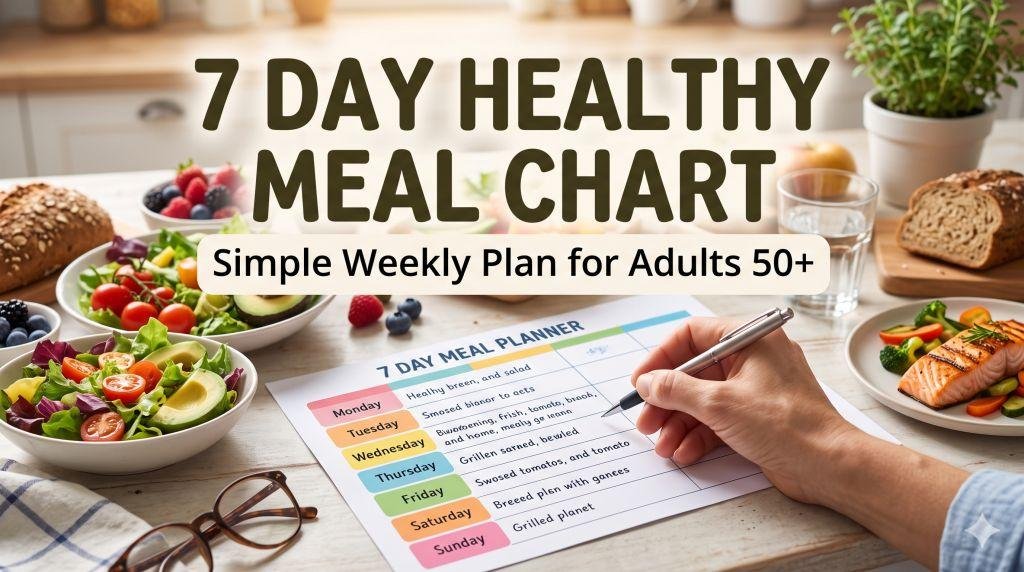
Eating well does not have to mean following a complicated diet or giving up the foods you enjoy. A simple 7 day healthy meal chart can make it easier to eat balanced meals, get enough protein and fiber, and include a wider variety of fruits and vegetables throughout the week.
For adults over 50, meal planning can be especially useful. Appetite, activity level, muscle mass, digestion, and nutritional needs can change with age. That makes the quality of your meals important, even when your overall calorie needs may be lower than they were when you were younger.
This seven-day plan focuses on familiar American foods such as oatmeal, eggs, Greek yogurt, salmon, chicken, beans, vegetables, fruit, whole grains, and nuts. Portions can be adjusted according to your appetite, activity level, health goals, and advice from your healthcare professional.
The goal is not perfection. It is to create a realistic eating pattern you could actually follow week after week.
Quick Answer: What Should a Healthy 7-Day Meal Plan Include?
A good 7 day healthy meal chart should include a variety of:
- Vegetables and fruits
- Protein foods such as fish, poultry, eggs, beans, lentils, and yogurt
- Whole grains such as oats, brown rice, and whole-wheat bread
- Calcium-rich foods or fortified alternatives
- Healthy fats from nuts, seeds, avocado, and olive oil
- Plenty of fluids
- Foods that are relatively low in added sugar, excess sodium, and saturated fat
The current U.S. Dietary Guidelines emphasize whole, nutrient-dense foods, including protein, vegetables, fruits, dairy or fortified alternatives, healthy fats, and whole grains, while encouraging people to reduce highly processed foods, added sugars, excess sodium, and unhealthy fats.
What Is a 7 Day Healthy Meal Chart?
A 7 day healthy meal chart is simply a weekly eating plan that shows what you could eat for breakfast, lunch, dinner, and snacks over seven days.
It does not need to be a strict diet.
Think of it as a roadmap that reduces the daily question, “What should I eat today?”
For adults over 50, a useful meal plan should emphasize nutrient density. That means getting plenty of vitamins, minerals, protein, fiber, and other nutrients without relying heavily on foods that provide lots of calories but relatively few nutrients.
The National Institute on Aging recommends eating a variety of fruits, vegetables, grains, protein foods, and dairy foods while paying attention to added sugar, saturated fat, and sodium.
A meal chart can also make grocery shopping easier and reduce the temptation to rely on fast food or highly processed convenience foods.
7 Day Healthy Meal Chart
| Day | Breakfast | Lunch | Dinner | Snack Ideas |
|---|---|---|---|---|
| Day 1 | Oatmeal with berries, walnuts and plain Greek yogurt | Grilled chicken salad with whole-grain bread | Baked salmon, roasted broccoli and brown rice | Apple + peanut butter |
| Day 2 | Scrambled eggs, whole-grain toast and orange | Lentil soup with side salad | Chicken, sweet potato and green beans | Plain yogurt + berries |
| Day 3 | Greek yogurt, berries, oats and chia seeds | Turkey and avocado whole-grain sandwich with vegetables | Bean and vegetable chili with brown rice | Handful of unsalted nuts |
| Day 4 | Vegetable omelet and whole-grain toast | Tuna and white-bean salad | Grilled chicken, quinoa and roasted vegetables | Pear + cottage cheese |
| Day 5 | Oatmeal with banana and walnuts | Chickpea and vegetable bowl | Baked salmon, sweet potato and spinach | Greek yogurt |
| Day 6 | Eggs, avocado and whole-grain toast | Chicken and vegetable soup with whole-grain crackers | Turkey meatballs, whole-wheat pasta and vegetables | Berries + nuts |
| Day 7 | Greek yogurt parfait with fruit and oats | Leftover salmon or chicken grain bowl | Bean and vegetable tacos with avocado | Apple or orange |
This chart is a general example, not an individualized prescription. Portion sizes should be adjusted according to your needs.
Day 1: Start With Protein, Fiber and Whole Grains
Breakfast
Oatmeal with berries, walnuts and plain Greek yogurt
Try:
- ½–1 cup cooked oatmeal
- Blueberries or strawberries
- A small handful of walnuts
- Plain Greek yogurt
Oats provide fiber, while Greek yogurt adds protein and calcium. Berries provide naturally occurring carbohydrates along with vitamins and plant compounds.
Lunch
Grilled chicken salad
Combine:
- Grilled chicken breast
- Mixed greens
- Tomatoes
- Cucumber
- Carrots
- Avocado
- Olive-oil-based dressing
- One slice of whole-grain bread
Dinner
Baked salmon with broccoli and brown rice
A simple plate could include:
- 3–5 ounces baked salmon
- Roasted or steamed broccoli
- ½–1 cup cooked brown rice
Salmon is a convenient source of protein and omega-3 fatty acids.
Snack
An apple with a small amount of peanut butter can provide a combination of carbohydrate, fiber, fat and protein.
Day 2: Make Fiber a Priority
Breakfast
Scrambled eggs with whole-grain toast and orange
Add spinach, mushrooms, tomatoes or peppers to the eggs for extra vegetables.
Lunch
Lentil soup with a side salad
Lentils provide both plant protein and fiber.
If using canned soup, check the Nutrition Facts label for sodium. Choosing a lower-sodium option can be helpful if you have been advised to reduce sodium.
Dinner
Chicken, sweet potato and green beans
Try:
- Roasted chicken
- One small sweet potato
- Steamed green beans
- A drizzle of olive oil
Sweet potatoes can provide fiber and potassium.
Snack
Plain yogurt topped with fresh berries is an easy alternative to many sweetened desserts.
Day 3: Keep Meals Simple
Breakfast
Greek yogurt breakfast bowl
Combine plain Greek yogurt with:
- Berries
- Oats
- Chia seeds
- A few chopped walnuts
Choose plain yogurt and add fruit yourself if you are trying to reduce added sugar.
Lunch
Turkey and avocado sandwich
Use:
- Whole-grain bread
- Lean turkey
- Avocado
- Lettuce
- Tomato
- Mustard
Serve with carrots, cucumber or another vegetable.
Dinner
Bean and vegetable chili
Use beans, tomatoes, onions, peppers and other vegetables.
You can serve it with a small portion of brown rice or a whole-grain side.
Beans are particularly useful in a healthy meal plan because they can contribute protein, fiber, folate, potassium and other nutrients.
Snack
A small handful of unsalted almonds or walnuts can be an easy snack when you want something filling.
Day 4: A Good Day for Eggs and Vegetables
Breakfast
Vegetable omelet with whole-grain toast
Fill the omelet with vegetables such as:
- Spinach
- Mushrooms
- Peppers
- Onions
- Tomatoes
Add a piece of whole-grain toast.
Lunch
Tuna and white-bean salad
Combine tuna, white beans, tomatoes, cucumber and leafy greens.
Use olive oil and lemon juice instead of a heavy creamy dressing.
Dinner
Grilled chicken with quinoa and roasted vegetables
Quinoa can provide protein and fiber while serving as an alternative to rice or pasta.
Use whatever vegetables are affordable and easy to prepare.
Snack
Try a pear with cottage cheese.
Day 5: Include Fish and Colorful Vegetables
Breakfast
Oatmeal with banana and walnuts
Add cinnamon for flavor rather than relying on sugar.
If you need more protein at breakfast, serve the oatmeal alongside plain Greek yogurt or an egg.
Lunch
Chickpea and vegetable bowl
Combine:
- Chickpeas
- Spinach or mixed greens
- Tomatoes
- Cucumber
- Carrots
- Brown rice or quinoa
- Olive oil and lemon
Dinner
Baked salmon with sweet potato and spinach
This meal combines protein, vegetables, fiber-rich carbohydrates and healthy fats.
Snack
Plain Greek yogurt with berries is an easy high-protein option.
Day 6: Use Familiar Family Foods
Breakfast
Eggs, avocado and whole-grain toast
Add tomatoes or fruit on the side.
Lunch
Chicken and vegetable soup
Use chicken, carrots, celery, onions and other vegetables.
Pair it with whole-grain crackers or a slice of whole-grain bread.
Dinner
Turkey meatballs with whole-wheat pasta
Serve with:
- Tomato-based sauce
- Steamed broccoli
- Green salad
Watch the portion of pasta rather than eliminating it completely.
Snack
Fresh berries and a few unsalted nuts make a simple afternoon snack.
Day 7: Keep Sunday Flexible
Breakfast
Greek yogurt parfait
Layer:
- Plain Greek yogurt
- Strawberries or blueberries
- Oats
- Chopped nuts
Lunch
Leftover chicken or salmon grain bowl
Using leftovers can save both money and preparation time.
Combine leftover protein with brown rice or quinoa and plenty of vegetables.
Dinner
Bean and vegetable tacos
Use:
- Black or pinto beans
- Corn or whole-grain tortillas
- Lettuce
- Tomatoes
- Peppers
- Avocado
- Salsa
Choose lower-sodium canned beans or rinse canned beans before using them.
Snack
An apple, orange or another piece of fruit can finish the day.
How to Build a Healthy Plate After 50
You do not have to follow the seven-day chart exactly.
Instead, learn the basic structure and build your own meals.
A useful approach is to make vegetables and fruit a major part of the meal, include a protein source, and choose a sensible portion of whole grains or another carbohydrate.
For example:
Half the meal: vegetables and/or fruit
About one-quarter: protein
About one-quarter: whole grains or another carbohydrate-rich food
The exact proportions do not have to be perfect at every meal.
The CDC recommends emphasizing vegetables, fruits, healthy protein foods, dairy without added sugars, healthy fats and whole grains while limiting added sugars, sodium and saturated fat.
Important Nutrients for Adults Over 50
A healthy meal plan is not simply about calories.
As you get older, certain nutrients deserve particular attention.
Protein
Protein helps maintain and repair body tissues and is especially important for maintaining muscle.
Good options include:
- Fish
- Chicken
- Turkey
- Eggs
- Greek yogurt
- Cottage cheese
- Beans
- Lentils
- Tofu
- Nuts and seeds
Try to include a meaningful protein source at most meals.
Fiber
Fiber supports digestive health and can help meals feel satisfying.
Good sources include:
- Oats
- Beans
- Lentils
- Berries
- Apples
- Vegetables
- Whole grains
- Nuts
- Seeds
If you currently eat very little fiber, increase it gradually and drink adequate fluids.
Calcium
Calcium is important for maintaining bones and teeth.
Sources include:
- Milk
- Yogurt
- Cheese
- Calcium-fortified plant beverages
- Some leafy greens
- Certain calcium-set tofu products
You can also read our related guide on calcium intake by age for more detailed information.
Vitamin D
Vitamin D helps the body absorb calcium and is important for bone health.
Food sources include fatty fish, egg yolks and fortified foods.
Some people may need supplementation, but supplementation should be based on individual circumstances rather than automatically assuming everyone needs a high-dose supplement.
Vitamin B12
Vitamin B12 deserves attention as people age because some older adults have difficulty absorbing enough from food.
Sources include:
- Fish
- Meat
- Eggs
- Milk
- Dairy products
- Fortified foods
People following vegetarian or vegan diets may need to pay particular attention to reliable B12 sources.
Potassium
Potassium is found in foods such as potatoes, beans, spinach, tomatoes, avocados, bananas and yogurt.
However, more potassium is not automatically better for everyone. People with kidney disease or those taking certain medications may need individualized potassium guidance.
Our potassium-rich foods chart can be useful when planning meals.
How a Healthy Meal Plan May Support Healthy Aging
A nutritious eating pattern can support several aspects of health, although no meal plan can guarantee a particular medical outcome.
1. Supports Muscle Maintenance
Protein provides amino acids needed for maintaining body tissues.
Combining adequate protein with resistance exercise is particularly useful for maintaining strength as you age.
2. Provides Fiber
Beans, vegetables, fruits and whole grains can increase fiber intake.
Fiber supports normal digestion and can contribute to a satisfying meal pattern.
3. Supports Heart Health
Replacing some highly processed foods, excessive saturated fat and high-sodium foods with vegetables, fruits, whole grains, fish, beans and unsalted nuts can fit into a heart-conscious eating pattern.
For more information about blood pressure readings, see our blood pressure chart for seniors.
4. Helps Make Meals More Nutrient-Dense
When appetite decreases with age, nutrient-dense foods become particularly useful.
A small meal containing eggs, vegetables and whole-grain toast can provide considerably more nutrition than a snack based mainly on refined carbohydrates.
5. Can Make Weight Management Easier
A structured meal plan can help reduce random snacking and frequent restaurant meals.
However, weight management is individual. Some older adults need to lose weight, while others may need to prevent unintended weight loss.
Foods to Eat More Often
A practical shopping list might include:
Protein Foods
- Salmon
- Tuna
- Sardines
- Chicken
- Turkey
- Eggs
- Greek yogurt
- Cottage cheese
- Beans
- Lentils
- Tofu
- Unsalted nuts and seeds
Vegetables
- Spinach
- Broccoli
- Carrots
- Tomatoes
- Bell peppers
- Green beans
- Sweet potatoes
- Cauliflower
- Mixed greens
Fruits
- Berries
- Apples
- Oranges
- Bananas
- Pears
- Peaches
Fresh is not required. Frozen fruits and vegetables can be convenient and nutritious options.
Whole Grains
- Oatmeal
- Brown rice
- Quinoa
- Whole-wheat pasta
- Whole-grain bread
- Barley
Foods to Limit
A healthy meal plan does not require banning particular foods.
Instead, consider limiting foods that are frequently high in added sugar, sodium, saturated fat or refined carbohydrates.
Examples include:
- Sugary drinks
- Candy
- Large desserts
- Highly processed snack foods
- Processed meats
- Frequent fast food
- Excessively salty packaged meals
- Refined baked goods
- Foods with large amounts of added sugar
The Dietary Guidelines for Americans 2025–2030 emphasize reducing highly processed foods, added sugars, excess sodium and unhealthy fats.
Common Mistakes When Following a 7-Day Meal Plan
Eating Too Little Protein
A breakfast consisting only of toast and coffee may not provide much protein.
Adding eggs, yogurt or another protein source can make the meal more balanced.
Making Every Meal Too Small
Some people become so focused on eating “healthy” that they unintentionally under-eat.
This can be a concern for older adults who already have a poor appetite.
Drinking Too Many Calories
Soda, sweet tea, sugary coffee drinks and frequent fruit juice can add substantial calories without providing the same fullness as whole foods.
Depending Too Much on Processed “Healthy” Foods
A package labeled “healthy” is not automatically a nutritious choice.
Read the Nutrition Facts label and ingredient list.
Forgetting Sodium
Soups, sauces, deli meats, canned foods and packaged meals can contain substantial amounts of sodium.
Look for lower-sodium options when appropriate.
Trying to Change Everything Overnight
A seven-day chart should be a starting point, not a test of willpower.
Changing two or three meals first may be more sustainable than completely rebuilding your diet in one weekend.
Simple Meal-Prep Tips for the Week
You do not need to spend your entire Sunday cooking.
Try preparing a few basics:
- Cook a batch of brown rice or quinoa.
- Roast a large tray of vegetables.
- Hard-boil several eggs.
- Wash and portion fruit.
- Cook chicken or another lean protein.
- Keep canned beans available for quick meals.
- Portion nuts into small containers.
- Keep plain Greek yogurt in the refrigerator.
- Freeze extra portions of soups or cooked meals.
- Keep healthy emergency meals available for busy days.
The CDC notes that planning meals at home can make it easier to choose nutritious foods and may help reduce reliance on drive-through meals.
Real-Life Example: A Simple Day for Someone Over 50
Imagine a 62-year-old who works part-time and does not want to spend hours cooking.
A realistic day could look like this:
7:30 a.m. — Breakfast
Oatmeal with blueberries, walnuts and Greek yogurt.
12:30 p.m. — Lunch
Chicken salad with mixed greens, tomatoes, avocado and whole-grain bread.
3:30 p.m. — Snack
An apple with a small amount of peanut butter.
6:30 p.m. — Dinner
Baked salmon, roasted vegetables and brown rice.
Throughout the day
Water and other appropriate unsweetened beverages.
This is not the only healthy combination. The important part is the overall pattern: protein, vegetables, fruit, whole grains, healthy fats and appropriate portions.
Common Myths About Healthy Meal Plans
Myth: You have to eliminate carbohydrates after 50.
Fact: Carbohydrates can be part of a healthy diet. Whole grains, beans, fruit and vegetables provide carbohydrates along with important nutrients and, in many cases, fiber.
Myth: Older adults should eat very little food.
Fact: Calorie needs vary considerably. Eating too little can make it difficult to obtain adequate protein, vitamins and minerals.
Myth: Healthy food has to be expensive.
Fact: Foods such as oats, beans, lentils, eggs, frozen vegetables and canned fish can be relatively affordable.
Myth: Fresh vegetables are always healthier than frozen vegetables.
Fact: Frozen vegetables can be a convenient nutritious option, particularly when they do not contain large amounts of added sodium or sauces.
Myth: You need supplements to have a healthy diet.
Fact: Supplements can be useful in certain situations, but they do not replace a varied diet. Whether a supplement is appropriate depends on individual needs.
Myth: Eating healthy means never eating dessert.
Fact: A healthy eating pattern can include occasional treats. Frequency and portion size matter more than trying to achieve dietary perfection.
Myth: One “superfood” can make up for an unhealthy diet.
Fact: Overall eating patterns matter much more than any single food.
Who Should Be More Careful With a Generic Meal Plan?
A general seven-day chart cannot account for every medical condition or medication.
Talk with a healthcare professional or registered dietitian before making major dietary changes if you have:
- Diabetes or frequent blood sugar problems
- Kidney disease
- Heart failure
- Significant liver disease
- Difficulty swallowing
- Unintentional weight loss
- A diagnosed nutritional deficiency
- A history of an eating disorder
- Food allergies or significant intolerances
- A medically prescribed diet
People taking medications that affect potassium, sodium, blood sugar, or fluid balance may also need individualized dietary advice.
For readers monitoring blood sugar, our blood glucose level chart provides additional background on how different glucose measurements are interpreted.
How to Get Started With This 7 Day Healthy Meal Chart
You do not have to follow the chart perfectly.
Step 1: Choose three breakfasts
Pick three breakfasts you genuinely enjoy.
For example:
- Oatmeal and berries
- Eggs and whole-grain toast
- Greek yogurt and fruit
Rotate them throughout the week.
Step 2: Prepare two proteins
Cook chicken and salmon, for example.
Beans and eggs can provide additional options.
Step 3: Buy five vegetables
Choose vegetables you will actually eat.
Frozen vegetables are perfectly reasonable when convenience matters.
Step 4: Keep fruit visible
Put apples, oranges or bananas somewhere easy to see.
Step 5: Plan one healthy snack
Greek yogurt, fruit, nuts or cottage cheese can prevent you from automatically reaching for highly processed snacks.
Step 6: Make dinner produce-heavy
Instead of asking, “What meat am I eating tonight?” ask, “What vegetables will be on my plate?”
Step 7: Adjust portions
A meal plan should fit your body and lifestyle, not the other way around.
Frequently Asked Questions
1. What is the best 7 day healthy meal chart for adults over 50?
The best plan is one that provides a variety of vegetables, fruits, protein foods, whole grains, healthy fats and appropriate calcium-rich foods while fitting your calorie needs and health conditions.
2. Can I follow this meal plan every week?
Yes, you can use the basic structure repeatedly, but variety is helpful. Change vegetables, fruits, protein sources and whole grains from week to week.
3. What should I eat for breakfast after 50?
Good choices include oatmeal with fruit and nuts, eggs with vegetables and whole-grain toast, or plain Greek yogurt with fruit and oats.
4. How much protein should adults over 50 eat?
Protein needs vary according to body size, activity level, health status and other factors. Rather than focusing only on a single daily number, try to include protein-rich foods regularly throughout the day.
5. Is oatmeal a healthy breakfast for older adults?
Yes. Oatmeal can be a nutritious choice because oats provide carbohydrates and fiber. Add protein such as Greek yogurt, milk, nuts or eggs to make breakfast more balanced.
6. What are good snacks for adults over 50?
Fruit with nuts or peanut butter, plain Greek yogurt with berries, cottage cheese with fruit, or vegetables with hummus are practical choices.
7. Can this meal plan help with weight loss?
It can provide a nutritious structure that may make weight management easier, but weight loss depends on overall calorie intake, activity, health conditions, medications and other factors.
8. Is this meal plan suitable for people with diabetes?
Some foods in the plan can fit into a diabetes-friendly eating pattern, but portions and carbohydrate distribution may need adjustment. People with diabetes should follow individualized advice from their healthcare team.
9. What should I drink with meals?
Water is a simple default choice. Unsweetened beverages can also fit into a healthy eating pattern.
People with certain heart, kidney or other medical conditions may have specific fluid recommendations.
10. Are potatoes healthy for adults over 50?
Potatoes can be part of a healthy diet. Preparation matters. Baked or roasted potatoes are generally different nutritionally from heavily salted or deep-fried versions.
11. Should older adults avoid bread?
No. Whole-grain bread can provide fiber and nutrients. Look at the Nutrition Facts label and choose a product that fits your overall diet.
12. Are canned beans healthy?
Yes. Canned beans can be a convenient source of protein and fiber. If sodium is a concern, choose lower-sodium varieties or rinse canned beans before eating.
13. What if I have a small appetite?
Focus on nutrient-dense foods rather than simply trying to eat large meals. Smaller meals containing protein, vegetables, healthy fats and whole grains may be easier to manage.
Persistent loss of appetite or unexplained weight loss deserves medical attention.
14. Can I eat dessert while following a healthy meal plan?
Yes. An occasional dessert can fit into an overall healthy eating pattern. The key is to keep highly sugary foods from becoming the main part of your daily diet.
15. Is a 7 day healthy meal chart enough to improve my health?
A meal plan is only one part of healthy aging. Regular physical activity, adequate sleep, not smoking, appropriate preventive care, stress management and taking prescribed medications correctly also matter.
Final Takeaway
A 7 day healthy meal chart does not need to be restrictive, expensive or complicated.
For adults over 50, focus on a repeatable pattern: include protein at meals, eat a variety of vegetables and fruits, choose whole grains and other high-fiber foods, include healthy fats, and keep added sugar, excess sodium and highly processed foods in check.
You also do not need to eat perfectly every day.
If one meal is heavier than planned, simply return to your normal routine at the next meal. Long-term consistency matters much more than getting every meal exactly right.
For more healthy-aging nutrition ideas, see EverAgeWell’s guide to 10 foods to eat after 50.
Medical Disclaimer
This article is provided for general educational and informational purposes only. It is not a substitute for individualized medical advice, diagnosis, or treatment. If you have a medical condition, take prescription medications, have specific dietary restrictions, or are experiencing unexplained weight loss or appetite changes, talk with your doctor or a qualified registered dietitian before making significant changes to your diet.
Trusted Sources
- U.S. Dietary Guidelines for Americans, 2025–2030
- CDC — Healthy Eating and Nutrition
- National Institute on Aging — Healthy Eating as You Age
- USDA MyPlate — Healthy Eating for Older Adults
Written by
Kanhaiya Solanki is a dedicated online researcher, content writer, and blogger passionate about publishing high-quality, research-based articles. His goal is to provide accurate, easy-to-understand, and practical information on health, technology, senior care, and lifestyle topics for readers worldwide.