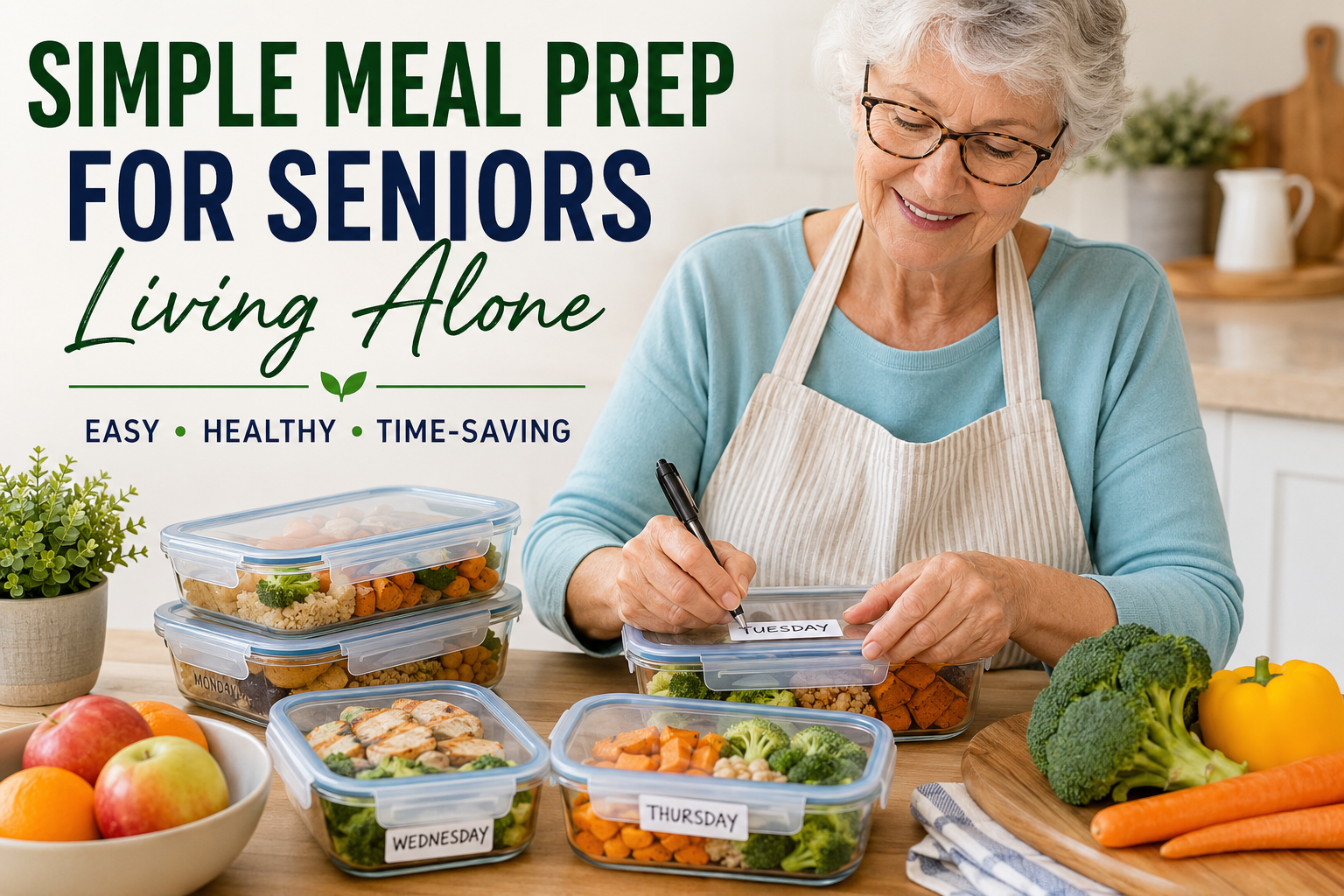
Simple meal prep for seniors living alone can make everyday life easier, healthier, and less stressful. Cooking for one often feels challenging. Many older adults find themselves buying groceries that go unused, spending too much time in the kitchen, or relying on processed convenience foods.
The good news is that meal preparation does not need to be complicated. With a few smart strategies, seniors can enjoy nutritious homemade meals without spending hours cooking every day.
Whether you’re a retiree looking to simplify your routine or helping an aging parent maintain healthy eating habits, this guide covers everything you need to know about simple meal prep for seniors living alone.
Why Simple Meal Prep for Seniors Living Alone Matters
Many seniors live independently and enjoy the freedom that comes with it. However, preparing healthy meals every day can become tiring.
Cooking for one often leads to:
- Skipping meals
- Eating less variety
- Choosing convenience foods
- Wasting groceries
- Missing important nutrients
Simple meal prep for seniors living alone helps solve these problems by preparing food ahead of time. Instead of cooking daily, meals can be planned and prepared once or twice a week.
This approach saves energy, reduces stress, and encourages healthier eating habits.
Common Challenges of Cooking for One
Smaller Appetites
Many older adults naturally eat less than they did in their younger years. This can make it difficult to consume enough nutrients.
Limited Energy
Standing in the kitchen for long periods may become tiring.
Grocery Waste
Buying family-sized packages often results in spoiled food before it can be used.
Budget Concerns
Living on a fixed income can make food planning important.
Loss of Motivation
Some people simply don’t enjoy cooking when they are the only person eating.
Meal prep addresses many of these challenges by making healthy eating more convenient.
Benefits of Simple Meal Prep for Seniors Living Alone
Saves Time
Preparing meals in batches reduces daily cooking.
Supports Better Nutrition
Having healthy food ready makes nutritious choices easier.
Reduces Food Waste
Ingredients are used more efficiently.
Saves Money
Planning meals helps reduce impulse purchases.
Improves Independence
Seniors can maintain control over their nutrition and schedule.
Reduces Stress
Knowing meals are already prepared removes daily decision-making pressure.
Understanding Senior Nutrition Needs
Healthy aging requires proper nutrition.
Protein
Protein helps maintain muscle strength.
Good sources include:
- Eggs
- Chicken
- Turkey
- Fish
- Greek yogurt
- Cottage cheese
- Beans
- Lentils
Fiber
Fiber supports digestive health.
Sources include:
- Oatmeal
- Whole grains
- Fruits
- Vegetables
- Beans
Calcium
Calcium helps support bone health.
Sources include:
- Milk
- Yogurt
- Cheese
- Fortified plant milk
Healthy Fats
Healthy fats support heart and brain health.
Sources include:
- Avocados
- Nuts
- Seeds
- Olive oil
- Fatty fish
Hydration
Many seniors do not feel thirsty as often.
Good options include:
- Water
- Herbal tea
- Low-sodium soups
- Milk
Practical Explanation: Why Meal Prep Works
Meal prep works because it removes barriers to healthy eating.
Imagine preparing grilled chicken, roasted vegetables, and brown rice on Sunday afternoon. Instead of cooking every evening, you simply combine portions throughout the week.
The result:
- Less effort
- Faster meals
- Better nutrition
- Fewer unhealthy choices
This method is especially helpful for seniors who may experience fatigue, mobility challenges, or limited cooking interest.
Essential Meal Prep Tools
You do not need expensive equipment.
Helpful Tools
| Tool | Benefit |
|---|---|
| Slow cooker | Easy hands-off cooking |
| Rice cooker | Consistent grains |
| Sheet pans | Simple roasting |
| Food storage containers | Portion control |
| Measuring cups | Easy serving sizes |
| Sharp knife | Safer food preparation |
| Freezer bags | Longer food storage |
How to Start Simple Meal Prep for Seniors Living Alone
Step 1: Choose Easy Recipes
Start with meals requiring only a few ingredients.
Step 2: Plan for Three to Five Days
Avoid preparing too much food initially.
Step 3: Shop with a List
Buying only needed ingredients reduces waste.
Step 4: Cook in Batches
Prepare proteins, vegetables, and grains together.
Step 5: Portion Meals
Store meals in individual containers.
Step 6: Freeze Extras
This creates a backup meal supply.
15 Simple Meal Prep Ideas for Seniors Living Alone
1. Overnight Oats
Mix:
- Oats
- Milk
- Berries
- Chia seeds
Store in jars for quick breakfasts.
2. Egg Muffins
Combine:
- Eggs
- Spinach
- Cheese
Bake in muffin tins and refrigerate.
3. Chicken and Vegetables
Bake chicken breasts with mixed vegetables.
Portion into containers.
4. Turkey Chili
A large pot can provide several meals.
5. Vegetable Soup
Easy to freeze and reheat.
6. Tuna Salad Cups
Prepare tuna salad and portion for lunches.
7. Greek Yogurt Parfaits
Layer:
- Yogurt
- Fruit
- Granola
8. Slow Cooker Chicken
Cook once and use throughout the week.
9. Brown Rice Bowls
Add:
- Rice
- Vegetables
- Protein
10. Baked Salmon
Prepare several portions at once.
11. Bean and Vegetable Stew
Affordable and nutrient-rich.
12. Cottage Cheese Snack Boxes
Pair with fruit and nuts.
13. Whole Wheat Pasta
Prepare pasta and divide into portions.
14. Roasted Sweet Potatoes
Store for easy side dishes.
15. Frozen Smoothie Packs
Prepare ingredients in freezer bags for quick blending.
One-Week Sample Meal Prep Plan
Monday
Breakfast: Overnight oats
Lunch: Chicken and vegetables
Dinner: Turkey chili
Tuesday
Breakfast: Egg muffins
Lunch: Tuna salad
Dinner: Salmon and sweet potatoes
Wednesday
Breakfast: Greek yogurt parfait
Lunch: Vegetable soup
Dinner: Rice bowl
Thursday
Breakfast: Overnight oats
Lunch: Turkey chili
Dinner: Slow cooker chicken
Friday
Breakfast: Egg muffins
Lunch: Cottage cheese snack box
Dinner: Pasta with vegetables
Saturday
Breakfast: Smoothie
Lunch: Vegetable soup
Dinner: Chicken bowl
Sunday
Breakfast: Oatmeal
Lunch: Salad with protein
Dinner: Meal prep day leftovers
Best Foods for Simple Meal Prep for Seniors Living Alone
Proteins
- Eggs
- Chicken
- Fish
- Turkey
- Beans
- Lentils
Fruits
- Apples
- Bananas
- Berries
- Oranges
Vegetables
- Carrots
- Spinach
- Broccoli
- Green beans
Whole Grains
- Oatmeal
- Brown rice
- Whole wheat bread
- Quinoa
Healthy Snacks
- Nuts
- Yogurt
- Cottage cheese
- Fresh fruit
Budget-Friendly Meal Prep Tips
Buy Frozen Vegetables
Frozen produce often costs less and lasts longer.
Use Store Brands
Many store-brand products offer similar quality at lower prices.
Cook Larger Batches
Batch cooking reduces cost per serving.
Choose Seasonal Produce
Seasonal fruits and vegetables are often more affordable.
Freeze Leftovers
Prevent food waste by freezing extra portions.
Compare Unit Prices
Check shelf labels to identify better values.
What Are the Safest Food Storage Practices?
Food safety is especially important for older adults.
Refrigerator Guidelines
Store cooked foods within two hours.
Use Clear Labels
Mark containers with preparation dates.
Follow the Four-Day Rule
Most prepared meals should be eaten within four days.
Freeze Extra Portions
Freezing extends storage life.
Reheat Thoroughly
Ensure foods are heated completely before eating.
According to guidance from the U.S. Department of Agriculture Food Safety and Inspection Service, proper refrigeration and reheating help reduce foodborne illness risk.
Common Mistakes to Avoid
Preparing Too Much Food
Start small and increase gradually.
Ignoring Protein Intake
Protein becomes increasingly important with age.
Buying Excess Produce
Purchase realistic quantities.
Using Large Containers
Individual portions make meals easier to manage.
Forgetting Hydration
Water intake remains important even during meal planning.
Skipping Variety
Rotate foods to prevent boredom and improve nutrition.
Who Should Be Careful?
Meal prep is generally safe for most seniors, but some individuals should seek personalized guidance.
Examples include:
- People with kidney disease
- Individuals managing diabetes
- Those following low-sodium diets
- Seniors with swallowing difficulties
- Individuals with food allergies
A healthcare provider or registered dietitian can offer personalized recommendations.
Disclaimer
This article is intended for educational purposes only and should not replace professional medical advice. Nutrition needs vary from person to person. Consult your healthcare provider before making significant dietary changes.
Frequently Asked Questions
What is the easiest meal prep method for seniors?
Batch cooking proteins, vegetables, and grains once or twice weekly is often the simplest approach.
How many days should meal-prepped food last?
Most refrigerated meals remain safe for about three to four days when stored properly.
Can seniors freeze meal-prepped food?
Yes. Freezing meals can extend storage time and reduce waste.
What are the healthiest breakfast options for seniors?
Overnight oats, egg muffins, Greek yogurt parfaits, and oatmeal are popular choices.
How can seniors save money on meal prep?
Buying frozen vegetables, cooking in batches, and planning meals before shopping can significantly reduce costs.
Is meal prep safe for seniors with diabetes?
Many meal prep strategies can support blood sugar management, but individualized meal plans should come from healthcare professionals.
What foods should seniors always keep available?
Protein-rich foods, fruits, vegetables, whole grains, and healthy snacks are excellent staples.
Final Thoughts
Simple meal prep for seniors living alone is one of the easiest ways to support healthy eating, save time, reduce food waste, and maintain independence. The process does not require complicated recipes or expensive kitchen equipment. Small steps, such as preparing breakfast ahead of time or cooking extra portions for future meals, can make a meaningful difference.
The key is consistency rather than perfection. Start with a few simple recipes, build a routine that fits your lifestyle, and focus on creating meals that are both nutritious and enjoyable. Over time, meal prep can become a valuable habit that supports healthier aging and makes everyday life easier.
Also Read –
Best Indoor Walking Alternatives for Seniors: 15 Easy Ways to Stay Active at Home
Easy Home Exercises for Seniors With Bad Knees: 15 Safe Ways to Stay Active