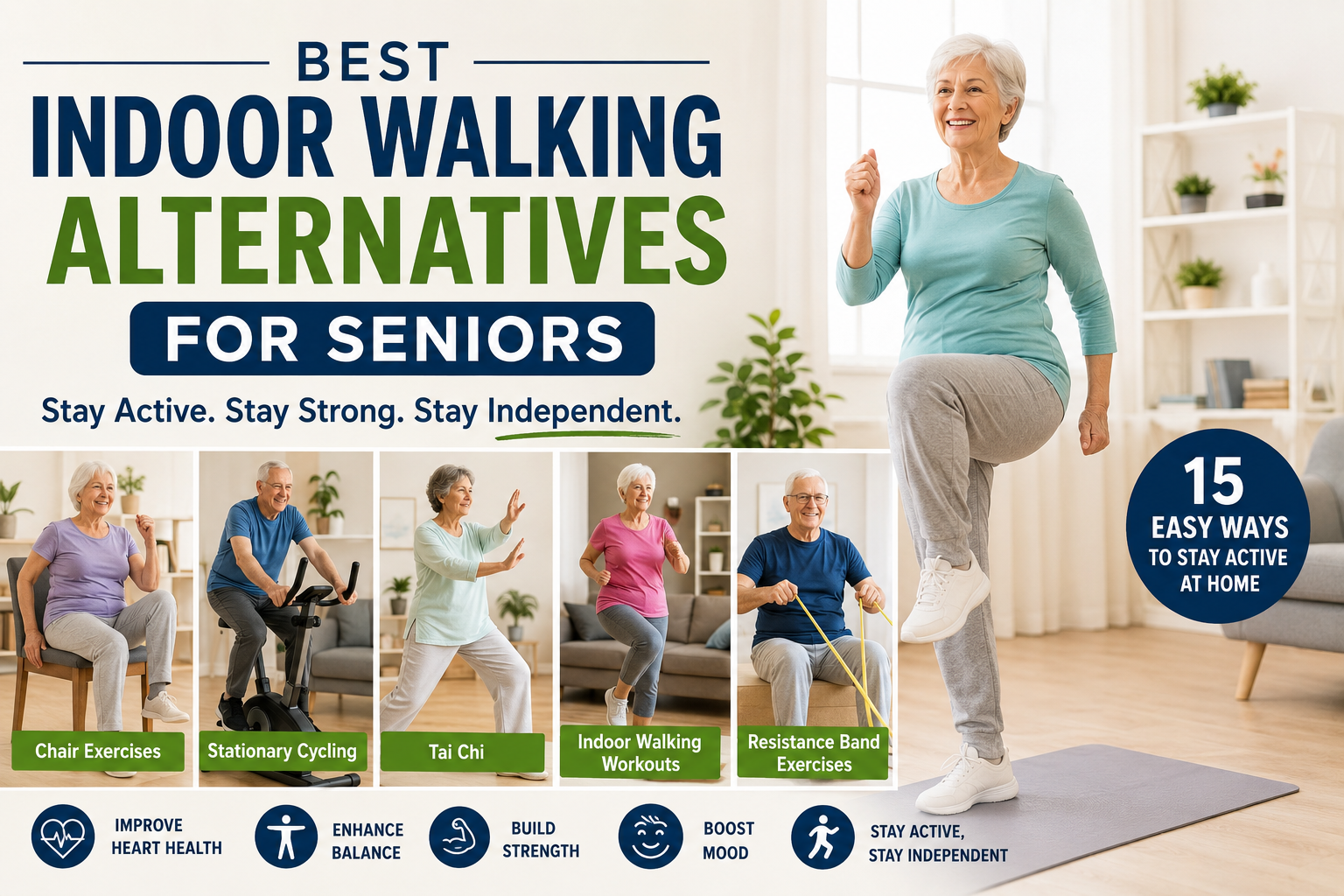
Finding the best indoor walking alternatives for seniors has become more important than ever. While walking is one of the simplest and most effective forms of exercise, there are many situations when heading outside is not practical. Bad weather, extreme heat, icy sidewalks, mobility limitations, joint pain, or safety concerns can make regular outdoor walks difficult.
The good news is that staying active does not require a long walk around the neighborhood. There are many indoor activities that can provide similar benefits while being easier on the body and more convenient to perform at home.
Whether you’re looking to improve cardiovascular health, maintain mobility, strengthen muscles, or simply stay active during the winter months, indoor walking alternatives can help you keep moving safely and comfortably.
In this guide, we’ll explore the best indoor walking alternatives for seniors, how they work, and how to choose the right option for your fitness level and health needs.
Why This Topic Matters
As we age, staying physically active becomes increasingly important. Regular movement helps support:
- Heart health
- Joint flexibility
- Muscle strength
- Balance and coordination
- Healthy weight management
- Mental well-being
- Independence in daily life
Unfortunately, many older adults become less active because outdoor walking isn’t always possible.
According to recommendations from major health organizations, older adults benefit from regular physical activity throughout the week. Even moderate movement can make a meaningful difference in overall health and quality of life.
That’s why finding effective indoor alternatives matters. These activities allow seniors to continue exercising regardless of weather, transportation challenges, or physical limitations.
Benefits of Indoor Exercise for Seniors
Before discussing specific activities, it’s helpful to understand why indoor exercise can be such a valuable option.
Better Consistency
One of the biggest advantages is consistency. Rain, snow, extreme temperatures, or poor air quality won’t interfere with your routine.
Reduced Fall Risk
Outdoor surfaces can be uneven, slippery, or poorly maintained. Indoor environments are generally easier to control and make safer.
Convenient and Accessible
Many indoor exercises require little or no equipment and can be done right in the living room.
Easier on the Joints
Certain indoor activities provide low-impact movement that may be more comfortable for seniors dealing with knee, hip, or ankle discomfort.
Supports Mental Health
Regular movement helps improve mood, reduce stress, and maintain cognitive function.
How Indoor Walking Alternatives Compare to Walking
Walking provides several benefits:
| Benefit | Walking | Indoor Alternatives |
|---|---|---|
| Cardiovascular Fitness | Excellent | Excellent |
| Joint Mobility | Good | Good to Excellent |
| Balance Training | Moderate | Good to Excellent |
| Muscle Strength | Moderate | Good |
| Convenience | Weather Dependent | Excellent |
| Fall Risk Control | Variable | Better |
Many indoor exercises offer similar cardiovascular benefits while adding strength and balance training that traditional walking may not provide.
15 Best Indoor Walking Alternatives for Seniors
1. Marching in Place
Marching in place is one of the closest indoor walking alternatives available.
Simply stand upright and lift your knees one at a time while swinging your arms naturally.
Benefits include:
- Improved circulation
- Elevated heart rate
- Better coordination
- Minimal equipment required
Beginners can start with five minutes and gradually increase duration.
2. Indoor Walking Workout Videos
Many seniors enjoy guided indoor walking programs available online.
These workouts mimic walking movements while incorporating:
- Side steps
- Arm movements
- Knee lifts
- Gentle cardio exercises
Benefits include:
- Structured routines
- Easy-to-follow instruction
- Adjustable intensity levels
- Home convenience
These programs are particularly helpful for individuals who enjoy having guidance and motivation.
3. Chair Marching Exercises
For seniors with balance concerns, chair marching can be an excellent choice.
Sit in a sturdy chair and alternate lifting your knees.
This activity helps:
- Increase circulation
- Strengthen hip muscles
- Improve mobility
- Reduce sedentary time
Chair-based exercises provide a safer option for individuals recovering from illness or dealing with limited mobility.
4. Stationary Cycling
A stationary bike offers a low-impact cardiovascular workout that is gentle on the joints.
Benefits include:
- Improved heart health
- Leg strengthening
- Reduced joint stress
- Better endurance
Recumbent bikes can be especially comfortable for older adults who need additional back support.
5. Seated Aerobics
Seated aerobics combines rhythmic movements with the security of sitting down.
Typical exercises include:
- Arm raises
- Leg lifts
- Seated marching
- Gentle twists
These movements help increase heart rate while reducing fall risk.
6. Tai Chi
Tai Chi is often described as meditation in motion.
This ancient exercise focuses on:
- Slow controlled movements
- Deep breathing
- Balance improvement
- Flexibility
Research has consistently shown that Tai Chi can support balance and may help reduce fall risk in older adults.
7. Dancing at Home
Dancing is one of the most enjoyable indoor walking alternatives for seniors.
Favorite music can transform exercise into a fun daily activity.
Benefits include:
- Improved cardiovascular fitness
- Better coordination
- Increased flexibility
- Enhanced mood
Even ten to fifteen minutes of dancing can provide meaningful movement.
8. Step Touch Exercises
Step touch exercises involve stepping side-to-side while maintaining a comfortable rhythm.
This simple movement helps:
- Improve coordination
- Increase activity levels
- Strengthen lower-body muscles
- Promote balance
The exercise can be modified to suit nearly any fitness level.
9. Resistance Band Walking Movements
Resistance bands add light strength training to walking-style motions.
Benefits include:
- Muscle strengthening
- Improved mobility
- Better stability
- Enhanced functional fitness
Because resistance bands are lightweight and affordable, they’re a popular option for home workouts.
10. Stair Climbing
For seniors who can safely use stairs, stair climbing offers a highly effective indoor workout.
Advantages include:
- Increased leg strength
- Improved endurance
- Enhanced cardiovascular health
- Better balance
Safety should always come first. Use handrails and avoid rushing.
Scientific and Practical Explanation: Why These Alternatives Work
Many people assume that walking itself is the only important factor. In reality, the health benefits come from several components:
- Continuous movement
- Elevated heart rate
- Muscle engagement
- Joint mobility
- Balance challenges
Indoor walking alternatives often provide these same elements.
For example:
- Marching in place mimics walking mechanics.
- Cycling improves cardiovascular endurance.
- Tai Chi enhances balance and mobility.
- Dancing combines aerobic activity with coordination training.
When performed regularly, these activities can help seniors maintain physical function and overall wellness.
How Often Should Seniors Exercise Indoors?
The ideal amount varies based on health status and fitness level.
A practical starting point may include:
| Day | Activity |
|---|---|
| Monday | Indoor walking workout |
| Tuesday | Tai Chi |
| Wednesday | Marching in place |
| Thursday | Resistance band exercises |
| Friday | Dancing |
| Saturday | Stationary cycling |
| Sunday | Gentle stretching |
Consistency matters more than perfection.
Even short sessions can contribute to better health over time.
Tips for Getting Started Safely
If you’re new to indoor exercise, keep these tips in mind:
Start Small
Begin with 5 to 10 minutes per session.
Gradually increase time as endurance improves.
Wear Supportive Shoes
Good footwear can help reduce stress on joints and improve stability.
Stay Hydrated
Drink water before and after exercise, even when indoors.
Clear Your Space
Remove loose rugs, cords, and clutter to reduce fall risks.
Listen to Your Body
Mild fatigue is normal, but pain, dizziness, or unusual symptoms should not be ignored.
Consider Medical Advice
Individuals with chronic conditions should consult a healthcare professional before starting a new exercise program.
Can Indoor Exercise Really Replace Walking?
In many cases, yes.
While outdoor walking offers fresh air and scenery, indoor alternatives can provide many of the same physical benefits.
The key is choosing activities that:
- Raise your heart rate
- Encourage regular movement
- Challenge balance appropriately
- Strengthen muscles
- Fit comfortably into your lifestyle
For many seniors, a combination of indoor activities may actually provide more comprehensive fitness benefits than walking alone.
Disclaimer: This article is for educational purposes only and does not constitute medical advice. Always consult a qualified healthcare professional regarding exercise recommendations specific to your health condition.
11. Low-Impact Aerobic Routines
Low-impact aerobics can be an excellent substitute for traditional walking. These routines keep at least one foot on the ground while moving, which reduces stress on the joints.
Common movements include:
- Side steps
- Heel taps
- Knee lifts
- Arm circles
- Gentle toe touches
Benefits include:
- Improved heart health
- Better stamina
- Increased calorie burn
- Enhanced coordination
Many seniors enjoy following beginner-friendly aerobic classes online because the instructor demonstrates proper form and pacing.
12. Mini Stepper Machines
A mini stepper is a compact exercise device that simulates stair climbing.
Why seniors like it:
- Takes up little space
- Easy to store
- Provides cardiovascular exercise
- Strengthens leg muscles
For beginners, even five to ten minutes can be challenging enough to improve endurance over time.
Always use a sturdy support nearby if balance is a concern.
13. Water-Based Exercise (Indoor Pools)
If access to an indoor community pool is available, water exercise is one of the best indoor walking alternatives for seniors.
Water naturally supports body weight, reducing pressure on joints.
Benefits include:
- Less stress on knees and hips
- Improved flexibility
- Better cardiovascular fitness
- Reduced risk of impact injuries
Many community centers and fitness facilities offer senior-friendly aquatic exercise classes.
14. Balance and Mobility Circuits
Balance-focused exercises may not seem like a walking replacement at first, but they support many of the same physical functions.
Examples include:
- Standing on one foot
- Heel-to-toe walking indoors
- Side leg raises
- Controlled weight shifting
- Gentle squats
These movements help seniors maintain stability and confidence during daily activities.
Improving balance can be just as important as improving endurance.
15. Light Strength Training
Walking primarily works the lower body. Strength training can complement or replace some of those benefits.
Simple exercises include:
- Chair squats
- Wall push-ups
- Seated leg extensions
- Bicep curls
- Resistance band rows
Benefits include:
- Preserving muscle mass
- Supporting bone health
- Improving mobility
- Making everyday tasks easier
Strong muscles help seniors stay independent longer.
Which Indoor Walking Alternatives Are Best for Different Mobility Levels?
Not every senior has the same fitness level. Choosing activities that match your abilities is important.
| Mobility Level | Recommended Activities |
|---|---|
| Limited Mobility | Chair marching, seated aerobics, resistance bands |
| Moderate Mobility | Indoor walking videos, Tai Chi, dancing |
| Active Seniors | Stair climbing, mini stepper, cycling |
| Joint Concerns | Water exercise, cycling, Tai Chi |
| Balance Concerns | Chair exercises, seated aerobics, supported marching |
This personalized approach helps ensure exercise remains both safe and effective.
Creating a Weekly Indoor Activity Plan
One common mistake is doing the same exercise every day.
Variety keeps workouts interesting and challenges different muscle groups.
Sample Weekly Plan
Monday
- Marching in place
- Light stretching
Tuesday
- Chair exercises
- Resistance band workout
Wednesday
- Indoor walking workout video
Thursday
- Tai Chi session
Friday
- Dancing at home
Saturday
- Stationary cycling
Sunday
- Gentle mobility and recovery exercises
Rotating activities can help reduce boredom while promoting overall fitness.
Best Practices for Staying Motivated
Many seniors start exercising with good intentions but struggle to stay consistent.
Here are some practical strategies that help.
Set Small Goals
Instead of aiming for an hour of exercise immediately, focus on:
- 10 minutes daily
- Three workouts per week
- One additional activity session each week
Small victories build momentum.
Track Progress
Keeping a simple notebook can help.
Record:
- Exercise type
- Duration
- How you felt afterward
Many people are surprised by how quickly they improve.
Exercise With Friends
Virtual classes, community programs, or family members can make exercise more enjoyable.
Accountability often improves consistency.
Make It Enjoyable
Choose activities you genuinely like.
If dancing feels fun, dance.
If cycling feels comfortable, cycle.
The best exercise is the one you’ll continue doing.
Common Mistakes to Avoid
When exploring the best indoor walking alternatives for seniors, avoid these common errors.
Doing Too Much Too Soon
Many people become enthusiastic and push themselves too hard during the first week.
This can lead to:
- Excessive soreness
- Fatigue
- Frustration
Gradual progress is more sustainable.
Ignoring Warm-Ups
A few minutes of gentle movement before exercise can help prepare muscles and joints.
Simple warm-ups include:
- Shoulder rolls
- Marching slowly
- Gentle stretches
Skipping Strength Training
Cardio is important, but strength training helps maintain muscle mass and supports healthy aging.
Combining both produces better results.
Poor Posture
Many seniors unknowingly lean forward or look down during exercise.
Good posture improves breathing and reduces strain.
Try to:
- Keep shoulders relaxed
- Look forward
- Engage core muscles gently
Not Drinking Enough Water
Hydration remains important even during indoor activities.
Older adults sometimes experience a reduced sense of thirst, making conscious hydration especially important.
Comparing Yourself to Others
Every senior has a unique fitness journey.
Focus on personal improvement rather than matching someone else’s abilities.
Who Should Be Careful?
Although indoor exercise is generally safe, certain individuals should take extra precautions.
These include people with:
- Recent surgeries
- Severe balance disorders
- Uncontrolled heart conditions
- Significant breathing difficulties
- Recent injuries
- Advanced arthritis flare-ups
In these situations, guidance from a healthcare provider or physical therapist may be helpful.
Frequently Asked Questions
What is the best indoor walking alternative for seniors?
Marching in place is often considered one of the closest alternatives because it closely mimics natural walking movements while requiring no equipment.
Can indoor exercises improve cardiovascular health?
Yes. Activities such as dancing, cycling, indoor walking workouts, and low-impact aerobics can help support cardiovascular fitness when performed regularly.
How long should seniors exercise each day?
Many health experts recommend regular physical activity throughout the week. Even 15 to 30 minutes of movement daily can provide meaningful benefits for many older adults.
Are indoor exercises safe for seniors with knee pain?
Many low-impact activities such as stationary cycling, Tai Chi, chair exercises, and water workouts may be more comfortable than traditional walking for people with knee discomfort.
Can indoor exercise help with balance?
Yes. Tai Chi, balance drills, and mobility exercises can help improve coordination and stability.
Is dancing good exercise for seniors?
Absolutely. Dancing combines cardiovascular activity, coordination training, and enjoyment, making it an excellent choice for many older adults.
Do seniors need special equipment?
Not necessarily. Many effective exercises require no equipment at all. A sturdy chair and comfortable shoes are often enough to get started.
Can indoor workouts help with weight management?
When combined with healthy eating habits, regular physical activity can support healthy weight management goals.
How can seniors stay motivated to exercise indoors?
Creating a schedule, tracking progress, choosing enjoyable activities, and exercising with friends or family members can help maintain motivation.
Is it okay to exercise every day?
For many healthy seniors, some form of daily movement is beneficial. However, exercise intensity should vary, and adequate recovery is important.
Final Thoughts
Finding the best indoor walking alternatives for seniors is not about replacing walking completely. It is about ensuring that movement remains a regular part of life regardless of weather, mobility challenges, or personal circumstances.
The most effective indoor exercise program is one that is safe, enjoyable, and sustainable. Whether you choose marching in place, Tai Chi, dancing, chair exercises, cycling, or a combination of several activities, the goal is to keep moving consistently.
Regular physical activity can support heart health, muscle strength, flexibility, balance, and independence. Small daily efforts often lead to meaningful long-term results.
If you’re just getting started, begin slowly, focus on proper form, and choose activities that fit your comfort level. Over time, these simple habits can contribute to a healthier and more active lifestyle.
Remember that every step, stretch, pedal, or movement counts. Staying active indoors can be just as valuable as walking outdoors when done consistently and safely.
References and Resources
For additional information about physical activity and healthy aging, readers may find these resources useful:
- National Institute on Aging
- Centers for Disease Control and Prevention (CDC) Physical Activity Guidelines
- National Council on Aging
Also read –
Natural Remedies for Dry Mouth in Seniors: 15 Effective Ways to Find Relief
Healthy Desserts for Elderly Diabetics: 15 Delicious and Blood Sugar-Friendly Treats
15 Foods Seniors With Diabetes Should Avoid for Better Blood Sugar Control