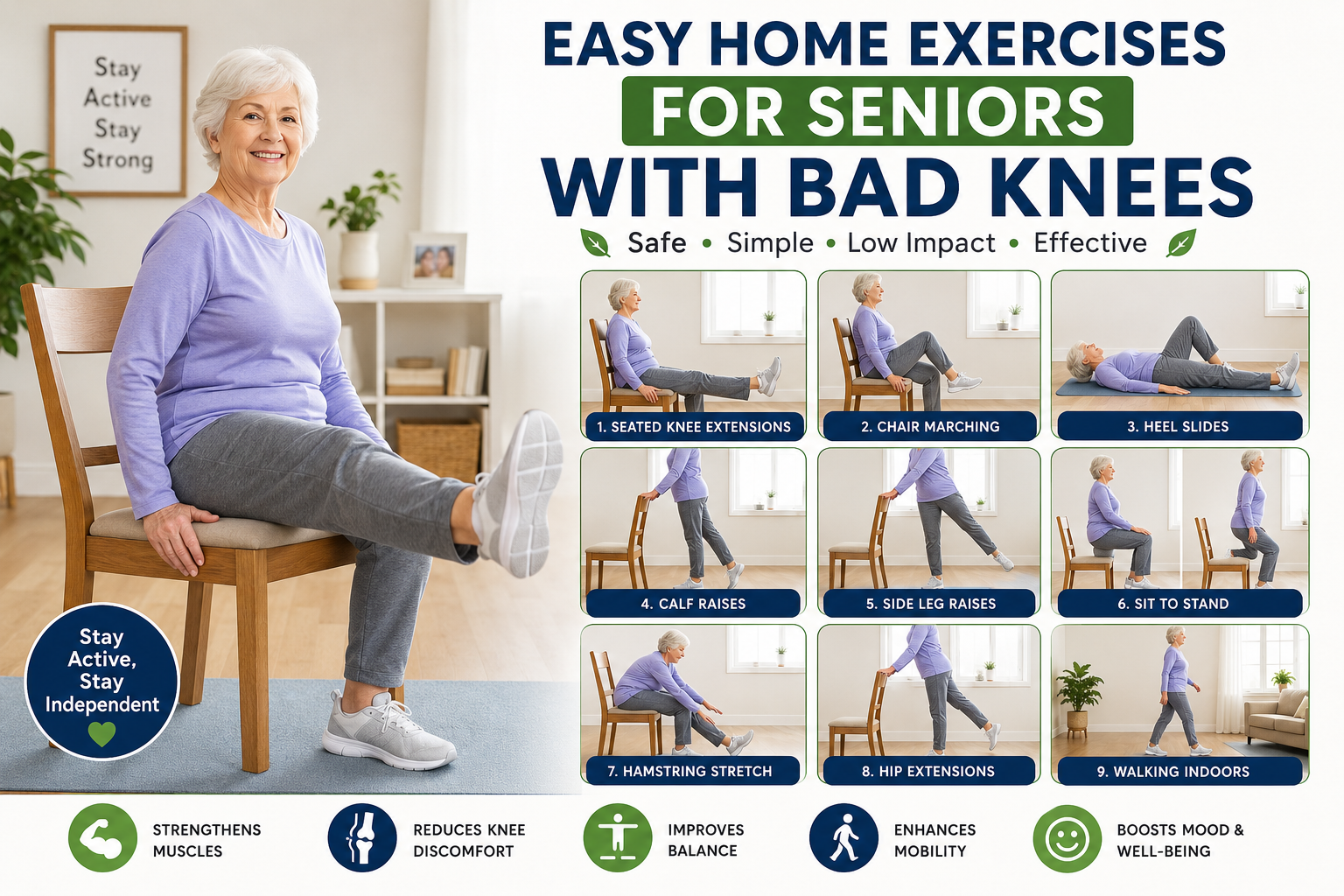
the best easy home exercises for seniors with bad knees. Learn safe, low-impact movements that improve strength, flexibility, balance, and mobility.
Living with knee pain can make even simple daily activities feel challenging. Walking to the mailbox, climbing stairs, getting out of a chair, or standing in the kitchen for long periods may become uncomfortable. For many older adults, knee discomfort often leads to less movement, which can create even more stiffness and weakness over time.
The good news is that staying active doesn’t always require intense workouts or expensive gym memberships. In fact, many easy home exercises for seniors with bad knees can be performed safely in the comfort of your living room using nothing more than a sturdy chair and a little open space.
Regular movement helps strengthen the muscles that support the knees, improve flexibility, increase circulation, and enhance overall mobility. When done correctly, low-impact exercises can reduce stiffness and help seniors maintain independence for longer.
In this guide, you’ll discover safe exercises, practical tips, common mistakes to avoid, and answers to frequently asked questions about exercising with knee problems.
Why This Topic Matters
Knee problems affect millions of older adults across the United States. Conditions such as age-related wear and tear, previous injuries, excess body weight, and arthritis can all contribute to ongoing knee discomfort.
Many seniors assume that exercise will worsen knee pain. In reality, avoiding movement entirely can lead to:
- Weaker leg muscles
- Reduced flexibility
- Poor balance
- Increased risk of falls
- Weight gain
- Greater joint stiffness
The right exercises can help keep joints moving while supporting long-term mobility and quality of life.
Understanding Bad Knees in Seniors
Before beginning an exercise program, it helps to understand why knee pain develops.
Common causes include:
| Cause | Description |
|---|---|
| Osteoarthritis | Gradual breakdown of knee cartilage |
| Previous Injuries | Old sports injuries or accidents |
| Weak Muscles | Less support around the knee joint |
| Excess Weight | Additional stress on the knees |
| Reduced Activity | Leads to stiffness and weakness |
| Inflammation | Swelling and discomfort around joints |
Many seniors experience a combination of these factors.
Benefits of Easy Home Exercises for Seniors With Bad Knees
One of the biggest advantages of easy home exercises for seniors with bad knees is that they provide movement without excessive joint stress.
Benefits may include:
Improved Leg Strength
Strong muscles help absorb pressure that would otherwise impact the knee joint directly.
Better Flexibility
Regular stretching improves range of motion and reduces stiffness.
Improved Balance
Balance-focused exercises help lower the risk of falls.
Enhanced Circulation
Movement encourages healthy blood flow throughout the body.
Greater Independence
Simple activities such as standing, walking, and climbing stairs may become easier.
Better Mood
Physical activity supports mental well-being and may help reduce feelings of isolation.
Scientific and Practical Explanation
The knee relies heavily on surrounding muscles for support.
Key muscle groups include:
- Quadriceps (front of thighs)
- Hamstrings (back of thighs)
- Glutes
- Calves
- Hip stabilizers
When these muscles become weak, more stress is placed directly on the knee joint.
Low-impact exercise helps strengthen these supporting muscles without excessive force. This can improve knee function and make everyday movements more comfortable.
15 Best Easy Home Exercises for Seniors With Bad Knees
1. Seated Knee Extensions
This is one of the safest beginner exercises.
How to do it:
- Sit upright in a sturdy chair.
- Slowly straighten one leg.
- Hold for 3 seconds.
- Lower slowly.
- Repeat with the other leg.
Repetitions:
- 10–15 per leg
Benefits:
- Strengthens quadriceps
- Improves knee stability
2. Chair Marching
Chair marching helps improve circulation and hip strength.
Steps:
- Sit comfortably.
- Lift one knee.
- Lower it.
- Lift the opposite knee.
Duration:
- 1–2 minutes
Benefits:
- Gentle cardio
- Improves mobility
3. Heel Slides
This movement promotes flexibility.
Steps:
- Lie on your back.
- Slowly slide one heel toward your body.
- Straighten the leg.
- Repeat.
Repetitions:
- 10 per side
Benefits:
- Improves range of motion
- Reduces stiffness
4. Seated Leg Lifts
Steps:
- Sit tall.
- Lift one leg slightly off the floor.
- Hold briefly.
- Lower slowly.
Repetitions:
- 10–15 each side
Benefits:
- Builds thigh strength
5. Standing Calf Raises
Hold onto a chair for support.
Steps:
- Stand upright.
- Rise onto your toes.
- Lower slowly.
Repetitions:
- 10–15
Benefits:
- Strengthens calves
- Improves balance
6. Side Leg Raises
Steps:
- Stand beside a chair.
- Lift one leg out to the side.
- Lower slowly.
Repetitions:
- 10 per side
Benefits:
- Strengthens hip muscles
- Supports knee alignment
7. Mini Squats
Unlike deep squats, mini squats are gentler on the knees.
Steps:
- Hold a chair.
- Bend knees slightly.
- Return to standing.
Repetitions:
- 8–12
Benefits:
- Builds lower-body strength
8. Sit-to-Stand Exercise
This exercise mimics everyday movement.
Steps:
- Sit in a sturdy chair.
- Stand up slowly.
- Sit down with control.
Repetitions:
- 8–10
Benefits:
- Strengthens legs
- Improves functional mobility
9. Hamstring Stretch
Steps:
- Sit near the edge of a chair.
- Extend one leg.
- Lean forward gently.
Hold:
- 20–30 seconds
Benefits:
- Improves flexibility
10. Ankle Pumps
Steps:
- Sit comfortably.
- Point toes away.
- Pull toes toward you.
Duration:
- 1 minute
Benefits:
- Promotes circulation
- Reduces stiffness
11. Standing Hip Extensions
Steps:
- Hold a chair.
- Move one leg backward.
- Return slowly.
Repetitions:
- 10 per leg
Benefits:
- Strengthens glutes
- Supports knee function
12. Wall Support Standing
Steps:
- Stand facing a wall.
- Place hands on the wall.
- Practice balanced standing.
Duration:
- 30 seconds
Benefits:
- Improves stability
13. Toe Taps
Steps:
- Sit in a chair.
- Tap toes repeatedly.
Duration:
- 1 minute
Benefits:
- Improves circulation
14. Gentle Step-Ups
Use a low step.
Steps:
- Step up carefully.
- Step down slowly.
Repetitions:
- 5–10
Benefits:
- Improves strength and coordination
15. Walking Indoors
Walking remains one of the best low-impact activities.
Start with:
- 5–10 minutes daily
Gradually increase as tolerated.
Benefits:
- Supports heart health
- Encourages joint movement
Sample Weekly Exercise Schedule
| Day | Activity |
|---|---|
| Monday | Chair marching, leg lifts, stretching |
| Tuesday | Walking and calf raises |
| Wednesday | Knee extensions and balance work |
| Thursday | Light walking and stretching |
| Friday | Sit-to-stand and side leg raises |
| Saturday | Indoor walk and flexibility exercises |
| Sunday | Gentle movement and recovery |
What Is the Best Time of Day to Exercise?
Many seniors find morning exercise helpful because it reduces stiffness accumulated overnight.
Others prefer afternoon sessions when joints feel warmer.
The best time is whichever time you can consistently maintain.
Additional Lifestyle Tips for Healthier Knees
Exercise works best when combined with healthy daily habits.
Maintain a Healthy Weight
Even small weight reductions may decrease stress on the knees.
Wear Supportive Footwear
Proper shoes can improve alignment and reduce discomfort.
Stay Hydrated
Water supports overall joint function.
Take Movement Breaks
Avoid sitting for long periods.
Use Heat Before Exercise
Warm muscles may move more comfortably.
Foods That Support Joint Health
While food isn’t a cure for knee problems, a nutritious diet supports overall joint wellness.
Fatty Fish
Examples include:
- Salmon
- Sardines
- Trout
Colorful Vegetables
Examples include:
- Spinach
- Kale
- Broccoli
- Bell peppers
Berries
Rich in beneficial plant compounds.
Nuts and Seeds
Good sources of healthy fats.
Olive Oil
Often included in heart-healthy eating plans.
Lean Protein
Supports muscle maintenance.
Common Mistakes to Avoid
Many seniors accidentally make knee discomfort worse through exercise mistakes.
Doing Too Much Too Soon
Gradual progress is safer.
Ignoring Sharp Pain
Mild muscle fatigue is normal. Sharp pain is not.
Holding Your Breath
Breathe steadily during exercise.
Poor Posture
Proper form helps protect joints.
Skipping Warm-Ups
Always prepare muscles before exercising.
Exercising In Unsupportive Shoes
Proper footwear can make a significant difference.
Who Should Be Careful?
Consult a healthcare professional before beginning an exercise routine if you have:
- Recent knee surgery
- Severe arthritis
- Serious balance problems
- Recent fractures
- Unexplained swelling
- Significant heart conditions
Stop exercising and seek medical advice if you experience:
- Severe pain
- Sudden swelling
- Dizziness
- Chest discomfort
- Loss of balance
Frequently Asked Questions
What are the easiest home exercises for seniors with bad knees?
Seated knee extensions, chair marching, ankle pumps, and gentle walking are often among the easiest options.
Can exercise make knee pain worse?
The right exercises usually support knee function. However, excessive intensity or poor form may increase discomfort.
How often should seniors exercise with bad knees?
Most older adults can benefit from gentle movement several days per week. Individual needs vary.
Is walking good for bad knees?
For many seniors, walking is a safe and effective low-impact activity when done at a comfortable pace.
Should I exercise if my knees hurt today?
Mild stiffness may improve with gentle movement. Severe pain should be evaluated by a healthcare provider.
Are chair exercises effective?
Yes. Chair-based exercises can help improve strength, flexibility, and circulation while minimizing joint stress.
Can strengthening muscles reduce knee discomfort?
Strong leg and hip muscles often provide better support for the knee joint.
When Should You See a Doctor?
Schedule an evaluation if you experience:
- Persistent swelling
- Sudden worsening symptoms
- Inability to bear weight
- Knee instability
- Significant reduction in mobility
Early evaluation may help identify underlying causes and appropriate treatment options.
Final Thoughts
Finding the right balance between movement and comfort can feel challenging when you have knee problems. Fortunately, many easy home exercises for seniors with bad knees provide a safe way to stay active without placing excessive stress on the joints.
The key is consistency rather than intensity. A few minutes of gentle exercise performed regularly can help improve strength, flexibility, balance, and confidence over time.
Start slowly, listen to your body, and focus on progress rather than perfection. Whether it’s seated knee extensions, chair marching, gentle walking, or simple stretches, every bit of movement contributes to healthier aging and better mobility.
Disclaimer: This article is for educational purposes only and does not replace professional medical advice. Always consult your healthcare provider before starting a new exercise program, especially if you have existing medical conditions, chronic pain, or recent injuries.
External Resources
- https://www.cdc.gov/physicalactivity
- https://www.nia.nih.gov/health/exercise-physical-activity
- https://www.arthritis.org
Related Keywords
- chair exercises for seniors with knee pain
- low impact workouts for older adults
- knee strengthening exercises for seniors
- safe exercises for arthritis knees
- home fitness for seniors over 60
Also read –
How to Reduce Knee Pain Naturally After 50: 15 Proven Ways That Really Help
Natural Remedies for Dry Mouth in Seniors: 15 Effective Ways to Find Relief