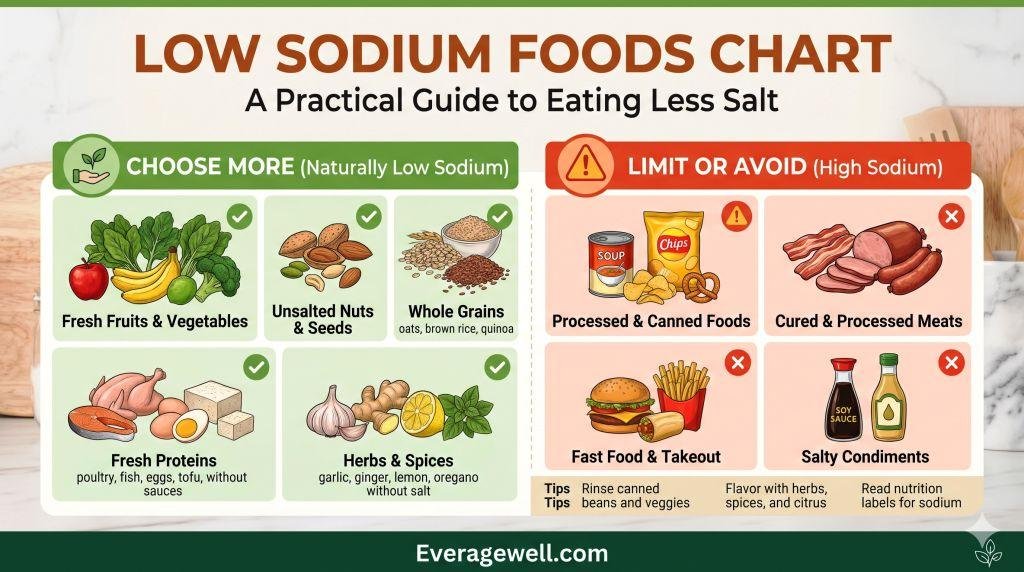
Choosing foods with less sodium can be easier when you know what to look for. A low sodium foods chart helps you compare everyday foods and identify options that fit a heart-conscious eating pattern without giving up flavor or variety.
Many fresh fruits, vegetables, plain whole grains, unsalted nuts, unseasoned meats, and fresh fish are naturally low in sodium. However, packaged foods, restaurant meals, sauces, deli meats, and salty snacks can add substantial amounts of sodium to your daily intake.
For adults over 50, paying attention to sodium may be particularly important because high blood pressure and other cardiovascular conditions become more common with age. Too much sodium can contribute to elevated blood pressure, increasing the risk of heart disease and stroke.
The good news is that reducing sodium does not mean eating bland meals or eliminating every packaged food. A few practical substitutions, combined with reading nutrition labels, can make a meaningful difference.
This guide includes a detailed low sodium foods chart, foods to limit, simple meal ideas, sodium-labeling tips, and answers to common questions about following a lower-sodium diet safely.
Quick Answer: Which Foods Are Low in Sodium?
Some of the best low sodium foods include:
- Fresh apples, bananas, berries, oranges, and pears.
- Fresh or frozen vegetables without added salt or sauces.
- Plain oatmeal, brown rice, quinoa, and other unsalted whole grains.
- Fresh chicken, turkey, fish, and lean meat without added sodium solutions.
- Dried beans, lentils, and peas prepared without added salt.
- Unsalted almonds, walnuts, and other nuts.
- Plain milk and yogurt.
- Eggs prepared without added salt.
- Homemade soups made with low-sodium broth.
- Herbs, spices, garlic, lemon juice, and vinegar for flavor.
For most U.S. adults, the general recommendation is to consume less than 2,300 milligrams (mg) of sodium per day. Some people, particularly those managing certain medical conditions, may benefit from a different target recommended by their healthcare professional.
1. What Is a Low Sodium Diet?
A low sodium diet is an eating pattern designed to reduce the amount of sodium you consume from food and beverages.
Sodium is an essential mineral. Your body needs it to maintain fluid balance and support normal nerve and muscle function. The problem is not sodium itself but consuming more than your body needs.
Most dietary sodium comes from sodium chloride, commonly known as table salt. However, sodium is also present in ingredients used to preserve, season, or process food.
For example, sodium can be found in:
- Canned soups and vegetables.
- Bread and packaged baked goods.
- Processed meats.
- Cheese.
- Salad dressings and sauces.
- Frozen meals.
- Restaurant food.
- Seasoning mixes and instant noodles.
According to the U.S. Centers for Disease Control and Prevention (CDC), consuming too much sodium can raise blood pressure and increase the risk of heart disease and stroke.
A lower-sodium eating pattern generally emphasizes fresh or minimally processed foods while limiting products with substantial amounts of added sodium.
How Much Sodium Do You Need Each Day?
For most adults and children aged 14 and older, the U.S. Daily Value and general dietary recommendation is less than 2,300 mg of sodium per day.
The American Heart Association identifies 1,500 mg per day as an ideal goal for most adults, while recognizing that individual needs and medical circumstances differ.
You do not necessarily need to aim for 1,500 mg simply because it is a lower number. If you have high blood pressure, heart failure, kidney disease, or another medical condition, ask your healthcare professional what daily sodium target is appropriate for you.
For more information, see the CDC’s guide to sodium and health.
2. Low Sodium Foods Chart
The following chart provides practical examples of foods that can fit into a lower-sodium diet.
Values are approximate estimates for typical plain foods and serving sizes. Actual sodium content varies by variety, preparation method, brand, and whether salt or sodium-containing ingredients have been added.
| Food Group | Food | Typical Serving | Approximate Sodium |
|---|---|---|---|
| Fruits | Apple, raw | 1 medium | 2 mg |
| Fruits | Banana | 1 medium | 1 mg |
| Fruits | Orange | 1 medium | 0 mg |
| Fruits | Strawberries | 1 cup | 2 mg |
| Fruits | Blueberries | 1 cup | 2 mg |
| Vegetables | Cucumber, raw | 1 cup sliced | 2 mg |
| Vegetables | Broccoli, cooked without salt | 1/2 cup | 20 mg |
| Vegetables | Carrots, raw | 1/2 cup | 45 mg |
| Vegetables | Spinach, raw | 1 cup | 24 mg |
| Vegetables | Sweet potato, baked without salt | 1 medium | 70 mg |
| Grains | Plain oatmeal, cooked with water | 1 cup | 2 mg |
| Grains | Brown rice, cooked without salt | 1 cup | 10 mg |
| Grains | Quinoa, cooked without salt | 1 cup | 13 mg |
| Protein | Egg, hard-boiled | 1 large | 60 mg |
| Protein | Fresh chicken breast, unseasoned | 3 oz cooked | About 60–90 mg |
| Protein | Fresh salmon, unseasoned | 3 oz cooked | About 50–70 mg |
| Protein | Fresh lean beef, unseasoned | 3 oz cooked | About 50–80 mg |
| Legumes | Lentils, cooked without salt | 1/2 cup | About 2–5 mg |
| Legumes | Dried beans, cooked without salt | 1/2 cup | About 2–10 mg |
| Dairy | Plain milk | 1 cup | About 100–130 mg |
| Dairy | Plain yogurt | 6 oz | About 60–100 mg |
| Nuts | Unsalted almonds | 1 oz | About 0–5 mg |
| Nuts | Unsalted walnuts | 1 oz | About 0–5 mg |
These are rounded estimates intended for general food comparison, not precise values for every product. Check USDA FoodData Central or the package label for the specific food you buy.
How to Use This Chart
Start by choosing foods you already enjoy.
If you eat oatmeal for breakfast, prepare it without added salt and flavor it with fruit or cinnamon. If you regularly eat canned beans, try a no-salt-added variety or cook dried beans at home.
For lunch and dinner, combine a plain protein source with vegetables and an unsalted grain.
Remember that a naturally low-sodium ingredient can become a high-sodium meal when you add salty sauces, seasoning packets, processed meat, or generous amounts of table salt.
The goal is to consider the entire meal, not just individual ingredients.
3. Understanding Sodium and Salt
Although people often use the words sodium and salt interchangeably, they are not exactly the same.
Table salt is sodium chloride. Sodium is the mineral listed on the Nutrition Facts label.
One teaspoon of table salt contains approximately 2,300 mg of sodium, although the precise amount depends on the type and density of the salt.
That is close to the entire recommended daily sodium limit for most adults.
Sodium can also come from ingredients other than table salt. Monosodium glutamate (MSG), sodium bicarbonate, sodium citrate, and sodium-containing preservatives are examples.
This means that avoiding the salt shaker does not automatically make your diet low in sodium.
Packaged foods and prepared restaurant meals can contain substantial sodium even when they do not taste particularly salty.
A practical approach is to look at the sodium amount on the Nutrition Facts label, check the serving size, and consider how much you actually eat.
4. Low Sodium Foods by Food Group
4.1 Fresh Fruits
Most fresh fruits are naturally low in sodium and can be convenient snacks or additions to meals.
Good choices include:
- Apples.
- Bananas.
- Oranges.
- Pears.
- Grapes.
- Blueberries.
- Strawberries.
- Peaches.
- Melons.
Fresh fruit is usually a better starting point than fruit packed in salty or heavily processed products.
Choose fruit canned in water or its own juice when appropriate, and compare labels because packaged products can differ.
For a balanced snack, pair an apple with unsalted nuts or serve berries with plain yogurt.
4.2 Fresh and Frozen Vegetables
Vegetables provide vitamins, minerals, fiber, and other nutrients while generally contributing relatively little sodium when prepared without salt.
Useful choices include broccoli, carrots, green beans, cabbage, cauliflower, zucchini, cucumbers, peppers, and leafy greens.
Frozen vegetables can be especially convenient because they often require little preparation.
Choose plain frozen vegetables rather than varieties packaged with cheese sauce, seasoned butter, or salty flavorings.
Canned vegetables can also fit into a lower-sodium diet. Look for products labeled “no salt added” and check the Nutrition Facts panel.
If you use regular canned vegetables or beans, draining and rinsing them may reduce their sodium content.
The amount of reduction varies by product and preparation, so do not assume rinsing removes all the sodium.
4.3 Plain Whole Grains
Plain grains can provide energy and fiber without adding much sodium.
Consider:
- Oatmeal.
- Brown rice.
- Quinoa.
- Barley.
- Plain whole-wheat pasta.
- Unsalted popcorn.
The important word is plain.
Instant flavored oatmeal, seasoned rice mixes, packaged noodle dishes, and boxed pasta meals may contain considerably more sodium than their basic ingredients.
Prepare grains using water or an appropriate low-sodium broth, then add flavor with herbs, spices, vegetables, or lemon juice.
Bread deserves special attention. Even though an individual slice may not taste salty, sodium can add up when you eat several slices or combine bread with cheese and deli meat.
Compare different brands rather than assuming every whole-grain product is low in sodium.
4.4 Fresh Chicken, Fish, and Lean Meat
Fresh, unseasoned protein foods are often lower in sodium than processed alternatives.
Good choices may include:
- Fresh chicken breast.
- Fresh turkey.
- Salmon.
- Cod.
- Other fresh fish.
- Lean beef.
- Pork prepared without salty marinades.
However, not all raw-looking meat is unprocessed.
Some poultry and other meats are injected with a sodium solution to improve tenderness or moisture. Check the package for terms such as “enhanced,” “contains a solution,” or references to broth or saline.
Processed alternatives, including bacon, ham, hot dogs, sausage, and deli meats, commonly contain more sodium.
If you enjoy chicken, try roasting it with garlic, black pepper, paprika, and lemon instead of using a packaged seasoning mix.
4.5 Beans, Lentils, and Peas
Beans and lentils provide plant-based protein, fiber, and other nutrients.
They are useful for people who want to reduce their reliance on processed meats while keeping meals satisfying.
Choose dried beans and cook them without adding salt, or purchase canned versions labeled “no salt added.”
Rinsing canned beans can help reduce sodium when no-salt-added products are unavailable.
Try adding beans to vegetable soups, salads, grain bowls, tacos, or homemade chili.
If you are new to eating more legumes, increase your intake gradually and drink enough fluid according to your healthcare professional’s guidance.
4.6 Milk and Yogurt
Milk and plain yogurt naturally contain some sodium, but they can still fit into a lower-sodium eating pattern.
They also provide protein and calcium, which are important nutrients for maintaining muscle and bone health as you age.
Plain yogurt is often a useful choice for breakfast or snacks. You can add fresh berries, sliced fruit, or cinnamon instead of relying on flavored toppings.
Cheese requires more careful comparison. Some varieties contain considerably more sodium than others.
If you enjoy cheese, compare the sodium content per serving and consider using a smaller amount of a flavorful variety rather than eliminating it entirely.
For more information about calcium needs as you age, read EverAgeWell’s guide to calcium intake by age.
4.7 Unsalted Nuts and Seeds
Unsalted nuts and seeds are convenient options for snacks and meals.
Examples include:
- Almonds.
- Walnuts.
- Pecans.
- Pistachios without added salt.
- Pumpkin seeds without added salt.
- Sunflower seeds without added salt.
Choose plain or unsalted versions whenever possible.
Flavored nuts, salted seed mixes, and snack mixes may contain considerably more sodium.
Because nuts and seeds are energy-dense, a small handful is often a practical serving.
Try adding unsalted nuts to oatmeal or yogurt, or use ground nuts and seeds as a topping for salads.
4.8 Eggs
Eggs contain relatively little sodium compared with many processed breakfast foods.
A hard-boiled egg, for example, provides protein without requiring additional seasoning.
The sodium content of an egg dish can rise quickly when you add bacon, sausage, cheese, packaged seasoning, or large amounts of salt.
For a lower-sodium breakfast, try scrambled eggs with vegetables, oatmeal with fruit, or a boiled egg served with whole-grain toast.
4.9 Herbs, Spices, and Flavorful Ingredients
Reducing salt does not mean giving up flavor.
Instead, use ingredients that make food taste satisfying without adding much sodium.
Try:
- Garlic and onion.
- Black pepper.
- Paprika.
- Cumin.
- Rosemary.
- Thyme.
- Basil.
- Cilantro.
- Lemon or lime juice.
- Vinegar.
- Ginger.
- Salt-free spice blends.
Be careful with seasoning products marketed as complete seasonings. Some contain salt as their first or second ingredient.
Read the label rather than relying on the product name.
4.10 Lower-Sodium Packaged Foods
You do not have to cook every meal from scratch.
Packaged foods can be convenient, especially for adults who have limited time, mobility challenges, or difficulty preparing elaborate meals.
Look for:
- No-salt-added canned beans.
- Low-sodium broth.
- Plain frozen vegetables.
- Unsalted nuts.
- Lower-sodium canned fish.
- Reduced-sodium soups.
- Lower-sodium sauces.
- Plain frozen fish or poultry without added seasoning.
Compare products within the same category. A reduced-sodium product may contain less sodium than the original version but still contribute a substantial amount per serving.
Check the serving size and consider how many servings you will actually eat.
5. High-Sodium Foods to Limit
A lower-sodium diet is often less about eliminating a particular food and more about reducing the frequency and portion size of foods that contain substantial sodium.
The following chart shows common foods worth checking carefully.
| Food | Why to Check It | Lower-Sodium Alternative |
|---|---|---|
| Bacon and sausage | Often contain added salt and preservatives | Eggs, fresh poultry, or unseasoned fish |
| Deli meats | Can contain substantial sodium | Freshly cooked chicken or turkey |
| Canned soup | Sodium varies widely by brand | Homemade soup with low-sodium broth |
| Instant noodles | Seasoning packets can be very salty | Plain noodles with vegetables and herbs |
| Pickles and olives | Often preserved in salty brine | Fresh cucumber or other fresh vegetables |
| Soy sauce | Often high in sodium | A reduced-sodium version, used sparingly |
| Bottled salad dressing | Sodium varies by product | Olive oil, lemon juice, and vinegar |
| Salted chips and pretzels | Salt is often added during processing | Unsalted nuts or plain popcorn |
| Frozen prepared meals | Sodium can add up across a whole meal | Plain frozen ingredients assembled at home |
| Pizza | Cheese, crust, sauce, and toppings contribute sodium | Homemade pizza with carefully chosen ingredients |
| Processed cheese | Can contain substantial sodium | Compare lower-sodium cheese options |
| Restaurant sauces and gravies | Often contain added salt | Request sauce on the side |
You do not necessarily need to avoid every item on this list.
Instead, compare labels, choose smaller portions when appropriate, and make lower-sodium foods the everyday foundation of your meals.
External resource: The American Heart Association’s sodium reduction guide offers additional tips for shopping, cooking, and dining out.
6. Potential Benefits of Eating Less Sodium
May Help Support Healthy Blood Pressure
One of the best-established reasons to reduce excessive sodium intake is its effect on blood pressure.
Sodium influences the amount of fluid in your body. For some people, consuming too much sodium contributes to higher blood pressure.
Reducing sodium can help lower blood pressure, although the size of the effect varies from person to person.
This is especially relevant for adults with hypertension, or high blood pressure.
May Support Heart Health
High blood pressure is a major risk factor for heart disease and stroke.
A lower-sodium diet may help manage one important contributor to these conditions.
However, sodium reduction is only one part of cardiovascular health. Physical activity, medication when prescribed, smoking cessation, sleep, and overall dietary quality also matter.
May Help With Fluid Management in Certain Conditions
Some people with heart failure, kidney disease, or other medical conditions may be advised to limit sodium to help manage fluid retention.
The appropriate amount depends on the individual’s diagnosis, symptoms, kidney function, medications, and treatment plan.
A general low sodium foods chart cannot determine the right prescription for someone with a medical condition.
Can Encourage More Home Cooking
Preparing more meals at home makes it easier to control added salt and choose ingredients.
It can also help you use more vegetables, beans, whole grains, and fresh protein sources.
You do not need complicated recipes. Simple meals made from a few familiar ingredients can be practical and nutritious.
Can Make Food Choices Easier
Once you become familiar with nutrition labels, grocery shopping may feel less confusing.
You can compare two soups, breads, or frozen meals and choose the option that fits your needs.
Over time, these small decisions can become routine rather than a daily challenge.
7. How to Read Sodium on Food Labels
The Nutrition Facts label is one of the most useful tools for reducing sodium.
Here is what to look for.
Check the Sodium Amount in Milligrams
The label lists sodium in milligrams per serving.
For example, a soup might contain 700 mg of sodium per cup. If you eat two cups, you consume approximately 1,400 mg from that soup alone.
That is why serving size matters.
Understand Percent Daily Value
The FDA uses the following general guide for sodium on food labels:
- 5% Daily Value or less: Low in sodium.
- 20% Daily Value or more: High in sodium.
The Daily Value for sodium is 2,300 mg.
A product containing 460 mg of sodium per serving provides 20% of the Daily Value, making it a high-sodium choice by this labeling guideline.
When comparing similar products, choose one with less sodium per serving when practical.
Know What Common Sodium Claims Mean
| Label Claim | General Meaning |
|---|---|
| Sodium-free | Less than 5 mg of sodium per serving |
| Very low sodium | 35 mg or less per serving |
| Low sodium | 140 mg or less per serving |
| Reduced sodium | At least 25% less sodium than the regular reference product |
| Light in sodium | Generally at least 50% less sodium than the regular reference product |
| No salt added | Salt was not added during processing; the food may still contain sodium |
These claims are not interchangeable.
For example, a reduced-sodium soup may still contain several hundred milligrams of sodium per serving.
For more details, visit the FDA’s official resource on sodium in your diet.
8. Low Sodium Meal Plan for Adults Over 50
A low sodium meal plan does not have to be complicated or expensive. The key is to build meals around familiar foods and pay attention to ingredients that can add hidden sodium.
The following one-day plan is an example for a generally healthy adult. It is not a prescribed diet, and the sodium amounts are estimates rather than laboratory-verified totals.
| Meal | Suggested Foods | Estimated Sodium |
|---|---|---|
| Breakfast | Plain oatmeal, blueberries, a banana, and milk | 110–160 mg |
| Morning snack | An apple and a small handful of unsalted almonds | 5–15 mg |
| Lunch | Homemade chicken salad with lettuce, cucumber, brown rice, and olive oil with lemon juice | 150–300 mg |
| Afternoon snack | Plain yogurt with fresh strawberries | 70–120 mg |
| Dinner | Baked salmon, a plain baked sweet potato, and steamed broccoli | 150–300 mg |
| Estimated total | Breakfast, snacks, lunch, and dinner | 485–895 mg |
Actual sodium intake may be higher or lower depending on serving sizes, ingredients, and preparation methods. The example also does not necessarily provide enough calories, protein, or other nutrients for every person.
There is no need to copy this menu exactly. Adjust portions and ingredients to meet your nutritional needs.
For many adults over 50, eating enough protein and calories is just as important as limiting excessive sodium. Avoid making your diet so restrictive that you unintentionally lose weight or muscle.
Three Simple Meal Ideas
Breakfast: Vegetable omelet
Prepare eggs with mushrooms, spinach, and onions. Serve with fruit and whole-grain toast. Compare bread labels and use herbs instead of adding extra salt.
Lunch: Homemade chicken and bean bowl
Combine freshly cooked chicken, no-salt-added beans, brown rice, lettuce, tomatoes, and a dressing made from lemon juice and olive oil.
Dinner: Baked fish and vegetables
Bake salmon or another fresh fish with garlic, black pepper, and lemon. Serve with a baked potato and steamed vegetables.
These meals provide protein and other important nutrients without relying heavily on processed meats, packaged sauces, or seasoning mixes.
What If You Prefer Convenience Foods?
You can still make practical choices when you have limited time or energy.
Keep some of these items available:
- Plain frozen vegetables.
- No-salt-added canned beans.
- Plain microwaveable rice with no added seasoning.
- Unsalted nuts.
- Fresh fruit.
- Plain yogurt.
- Frozen fish without added sauces.
- Low-sodium canned soup.
Check the labels on convenience foods because sodium levels vary considerably among brands.
9. Common Low Sodium Diet Mistakes
Mistake 1: Only Removing the Salt Shaker
Using less table salt is helpful, but sodium also comes from packaged foods, restaurant meals, sauces, and processed meats.
A better approach: Review the Nutrition Facts labels on the foods you eat most often.
Mistake 2: Assuming All Packaged Foods Are Unhealthy
Some packaged foods are convenient, nutritious, and relatively low in sodium.
A better approach: Compare similar products and choose options with less sodium when practical.
Mistake 3: Confusing Reduced Sodium With Low Sodium
A product with 25% less sodium than its original version may still contain a considerable amount.
A better approach: Check the actual milligrams per serving rather than relying only on the front-of-package claim.
Mistake 4: Forgetting About Condiments
A meal may contain very little added salt until you include soy sauce, bottled dressing, ketchup, barbecue sauce, or gravy.
A better approach: Measure condiments, compare reduced-sodium versions, and experiment with herbs, vinegar, and citrus.
Mistake 5: Cutting Out Too Many Foods
Some people respond to a low sodium recommendation by eliminating large numbers of foods without considering their overall nutritional needs.
This can be especially problematic for older adults who already have a small appetite or difficulty maintaining their weight.
A better approach: Focus on sensible substitutions and maintain a varied diet with sufficient protein, calories, fiber, vitamins, and minerals.
Mistake 6: Using Potassium-Based Salt Substitutes Without Checking Safety
Some salt substitutes replace sodium chloride with potassium chloride.
These products may be useful for certain people, but they are not appropriate for everyone. Kidney disease and some medications can increase the risk of potassium becoming too high.
A better approach: Ask your healthcare professional or pharmacist before using potassium-based salt substitutes if you have kidney problems or take medications that affect potassium.
For related nutrition information, see EverAgeWell’s potassium-rich foods chart. Remember that people with kidney disease may need individualized guidance about both sodium and potassium.
10. Myths About Low Sodium Foods
Myth 1: Everyone Should Eliminate Sodium Completely
Fact: Sodium is essential for normal body function. The goal is to avoid excessive intake, not eliminate sodium entirely.
Myth 2: Food Cannot Taste Good Without Salt
Fact: Garlic, lemon juice, herbs, spices, pepper, ginger, and vinegar can provide plenty of flavor. Your taste preferences may also adjust gradually as you become accustomed to using less salt.
Myth 3: Sea Salt Is Healthier Because It Is Natural
Fact: Sea salt and table salt both contain sodium. Sea salt is not a reliable way to reduce sodium intake if you use similar amounts.
Myth 4: If a Food Tastes Mild, It Must Be Low in Sodium
Fact: Some packaged foods contain substantial sodium without tasting particularly salty. Nutrition labels provide more useful information than taste alone.
Myth 5: Fresh Foods Are Always Sodium-Free
Fact: Fresh foods naturally contain varying amounts of sodium. Some fresh meats may also have added sodium solutions. Fresh foods are often useful choices, but their actual sodium content still matters.
Myth 6: Reduced-Sodium Products Are Always the Best Choice
Fact: Reduced-sodium products contain less sodium than their regular reference versions, but they may still have relatively high sodium levels. Compare the nutrition information before deciding.
Myth 7: Everyone Over 50 Needs the Same Sodium Limit
Fact: General recommendations provide a useful starting point, but medical conditions, medications, activity, and treatment plans can affect individual needs. Some people need more specific guidance from their healthcare team.
11. Who Should Be More Careful With Sodium?
Reducing excessive sodium is useful for many adults, but certain groups may need more individualized guidance.
Adults Over 50
Blood pressure often becomes more difficult to manage as people age, although high blood pressure is not an inevitable part of getting older.
Adults over 50 may benefit from learning how to read food labels, preparing more meals at home, and reducing frequent reliance on high-sodium convenience foods.
At the same time, older adults should protect their nutritional intake. A restrictive diet that makes food unappealing or reduces calorie and protein intake may create other problems.
People With High Blood Pressure
People with hypertension may benefit from reducing excessive sodium as part of an overall blood pressure management plan.
A healthcare professional can help determine a suitable daily target and explain how dietary changes fit with prescribed medication and other lifestyle measures.
People With Heart Failure
Some people with heart failure are advised to limit sodium because it can affect fluid balance.
However, sodium restrictions and fluid recommendations vary by patient. Follow the specific instructions provided by your healthcare team rather than adopting an extremely restrictive diet independently.
People With Chronic Kidney Disease
The kidneys help regulate sodium and fluid balance. When kidney function is impaired, managing sodium may become especially important.
However, people with kidney disease may also have individual restrictions involving potassium, phosphorus, protein, or fluid.
A renal dietitian can help create a meal plan that addresses these needs without unnecessarily eliminating nutritious foods.
People Taking Certain Medications
Some medications affect fluid balance, sodium levels, or potassium levels.
If you take diuretics or medications for blood pressure, heart disease, or kidney disease, discuss major dietary changes and salt substitutes with your healthcare professional or pharmacist.
Do not change a prescribed medication or fluid restriction on your own.
12. How to Start Eating Less Sodium
You do not need to overhaul your entire diet overnight. A gradual approach can be easier to maintain.
Step 1: Review What You Eat Most Often
For a few days, pay attention to your usual meals, snacks, drinks, and condiments.
You do not need to measure every ingredient perfectly. The purpose is to identify your main sources of sodium.
Step 2: Compare Two Similar Products
Choose one item you regularly buy, such as bread, canned soup, or salad dressing.
Compare the sodium content of two or three brands. Check the serving size and select a lower-sodium option that you enjoy.
Step 3: Make One Simple Substitution
Replace one frequent high-sodium food with a lower-sodium alternative.
For example:
- Replace deli meat with freshly cooked chicken.
- Choose unsalted nuts instead of salted snack mixes.
- Use plain frozen vegetables instead of vegetables with sauce.
- Make homemade salad dressing with olive oil and lemon juice.
- Choose no-salt-added beans when available.
Step 4: Experiment With Flavor
Try a different herb or spice each week.
Lemon and black pepper work well with fish and chicken. Garlic, cumin, and paprika can add flavor to beans and vegetables. Vinegar can brighten salads and soups.
Taste your food before adding salt automatically.
Step 5: Plan a Few Meals Ahead
Planning even two or three meals can reduce dependence on restaurant food and heavily seasoned convenience meals.
Keep simple ingredients available so that preparing a lower-sodium meal does not become a difficult task.
Step 6: Monitor Your Progress Without Obsessing
If you have been advised to limit sodium, a short food log can help you identify patterns.
You do not have to count every milligram forever. The aim is to develop an understanding of where sodium comes from and which changes are realistic for you.
If your healthcare professional has prescribed a specific sodium limit, use that target rather than a generic online chart.
13. Frequently Asked Questions About Low Sodium Foods
1. What foods are lowest in sodium?
Many fresh fruits, unsalted nuts, plain oatmeal, unsalted rice, and fresh vegetables prepared without salt contain very little sodium. The exact amount depends on the food and serving size.
2. What is the recommended daily sodium intake for adults?
The general recommendation for most adults is less than 2,300 mg of sodium per day. Some people may benefit from a lower target based on their health and their healthcare professional’s advice.
3. What are the best low sodium foods for adults over 50?
Good options include fresh fruit, vegetables, plain whole grains, beans, unsalted nuts, eggs, fresh fish, unseasoned poultry, and plain yogurt. Adults over 50 should also ensure that their diet provides enough protein, calories, and other essential nutrients.
4. Are eggs low in sodium?
Eggs contain some sodium but can fit into a lower-sodium diet. A large hard-boiled egg contains approximately 60 mg. Adding bacon, sausage, processed cheese, or salty seasonings increases the sodium content of the meal.
5. Is oatmeal low in sodium?
Plain oatmeal prepared with water and without added salt is naturally very low in sodium. Flavored instant oatmeal may contain additional sodium, so compare product labels.
6. Are bananas low in sodium?
Yes. A medium banana contains approximately 1 mg of sodium. Bananas also provide potassium, but people who have been instructed to limit potassium should follow their individualized dietary guidance.
7. Is rice low in sodium?
Plain rice cooked without salt is low in sodium. Packaged rice mixes, instant flavored rice, and restaurant rice may contain more sodium because of added seasonings, broth, or sauces.
8. What foods should I avoid on a low sodium diet?
Common foods to limit include processed meats, salty snacks, many canned soups, instant noodles, pickles, salty sauces, and some frozen prepared meals. You do not necessarily need to avoid every item; check labels and consider portions.
9. Is sea salt better than regular table salt?
No. Both contain sodium. Switching from table salt to sea salt does not automatically reduce your sodium intake.
10. Can I eat bread on a low sodium diet?
Yes. Bread can fit into a lower-sodium eating pattern, but sodium levels vary by brand and serving size. Compare labels and consider how much bread you eat throughout the day.
11. How can I make food taste good with less salt?
Use garlic, onions, pepper, herbs, spices, lemon juice, lime juice, ginger, and vinegar. Roasting and grilling can also bring out natural flavors without requiring large amounts of added salt.
12. Does drinking more water remove excess sodium?
Your kidneys help regulate sodium and fluid balance, but drinking excessive amounts of water is not a safe or reliable way to correct a high-sodium diet. Follow your normal hydration needs and any fluid restrictions prescribed by your healthcare team.
13. Are low sodium foods helpful for high blood pressure?
They can help when they reduce excessive sodium intake. A lower-sodium eating pattern, combined with other appropriate lifestyle measures and prescribed treatment, may support better blood pressure control.
14. Are potassium-based salt substitutes safe for seniors?
Not for everyone. Some salt substitutes contain potassium chloride, which can be dangerous for people with certain kidney conditions or those taking medications that raise potassium levels. Ask a healthcare professional or pharmacist before using these products if you have relevant medical conditions or take prescription medications.
15. Can I follow a low sodium diet if I have kidney disease?
Possibly, but your diet should be tailored to your kidney function and treatment plan. Sodium, potassium, phosphorus, protein, and fluid requirements can vary considerably among people with kidney disease. Ask your healthcare professional or renal dietitian for individualized advice.
14. Final Takeaway: Use This Low Sodium Foods Chart to Make Better Choices
A low sodium foods chart can make grocery shopping, meal planning, and everyday food choices easier.
Start with familiar foods such as fresh fruit, vegetables, plain grains, beans, unsalted nuts, and fresh protein sources. Compare packaged products, pay attention to serving sizes, and use herbs and spices to build flavor without relying heavily on salt.
For adults over 50, the most useful approach is a balanced one: reduce excessive sodium while maintaining enough calories, protein, fiber, and essential nutrients.
You do not need a perfect diet to make progress. Begin with one or two manageable changes, build on them over time, and ask your healthcare professional for guidance if you have a condition that requires a specific sodium target.
Medical Disclaimer
This article is for general educational and informational purposes only. It is not a substitute for professional medical advice, diagnosis, or treatment. Individual sodium needs vary, particularly for people with high blood pressure, heart failure, kidney disease, or other medical conditions. Consult a qualified healthcare professional before making significant dietary changes or using potassium-based salt substitutes.
Trusted Sources and Further Reading
The following authoritative resources provide additional information about sodium, nutrition labels, and heart-healthy eating:
- CDC: About Sodium and Health
- FDA: Sodium in Your Diet
- American Heart Association: How Much Sodium Should I Eat Per Day?
- National Heart, Lung, and Blood Institute: DASH Eating Plan
- USDA FoodData Central: Food and Nutrient Information
About EverAgeWell: EverAgeWell provides practical health and wellness information to help readers make informed decisions about healthy aging, nutrition, and everyday life.
Written by
Kanhaiya Solanki is a dedicated online researcher, content writer, and blogger passionate about publishing high-quality, research-based articles. His goal is to provide accurate, easy-to-understand, and practical information on health, technology, senior care, and lifestyle topics for readers worldwide.