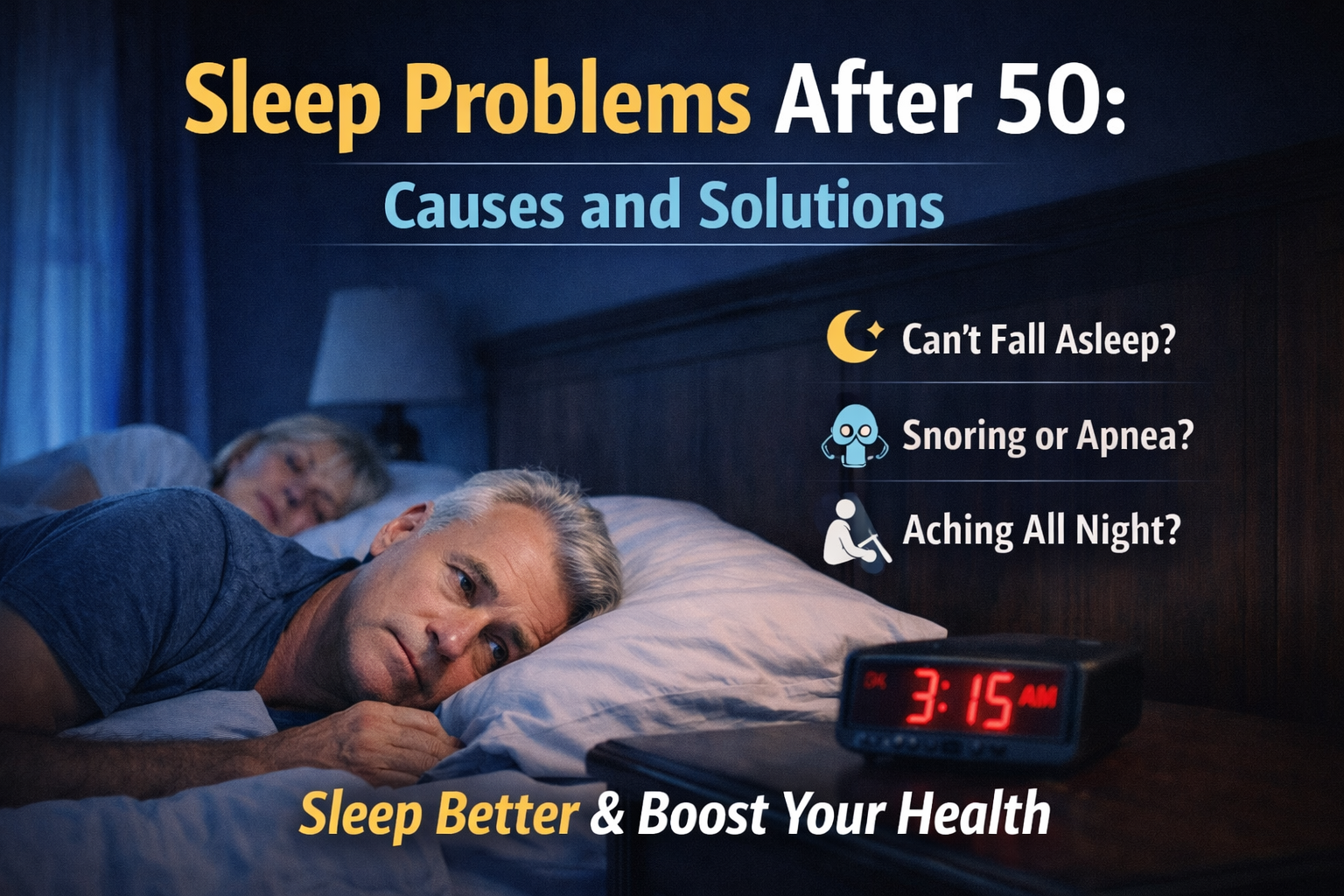
Sleep problems after 50 are common in the USA. Learn the real causes and proven solutions to sleep better, reduce insomnia, and wake up refreshed.
Sleep problems after 50 affect millions of adults across the United States. If you find yourself lying awake at 2 a.m., waking up too early, or feeling tired even after seven hours in bed, you are not alone.
Many seniors believe poor sleep is just a normal part of aging. While sleep patterns do change with age, constant insomnia, frequent waking, or daytime exhaustion are not things you have to accept.
In this detailed guide, we will explore the real causes of sleep problems after 50 and practical, science-backed solutions that work. You’ll also learn about common mistakes, expert tips, and easy lifestyle changes that can help you sleep better naturally.
Let’s take control of your sleep — and your health.
Why Sleep Problems After 50 Are So Common
Sleep problems after 50 often develop slowly. You might not even notice the shift at first.
Changes in Your Body Clock
As you age, your internal clock shifts. You may feel sleepy earlier in the evening and wake up earlier in the morning. This is called a “phase advance.”
That 5 a.m. wake-up may not mean something is wrong — but if you fall asleep at 9 p.m. and wake at 3 a.m., it can feel frustrating.
Reduced Melatonin Production
Melatonin is the hormone that helps you fall asleep. After 50, your body naturally produces less of it.
This can lead to:
- Trouble falling asleep
- Light, easily disturbed sleep
- More nighttime awakenings
Lighter Sleep Cycles
Deep sleep decreases with age. You may spend more time in lighter stages of sleep, making it easier for noise, light, or discomfort to wake you.
Common Causes of Sleep Problems After 50
Understanding the cause is the first step toward finding the right solution.
1. Insomnia
Insomnia is one of the most common sleep disorders in older adults. It includes:
- Trouble falling asleep
- Waking up during the night
- Waking too early
- Feeling unrefreshed
Chronic insomnia can increase the risk of depression, heart disease, and memory problems.
2. Sleep Apnea
Sleep apnea is very common after 50, especially in men and people who are overweight.
Signs include:
- Loud snoring
- Gasping during sleep
- Morning headaches
- Extreme daytime fatigue
Sleep apnea can increase the risk of high blood pressure and heart problems. Many people do not know they have it.
3. Restless Legs Syndrome (RLS)
RLS causes uncomfortable sensations in the legs, especially at night. You may feel:
- Tingling
- Crawling sensations
- An urge to move your legs
This condition can make it nearly impossible to fall asleep.
4. Frequent Nighttime Urination
Many adults over 50 wake up to use the bathroom. This can be due to:
- Enlarged prostate in men
- Bladder changes
- Diabetes
- Drinking fluids late at night
Even one or two bathroom trips can break your sleep cycle.
5. Chronic Pain
Arthritis, back pain, or joint stiffness can make staying comfortable difficult.
Pain tends to feel worse at night when there are fewer distractions.
6. Medications
Some common medications for:
- Blood pressure
- Depression
- Asthma
- Thyroid problems
can interfere with sleep.
Always check with your doctor if sleep problems started after beginning a new medication.
7. Stress and Anxiety
Retirement, health concerns, financial stress, or caring for a spouse can increase anxiety.
Your mind may feel calm during the day but race at night.
Health Risks of Poor Sleep After 50
Sleep problems after 50 are not just annoying. They can impact your long-term health.
Chronic sleep deprivation is linked to:
- High blood pressure
- Heart disease
- Type 2 diabetes
- Memory decline
- Increased fall risk
- Weakened immune system
Poor sleep can also affect mood, leading to irritability or depression.
Good sleep is not a luxury. It is essential healthcare.
Practical Solutions for Sleep Problems After 50
Now let’s focus on what works.
1. Create a Consistent Sleep Schedule
Go to bed and wake up at the same time every day — even on weekends.
This helps reset your internal clock.
If you wake up early, resist the urge to nap for long periods during the day.
2. Improve Your Sleep Environment
Your bedroom should be:
- Dark
- Quiet
- Cool (around 65–68°F)
- Comfortable
Consider blackout curtains, white noise machines, or supportive mattresses.
3. Watch What You Eat and Drink
Avoid:
- Caffeine after 2 p.m.
- Heavy meals late at night
- Alcohol before bed
Alcohol may make you sleepy at first but disrupts deep sleep later.
4. Get Regular Exercise
Daily movement improves sleep quality.
Best options for adults over 50 include:
- Walking
- Swimming
- Yoga
- Light strength training
Avoid intense workouts within two hours of bedtime.
5. Manage Stress Before Bed
Try:
- Deep breathing exercises
- Gentle stretching
- Prayer or meditation
- Reading a calming book
Avoid watching stressful news before sleep.
Natural Remedies for Better Sleep After 50
Many seniors prefer natural approaches before using prescription sleep aids.
Magnesium
Magnesium supports muscle relaxation and nervous system function.
Many older adults are slightly deficient.
Warm Bath Before Bed
A warm bath can help lower core body temperature afterward, signaling sleep.
Herbal Teas
Chamomile and valerian root are popular calming teas.
Always check for medication interactions.
Melatonin Supplements
Low-dose melatonin may help reset your sleep cycle.
Start with the lowest effective dose.
When to See a Doctor
Seek medical advice if:
- You snore loudly and feel tired daily
- You stop breathing during sleep
- Insomnia lasts more than three weeks
- You feel depressed or anxious
- You experience sudden sleep changes
A sleep study may be recommended.
Common Mistakes That Make Sleep Worse
Many adults accidentally worsen sleep problems after 50.
1. Going to Bed Too Early
If you are not sleepy, lying in bed can increase frustration.
2. Long Daytime Naps
Keep naps under 30 minutes.
3. Watching TV in Bed
Your brain should associate the bed with sleep — not entertainment.
4. Using Sleeping Pills Long-Term
Prescription sleep medications can cause dependence and increase fall risk.
Use only under medical supervision.
Expert Tips for Long-Term Sleep Success
Sleep specialists often recommend:
Cognitive Behavioral Therapy for Insomnia (CBT-I)
CBT-I is considered the gold standard for treating chronic insomnia.
It helps change thought patterns and behaviors that interfere with sleep.
Morning Sunlight Exposure
Natural light early in the day strengthens your circadian rhythm.
Spend at least 20–30 minutes outdoors each morning.
Keep a Sleep Journal
Track:
- Bedtime
- Wake time
- Night awakenings
- Diet and exercise
Patterns will become clear.
Real-Life Example
John, 67, retired three years ago. He began staying up late watching TV and sleeping in until 9 a.m.
Soon, he started waking at 3 a.m. every night.
After adjusting to a consistent schedule, cutting evening coffee, and walking daily, his sleep improved within four weeks.
Small changes made a big difference.
Building a Healthy Night Routine After 50
Here is a simple bedtime routine example:
- Stop caffeine after 2 p.m.
- Take a 20-minute evening walk.
- Turn off screens at 9 p.m.
- Take a warm shower.
- Read quietly in dim light.
- Go to bed at 10 p.m.
Consistency is key.
How Retirement Affects Sleep
Retirement can remove daily structure.
Without work schedules, bedtime may drift later.
Solution: create a daily routine that includes:
- Morning wake time
- Exercise
- Social activity
- Set bedtime
Structure improves sleep.
Sleep and Mental Health After 50
Poor sleep and depression often go together.
Warning signs include:
- Loss of interest in hobbies
- Low energy
- Appetite changes
- Persistent sadness
If these occur, talk to a healthcare provider.
Treating mental health often improves sleep.
Conclusion
Sleep problems after 50 are common, but they are not something you must accept.
Aging changes sleep patterns, but chronic insomnia, exhaustion, or sleep apnea require attention.
By improving your sleep environment, adjusting habits, managing stress, and seeking medical care when needed, you can sleep deeply again.
Better sleep means better energy, sharper memory, improved mood, and stronger overall health.
Your 50s, 60s, and 70s can be vibrant years — and quality sleep is a big part of that journey.
Frequently Asked Questions
1. Why do sleep problems after 50 get worse with age?
Sleep problems after 50 often increase due to natural biological changes. The body produces less melatonin, and deep sleep stages decrease. Many people also develop medical conditions like arthritis or sleep apnea that disturb rest. Lifestyle changes, retirement schedules, and increased stress can also play a role. While some sleep changes are normal, chronic insomnia or extreme fatigue is not. With proper sleep hygiene and medical evaluation when needed, most older adults can improve their sleep quality significantly.
2. How many hours of sleep do adults over 50 really need?
Most adults over 50 still need 7 to 8 hours of sleep per night. However, sleep may be lighter and more fragmented. The key is how you feel during the day. If you wake up refreshed and function well, your sleep duration is likely adequate. If you feel tired, irritable, or unfocused, you may need better-quality sleep rather than simply more hours in bed.
3. Is insomnia common after age 50 in the USA?
Yes, insomnia is very common among Americans over 50. Studies show that nearly half of older adults report sleep difficulties. Hormonal changes, chronic pain, medications, and stress contribute to this trend. Fortunately, cognitive behavioral therapy for insomnia and lifestyle changes are highly effective and safer than long-term sleeping pills.
4. Can sleep apnea cause serious health problems in seniors?
Yes. Untreated sleep apnea increases the risk of high blood pressure, heart disease, stroke, and diabetes. It also causes daytime fatigue, which raises fall risk. If you snore loudly or feel exhausted despite sleeping several hours, consult a doctor. Treatment such as CPAP therapy can dramatically improve both sleep and overall health.
5. Are sleeping pills safe for adults over 50?
Sleeping pills may help short term but are not ideal long-term solutions. They can cause dizziness, confusion, memory issues, and increased fall risk in seniors. Many doctors recommend behavioral therapy and lifestyle changes first. Always consult your physician before starting or stopping any medication.
6. Does menopause affect sleep in women over 50?
Yes. Hormonal changes during menopause can cause night sweats, hot flashes, and mood changes that disrupt sleep. Maintaining a cool bedroom, using breathable bedding, and speaking with a healthcare provider about hormone therapy options may help reduce symptoms.
7. Why do I wake up at 3 a.m. every night?
Waking at 3 a.m. can be related to stress, anxiety, blood sugar fluctuations, or changes in your circadian rhythm. Avoid checking the clock repeatedly, which increases stress. Relaxation techniques and consistent sleep schedules can help retrain your body to sleep longer.
8. Does diet affect sleep after 50?
Yes. Caffeine, alcohol, heavy meals, and sugary snacks before bed can disrupt sleep. A balanced diet with whole grains, lean protein, and healthy fats supports stable blood sugar and better rest. Staying hydrated during the day but limiting fluids before bedtime also helps.
9. Can exercise really improve sleep in seniors?
Absolutely. Regular physical activity improves sleep depth and duration. Even 30 minutes of brisk walking most days can make a difference. Exercise reduces stress and helps regulate your body clock. Just avoid vigorous workouts close to bedtime.
10. When should I see a sleep specialist?
See a specialist if insomnia lasts more than a month, you suspect sleep apnea, or daytime fatigue affects daily life. A professional evaluation can identify underlying conditions and provide targeted treatment options. Early treatment improves long-term health outcomes.