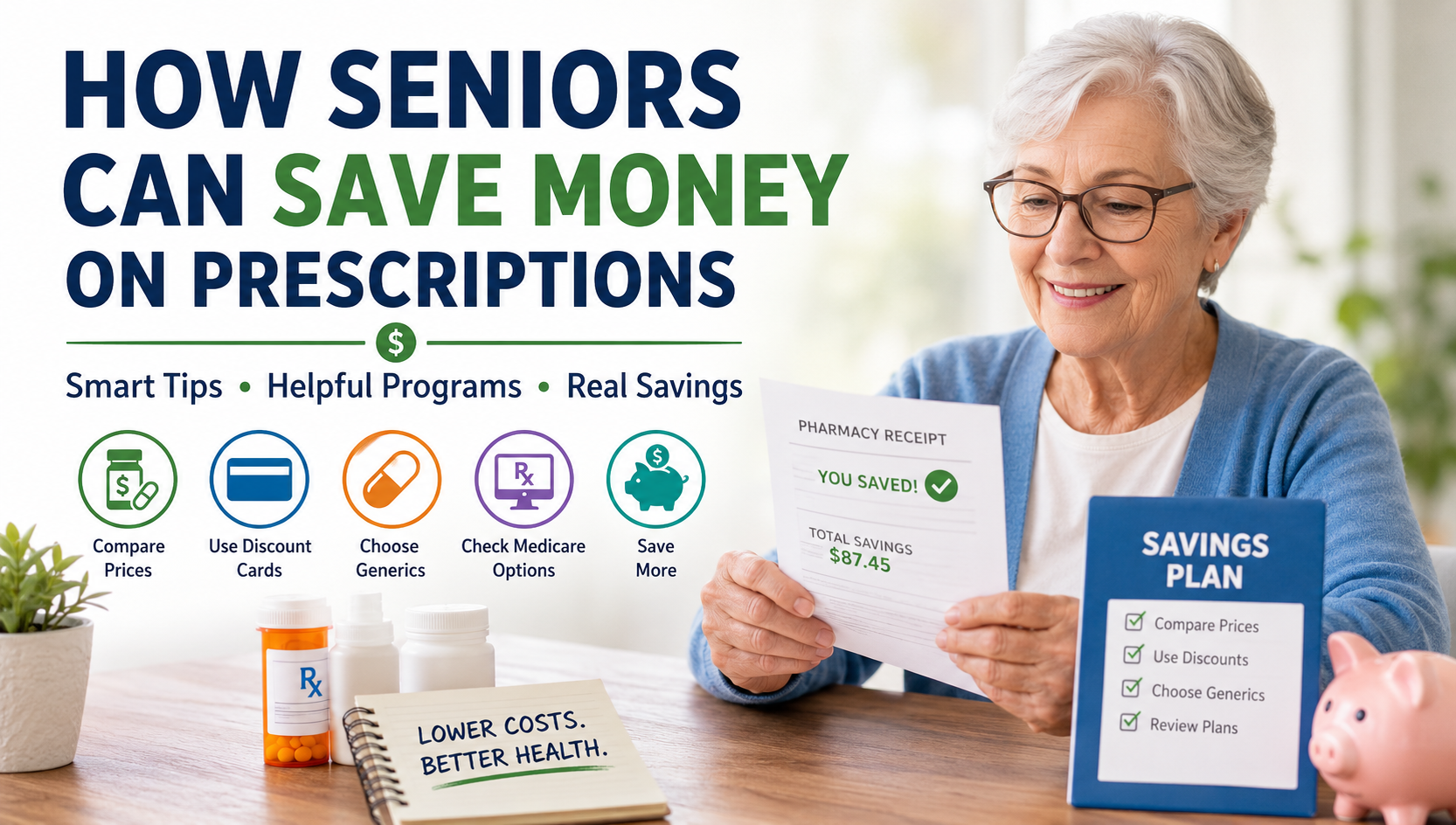
Learn how seniors can save money on prescriptions with Medicare tips, discount programs, generic drugs, and smart pharmacy strategies.
Prescription medication costs continue to rise across the United States, and many older adults feel the pressure every month. For seniors living on retirement income, Social Security, or limited savings, paying for medications can become stressful very quickly.
The good news is that there are practical ways to lower those costs without sacrificing health or safety. Many people overpay simply because they are unaware of discount programs, generic alternatives, Medicare options, or pharmacy pricing differences.
If you have been searching for realistic ways to reduce medication expenses, this guide on how seniors can save money on prescriptions will walk you through trusted strategies that actually work in real life.
Whether you take one medication or several prescriptions each month, even small changes can lead to significant yearly savings.
Why Prescription Costs Are a Big Problem for Seniors
As people age, prescription needs usually increase. Conditions like high blood pressure, diabetes, arthritis, heart disease, and cholesterol problems often require ongoing medication.
Unfortunately, medication prices in the U.S. can vary widely. A single prescription may cost:
- $10 at one pharmacy
- $45 at another
- Over $100 without insurance
Many seniors also deal with:
- Fixed retirement income
- Medicare coverage gaps
- Rising healthcare expenses
- Multiple prescriptions at once
According to the Centers for Medicare & Medicaid Services, millions of Americans rely on Medicare drug plans to manage medication costs. Still, many older adults do not fully understand how to maximize those benefits.
That is why learning how seniors can save money on prescriptions matters more than ever.
How Seniors Can Save Money on Prescriptions
There is no single solution that works for everyone. The best approach usually combines several savings methods together.
Below are some of the most effective ways seniors across America reduce medication expenses safely.
Compare Prices Between Pharmacies
One of the easiest ways to save money is simply comparing pharmacy prices.
Many people assume prescription prices are the same everywhere. They are not.
The exact same medication can cost dramatically different amounts depending on the pharmacy.
Why Prices Vary
Pharmacies negotiate pricing differently with suppliers and insurance companies. Some stores also offer special discount programs.
Common places to compare include:
- Large chain pharmacies
- Grocery store pharmacies
- Independent local pharmacies
- Online pharmacies
- Warehouse clubs
Helpful Price Comparison Websites
You can compare prices through trusted tools like:
These services often provide coupons that lower costs instantly.
Real-Life Example
A senior taking cholesterol medication might pay:
| Pharmacy | Monthly Price |
|---|---|
| Pharmacy A | $52 |
| Pharmacy B | $18 |
| Pharmacy C with coupon | $9 |
Over a year, that difference becomes hundreds of dollars.
Ask About Generic Medications
One of the smartest ways seniors can save money on prescriptions is switching to generic drugs when appropriate.
What Are Generic Drugs?
Generic medications contain the same active ingredients as brand-name drugs. They are approved by the U.S. Food & Drug Administration and must meet safety and effectiveness standards.
In many cases, generics work just as well as the brand-name version.
Why Generics Cost Less
Drug manufacturers spend less on marketing and development for generics, which helps lower prices.
Potential Savings
| Medication Type | Brand Name Cost | Generic Cost |
|---|---|---|
| Blood pressure medicine | $120 | $15 |
| Acid reflux medication | $90 | $12 |
| Diabetes medication | $200 | $35 |
Questions to Ask Your Doctor
- Is there a generic version available?
- Are there lower-cost alternatives?
- Can I safely switch medications?
Never stop or change medication without medical guidance.
Use Medicare Prescription Drug Plans Wisely
Understanding Medicare can make a major difference in medication expenses.
What Is Medicare Part D?
Medicare Part D helps cover prescription medications.
However, every plan is different.
Some plans:
- Cover more medications
- Offer lower copays
- Include preferred pharmacies
- Provide mail-order discounts
Review Your Plan Every Year
This is one of the most overlooked prescription savings tips for seniors.
Drug plans change yearly. A plan that worked well last year may no longer be your best option.
During Medicare Open Enrollment, compare:
- Monthly premiums
- Deductibles
- Prescription copays
- Pharmacy networks
You can compare plans at:
Prescription Discount Cards and Savings Programs
Many seniors assume they cannot use discount cards if they already have Medicare. In some cases, they still can.
How Discount Cards Work
Prescription savings cards negotiate lower cash prices with pharmacies.
Sometimes the discount price is cheaper than insurance copays.
Popular programs include:
Important Tip
Always compare:
- Insurance price
- Discount card price
- Cash price
The lowest option may surprise you.
Mail-Order Pharmacies: Are They Worth It?
Mail-order pharmacies can help seniors save money and simplify medication management.
Benefits of Mail-Order Prescriptions
Many Medicare and insurance plans offer discounts for 90-day supplies through mail-order services.
Benefits include:
- Lower monthly cost
- Fewer pharmacy trips
- Automatic refills
- Convenient home delivery
Potential Downsides
Mail-order services may not be ideal for:
- New medications
- Short-term prescriptions
- Medications needing quick changes
Always use licensed pharmacies verified by:
National Association of Boards of Pharmacy
Can Seniors Save Money by Buying a 90-Day Supply?
In many cases, yes.
Buying a 90-day supply instead of a 30-day refill often reduces overall costs.
Why Larger Refills Cost Less
Insurance companies and pharmacies sometimes charge lower dispensing fees for larger quantities.
Example
| Supply Amount | Monthly Equivalent Cost |
|---|---|
| 30-day refill | $25 |
| 90-day refill | $55 total |
That saves $20 every three months.
Ask Your Doctor
Not every medication is appropriate for long-term refills. Ask if your prescription qualifies.
Talk to Your Doctor About Lower-Cost Options
Many seniors feel uncomfortable discussing medication costs with their doctor. But physicians often know cheaper alternatives.
What Doctors Can Help With
Your doctor may be able to:
- Prescribe generics
- Switch to lower-cost medications
- Remove unnecessary prescriptions
- Recommend assistance programs
Bring a Medication List
At appointments, carry:
- Current prescriptions
- Monthly medication costs
- Insurance information
This helps doctors recommend realistic solutions.
Patient Assistance Programs for Seniors
Many pharmaceutical companies offer assistance programs for people who struggle to afford medication.
What These Programs Provide
Depending on income and eligibility, seniors may receive:
- Free medications
- Reduced prices
- Copay assistance
Where to Search
Helpful resources include:
These websites help locate programs by medication name.
State and Local Help Programs
Some states provide extra prescription support for older adults.
Programs may include:
- Medication assistance
- Low-income senior benefits
- Medicare savings help
Check Local Resources
Helpful places to contact:
- Local senior centers
- Area Agencies on Aging
- State health departments
You can locate assistance through:
Best Everyday Habits to Reduce Prescription Costs
Saving money on prescriptions is not just about coupons. Everyday habits matter too.
Keep an Updated Medication List
This helps prevent:
- Duplicate prescriptions
- Dangerous interactions
- Unnecessary medications
Use One Pharmacy When Possible
Using a single pharmacy helps pharmacists:
- Track interactions
- Monitor refill timing
- Suggest cheaper alternatives
Take Medications Correctly
Skipping doses may seem like a money-saving trick, but it can worsen health problems and lead to higher medical bills later.
Scientific and Practical Explanation Behind Prescription Pricing
Many seniors wonder why medications cost so much in America.
Several factors influence pricing:
- Drug research and development costs
- Insurance negotiations
- Pharmacy benefit managers
- Brand-name patents
- Supply chain expenses
Unlike some countries, the U.S. healthcare system allows more pricing flexibility between manufacturers and pharmacies.
That is why comparison shopping matters so much.
Best Foods and Lifestyle Habits That May Support Healthy Aging
While lifestyle habits do not replace medication, healthy routines may support overall wellness and reduce long-term healthcare costs.
Healthy Habits for Seniors
Eat More Nutrient-Rich Foods
Focus on:
- Fruits
- Vegetables
- Whole grains
- Lean protein
- Healthy fats
Stay Physically Active
Simple activities can help:
- Walking
- Stretching
- Light strength exercises
- Swimming
Sleep and Stress Matter Too
Poor sleep and chronic stress may worsen some health conditions.
Healthy habits support overall wellness and may help some seniors avoid preventable medical complications.
Disclaimer: Lifestyle changes should not replace prescribed medical treatment. Always follow your healthcare provider’s guidance.
Common Mistakes to Avoid
Many seniors accidentally spend more than necessary because of simple mistakes.
1. Never Comparing Pharmacy Prices
This is extremely common.
Even nearby pharmacies may charge very different prices.
2. Automatically Choosing Brand Names
Generic medications often work just as effectively.
3. Ignoring Annual Medicare Reviews
Prescription plans change frequently.
4. Skipping Medication Due to Cost
This can lead to serious health complications and higher hospital bills later.
5. Using Unsafe Online Pharmacies
Only use verified pharmacies.
If a deal seems too good to be true, it probably is.
Who Should Be Careful When Cutting Prescription Costs?
Saving money is important, but safety matters too.
Certain people should be extra cautious when switching medications or pharmacies.
Seniors With Multiple Health Conditions
Medication interactions can become complicated.
People Taking Blood Thinners or Heart Medications
Small medication changes may affect safety.
Seniors With Memory Challenges
Managing refills from multiple discount programs may become confusing.
Anyone Considering Overseas Medication Purchases
Some international pharmacies are unsafe or unregulated.
Always consult healthcare professionals before making medication changes.
Frequently Asked Questions
How can seniors save money on prescriptions without insurance?
Seniors without insurance may benefit from:
- Generic medications
- Discount cards
- Patient assistance programs
- Community health clinics
- Pharmacy price comparison tools
Are generic medications really as effective as brand-name drugs?
In most cases, yes. Generic drugs approved by the FDA contain the same active ingredients and meet quality standards.
Is Medicare Part D worth it for seniors?
For many older adults, Medicare Part D significantly lowers prescription costs, especially for ongoing medications.
Can seniors use GoodRx with Medicare?
Sometimes. Seniors can compare Medicare copays with GoodRx prices and choose whichever option costs less.
What is the cheapest way to fill prescriptions?
The cheapest option varies depending on:
- Insurance coverage
- Pharmacy location
- Generic availability
- Discount programs
Comparing multiple options usually saves the most money.
Are online pharmacies safe for seniors?
Some are safe, but seniors should only use verified licensed pharmacies.
Check pharmacy legitimacy through:
Final Thoughts
Prescription medications are a major expense for many older Americans, but there are more savings opportunities available today than many people realize.
Learning how seniors can save money on prescriptions often comes down to asking questions, comparing prices, reviewing insurance plans carefully, and using trusted assistance programs.
Even small changes can add up over time.
A senior who saves:
- $20 per prescription
- Across 5 medications
- Every month
Could potentially save over $1,000 per year.
The most important thing is balancing affordability with safety. Never stop medications or make changes without speaking to a healthcare professional.
With the right approach, seniors can protect both their health and their budget.
Also Read –
Low Income Programs for Seniors in America: 2026 Guide
Best Online Doctors for Seniors: Trusted Telehealth Options in 2026