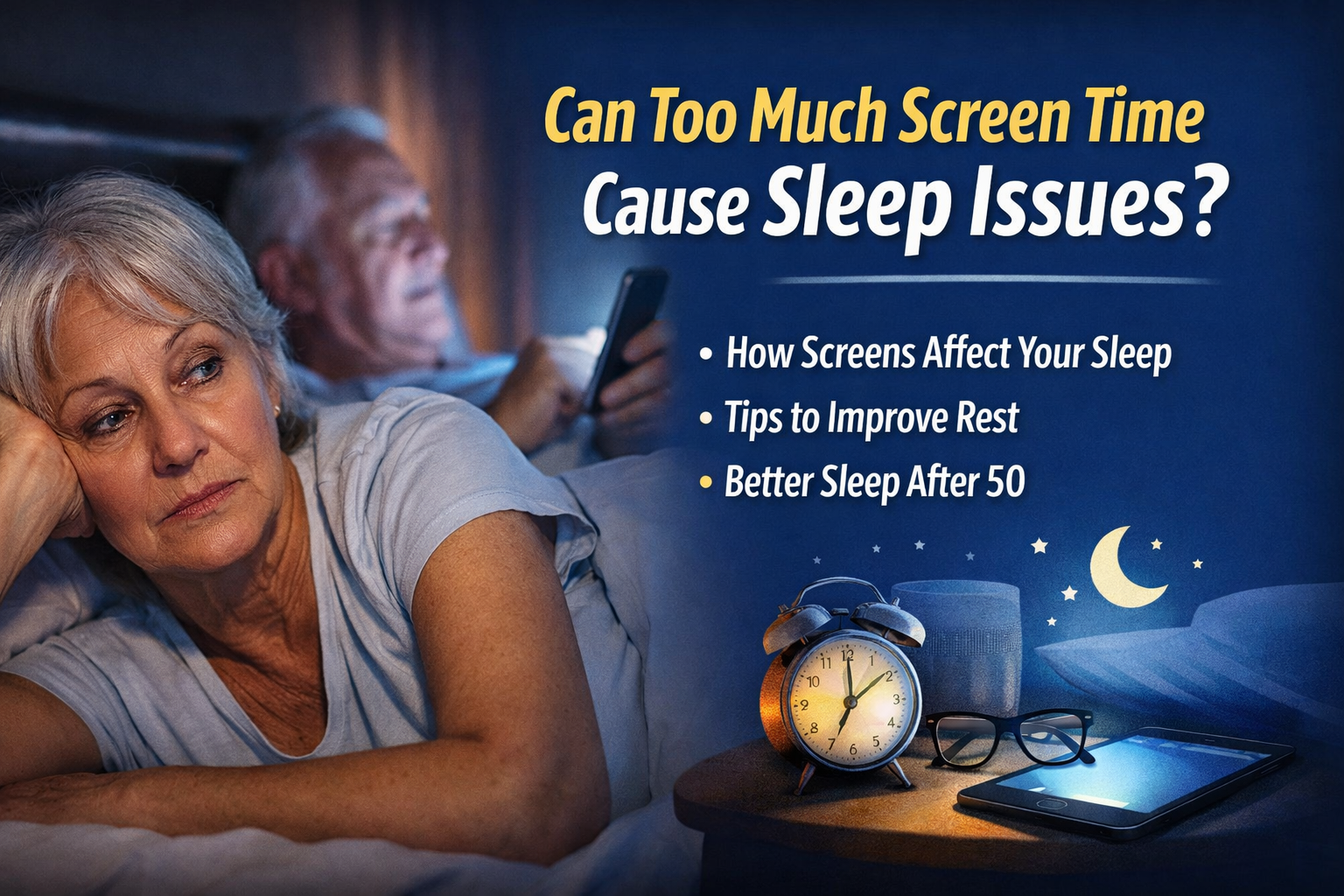
If you’ve ever found yourself scrolling through your phone late at night or watching “just one more episode” on TV, you’re not alone. For many adults over 50, screen time has quietly become part of the nightly routine. Whether it’s checking emails, browsing social media, or catching up on news, screens are everywhere.
But here’s the real question: Can too much screen time cause sleep issues?
The short answer is yes—and it’s more common than you might think.
Sleep problems are already a growing concern for older adults. Many people over 50 report trouble falling asleep, staying asleep, or waking up feeling tired. While aging plays a role, modern habits—especially increased screen use—can make things worse.
In this detailed guide, we’ll break down exactly how screen time affects sleep, why it matters more as you age, and what you can do to fix it. No complicated science, no confusing terms—just clear, practical advice you can start using tonight.
What Is Screen Time?
Before we go deeper, let’s define what “screen time” really means.
Screen time includes any time you spend looking at devices such as:
- Smartphones
- Tablets
- Televisions
- Laptops and desktop computers
- E-readers with backlit screens
For many retirees and seniors, screen time has increased over the years due to:
- Online news and entertainment
- Video calls with family
- Social media usage
- Streaming services
- Online shopping and banking
While these tools offer convenience and connection, excessive use—especially in the evening—can interfere with your natural sleep cycle.
How Sleep Changes After 50
To understand the impact of screen time, it helps to know how sleep naturally changes with age.
Common Sleep Changes in Older Adults
- You may feel sleepy earlier in the evening
- You may wake up earlier in the morning
- Sleep becomes lighter and less deep
- You may wake up more often during the night
Why These Changes Happen
As we age, the body produces less melatonin—the hormone that controls sleep. This makes it easier for outside factors, like light from screens, to disrupt your rest.
That means something as simple as watching TV before bed or checking your phone can have a stronger effect than it did when you were younger.
Can Too Much Screen Time Cause Sleep Issues?
Yes—and the effects are backed by research and real-life experience.
Too much screen time can:
- Delay the time it takes to fall asleep
- Reduce total sleep hours
- Lower sleep quality
- Cause frequent nighttime awakenings
But why does this happen?
Let’s break it down in simple terms.
How Screens Disrupt Your Sleep
1. Blue Light Blocks Sleep Hormones
Screens emit something called blue light, which mimics daylight.
Your brain uses light signals to decide when to stay awake and when to sleep. When you look at screens at night, your brain gets confused and thinks it’s still daytime.
This leads to:
- Reduced melatonin production
- Delayed sleep onset
- Poor sleep quality
Real-Life Example
Imagine reading news on your phone at 10:30 PM. Even if you feel tired, the light from your screen tells your brain, “Stay awake.” You end up tossing and turning longer than usual.
2. Mental Stimulation Keeps Your Brain Active
It’s not just the light—it’s also the content.
Watching exciting shows, reading emotional news, or scrolling through social media keeps your mind busy.
Instead of winding down, your brain stays alert.
Common Triggers
- Watching crime shows or action movies
- Reading stressful news headlines
- Engaging in online arguments or debates
- Checking emails or finances late at night
These activities can increase stress and make it harder to relax.
3. Screen Habits Delay Bedtime
One of the biggest hidden problems is time.
You may plan to sleep at 10 PM, but then:
- You check your phone
- Watch one more video
- Scroll for “just 10 minutes”
Before you know it, it’s 11:30 PM.
This habit slowly shifts your sleep schedule, leading to chronic sleep deprivation.
4. Nighttime Notifications Disrupt Sleep
Even after you fall asleep, your devices can still interfere.
- Message alerts
- App notifications
- Phone vibrations
These small disturbances can wake you up or prevent deep sleep.
Why Screen Time Affects Seniors More
You might be wondering—why is this a bigger issue after 50?
Here’s why:
1. Increased Light Sensitivity
Older eyes are more sensitive to light, especially at night.
2. Lower Melatonin Levels
Your body naturally produces less melatonin as you age.
3. Health Conditions
Conditions like arthritis, diabetes, or heart issues already affect sleep. Screen time adds another layer of disruption.
4. Less Physical Activity
Many retirees have less daytime activity, which already reduces sleep quality. Adding screen exposure worsens it.
Signs Your Screen Time Is Hurting Your Sleep
You don’t need a doctor to spot the signs. Watch for these:
- Trouble falling asleep within 30 minutes
- Waking up multiple times at night
- Feeling tired even after 7–8 hours in bed
- Falling asleep during the day
- Needing naps frequently
- Relying on sleep medications
If these sound familiar, your screen habits might be part of the problem.
Long-Term Effects of Poor Sleep
Ignoring sleep issues can lead to serious health concerns.
Physical Health Risks
- High blood pressure
- Heart disease
- Weight gain
- Weak immune system
Mental Health Effects
- Memory problems
- Poor focus
- Increased anxiety or depression
Safety Concerns
- Higher risk of falls
- Slower reaction times
- Reduced driving safety
Sleep is not a luxury—it’s essential for healthy aging.
Practical Tips to Reduce Screen Time and Sleep Better
Let’s focus on what really works.
1. Set a “No Screens” Time
Stop using screens at least 1–2 hours before bedtime.
Instead, try:
- Reading a physical book
- Listening to soft music
- Talking with family
2. Use Night Mode or Blue Light Filters
Most devices offer “night mode.”
This reduces blue light and makes screens warmer in color.
While not perfect, it helps reduce damage.
3. Keep Devices Out of the Bedroom
Your bedroom should be for sleep—not screens.
- Charge your phone in another room
- Avoid watching TV in bed
- Use a simple alarm clock instead of your phone
4. Create a Relaxing Bedtime Routine
Your body loves routine.
Try this nightly schedule:
- Turn off screens at 9 PM
- Drink herbal tea
- Read or meditate
- Go to bed at the same time daily
5. Increase Daytime Activity
The more active you are during the day, the better you’ll sleep at night.
- Take a morning walk
- Do light exercises
- Spend time outdoors
Sunlight during the day helps reset your internal clock.
6. Limit News and Social Media at Night
Late-night news can increase stress.
Instead:
- Watch or read news earlier in the day
- Avoid emotionally intense content at night
7. Adjust Screen Brightness
Lower brightness in the evening.
Bright screens are more disruptive than dim ones.
8. Try Audiobooks Instead of Screens
If you enjoy stories at night, switch to audio.
This allows your eyes and brain to relax.
Real-Life Example: A Simple Change That Worked
John, a 62-year-old retiree, struggled with sleep for years.
His routine:
- Watching TV until midnight
- Checking phone in bed
He made two changes:
- Turned off TV at 9:30 PM
- Left his phone in the living room
Within two weeks:
- He fell asleep faster
- Slept longer
- Felt more energetic during the day
Small changes can make a big difference.
Common Mistakes to Avoid
Many people try to fix sleep issues but make these mistakes:
1. Using Screens to “Relax”
Scrolling may feel relaxing, but it actually stimulates your brain.
2. Sleeping with the TV On
Background noise and light can disrupt deep sleep.
3. Checking the Phone at Night
Even a quick glance can reset your brain’s alertness.
4. Ignoring Sleep Signals
If you feel sleepy, go to bed. Don’t push through with more screen time.
5. Relying Only on Sleep Pills
Medication doesn’t fix the root cause.
Expert Tips for Better Sleep After 50
Here are some practical, expert-backed suggestions:
- Stick to a consistent sleep schedule
- Keep your bedroom cool and dark
- Avoid caffeine after 2 PM
- Eat light meals at night
- Use blackout curtains if needed
- Practice deep breathing before bed
Conclusion
So, can too much screen time cause sleep issues?
Absolutely—and for adults over 50, the impact can be even stronger.
The good news is that you don’t need to give up technology completely. You just need to use it wisely.
By reducing screen time before bed, creating a simple routine, and making small daily changes, you can improve your sleep naturally.
Better sleep means:
- More energy
- Better mood
- Stronger health
Start with one change tonight. Your body will thank you.
FAQs
1. Can watching TV before bed cause sleep problems in seniors?
Yes, watching TV before bed can affect sleep, especially if done close to bedtime. The light from the screen and the content itself can keep your brain active. For seniors, this effect is stronger because the body produces less melatonin with age. Watching exciting or emotional shows can make it harder to relax and fall asleep. If you enjoy TV, try turning it off at least one hour before bed and switching to a calmer activity like reading or listening to music.
2. How much screen time is too much for better sleep?
There’s no exact number that fits everyone, but experts suggest limiting screen use in the evening. Ideally, avoid screens for 1–2 hours before bedtime. Total daily screen time should also be balanced with physical activity and outdoor time. For seniors, long hours of screen exposure can reduce sleep quality and increase fatigue. Pay attention to how you feel—if you’re tired or restless at night, your screen habits may need adjustment.
3. Does blue light from phones really affect sleep?
Yes, blue light plays a major role in sleep disruption. It tricks your brain into thinking it’s daytime, which reduces melatonin production. This makes it harder to fall asleep and stay asleep. Even short exposure before bed can delay your sleep cycle. Using night mode or blue light filters can help, but the best solution is to avoid screens entirely before bedtime whenever possible.
4. Why do I feel tired even after sleeping with TV on?
Sleeping with the TV on can prevent deep, restful sleep. The light and sound create subtle disturbances throughout the night. Even if you don’t fully wake up, your brain remains partially active. This reduces the quality of your sleep, leaving you feeling tired in the morning. Turning off the TV and creating a dark, quiet environment can significantly improve how you feel after waking up.
5. Can reducing screen time improve sleep quickly?
Yes, many people notice improvements within a few days to a couple of weeks. The body responds quickly when you remove sleep disruptors like screens. You may fall asleep faster, wake up less often, and feel more refreshed. Consistency is key—stick to a routine and give your body time to adjust. Even small changes can lead to noticeable results.
6. Is it okay to use a phone if I wake up at night?
It’s best to avoid using your phone if you wake up during the night. The light and content can fully wake your brain, making it harder to fall back asleep. Instead, try deep breathing, stretching, or simply resting quietly. If needed, use a dim light rather than a bright screen. Keeping your phone out of reach can help prevent this habit.
7. Are tablets better than phones for nighttime use?
Not really. Tablets also emit blue light and can disrupt sleep in the same way as phones. The size of the screen doesn’t reduce the impact significantly. What matters most is the timing and duration of use. Any screen exposure before bed can interfere with sleep, regardless of the device type.
8. Can reading on a screen affect sleep?
Yes, reading on a backlit screen can still impact sleep due to blue light exposure. Even if the content is relaxing, the light can delay melatonin release. If you enjoy reading at night, consider switching to a physical book or using an e-reader without backlighting. This simple change can help your body prepare for sleep more naturally.
9. What is the best bedtime routine for better sleep?
A good routine should be calm and consistent. Start by turning off screens 1–2 hours before bed. Then engage in relaxing activities like reading, light stretching, or listening to music. Keep your bedtime and wake-up time the same every day. Over time, your body will learn when it’s time to sleep, making it easier to fall asleep naturally.
10. Can too much screen time cause long-term sleep problems?
Yes, ongoing excessive screen use can lead to chronic sleep issues. Over time, poor sleep can affect your overall health, including heart health, memory, and mood. For seniors, this can increase the risk of other conditions and reduce quality of life. The good news is that these effects can often be reversed by improving screen habits and sleep routines.
Also Read –
Best Foods for Heart Health After 50